

This post contains affiliate links. As an Amazon Associate, 360 Car Seat earns from qualifying purchases, at no extra cost to you.
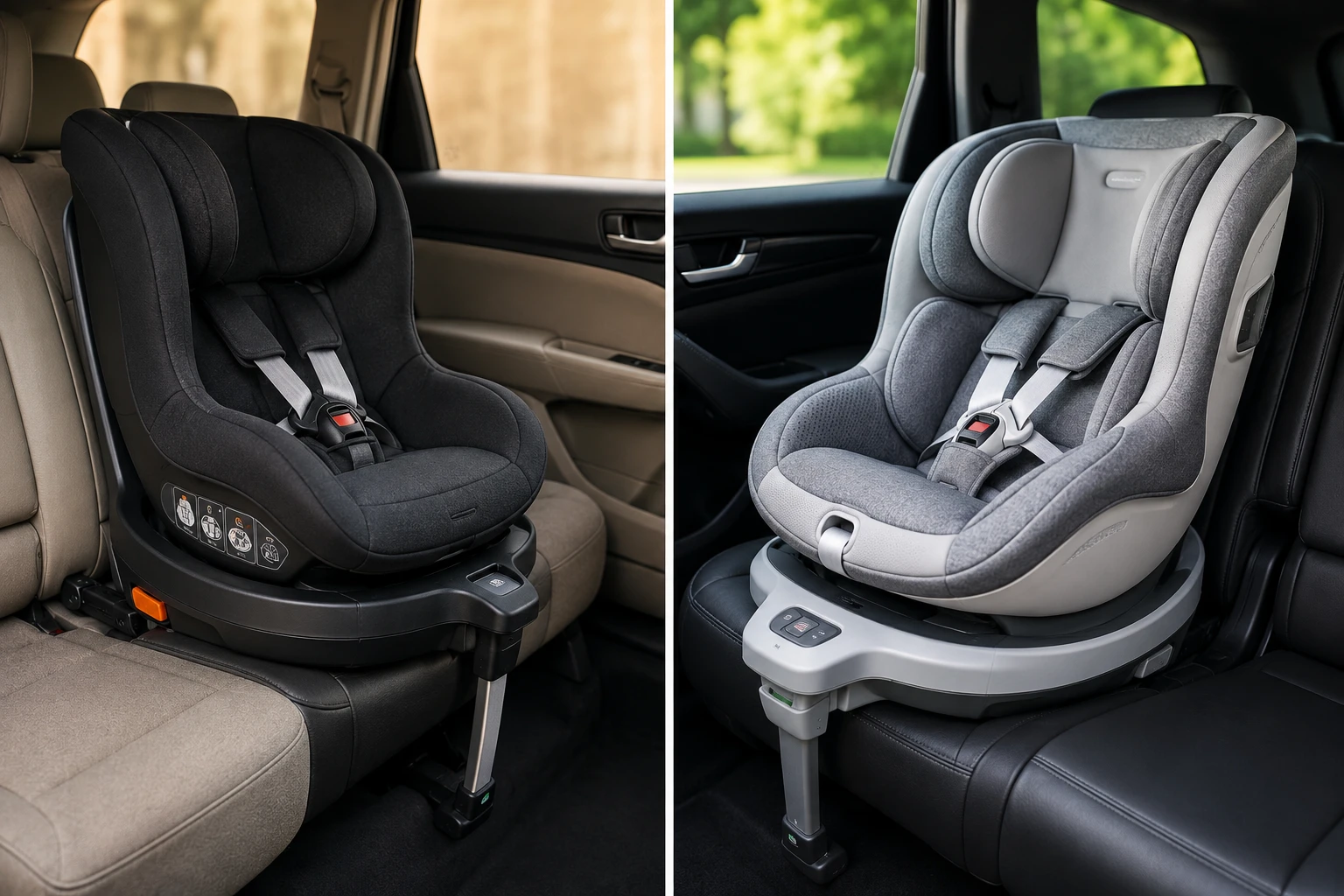
Rotating car seats have quickly become one of the most sought-after baby gear purchases. However, the price difference between models can be surprising. While some rotating seats cost a few hundred dollars, others can approach or exceed $800. Therefore, many parents find themselves comparing premium vs budget rotating car seats and wondering whether the extra investment truly delivers better value. The answer is not always straightforward. Although premium models often include additional features, budget-friendly options can still provide excellent safety and convenience. In this guide, we’ll explore the real-world differences so you can confidently choose the right seat for your family.
What Is a Rotating Car Seat?
Before comparing premium vs budget rotating car seats, it’s important to understand what makes these seats unique. Unlike traditional convertible car seats, rotating models swivel toward the vehicle door. As a result, parents can place their child into the seat more comfortably and secure the harness with less strain on their back and shoulders. Consequently, rotating seats have become especially popular among parents of infants and toddlers.
How Rotating Car Seats Work
Most rotating car seats feature either a 180-degree or 360-degree swivel mechanism. While 180-degree seats generally rotate toward one door, 360-degree models can rotate through a wider range of positions. Therefore, they often provide greater flexibility during daily use. Key advantages include:
- Easier loading and unloading
- Reduced strain on parents and caregivers
- Improved visibility when securing the harness
- Better access in larger vehicles
- Increased convenience for grandparents and babysitters
As a result, many families quickly find that a rotating seat simplifies everyday travel.
Why Rotating Car Seats Cost More Than Traditional Seats
Although the concept seems simple, the engineering behind a rotating seat is quite complex. Manufacturers must ensure the seat rotates smoothly while remaining secure during a collision. Consequently, rotating mechanisms require additional materials, testing, and design considerations. Therefore, rotating car seats generally cost more than standard convertible seats.
Understanding the Price Difference
When comparing premium vs budget rotating car seats, price is often the first thing parents notice. After all, the gap can be substantial. Budget rotating seats typically range from $250 to $350. Meanwhile, premium models often fall between $500 and $800 or higher. So what exactly are you paying for?
Typical Budget Rotating Car Seat Price Range
Budget-friendly rotating seats focus on delivering core functionality at a lower price. Although they may not include every premium feature, they still offer many practical benefits. Common features often include:
- Side-impact protection
- Adjustable harness systems
- Multiple recline positions
- LATCH compatibility
- Infant inserts
Therefore, many budget models provide an excellent balance between affordability and convenience.
Typical Premium Rotating Car Seat Price Range
Premium models, on the other hand, emphasize refinement and advanced features. Rather than simply adding rotation, they aim to improve nearly every aspect of the ownership experience. Common premium upgrades include:
- Advanced side-impact protection
- Load legs
- Anti-rebound technology
- Luxury fabrics
- Enhanced infant support
- Easier installation systems
- Smoother rotation mechanisms
Consequently, premium seats often appeal to parents seeking maximum convenience and comfort.
What Causes the Price Gap?
Several factors contribute to higher prices.
| Factor | Budget Models | Premium Models |
|---|---|---|
| Materials | Standard fabrics | Premium fabrics and memory foam |
| Safety Features | Basic required protections | Additional safety technologies |
| Installation | Standard systems | Enhanced guidance tools |
| Rotation Quality | Functional | Smoother operation |
| Durability | Good | Excellent |
| Comfort | Practical | Luxury-focused |
Furthermore, manufacturers often invest heavily in engineering and testing to differentiate premium products. The engineering behind rotating car seats is more complex than many parents realize. Manufacturers must balance safety, durability, and smooth operation while keeping weight manageable. In some ways, the design process resembles solving a complex optimization problem, where multiple competing factors must be balanced to achieve the best overall result.
Safety Comparison: Premium vs Budget Rotating Car Seats
Safety is understandably the most important consideration. However, one of the biggest misconceptions in the premium vs budget rotating car seats debate is that expensive automatically means safer. Fortunately, that isn’t necessarily true.
Every Car Seat Must Meet Safety Standards
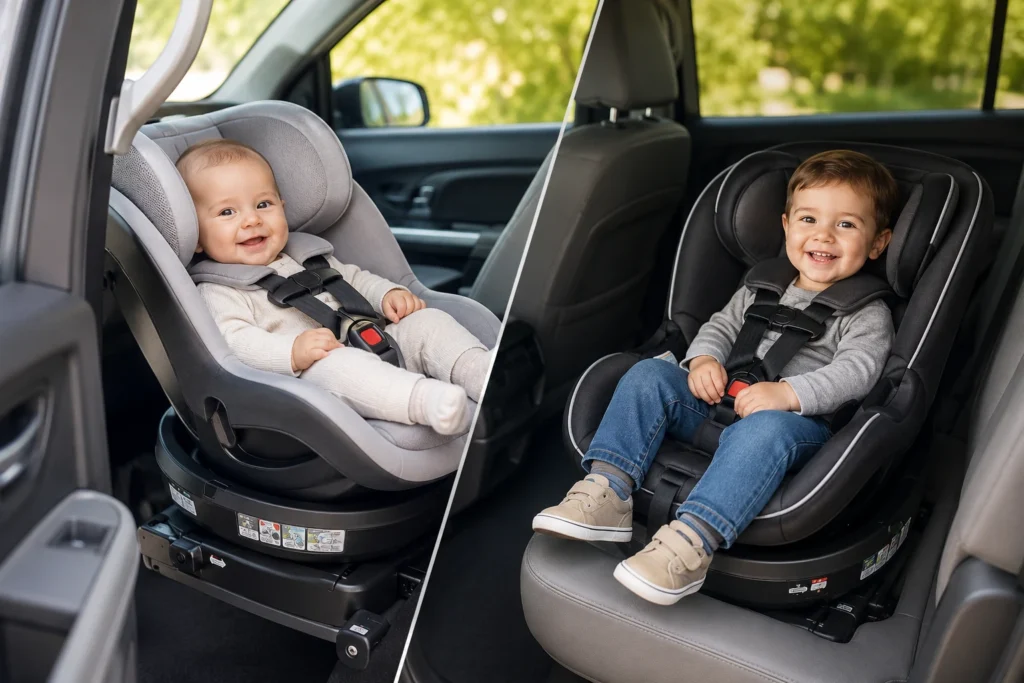
Regardless of price, every car seat sold in the United States must meet federal safety standards. Therefore, both budget and premium models undergo crash testing before reaching consumers. As a result, budget seats are not inherently unsafe. In fact, a properly installed budget seat is often safer than a poorly installed premium model. Consequently, proper usage remains one of the most important safety factors.
Additional Safety Features Found in Premium Models
Although all seats must meet minimum standards, premium models frequently include extra safety technologies.
Load Legs
Load legs extend from the base to the vehicle floor. As a result, they can help manage crash forces and reduce seat movement during certain collisions.
Anti-Rebound Bars
Similarly, anti-rebound bars help limit rearward movement during impact events. Therefore, they may contribute to additional stability.
Enhanced Side-Impact Protection
Many premium models include extra layers of energy-absorbing materials. Consequently, they may provide additional protection during side-impact crashes.
When Budget Seats Offer Similar Protection
While premium features can be beneficial, budget seats often perform extremely well when used correctly. Specifically, safety depends on:
- Proper installation
- Correct harness positioning
- Following manufacturer instructions
- Consistent daily use
Therefore, parents should prioritize fit and proper usage rather than price alone.
Comfort and Everyday Convenience
Although safety comes first, comfort plays a major role in daily satisfaction. After all, your child may spend hundreds or even thousands of hours in their car seat over the years. Therefore, comfort features deserve careful consideration.
Premium Car Seat Comfort Features
Premium seats often include upgrades designed to improve both comfort and convenience. Common features include:
- Memory foam cushioning
- Breathable fabrics
- Enhanced infant inserts
- Additional recline positions
- Improved ventilation systems
Consequently, these seats may provide a more pleasant experience during longer drives.
Budget Car Seat Comfort Features
Budget seats typically focus on practical functionality. Nevertheless, many still offer solid comfort levels. Common features include:
- Standard foam padding
- Durable fabric covers
- Basic recline options
- Essential infant support
Therefore, many children remain perfectly comfortable in budget-friendly models.
Which Matters More for Daily Use?
The answer depends largely on your lifestyle. For example, families who frequently travel long distances may appreciate premium comfort features more than families who primarily take short trips around town. Likewise, parents living in warmer climates may value breathable fabrics and enhanced ventilation. Therefore, usage patterns should play a significant role in the decision-making process.
Rotation Performance Comparison
Not all rotating mechanisms feel the same. While every rotating seat performs the same basic task, the quality of the experience can vary significantly. Consequently, rotation performance often becomes one of the biggest differentiators between premium and budget models.
Premium Rotation Systems
Premium manufacturers frequently invest heavily in refining the swivel mechanism. As a result, these seats often offer:
- Smooth one-handed rotation
- Consistent movement
- Easier access in tight parking spaces
- Reliable long-term operation
Therefore, daily interactions often feel effortless.
Budget Rotation Systems
Budget seats still rotate effectively. However, some models may require slightly more force or adjustment. Potential limitations may include:
- Stiffer movement
- Less refined locking systems
- More effort during operation
- Slightly reduced smoothness
Nevertheless, many parents remain perfectly satisfied with their performance.
Why Rotation Quality Matters Long-Term
Initially, minor differences may seem insignificant. However, after years of daily use, smooth operation becomes increasingly valuable. Therefore, rotation quality deserves serious attention when evaluating premium vs budget rotating car seats.
One Area Where Premium Models Often Shine
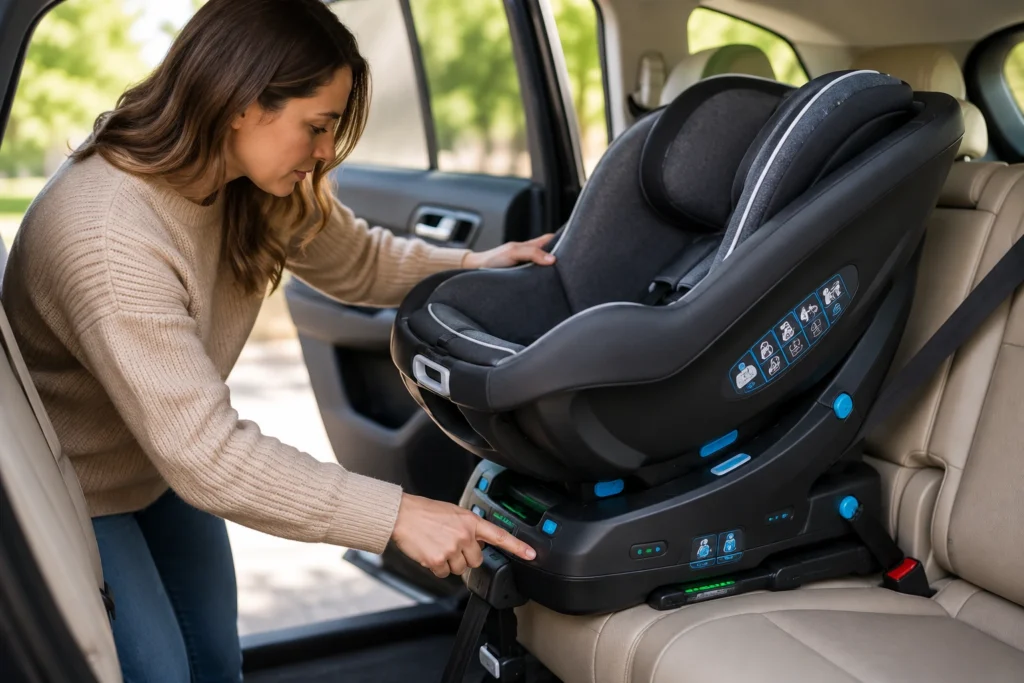
Installation is frequently overlooked during the buying process. However, it can significantly impact both safety and convenience. Therefore, this is one area where premium models often distinguish themselves.
Premium Installation Systems
Many premium seats include features specifically designed to reduce installation errors. Examples include:
- Visual confirmation indicators
- Color-coded installation guides
- Advanced lock-off systems
- Audible clicks
- Enhanced leveling indicators
Consequently, these features can make installation faster and easier. Many premium manufacturers invest heavily in reducing user error because even small installation mistakes can affect performance. This process often involves extensive testing and data analysis, sometimes using concepts similar to Bayesian inference, where probabilities are refined based on accumulated evidence and testing outcomes. Another factor many parents overlook is the learning curve associated with everyday adjustments. Even the safest car seat must be properly fitted to the child to perform as intended. Tasks such as tightening the harness, adjusting shoulder strap height, and ensuring a secure fit become part of regular use. Parents frequently search for guides such as How to Adjust Straps on Graco 360 Car Seat because proper harness positioning plays a critical role in both comfort and safety. Premium seats often simplify these adjustments with more intuitive controls, while budget models may require a bit more effort and familiarity.
Budget Installation Systems
Budget models typically include standard installation features. These often include:
- Traditional LATCH connectors
- Basic belt path guidance
- Manual adjustment points
- Standard indicators
Although installation may require more attention, many parents successfully install these seats without difficulty.
Why Easier Installation Matters
Research consistently shows that installation mistakes are common. Therefore, any feature that simplifies installation can provide meaningful value. Moreover, easier installation may improve confidence among parents and caregivers. As a result, premium installation systems often represent one of the strongest arguments for spending more.
Materials and Build Quality
While safety and rotation often receive the most attention, build quality can significantly influence long-term satisfaction. Therefore, when comparing premium vs budget rotating car seats, it is important to look beyond the initial purchase price. After all, most families will use their car seat for several years.
Premium Car Seat Construction
Premium manufacturers typically invest in higher-quality materials and finishes. As a result, these seats often include:
- Premium fabrics
- Memory foam padding
- Reinforced frames
- Improved stitching
- Higher-end plastics
Furthermore, premium materials often feel softer and more durable. Consequently, they may hold up better after years of daily use. Many premium seats are also designed with aesthetics in mind. Therefore, they often maintain a newer appearance longer than entry-level alternatives.
Budget Car Seat Construction
Budget seats focus on practicality rather than luxury. Nevertheless, that does not mean they are poorly built. Most budget models include:
- Durable synthetic fabrics
- Standard foam padding
- Strong plastic shells
- Reliable harness systems
Although the materials may not feel as refined, they are generally designed to withstand normal family use. Therefore, budget seats can still provide excellent durability.
How Build Quality Affects Long-Term Ownership
Small details often become noticeable over time. For example:
- Premium fabrics may resist stains better.
- Better padding may retain its shape longer.
- Higher-quality covers may be easier to remove and wash.
- Stronger components may show less wear.
Consequently, families planning several years of use may appreciate these long-term advantages.
Longevity and Value Over Time
The purchase price tells only part of the story. Instead, smart shoppers often focus on long-term value. Therefore, evaluating ownership costs over several years can provide a clearer perspective.
Cost Per Year Analysis
Consider this simple example:
| Seat Type | Purchase Price | Years of Use | Cost Per Year |
|---|---|---|---|
| Budget Seat | $300 | 5 Years | $60 |
| Premium Seat | $600 | 6 Years | $100 |
At first glance, the premium seat costs significantly more. However, the yearly difference may be smaller than expected. Consequently, some families find the additional convenience worth the added expense.
One Child vs Multiple Children
Family size can dramatically affect value calculations. For example, a premium seat used by three children over several years may offer better overall value than its price initially suggests. Meanwhile, parents planning to have only one child may prioritize affordability instead Therefore, future family plans should influence purchasing decisions.
Can a Premium Seat Save Money Over Time?
In certain situations, yes. Premium seats may offer:
- Better durability
- Longer usability periods
- Reduced wear and tear
- Higher resale potential where permitted
However, this is not always guaranteed. Therefore, parents should evaluate specific models rather than assuming every expensive seat automatically provides better value.
Premium Features Worth Paying For
Not every premium feature delivers equal value. Consequently, parents should focus on upgrades that genuinely improve safety or usability.
Features That Often Justify the Higher Price
Certain features consistently provide meaningful benefits.
Easier Installation Systems
As discussed earlier, installation errors are common. Therefore, systems that simplify installation can provide substantial value.
Load Legs
Load legs can improve stability and crash-force management. Consequently, many safety-conscious parents prioritize this feature.
Enhanced Side-Impact Protection
Additional protective structures may provide extra peace of mind. Therefore, these features often rank highly among premium buyers.
Superior Rotation Mechanisms
Since rotation is the primary purpose of the seat, smoother operation can dramatically improve everyday convenience. As a result, many parents consider this one of the most worthwhile upgrades.
Features That May Be More Luxury Than Necessity
On the other hand, some premium features are less essential. Examples include:
- Designer fabrics
- Premium branding
- Exclusive color options
- Cosmetic upgrades
Although these features may enhance appearance, they typically have less impact on safety and usability. Therefore, budget-conscious shoppers can often skip them without sacrificing functionality.
Who Should Buy a Budget Rotating Car Seat?
Budget rotating seats continue to gain popularity for good reason. After all, many families simply want reliable performance at a reasonable price.
Best for Budget-Conscious Families
If affordability is a major concern, budget rotating seats often provide excellent value. Furthermore, many modern budget models include features that were once exclusive to premium products.
Best for Secondary Vehicles
Not every vehicle requires a top-tier seat. For example, grandparents’ cars or occasional-use vehicles may not justify premium pricing. Therefore, a budget rotating seat often makes perfect sense.
Best for Occasional Use
Families who drive infrequently may not benefit from premium convenience features as much as daily commuters. Consequently, a lower-priced model may be the smarter financial decision.
Best for Short-Term Needs
If a child is approaching the next seating stage, parents may prefer spending less now rather than investing heavily in a seat that will soon be outgrown.
Who Should Buy a Premium Rotating Car Seat?
Although budget seats offer tremendous value, premium models are often worthwhile in certain situations.
Best for Daily Drivers
Parents who use their vehicle multiple times per day may appreciate every convenience upgrade. After all, small improvements become meaningful when repeated thousands of times.
Best for Frequent Travelers
Long road trips place greater demands on both children and caregivers. Therefore, enhanced comfort features can become particularly valuable.
Best for Growing Families
Families planning multiple children often benefit from premium durability and longevity. Consequently, the higher initial investment may pay off over time.
Best for Parents Prioritizing Convenience
Some parents simply value ease of use. If smoother rotation, easier installation, and premium comfort improve daily life, then the extra cost may be entirely justified.
Most Common Buying Mistakes to Avoid
Even experienced parents make mistakes during the shopping process. Fortunately, most can be avoided.
Focusing Only on Price
Price matters. However, value matters more. Therefore, consider the complete ownership experience rather than the purchase price alone.
Ignoring Vehicle Compatibility
Not every rotating seat fits every vehicle. Consequently, checking manufacturer compatibility guidelines before purchasing is essential.
Overlooking Child Growth Needs
Children grow quickly. Therefore, parents should evaluate height, weight, and usage limits carefully.
Prioritizing Features Over Fit
A seat loaded with premium features may still be the wrong choice if it does not fit your vehicle or child properly. As a result, fit should always take priority.
Premium vs Budget Rotating Car Seats: Side-by-Side Comparison
| Feature | Budget Rotating Seats | Premium Rotating Seats |
|---|---|---|
| Price | Lower | Higher |
| Safety Standards | Meets Federal Requirements | Meets Federal Requirements + Additional Features |
| Rotation Quality | Good | Excellent |
| Installation Ease | Moderate | Easier |
| Comfort | Practical | Enhanced |
| Materials | Standard | Premium |
| Durability | Good | Excellent |
| Daily Convenience | Good | Excellent |
| Long-Term Value | Strong | Potentially Stronger |
Final Verdict: Is a Premium Rotating Car Seat Worth It?
Ultimately, the premium vs budget rotating car seats debate does not have a universal winner. Instead, the right choice depends on your priorities. If you want reliable safety, solid functionality, and excellent value, a quality budget rotating seat may be all you need. However, if you prioritize easier installation, smoother rotation, premium comfort, and long-term convenience, a premium model may justify the higher cost. Fortunately, both categories offer excellent options today. Therefore, focus on finding the seat that fits your child, your vehicle, and your family’s lifestyle rather than simply choosing the most expensive option.
FAQs
All car seats sold in the United States must meet federal safety standards. However, premium models often include additional features such as load legs and enhanced side-impact protection.
For many families, yes. The ability to rotate the seat can make daily loading and unloading significantly easier, especially during the toddler years.
The ideal budget depends on your needs, vehicle, and usage frequency. Many families find excellent options between $300 and $600.
Many budget seats provide years of reliable use. However, premium models often use higher-quality materials that may show less wear over time.
Features such as easier installation systems, smoother rotation mechanisms, load legs, and advanced side-impact protection often provide the greatest practical benefits.
In many cases, yes. Premium seats frequently use stain-resistant materials and removable covers that simplify cleaning and maintenance.
Many rotating seats work well in compact vehicles, but fit varies by model. Always check vehicle compatibility before making a purchase.
Generally, yes. Premium models often include visual indicators, lock-off systems, and other features designed to reduce installation errors.
Many rotating car seats are designed to accommodate newborns when used with the appropriate inserts and settings. Always follow the manufacturer’s weight and height guidelines.
Premium seats may offer better long-term value for growing families because of their durability and convenience features. However, budget models can still be an excellent choice when properly maintained and used correctly.

