

This post contains affiliate links. As an Amazon Associate, 360 Car Seat earns from qualifying purchases, at no extra cost to you.
The Evenflo Revolve 360 troubleshooting process is usually simpler than many parents expect. Although the Revolve 360 is designed to make daily travel easier, occasional issues can arise after months or years of regular use. Fortunately, most problems involve installation, maintenance, or minor mechanical obstructions rather than major defects. Whether the seat won’t rotate, the harness feels stuck, or the buckle isn’t working properly, understanding the cause is the first step toward a solution. In this guide, we’ll walk through the most common issues and explain how to troubleshoot them safely and effectively.
Understanding How the Evenflo Revolve 360 Works
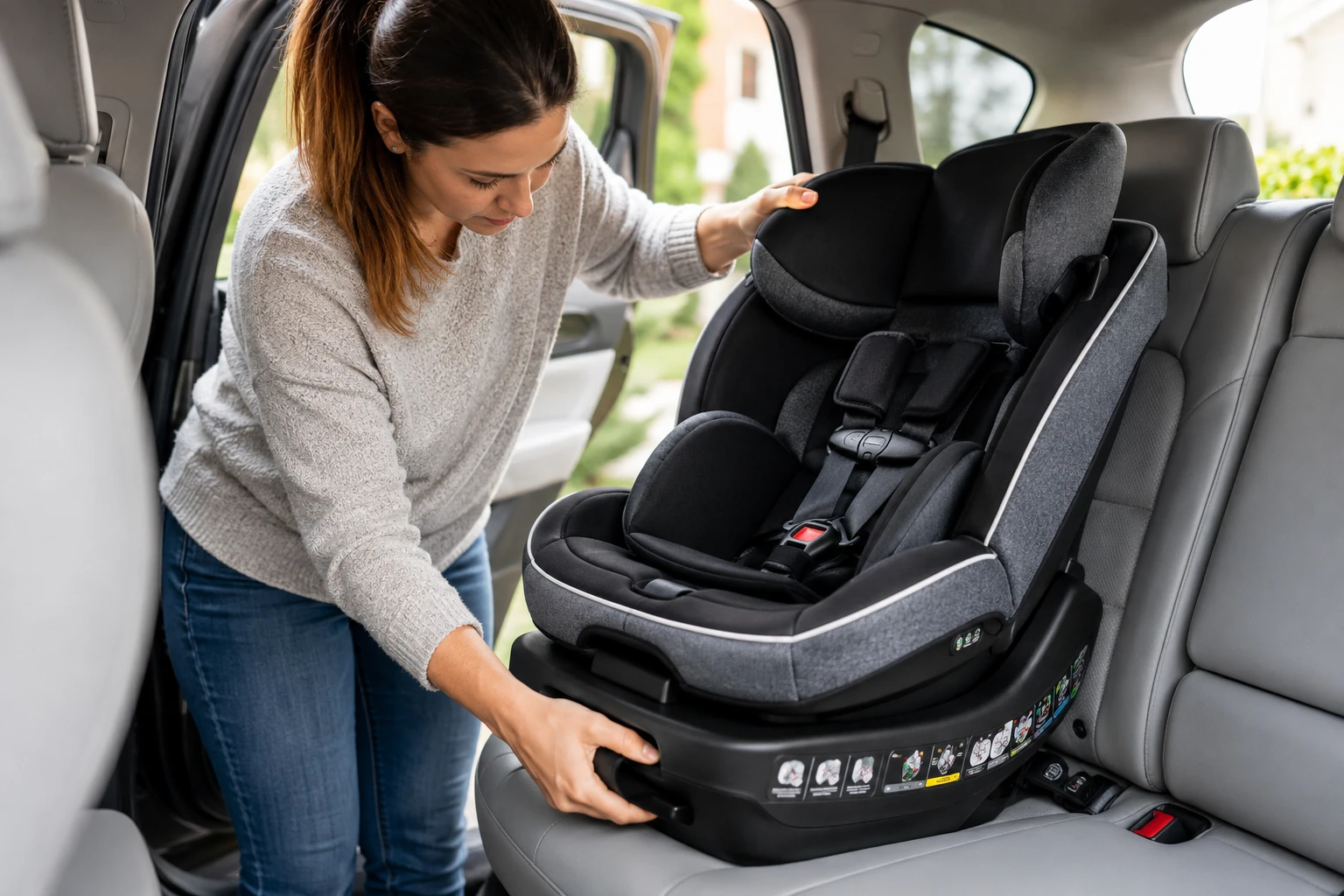
Before troubleshooting specific problems, it’s important to understand how the system operates. Unlike traditional car seats, the Evenflo Revolve 360 uses a rotating base that allows parents to turn the seat toward the vehicle door. As a result, loading and unloading children becomes much easier, especially during daily errands and long trips.
Key Features
The Revolve 360 includes:
- Rotating seat mechanism
- Locking rotation positions
- Rear-facing mode
- Forward-facing mode
- Booster mode
- Harness adjustment system
- Recline settings
- Installation indicators
Because several moving parts work together, even a small issue can affect performance.
Why Problems Occur
In many situations, the car seat itself isn’t damaged. Instead, problems are often caused by:
- Incorrect installation
- Debris buildup
- Misaligned components
- User error
- Normal wear and tear
- Improper positioning
Like many mechanical systems, small alignment issues can create a chain reaction of minor performance problems, a concept somewhat similar to the study of tribology, which examines friction, wear, and lubrication between moving surfaces. Therefore, identifying the root cause early can save significant time and frustration.
Evenflo Revolve 360 Won’t Rotate
One of the most common Evenflo Revolve 360 troubleshooting concerns involves a seat that suddenly refuses to rotate. Sometimes the issue appears without warning. Other times, parents notice increasing resistance over several weeks.
Common Causes
Several factors may prevent rotation.
| Possible Cause | Typical Symptom |
|---|---|
| Incorrect seat position | Rotation stops completely |
| Lock not fully disengaged | Seat moves slightly but won’t turn |
| Installation issue | Rotation feels restricted |
| Debris in track | Grinding or resistance |
| Misalignment | Partial movement only |
Step 1: Verify Proper Positioning
First, ensure the seat is in an approved position for rotation. Check that:
- The seat is properly locked
- The vehicle is parked
- No objects are blocking movement
- The release handle is fully activated
In many cases, a slight positioning issue is all that’s preventing rotation.
Step 2: Inspect the Rotation Path
Next, inspect the area around the base. Look carefully for:
- Crumbs
- Toys
- Food particles
- Loose fabric
- Small accessories
Engineers often analyze moving components using principles related to kinematics, the study of motion and how mechanical parts move relative to one another. Similarly, even a tiny obstruction can affect the smooth movement of a rotating car seat.
Step 3: Check Installation
Improper installation can place excessive pressure on the rotating mechanism. Inspect:
- LATCH connectors
- Seat belt routing
- Base stability
- Indicator status
If the base shifts excessively, rotation may become difficult.
Step 4: Never Force Rotation
Most importantly, never force the seat to move. If significant resistance exists, stop immediately and investigate further. Applying excessive force may damage components and create future safety concerns.
Evenflo Revolve 360 Stuck in Position
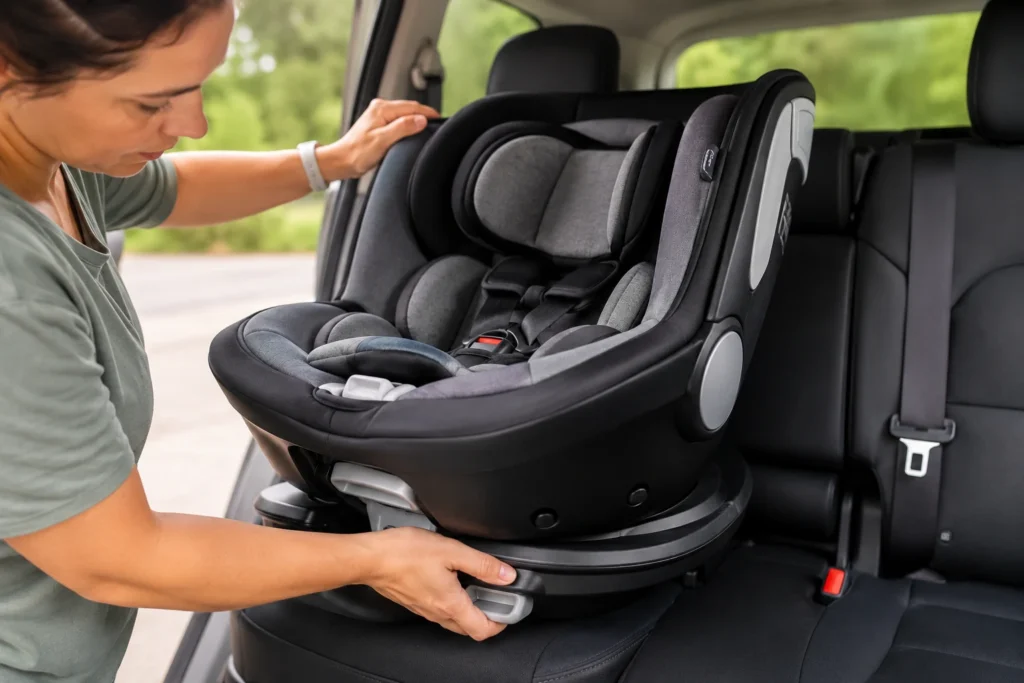
Another common complaint involves a seat that begins rotating but suddenly stops midway through the process.
Signs of a Stuck Seat
You may notice:
- Partial rotation
- Increased resistance
- Clicking noises
- Uneven movement
- Sudden stopping
If you’re searching for solutions because your Evenflo Revolve 360 Stuck in Position issue appeared unexpectedly, these symptoms often indicate an obstruction, alignment problem, or locking mechanism concern that requires closer inspection.
Remove Potential Obstructions
Start with a complete visual inspection. Check:
- Underneath the seat
- Around the rotating base
- Near locking components
- Along the track area
Parents are often surprised by what they discover hidden beneath a frequently used car seat.
Examine the Locking Mechanism
Next, evaluate the locking system. The seat cannot rotate properly unless the lock disengages completely. Activate the release handle several times while observing movement. If operation appears inconsistent, additional inspection may be required.
Verify Vehicle Position
Although it sounds simple, vehicle positioning matters. Parking on uneven surfaces may slightly alter weight distribution across the seat and base. Therefore, testing the seat on level ground can help identify whether environmental factors are contributing to the problem.
Harness Problems and Solutions
Harness concerns generate thousands of Evenflo Revolve 360 troubleshooting searches each year. Since the harness is used every time a child rides in the seat, even minor issues become noticeable quickly.
Harness Won’t Tighten
Many parents notice the harness becoming harder to tighten over time. Instead of moving smoothly, the adjustment process may begin requiring extra effort.
Common Causes
Typical causes include:
- Twisted straps
- Improper routing
- Debris inside the adjuster
- Harness tangles
- Misaligned components
Troubleshooting Steps
Follow these steps:
- Fully loosen the harness.
- Inspect both straps carefully.
- Remove any twists.
- Verify proper routing.
- Gradually tighten the harness again.
Often, this simple process resolves the issue.
Check Hidden Harness Areas
Additionally, inspect areas behind the seat. Harness straps travel through several channels that aren’t immediately visible. Consequently, hidden twists may develop and interfere with smooth adjustment.
Harness Won’t Loosen
While tightening problems are common, loosening problems can be equally frustrating. Parents frequently pull on the straps without success.
Possible Causes
Several factors may contribute:
- Locked release mechanism
- Excessive tension
- Debris accumulation
- Improper adjustment angle
What to Do
First, press the release button. Then, gently pull the shoulder straps forward while maintaining pressure on the release mechanism. This often relieves tension and allows normal operation.
Avoid Excessive Force
However, avoid aggressive pulling. Excessive force rarely fixes the issue and may increase wear on important components.
Buckle Problems
The buckle experiences constant daily use. Therefore, it is one of the components most likely to experience minor operational issues over time.
Buckle Won’t Click
A buckle that refuses to latch can understandably cause concern. Fortunately, the solution is often straightforward.
Check for Debris
Food particles frequently find their way into buckle assemblies. Inspect for:
- Cracker crumbs
- Sticky residue
- Dirt
- Small debris
Even a small obstruction can prevent proper engagement.
Verify Proper Alignment
Additionally, ensure the buckle tongues enter at the correct angle. If one side is slightly misaligned, the buckle may fail to engage completely.
Buckle Is Difficult to Release
Sometimes the opposite problem develops. The buckle secures normally but becomes difficult to release.
Common Reasons
Possible causes include:
- Dirt buildup
- Sticky substances
- Wear from repeated use
- Environmental exposure
Cleaning Recommendations
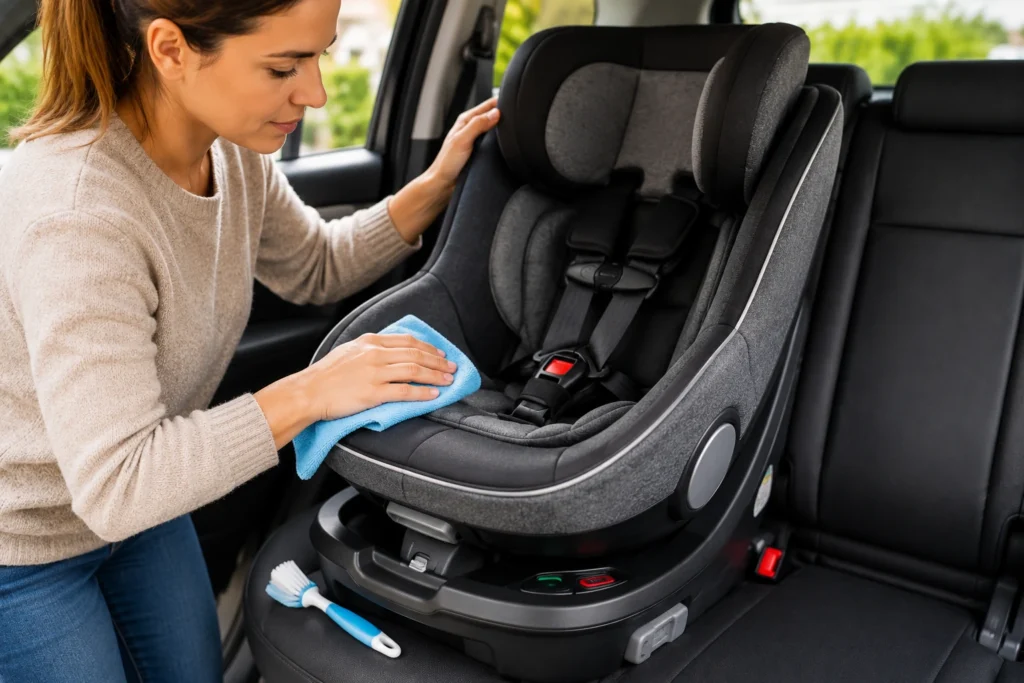
Always follow the manufacturer’s cleaning instructions. Generally, you should:
- Remove visible debris
- Clean approved areas carefully
- Allow components to dry completely
- Retest operation
Avoid using lubricants unless specifically approved by Evenflo. Although lubrication may seem helpful, it often attracts additional dirt and debris, which can worsen the issue over time.
Installation Troubleshooting
Installation errors can affect nearly every aspect of seat performance. In fact, many Evenflo Revolve 360 troubleshooting cases ultimately trace back to installation mistakes.
Seat Feels Loose
A properly installed car seat should remain secure at the installation point. Minor movement may be acceptable. Excessive movement is not.
Common Installation Mistakes
Watch for:
- Loose LATCH attachments
- Incorrect seat belt routing
- Twisted belts
- Insufficient tension
- Unlocked installation components
Even experienced parents occasionally overlook these details.
Perform a Stability Check
Grip the seat near the installation path. Then attempt to move it:
- Side to side
- Front to back
If significant movement occurs, review installation procedures carefully.
Understand Installation Indicators
Finally, verify all installation indicators. These indicators help confirm proper setup; however, they are only useful when correctly interpreted. Therefore, review the owner’s manual and ensure every indicator displays the expected status before assuming installation is complete.
Recline Position Problems
The recline feature plays an important role in both comfort and safety. However, some parents report difficulty adjusting recline settings during everyday use. Fortunately, most recline issues are relatively easy to diagnose.
Recline Adjustment Not Working
If the seat refuses to recline or seems stuck in a single position, several factors may be responsible. Common causes include:
- Incorrect installation angle
- Excessive pressure on the seat
- Obstructions near the recline mechanism
- Misaligned components
Before assuming a mechanical failure, inspect the seat carefully.
How to Adjust Recline Properly
First, remove unnecessary weight from the seat. Next, locate the recline adjustment control and verify that it moves freely. Then:
- Follow the instructions in the owner’s manual.
- Apply gentle pressure when adjusting.
- Ensure the seat is not wedged against the vehicle seat.
- Confirm the selected recline position locks securely.
In many situations, a simple adjustment resolves the problem immediately.
Safety Considerations
Most importantly, never use an unapproved recline position. Even if the seat appears comfortable, improper recline settings can affect crash performance. Therefore, always verify that the selected position matches the child’s age, size, and orientation.
Evenflo Revolve 360 Sensor and Indicator Concerns
Many parents become concerned when installation indicators appear inconsistent. Fortunately, indicator-related concerns are often easier to resolve than they initially seem.
Understanding Installation Indicators
The Revolve 360 includes visual indicators designed to help verify proper installation and positioning. These indicators may help confirm:
- Proper base installation
- Correct locking position
- Harness readiness
- Rotation alignment
However, indicators should always be used alongside the owner’s manual rather than as the sole confirmation method.
When Indicators Seem Incorrect
If an indicator appears to display the wrong status:
- Recheck installation steps
- Verify all locking mechanisms
- Confirm proper positioning
- Review the manual carefully
Sometimes an indicator may appear incorrect simply because one step was overlooked during installation. Therefore, retracing the installation process from the beginning is often worthwhile.
Cleaning and Maintenance Tips
Regular maintenance can prevent many common Evenflo Revolve 360 troubleshooting issues before they ever develop. A few minutes of preventative care can save hours of frustration later.
Areas That Require Routine Cleaning
Focus on these areas:
- Rotation track
- Harness system
- Buckle assembly
- Base components
- Recline controls
Since these parts experience frequent use, they naturally collect dust, crumbs, and debris.
Recommended Cleaning Practices
Follow manufacturer guidelines whenever possible. Generally speaking:
- Remove loose debris regularly
- Wipe approved surfaces gently
- Allow components to dry completely
- Inspect moving parts periodically
Additionally, avoid harsh chemicals that may damage plastic or fabric components.
Maintenance Checklist
Consider performing this quick inspection every month:
| Maintenance Task | Frequency |
|---|---|
| Inspect harness | Monthly |
| Clean buckle | Monthly |
| Check installation | Monthly |
| Inspect rotation path | Monthly |
| Review indicators | Monthly |
Although maintenance may seem minor, it often prevents larger issues from developing.
Common User Mistakes That Cause Issues
Interestingly, many Evenflo Revolve 360 troubleshooting concerns result from simple user mistakes rather than actual equipment problems. Understanding these mistakes can help prevent future headaches.
Rotating the Seat Improperly
One of the most common errors involves attempting rotation when the seat is not properly positioned. As a result:
- Rotation may stop midway
- The lock may remain engaged
- Excessive resistance may occur
Therefore, always verify the seat’s position before attempting rotation.
Incorrect Harness Adjustments
Harness problems frequently stem from improper adjustments. Examples include:
- Twisted straps
- Uneven tightening
- Incorrect routing
- Loose harness positioning
Fortunately, these issues are usually easy to correct once identified.
Installation Shortcuts
Parents are busy. However, rushing through installation can create long-term problems. Even small mistakes involving belt routing, LATCH connections, or locking mechanisms may affect performance. Consequently, taking a few extra minutes during installation can prevent many future issues.
Safety Precautions During Troubleshooting
Troubleshooting should always prioritize safety. Although many issues are minor, some situations require additional caution.
What You Should Never Do
Avoid these common mistakes:
- Forcing the rotation mechanism
- Modifying seat components
- Using unauthorized replacement parts
- Ignoring warning indicators
- Continuing to use a damaged seat
While these actions may seem like quick fixes, they can compromise safety.
Inspect for Visible Damage
Before troubleshooting any issue, inspect the seat carefully. Look for:
- Cracked plastic
- Damaged harness straps
- Missing components
- Broken buckles
- Deformed metal parts
If visible damage exists, stop troubleshooting and contact the manufacturer.
Prioritize Safety Over Convenience
It’s tempting to continue using a seat that “mostly works.” However, child passenger safety should always come first. Whenever uncertainty exists, seek professional guidance.
When to Contact Evenflo Customer Support
Sometimes troubleshooting reaches its limit. While many problems can be resolved at home, others require professional assistance.
Situations That Require Support
Contact Evenflo if you experience:
- Persistent rotation failures
- Broken components
- Damaged harness systems
- Cracked structural parts
- Recurring installation concerns
- Safety-related malfunctions
In these situations, manufacturer support can provide guidance that goes beyond basic troubleshooting.
Information to Gather Before Calling
To speed up the support process, have the following information available:
- Model number
- Date of manufacture
- Purchase information
- Description of the issue
- Photos if applicable
Providing accurate information helps customer service identify solutions more efficiently.
Replacement Parts Questions
Instead, contact Evenflo directly regarding:
- Approved replacement parts
- Warranty coverage
- Repair options
- Product recalls
Never assume replacement parts from third-party sources are compatible. This helps ensure the seat continues meeting safety requirements.
Conclusion
Although Evenflo Revolve 360 troubleshooting can seem overwhelming at first, most issues have simple explanations and practical solutions. By checking installation, inspecting moving components, and performing routine maintenance, many common problems can be resolved quickly. More importantly, always prioritize safety. If a problem persists or involves damaged components, contact Evenflo customer support for professional assistance.
FAQs
The most common causes are improper installation, a locked mechanism, or debris obstructing the rotation path. Inspect the base and verify the seat is positioned correctly before attempting to rotate it.
Start by checking for obstructions around the base and ensuring the locking mechanism is fully disengaged. If the issue persists, review the installation and consult the owner’s manual.
Follow the manufacturer’s instructions regarding rotation with a child in the seat. Always ensure the seat is in an approved position before rotating.
Twisted straps, incorrect routing, or debris in the adjustment mechanism can make tightening difficult. Inspect the harness carefully and remove any twists or obstructions.
Press the harness release button while gently pulling the shoulder straps forward. If it still won’t loosen, check for trapped debris or excessive tension in the system.
Food particles, dirt, or misaligned buckle tongues can prevent proper engagement. Clean the buckle area and ensure both tongues are inserted correctly.
A monthly inspection and cleaning routine helps prevent many common issues. More frequent cleaning may be necessary if the seat is used daily or exposed to food and debris.
Yes, improper installation can place uneven pressure on the rotating mechanism and cause performance issues. Always verify that the seat is securely installed.
No, unless specifically recommended by Evenflo. Unapproved lubricants can attract dirt and potentially interfere with the seat’s operation.
Contact support if you notice broken parts, recurring malfunctions, visible damage, or any issue that could affect the safety of the car seat.

