

This post contains affiliate links. As an Amazon Associate, 360 Car Seat earns from qualifying purchases, at no extra cost to you.
Family road trips are exciting. Windows down, playlists ready, snacks packed. But before you pull out of the driveway, there’s one thing that matters more than anything else essential safety checks before every family road trip. Skip them, and even a short drive can turn into a stressful situation fast. I’ve learned this the hard way. A “quick” weekend trip once turned into a roadside wait because of a dead battery that could’ve been caught in minutes. Since then, preparation isn’t optional it’s the first step of every journey. This guide walks you through the essential safety checks before every family road trip, with practical, real-world steps you can actually follow. No fluff. Just what works.
Why Safety Checks Matter Before a Road Trip
It’s tempting to think your car is fine. It ran yesterday, right? That assumption causes problems. Performing essential safety checks before every family road trip helps you:
- Avoid breakdowns in unfamiliar places
- Keep your family safe, especially children
- Prevent expensive emergency repairs
- Drive with confidence instead of worry
A few minutes of inspection can save hours or even days of stress. That’s a trade worth making.
Vehicle Inspection Checklist
This is your foundation. If the vehicle isn’t ready, nothing else matters.
A. Check Tire Condition and Pressure
Tires carry everything—your family, your luggage, your safety.
Here’s what to do:
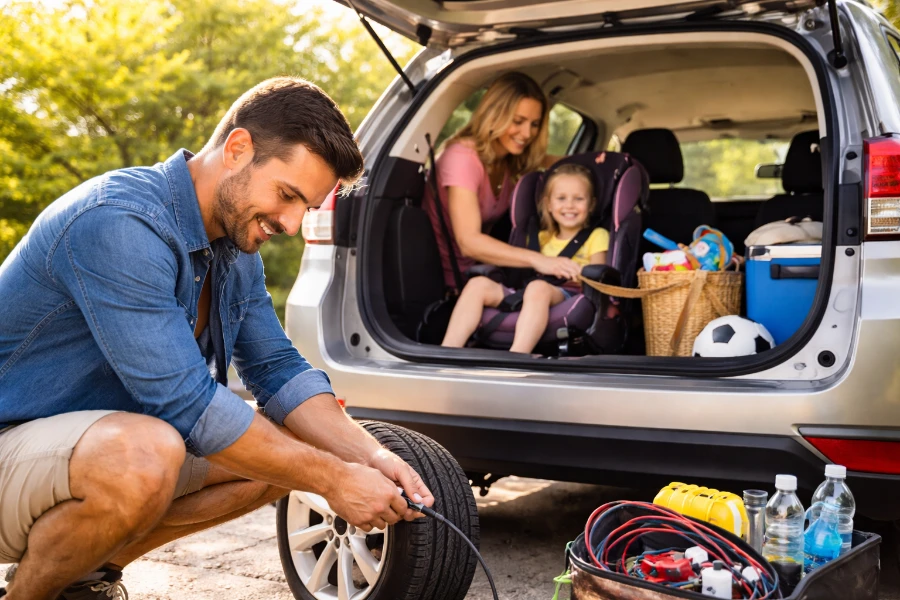
- Use a tire gauge to check pressure (match manufacturer specs)
- Inspect tread depth (use the coin test or a tread gauge)
- Look for cracks, bulges, or uneven wear
- Don’t forget the spare tire
Low pressure reduces fuel efficiency. Worn tires increase stopping distance. Both are risks you don’t want.
B. Test Brakes and Brake Fluid
Brakes are non-negotiable.
Pay attention to:
- Squeaking or grinding sounds
- Soft or unresponsive brake pedal
- Vibrations when braking
Quick check:
- Open the hood and inspect brake fluid levels
- If anything feels off, get it inspected before your trip
C. Inspect Engine Oil and Fluids
Engines need clean fluids to run smoothly.
Check these:
- Engine oil (level and color)
- Coolant
- Transmission fluid
- Windshield washer fluid
If the oil looks dark and dirty, change it. It’s a small job that protects a very expensive engine.
D. Examine Battery Health
A weak battery doesn’t warn you. It just fails.
Look for:
- Slow engine start
- Corrosion on terminals
- Battery older than 3–5 years
If you’re unsure, get a quick battery test. Most shops do it for free.
E. Check Lights and Signals
Visibility matters. Communication matters more.
Test:
- Headlights (low and high beams)
- Brake lights
- Turn signals
- Hazard lights
If one bulb is out, replace it immediately. It’s a quick fix that prevents accidents.
F. Windshield and Wipers
Clear vision is critical.
Check:
- Cracks or chips in the windshield
- Wiper blade condition
- Washer fluid levels
If wipers leave streaks, replace them. Rain doesn’t wait for you to be ready.
Quick Vehicle Checklist Table
| Component | What to Check | Action Needed |
| Tires | Pressure, tread, damage | Inflate or replace if needed |
| Brakes | Noise, responsiveness | Inspect or service |
| Fluids | Oil, coolant, washer fluid | Top up or change |
| Battery | Age, corrosion, startup | Test or replace |
| Lights | All exterior lights | Replace bulbs |
| Wipers | Performance, streaking | Replace blades |
Emergency Kit Essentials
Even with perfect preparation, things happen. Be ready.
A. Must-Have Safety Items
- First aid kit
- Flashlight (with extra batteries)
- Reflective warning triangles
B. Tools and Repair Supplies
- Jumper cables
- Tire inflator or repair kit
- Multi-tool or basic toolkit
C. Comfort and Survival Supplies
- Bottled water
- Non-perishable snacks
- Blankets
- Phone charger or power bank
Keep everything in one accessible container. When you need it, you won’t want to dig.
Child Safety Considerations
Traveling with kids changes everything. Child safety products step in where attention can’t always be perfect. They don’t replace parenting. They support it.
A. Proper Car Seat Installation
- Use age-appropriate seats
- Ensure tight, secure installation
- Double-check harness straps
For official guidance on child passenger safety, refer to the U.S. government resource from the National Highway Traffic Safety Administration
B. Seat Belt Checks
- Make sure belts fit properly across the shoulder not the neck
- Adjust seat height if needed
Small adjustments make a big difference.
C. Keeping Kids Comfortable and Safe
- Pack entertainment (books, tablets, toys)
- Schedule breaks every 2–3 hours
- Keep snacks and water within reach
Happy kids mean fewer distractions for the driver.
Route Planning and Navigation Safety
Don’t just “wing it.” Planning reduces risk.
A. Plan Your Route in Advance
- Choose well-lit, safe roads
- Identify rest stops and fuel stations
- Share your route with someone
B. Check Weather Conditions
- Look at forecasts before leaving
- Avoid storms, heavy rain, or extreme heat
C. Backup Navigation Options
- Download offline maps
- Keep a printed route
Technology fails sometimes. Preparation doesn’t.
Driver Readiness
The car might be ready. Are you?
A. Get Enough Rest Before Driving
Fatigue slows reaction time. It’s dangerous.
- Sleep at least 7–8 hours
- Avoid long drives after a full workday
B. Avoid Distractions
- Put your phone on “Do Not Disturb”
- Use hands-free navigation
Focus is everything behind the wheel.
C. Share Driving Responsibilities
- Rotate drivers every few hours
- Take breaks every 2–3 hours
Driving tired is as risky as driving impaired. Don’t push it.
Insurance and Documentation Check
It’s boring—until you need it.
Make sure you have:
- Driver’s license
- Vehicle registration
- Insurance documents
Also review:
- Roadside assistance coverage
- Emergency contact numbers
Keep digital and physical copies.
Fuel and Mileage Planning
Running out of gas ruins trips. It’s avoidable.
A. Start with a Full Tank
Always leave with a full tank. No exceptions.
B. Plan Fuel Stops
- Identify gas stations along your route
- Don’t wait until you’re below a quarter tank
Final Walkaround Before Departure
This takes two minutes. Do it every time.
Check:
- Doors locked properly
- Luggage secured
- Nothing left behind
- No visible leaks or issues
Common Mistakes to Avoid
Even experienced drivers slip up.
Avoid these:
- Skipping essential safety checks before every family road trip
- Overloading the vehicle
- Ignoring dashboard warning lights
- Forgetting the spare tire
Pro Tips for a Smooth Family Road Trip
Want to make your trip even better?
- Travel during off-peak hours
- Keep a printed checklist in your glove box
- Pre-pack snacks and essentials the night before
- Keep emergency contacts easily accessible
Conclusion
Road trips should be about memories, not mishaps. And it all starts with the essential safety checks before every family road trip.
Take the time. Do the checks. Stay consistent. Because when your car is ready, your route is planned, and your family is safe you’re free to enjoy every mile ahead.
Additional Resource (Wikipedia – Hard Word Reference)
For a deeper understanding of mechanical system behavior and failure analysis concepts, you can explore Tribology
FAQs
Most checks can be completed in 15–30 minutes if you follow a simple checklist.
Tires and brakes are critical since they directly impact safety and control.
If your car hasn’t been serviced recently or you notice issues, a quick inspection is a smart move.
Check before departure and every few days on longer trips or when temperature changes significantly.
Include a first aid kit, flashlight, jumper cables, water, snacks, and basic tools.
Yes, even new vehicles can have low fluids, tire pressure issues, or minor faults.
Follow manufacturer instructions or get it checked at a certified inspection station.
Do not ignore it—identify the issue or have a professional inspect the vehicle.
No, always have a backup like offline maps or printed directions.
Proper tire pressure and engine maintenance help your vehicle run more efficiently and reduce fuel consumption.

