
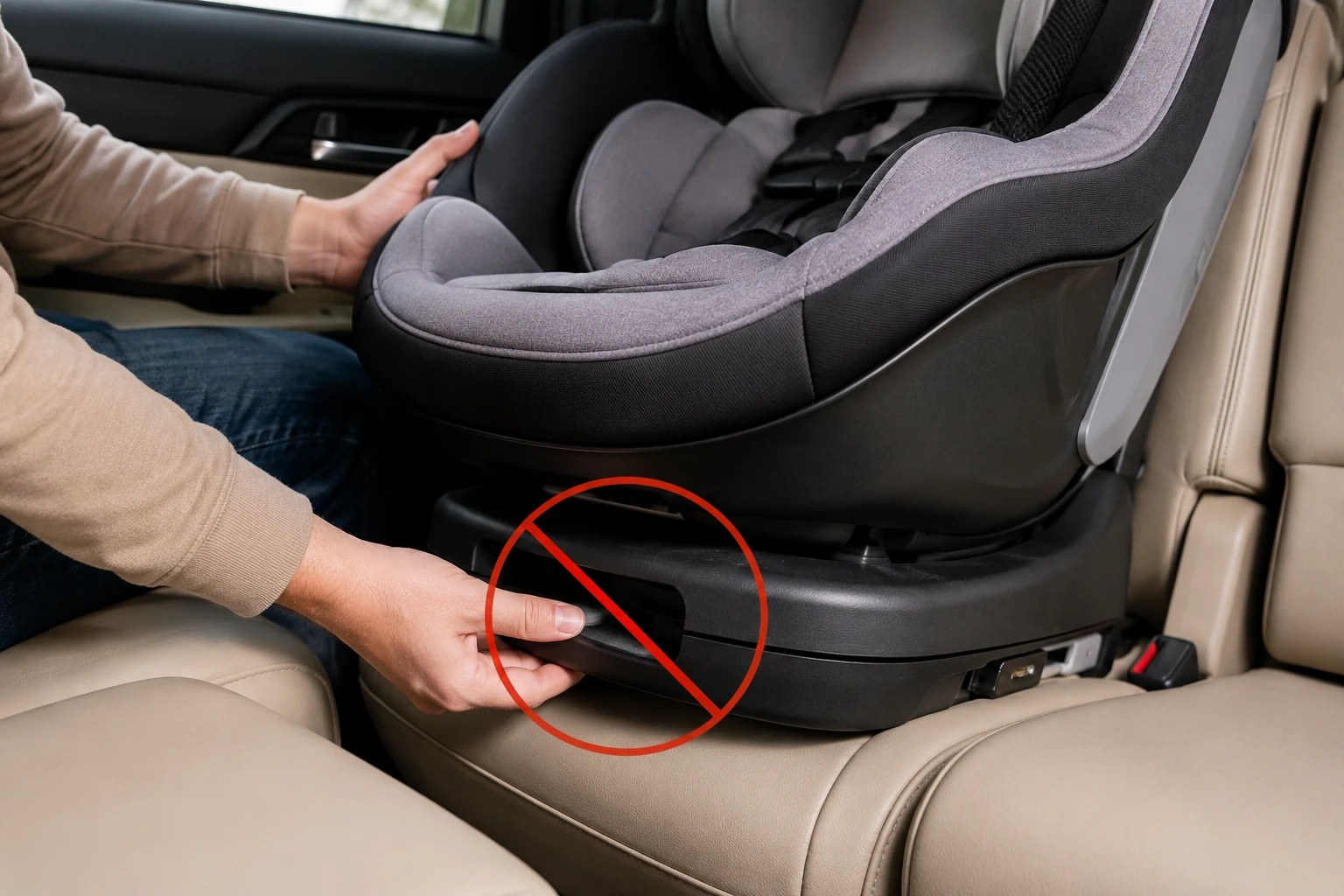

This post contains affiliate links. As an Amazon Associate, 360 Car Seat earns from qualifying purchases, at no extra cost to you.
The rotating feature is one of the biggest reasons parents choose this car seat. However, when an Evenflo Revolve 360 won’t rotate, that convenience can quickly turn into frustration. Fortunately, many rotation problems are caused by simple issues rather than serious mechanical failures. In addition, the rotating design is often considered one of the Best Way to Reduce Back Pain associated with repeatedly lifting children into and out of a vehicle. In this guide, we’ll explore the most common causes, practical fixes, and important troubleshooting steps to help get your seat working properly again.
Understanding How the Evenflo Revolve 360 Rotation System Works
Before attempting any repairs, it’s helpful to understand how the rotation system functions. Unlike traditional car seats, the Evenflo Revolve 360 sits on a rotating base that allows parents to turn the seat toward the vehicle door. As a result, placing a child into the seat and securing the harness becomes much easier. Nevertheless, the rotating mechanism includes several safety features designed to prevent unintended movement. Therefore, understanding these safeguards can help you identify why your seat may not be rotating.
What Makes the Revolve 360 Different?
The Evenflo Revolve 360 was designed to simplify everyday use without sacrificing safety. Key benefits include:
- Easier access when securing a child
- Less strain on parents’ backs and shoulders
- Convenient transitions between positions
- Improved loading and unloading efficiency
Because of these advantages, many parents rely heavily on the rotating function every day. However, the convenience comes with additional mechanical components that require proper operation.
Components That Affect Rotation
Several parts work together to create smooth movement. These include:
- Rotation release handle
- Locking mechanism
- Rotating platform
- Base installation system
- Alignment guides
If one of these components becomes obstructed, damaged, or misaligned, the seat may stop rotating correctly.
When Rotation Is Supposed to Stop
Interestingly, some situations that appear to be malfunctions are actually normal safety functions. The seat may intentionally prevent rotation when:
- The seat is not properly aligned
- A safety lock remains engaged
- Installation requirements are not met
- The seat is between approved positions
Therefore, before assuming the mechanism is broken, it’s worth confirming that the seat is being operated within its intended parameters.
Why Your Evenflo Revolve 360 Won’t Rotate
If your Evenflo Revolve 360 won’t rotate, several potential causes may be responsible. Let’s examine the most common ones.
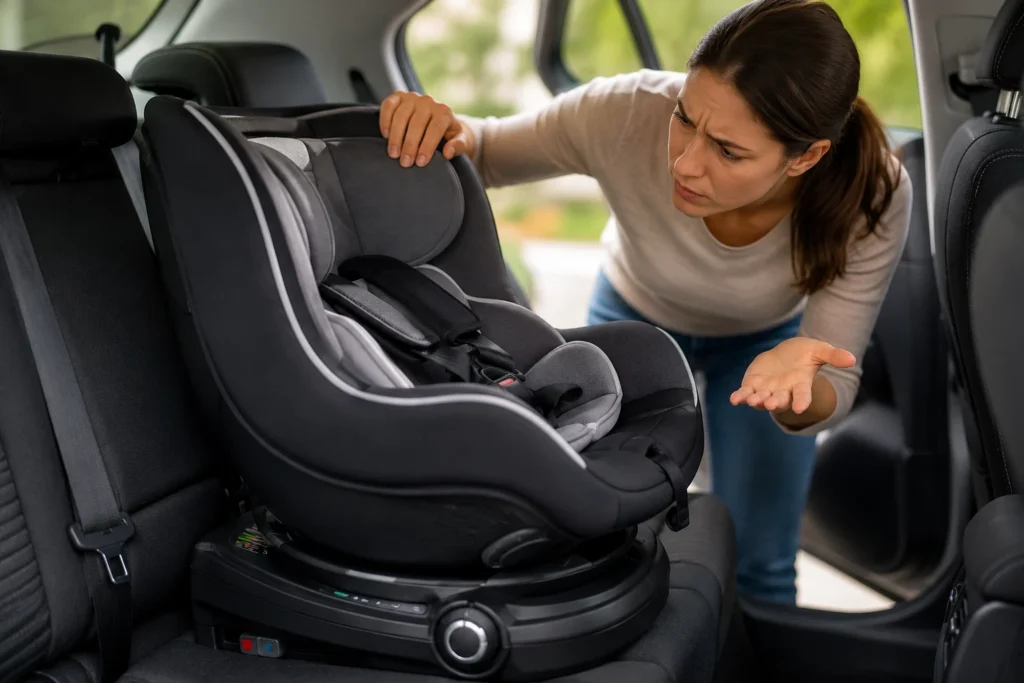
The Seat Is Not Positioned Correctly
One of the simplest explanations is incorrect positioning. The rotation mechanism relies on precise alignment. Consequently, if the seat is slightly out of position, the safety lock may prevent movement. Common signs include:
- The handle releases but nothing happens
- The seat rotates partially and stops
- Rotation feels unusually difficult
In many cases, returning the seat to its fully locked position before attempting rotation again solves the problem. Although it sounds simple, alignment issues account for a surprising number of rotation complaints.
The Rotation Lock Is Engaged
The locking system plays an important role in seat safety. However, it can also be a source of confusion. The release handle must fully disengage the locking mechanism before the seat can rotate. Sometimes parents pull the handle only partially, causing the lock to remain engaged. Check for:
- Full handle travel
- Smooth movement
- Proper release action
- Complete disengagement
If the handle feels different than normal, further inspection may be necessary.
Improper Installation of the Base
Another common reason an Evenflo Revolve 360 won’t rotate is installation error. The rotating seat depends on a properly secured base. If the base is installed unevenly or under excessive tension, rotational movement can become restricted. Potential installation problems include:
- Incorrect seat belt routing
- Uneven tightening
- Base not sitting flat
- Excessive side-to-side movement
Therefore, if the issue appeared shortly after installation or after moving the seat to another vehicle, installation should be one of the first areas you inspect.
Vehicle Seat Interference
Not every vehicle interior provides the same amount of clearance. As a result, surrounding surfaces may interfere with the seat’s movement. Potential obstructions include:
- Vehicle headrests
- Seat cushions
- Center consoles
- Door panels
- Adjacent seats
Even minor contact can prevent full rotation. Therefore, observe the seat carefully while attempting to rotate it and watch for any points of interference.
Debris in the Rotation Track
Parents know how quickly car seats collect crumbs, dirt, and miscellaneous objects. Eventually, some of this debris can work its way into the rotation mechanism. If your Evenflo Revolve 360 won’t rotate, inspect the base thoroughly. Pay close attention to:
- Rotation tracks
- Base openings
- Moving joints
- Under-seat areas
A tiny object can create significant resistance. Likewise, accumulated dirt can gradually affect movement over time. This principle is similar to concepts studied in tribology, a branch of engineering that focuses on friction, wear, and the interaction of moving surfaces.
Excessive Weight or Pressure
Although the seat is designed for daily use, excessive force can occasionally interfere with rotation. Examples include:
- Heavy diaper bags hanging from the seat
- Additional accessories pressing against the frame
- Uneven pressure during rotation
- Objects stored beneath the seat
Therefore, remove any unnecessary items before troubleshooting. This allows you to determine whether external pressure is contributing to the issue.
Mechanical Damage
While relatively uncommon, mechanical failures can occur. Potential warning signs include:
- Grinding noises
- Clicking sounds
- Broken handle movement
- Visible damage
- Sudden loss of rotation
If these symptoms appear, the problem may extend beyond routine troubleshooting.
How to Fix an Evenflo Revolve 360 That Won’t Rotate
Fortunately, many rotation problems can be resolved without professional repairs.
Step 1: Remove the Child and Clear the Seat
Safety comes first. Before troubleshooting, remove your child and any loose items from the seat. This includes:
- Blankets
- Toys
- Bottles
- Snacks
- Diaper bags
By eliminating extra weight and distractions, you can evaluate the mechanism more accurately.
Step 2: Verify Proper Installation
Next, inspect the installation carefully. Review:
- Base alignment
- Seat belt routing
- Tightness levels
- Overall stability
The base should feel secure without excessive movement. If anything seems unusual, reinstalling the seat may correct the issue.
Step 3: Test the Rotation Handle
The handle serves as the primary release mechanism. Therefore, examine it closely.
| Inspection Point | What You Should See |
|---|---|
| Handle Movement | Smooth and consistent |
| Resistance | Moderate, not excessive |
| Return Action | Springs back normally |
| Lock Release | Clearly disengages |
Any unusual resistance or looseness may indicate a developing problem.
Step 4: Inspect for Obstructions
Use a flashlight if necessary. Carefully examine:
- Rotation channels
- Base openings
- Moving joints
- Hidden gaps
Remove any visible debris gently. Avoid sharp tools that could damage plastic components. Additionally, mechanical systems often depend on precise movement. Concepts similar to epicyclic gearing demonstrate how even small obstructions can affect rotational performance in engineered mechanisms.
Step 5: Reset the Seat Position
Sometimes the simplest fix is the most effective. Move the seat fully back into its locked position. Then:
- Confirm proper alignment.
- Engage the lock completely.
- Pull the release handle.
- Attempt rotation again.
This process often resolves minor alignment issues.
Step 6: Perform a Full Function Test
Once rotation is restored, continue testing. Rotate the seat through all available positions and evaluate:
- Smoothness
- Consistency
- Lock engagement
- Resistance levels
If everything operates normally, the problem may have been temporary. However, if your Evenflo Revolve 360 won’t rotate consistently or the issue returns frequently, additional troubleshooting may be required. we’ll cover warning signs that indicate professional support may be needed, preventive maintenance tips, troubleshooting checklists, warranty considerations, and when it’s time to contact Evenflo customer service.
Signs Your Evenflo Revolve 360 Needs Professional Support
Most rotation issues can be resolved through basic troubleshooting. However, some situations require assistance from the manufacturer or a certified technician. Therefore, it’s important to recognize the warning signs early.
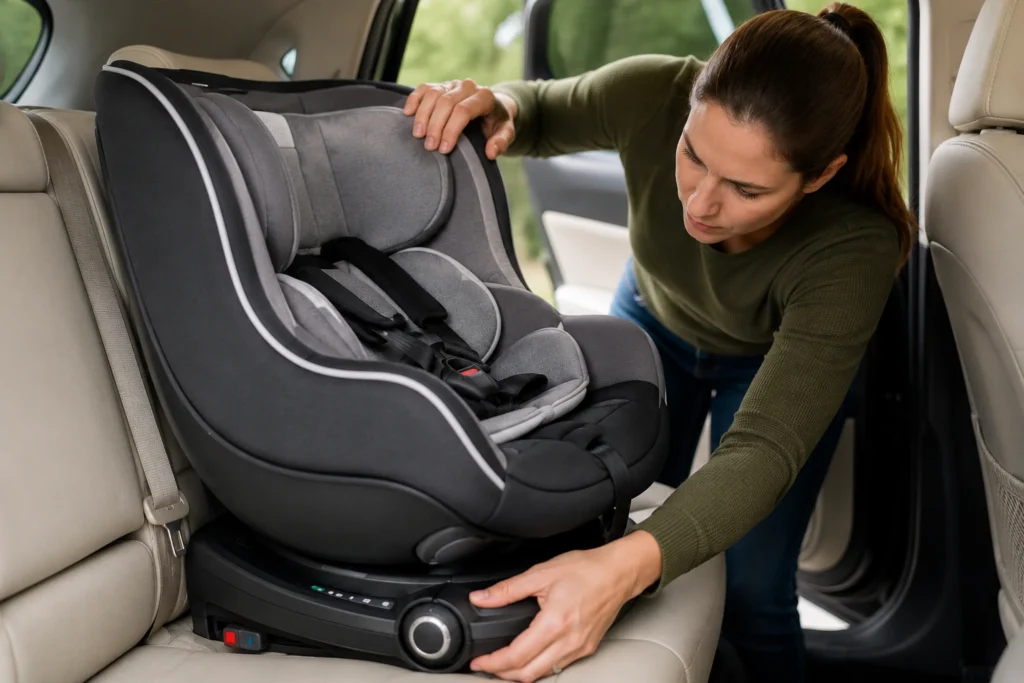
The Rotation Mechanism Feels Completely Jammed
A small amount of resistance can be normal. However, if the seat refuses to move despite proper operation of the release handle, the problem may involve internal components. Watch for symptoms such as:
- No movement whatsoever
- Sudden lockup after previously working normally
- Resistance that feels significantly worse over time
In these situations, forcing the seat is never recommended. Instead, stop troubleshooting and investigate further.
Clicking, Grinding, or Unusual Noises
Rotating car seats contain several moving parts that should operate smoothly. Consequently, strange noises deserve attention. Potential warning sounds include:
- Grinding
- Scraping
- Loud clicking
- Popping noises
These sounds may indicate:
- Internal wear
- Damaged components
- Foreign objects inside the mechanism
- Alignment problems
The sooner these issues are addressed, the less likely they are to worsen.
The Handle No Longer Functions Properly
The release handle is critical to the entire rotation system. Therefore, any abnormal handle behavior should be taken seriously. Common warning signs include:
- Excessive looseness
- Failure to spring back
- Sticking during operation
- Partial movement
If the handle cannot fully disengage the lock, the seat may not rotate regardless of other conditions.
The Seat Rotates Only Partially
Sometimes parents report that the seat starts rotating but stops midway. Although debris can occasionally cause this problem, partial rotation may also indicate:
- Internal mechanical damage
- Misaligned components
- Rotation track issues
If the problem persists after cleaning and reinstalling the seat, professional support may be necessary.
Evenflo Revolve 360 Troubleshooting Checklist
Before contacting customer support, work through this quick checklist.
| Problem | Possible Cause | Recommended Action |
|---|---|---|
| Won’t rotate at all | Lock engaged | Verify release handle operation |
| Rotation feels stiff | Debris or obstruction | Clean track and inspect base |
| Stops halfway | Interference or alignment issue | Check surroundings and reset seat |
| Inconsistent movement | Installation problem | Reinstall base |
| Grinding noise | Mechanical issue | Contact support |
| Handle feels loose | Release mechanism issue | Inspect handle and seek assistance |
| Recently moved vehicles | Installation error | Verify setup |
| Works intermittently | Debris or wear | Clean and monitor performance |
By following this checklist, many parents can quickly narrow down the source of the problem.
Preventing Future Rotation Problems
Once you’ve restored normal operation, the next goal is preventing the issue from returning. Fortunately, a few simple habits can make a significant difference.
Keep the Rotation Area Clean
Car seats experience daily wear. Food crumbs, dirt, sand, and small objects often accumulate in places that are difficult to see. Therefore, routine cleaning is essential. A monthly inspection can help identify:
- Crumbs
- Dirt buildup
- Small toys
- Loose debris
Removing these items before they interfere with movement can extend the life of the rotation mechanism.
Inspect the Seat Regularly
Many parents install a car seat and rarely think about it again. However, regular inspections can reveal problems before they become serious. Check periodically for:
- Loose components
- Cracks
- Unusual noises
- Changes in rotation smoothness
Early detection often leads to simpler solutions.
Avoid Forcing the Seat
This may be the most important preventative tip. When an Evenflo Revolve 360 won’t rotate, it can be tempting to apply additional force. Unfortunately, forcing the mechanism can create new problems. Potential consequences include:
- Broken handles
- Damaged locking components
- Misaligned parts
- Premature wear
Instead, identify the cause before attempting further operation.
Verify Installation After Vehicle Changes
Families frequently move car seats between vehicles. Likewise, vehicle seat positions often change over time. Each adjustment can affect rotation performance. Therefore, whenever the seat is moved:
- Review installation instructions
- Verify proper alignment
- Confirm stability
- Test rotation immediately
A quick check today may prevent a larger problem tomorrow.
Follow Weight and Usage Guidelines
Every car seat is designed with specific limits. Exceeding those limits may place unnecessary stress on moving components. Always follow:
- Height requirements
- Weight limits
- Manufacturer instructions
- Approved usage guidelines
Proper use contributes directly to long-term reliability.
When to Contact Evenflo Customer Support
If troubleshooting does not resolve the issue, contacting Evenflo may be the next logical step. Fortunately, preparing beforehand can make the process more efficient.
Gather Important Information
Before reaching out, collect:
- Model number
- Date of manufacture
- Purchase information
- Description of the problem
- Photos or videos if possible
The more information available, the easier it may be for support representatives to diagnose the issue.
Understand Warranty Coverage
Warranty coverage varies depending on several factors. Therefore, review your documentation carefully. Coverage may depend on:
- Purchase date
- Product condition
- Type of failure
- Proof of purchase
Having these details available can streamline the support process.
Repair or Replacement?
In some situations, a repair may not be practical. Instead, replacement may be recommended. Factors that influence this decision include:
| Situation | Potential Outcome |
|---|---|
| Minor obstruction | User fix |
| Installation issue | Reinstallation |
| Handle damage | Possible replacement parts |
| Internal mechanical failure | Service or replacement |
| Structural damage | Replacement recommended |
Ultimately, safety should always guide the decision. If there is any doubt about the integrity of the seat, professional evaluation is worth pursuing.
Common Mistakes Parents Make During Troubleshooting
While attempting to solve rotation issues, some parents unintentionally create additional problems. Avoid these common mistakes.
Skipping the Installation Check
Many people assume installation is correct because the seat worked previously. However, conditions change. Over time, vehicle seats compress and adjustments occur. Therefore, installation should always be rechecked during troubleshooting.
Using Lubricants
Some parents consider applying lubricants to improve movement. This is generally not recommended unless specifically approved by the manufacturer. Certain products may:
- Attract dirt
- Damage materials
- Interfere with proper operation
When in doubt, follow the manufacturer’s maintenance recommendations.
Ignoring Early Warning Signs
Minor issues rarely improve on their own. Consequently, unusual noises, stiffness, or intermittent rotation should be addressed promptly. Early intervention often prevents more significant repairs later.
Applying Excessive Force
Again, force is rarely the solution. If your Evenflo Revolve 360 won’t rotate, pushing harder may damage components that were previously intact. Patience and systematic troubleshooting produce far better results.
Final Thoughts
When an Evenflo Revolve 360 won’t rotate, the problem is often linked to installation, alignment, debris, or the locking mechanism rather than a major mechanical failure. Fortunately, most issues can be identified through careful inspection and a step-by-step troubleshooting process. However, if the seat continues to resist rotation, makes unusual noises, or shows signs of damage, contacting Evenflo support is the safest next step. After all, a properly functioning car seat isn’t just about convenience it’s about ensuring your child’s safety every time you hit the road.
FAQs
The most common causes include improper installation, a locked rotation mechanism, debris in the track, or interference from surrounding vehicle components.
Yes. Small amounts of debris can accumulate in the rotation track and create enough resistance to affect movement.
No. Applying excessive force may damage the rotation mechanism or locking components and could create safety concerns.
If the release handle does not fully disengage the locking system, the seat may remain locked and refuse to rotate.
Yes. Rechecking and reinstalling the base can often resolve alignment or installation-related rotation problems.
Yes. Headrests, center consoles, door panels, and adjacent seats can sometimes restrict rotation.
A small amount of resistance can be normal, but grinding, sticking, or excessive force requirements may indicate a problem.
Unless specifically approved by Evenflo, lubricants should generally be avoided because they may attract dirt or damage components.
You should contact support if troubleshooting fails, the handle appears damaged, the seat makes unusual noises, or rotation problems persist.
Not necessarily. Many rotation problems are caused by installation issues or debris, although severe mechanical or structural damage may require replacement.

