

This post contains affiliate links. As an Amazon Associate, 360 Car Seat earns from qualifying purchases, at no extra cost to you.
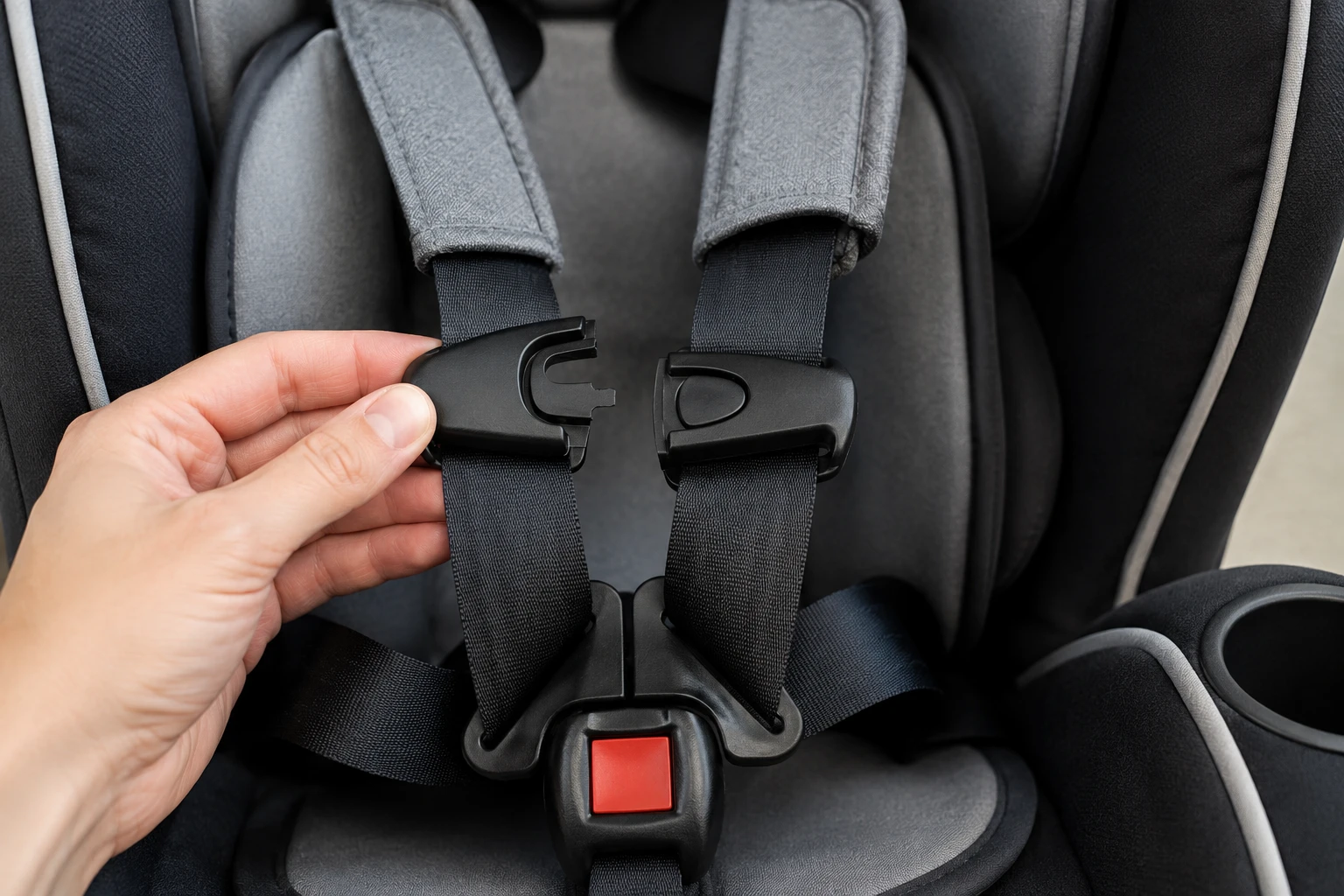
The Evenflo Revolve 360 chest clip problem is a concern many parents encounter after regular use of this popular rotating car seat. While the Revolve 360 is designed to make loading and unloading children easier, chest clip issues can quickly become frustrating and raise safety concerns. Fortunately, most chest clip problems are easy to identify and often simple to fix. Whether the clip won’t stay closed, feels stuck, slides down, or appears damaged, understanding the cause is the first step toward a solution. In this guide, we’ll explore common problems, practical fixes, and important safety considerations so you can keep your child riding safely.
What Is the Chest Clip on the Evenflo Revolve 360?
Before addressing any issue, it’s important to understand the role the chest clip plays within the harness system. The chest clip is the plastic component that connects both shoulder straps across your child’s chest. Although the harness itself provides the primary restraint, the chest clip helps keep those straps properly positioned throughout the ride. Without correct chest clip placement, the harness may not function as intended.
Purpose of the Chest Clip
The chest clip serves several key purposes:
- Helps keep harness straps centered on the shoulders
- Reduces the chance of straps slipping off
- Supports proper harness positioning
- Improves overall restraint effectiveness
In short, it helps maintain the fit that the harness system was designed to provide.
How the Chest Clip Should Be Positioned
Proper placement matters. The chest clip should sit at armpit level when your child is secured in the seat. However, many parents accidentally place it too low on the stomach or too high near the neck. Use the following table as a quick reference:
| Chest Clip Position | Recommended |
|---|---|
| Armpit level | Yes |
| Upper stomach | No |
| Below ribs | No |
| Near neck | No |
As a result, simply adjusting the chest clip to the proper height can resolve what appears to be an Evenflo Revolve 360 chest clip problem.
Common Evenflo Revolve 360 Chest Clip Problems
Not all chest clip issues look the same. Some are obvious, while others develop gradually over time. Let’s examine the most common concerns parents report.
Chest Clip Won’t Stay Closed
This problem can be especially concerning. You buckle the chest clip, hear it click, and then discover it has opened again moments later. Several factors may contribute to this issue:
- Worn locking tabs
- Internal damage
- Manufacturing defects
- Dirt interfering with the locking mechanism
If the clip repeatedly separates despite proper use, it should be inspected carefully.
Chest Clip Is Difficult to Buckle
On the other hand, some parents experience the opposite problem. The clip becomes increasingly difficult to close, requiring extra force to secure. Possible causes include:
- Food residue
- Dirt buildup
- Sticky liquids
- Plastic wear
Consequently, routine cleaning can sometimes restore normal operation.
Chest Clip Gets Stuck
A stuck chest clip can make every trip more difficult than it needs to be. The release mechanism may become hard to press or refuse to open smoothly. Common causes include:
- Sand or debris inside the clip
- Misaligned components
- Long-term wear
- Temperature-related expansion
Therefore, inspecting and cleaning the clip should be one of the first troubleshooting steps.
Chest Clip Slides Down Constantly
Another common Evenflo Revolve 360 chest clip problem involves the clip gradually moving downward during travel. In many situations, the chest clip itself isn’t defective. Instead, the issue may be related to:
- Loose harness straps
- Improper harness height
- Bulky clothing
- Excessive child movement
Because of this, evaluating overall harness fit is just as important as inspecting the clip.
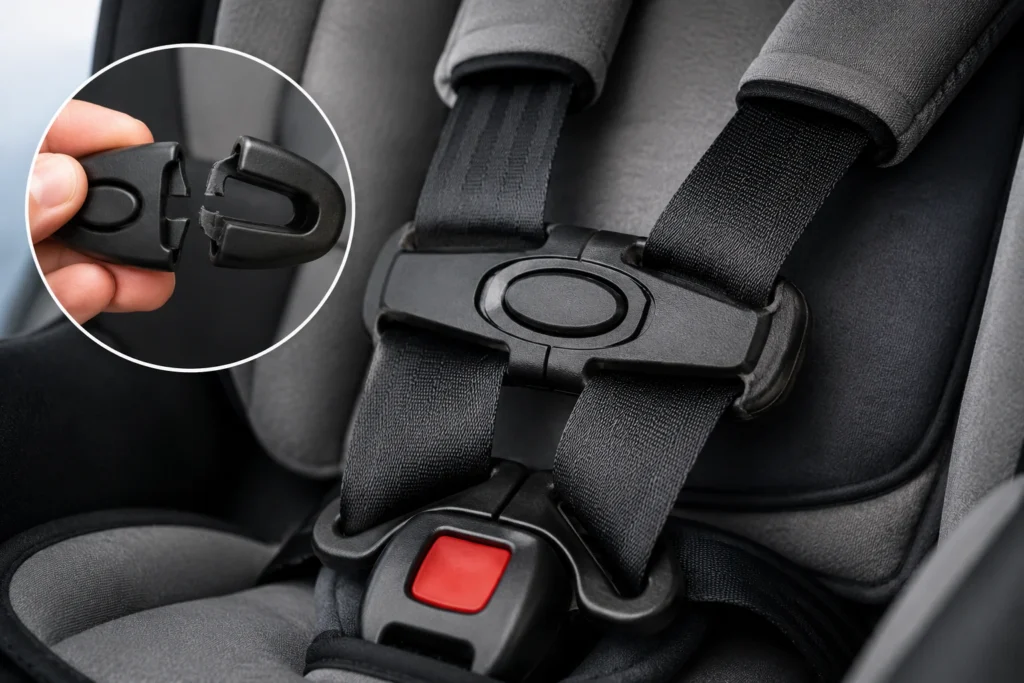
Broken or Cracked Chest Clip
Visible damage should never be ignored. Look carefully for:
- Small cracks
- Broken tabs
- Sharp edges
- Missing pieces
- Warped plastic
If any of these signs are present, replacement may be necessary.
Why Chest Clip Problems Occur
Like any frequently used component, chest clips experience wear over time. However, several specific factors can increase the likelihood of problems developing.
Everyday Wear and Tear
Repeated use places constant stress on the locking mechanism. Each time the clip is opened and closed, tiny amounts of wear occur. Eventually, those small changes can affect performance. While modern car seats are built to last, no plastic component lasts forever.
Dirt and Debris Accumulation
Children bring snacks everywhere. Crackers, Cookies, Juice boxes, Sticky treats, Over time, small particles can accumulate inside the chest clip and interfere with normal operation, As a result, what seems like a serious Evenflo Revolve 360 chest clip problem may simply be a cleaning issue.
Improper Harness Adjustments
Harness fit plays a larger role than many parents realize, When straps are too loose, the chest clip may shift frequently. When straps are overly tight, additional stress can be placed on clip components, Therefore, proper adjustment helps both safety and long-term durability.
Extreme Temperatures
Vehicles experience dramatic temperature changes throughout the year. During summer, interior temperatures can become extremely high. During winter, plastics may become less flexible. Repeated exposure to these conditions may gradually affect component performance.
Storage Damage
Sometimes damage occurs when the seat isn’t even being used. Heavy objects placed on top of the seat, improper storage, or accidental impacts can affect the chest clip. Consequently, storing the seat properly is an important part of long-term maintenance.
How to Troubleshoot an Evenflo Revolve 360 Chest Clip Problem
When a chest clip begins malfunctioning, a systematic inspection is often the fastest path to a solution. Rather than replacing parts immediately, start with a few simple checks.
Inspect the Clip Carefully
Begin with a visual inspection. Look for:
- Cracks
- Warping
- Broken tabs
- Uneven edges
- Missing pieces
Good lighting can help reveal damage that may otherwise go unnoticed.
Clean the Chest Clip Properly
Cleaning should always be one of the first troubleshooting steps. Use:
- Warm water
- Mild soap
- Soft cloth
Avoid:
- Harsh chemicals
- Solvents
- Lubricants
- Abrasive cleaners
After cleaning, allow all components to dry completely before testing the clip again.
Check Harness Routing
The harness should lie flat. Twisted straps can affect clip performance and make buckling more difficult than it should be. In some cases, parents searching for solutions to an Evenflo Revolve 360 Harness Twisted issue discover that the twisted webbing is also causing what appears to be a chest clip malfunction. Inspect the entire harness path carefully. Correct any twists before continuing with further troubleshooting.
Test the Locking Mechanism
Once the clip has been cleaned and inspected, the next step is testing its operation. Open and close the chest clip several times. Pay attention to:
- The clicking sound
- How securely it locks
- Resistance when opening
- Smoothness of operation
Ideally, the clip should engage consistently every time. However, if it feels loose, fails to click properly, or opens unexpectedly, replacement may be necessary.
Reposition the Harness Correctly
Next, review the overall harness fit. Even a perfectly functioning chest clip can appear problematic if the harness is adjusted incorrectly. Check the following:
- Shoulder straps are at the correct height
- Harness is snug
- Chest clip is positioned at armpit level
- Webbing lies flat without twists
As a result, many reports of an Evenflo Revolve 360 chest clip problem can be resolved without replacing any components.
When the Chest Clip Is Not Actually the Problem
Interestingly, some chest clip complaints originate from other areas of the restraint system. Therefore, it’s important to evaluate the entire setup.
Harness Is Too Loose
Loose harness straps allow excessive movement. Consequently, the chest clip may slide downward or appear ineffective. A quick pinch test can help. If you can pinch excess webbing at the shoulder, the harness likely needs tightening.
Child Is Wearing Bulky Clothing
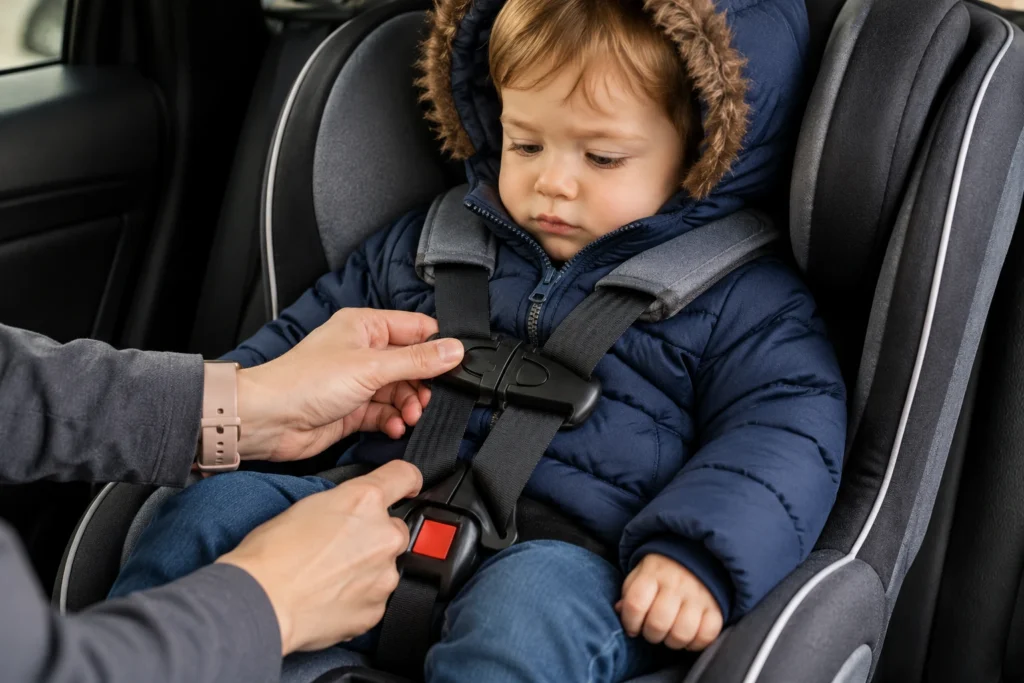
Heavy winter jackets often create fitting issues. Although the harness may appear snug, thick clothing compresses during a crash. This creates additional slack that can affect restraint performance. Instead, secure your child first and then place blankets over the harness if extra warmth is needed.
Incorrect Chest Clip Placement
A chest clip positioned too low will naturally migrate during travel. Therefore, always verify that the clip begins at armpit level before every trip.
Improper Seat Installation
Although installation doesn’t directly affect the chest clip, an improperly installed seat can alter harness positioning. If problems persist, review the installation instructions and verify that the seat is secured correctly.
Safety Risks of Ignoring Chest Clip Problems
Some parents postpone repairs because the chest clip still seems usable. However, delaying action can introduce unnecessary risk.
Reduced Harness Effectiveness
The harness system functions best when all components work together. If the chest clip isn’t performing properly, shoulder straps may shift out of position. As a result, restraint effectiveness may be reduced.
Increased Child Movement
Children naturally wiggle, stretch, and reposition themselves during travel. Without proper harness positioning, movement increases significantly. Consequently, maintaining proper chest clip function helps preserve overall fit.
Potential Crash Performance Concerns
Every component of a child restraint system is designed with a specific purpose. Ignoring a recurring Evenflo Revolve 360 chest clip problem could compromise how the harness performs during a collision. Therefore, it’s always better to address issues early.
Increased Stress for Parents
Let’s face it. A malfunctioning chest clip creates constant worry. Instead of wondering whether everything is secure, you’ll have greater confidence once the issue is resolved.
How to Replace a Damaged Evenflo Revolve 360 Chest Clip
Sometimes troubleshooting isn’t enough. When damage is present, replacement becomes the safest option.
Determine Whether Replacement Is Necessary
Replacement is generally recommended if you notice:
- Cracks
- Broken locking tabs
- Warped plastic
- Weak engagement
- Repeated opening during use
If any of these signs appear, stop using the damaged component and seek guidance from the manufacturer.
Contact Evenflo Customer Support
The manufacturer can help determine the appropriate next steps. Before contacting support, gather:
| Information Needed | Why It Helps |
|---|---|
| Model number | Identifies seat version |
| Manufacturing date | Verifies compatibility |
| Photos of damage | Speeds evaluation |
| Description of issue | Helps troubleshooting |
The more information you provide, the easier the process becomes.
Use Manufacturer-Approved Parts Only
This is extremely important. Only use replacement parts approved by Evenflo. Aftermarket components may not meet the same safety specifications.
Avoid DIY Repairs
It may be tempting to create a quick fix. Don’t. Avoid:
- Glue
- Tape
- Drilling
- Sanding
- Homemade modifications
Instead, use approved replacement components whenever repairs are needed.
Preventing Future Chest Clip Problems
Fortunately, a little preventive maintenance can go a long way.
Perform Regular Inspections
Set aside a few minutes each month to examine:
- Harness webbing
- Chest clip
- Buckle assembly
- Seat shell
Early detection often prevents larger problems later.
Keep the Clip Clean
Routine cleaning removes debris before it accumulates. Even a quick wipe-down can improve long-term performance.
Store the Seat Properly
When storing the seat:
- Keep it dry
- Avoid prolonged sunlight exposure
- Prevent heavy objects from resting on it
These simple steps help preserve plastic components.
Follow Manufacturer Recommendations
Always consult your owner’s manual for approved maintenance procedures. Following the manufacturer’s guidance helps ensure safe operation.
Educate Other Caregivers
Grandparents. Babysitters. Family members. Anyone transporting your child should understand how to use the harness system correctly. Consistency matters.
Signs You Should Contact Evenflo Immediately
Certain situations require immediate manufacturer assistance. Reach out if:
- The clip repeatedly fails
- Cracks appear
- The clip will not latch securely
- Components appear defective
- You have concerns about recalls
Prompt action can help prevent more serious issues. The durability of plastic safety components can sometimes be influenced by principles studied in Tribology, which examines friction, wear, and material interaction: Likewise, understanding Viscoelasticity can provide insight into how certain plastics respond to repeated stress, temperature changes, and long-term use: While these concepts are highly technical, they help explain why plastic components can gradually change over time.
Conclusion
Although an Evenflo Revolve 360 chest clip problem can be frustrating, most issues can be identified and resolved with a careful inspection, proper cleaning, and correct harness adjustment. Moreover, regular maintenance helps prevent many common problems before they develop. If you notice persistent issues, visible damage, or repeated failures, contact the manufacturer promptly. Ultimately, a properly functioning chest clip helps keep the harness positioned correctly and contributes to safer, more confident travel for both you and your child.
FAQs
Yes. Frequent use, exposure to heat, and normal wear can gradually affect the locking mechanism and plastic components.
Dirt, debris, or residue inside the mechanism can make the clip harder to operate. Cleaning it according to the manufacturer’s instructions may help.
Yes. A clear click usually indicates that both sides of the chest clip have engaged properly.
Absolutely. Twisted harness straps can place uneven pressure on the clip and may contribute to positioning or buckling problems.
Minor movement can occur, but significant sliding often indicates that the harness needs adjustment or tightening.
In many cases, manufacturer-approved replacement chest clips are available. Contact Evenflo to determine the correct replacement option for your specific model.
Check harness tightness, shoulder strap height, and clothing thickness. These factors commonly affect chest clip positioning.
Yes. Harsh chemicals, solvents, and abrasive cleaners can weaken plastic components and should be avoided.
With proper care and maintenance, the chest clip should last for many years; however, regular inspections are important to identify wear or damage early.
Not necessarily. If the damage is limited to the chest clip and approved replacement parts are available, replacing the clip may resolve the issue safely.

