
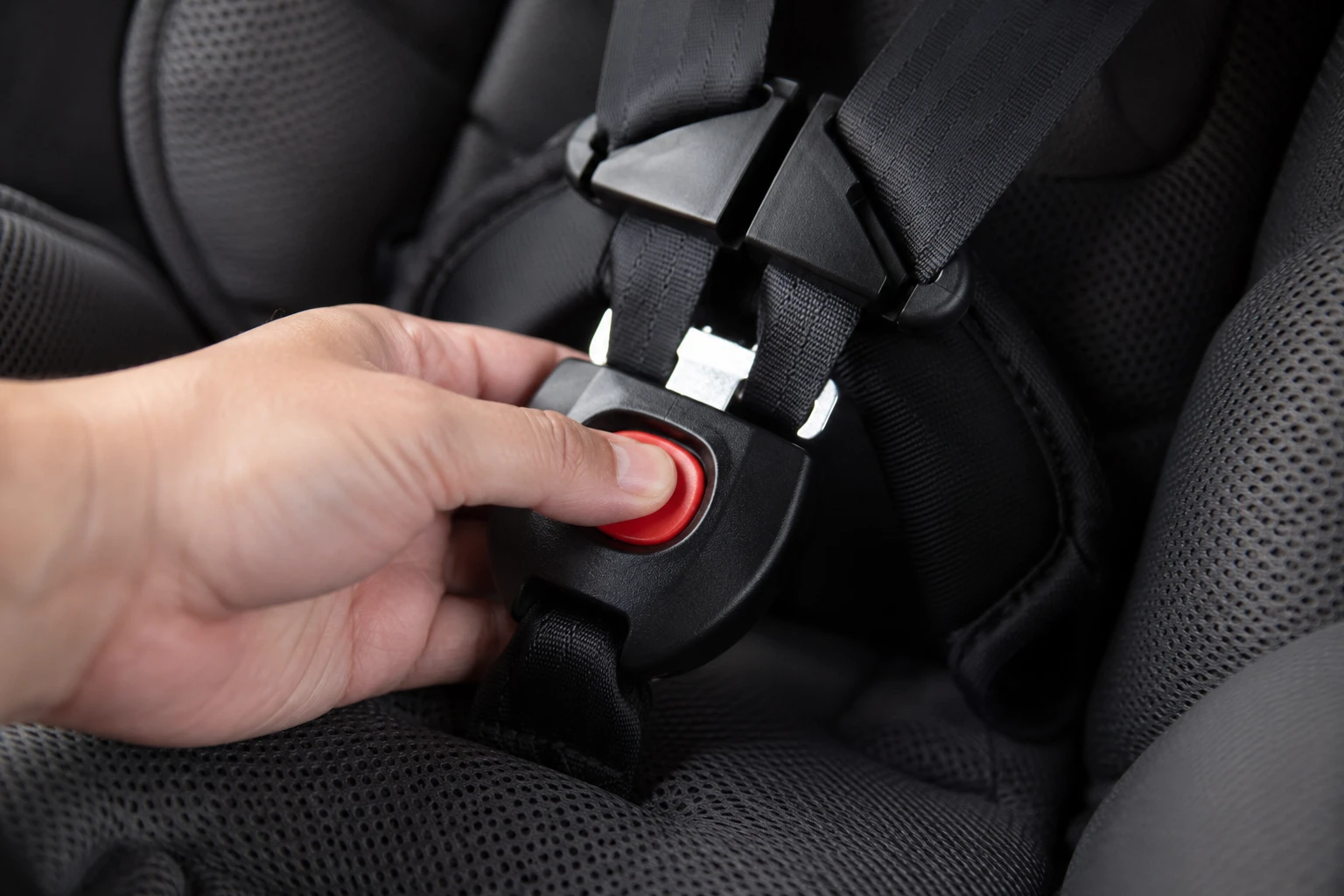

A car seat buckle won’t release problem can turn an ordinary trip into a stressful situation within seconds. One moment you’re unloading groceries. The next, you’re pressing the buckle release button repeatedly with no success. Fortunately, many buckle issues have simple explanations. However, some problems require immediate attention to maintain your child’s safety. Therefore, understanding why a buckle gets stuck is the first step toward solving the issue quickly and safely. In this guide, we’ll cover the most common causes, practical fixes, warning signs, and prevention strategies that every parent should know.
Understanding How a Car Seat Buckle Works
Although a buckle looks simple from the outside, several moving components work together behind the scenes. When everything functions correctly, the buckle securely locks your child into the harness system while allowing quick release when needed.
Components of a Car Seat Buckle
Most car seat buckles contain:
- Buckle housing
- Release button
- Internal spring mechanism
- Locking tabs
- Metal buckle tongues
When the buckle tongues are inserted, the internal locking tabs engage automatically. Then, when the release button is pressed, the spring mechanism disengages the tabs and allows the tongues to slide out. Because these components move repeatedly throughout the life of the seat, they require occasional inspection and cleaning.
Why Proper Buckle Function Matters
The buckle is one of the most important safety features on a child restraint system. A buckle that does not lock properly can reduce crash protection. Likewise, a buckle that won’t release can make it difficult to remove a child quickly during an emergency. For that reason, even minor buckle issues should never be ignored. Interestingly, engineers often study concepts such as tribology, the science of friction and wear, when developing mechanical systems that must operate reliably over thousands of cycles. Car seat buckles rely on similar principles to maintain smooth operation.
Common Reasons a Car Seat Buckle Won’t Release
When parents encounter this problem, many assume the buckle has broken. However, that is often not the case. Instead, everyday use frequently causes the issue.
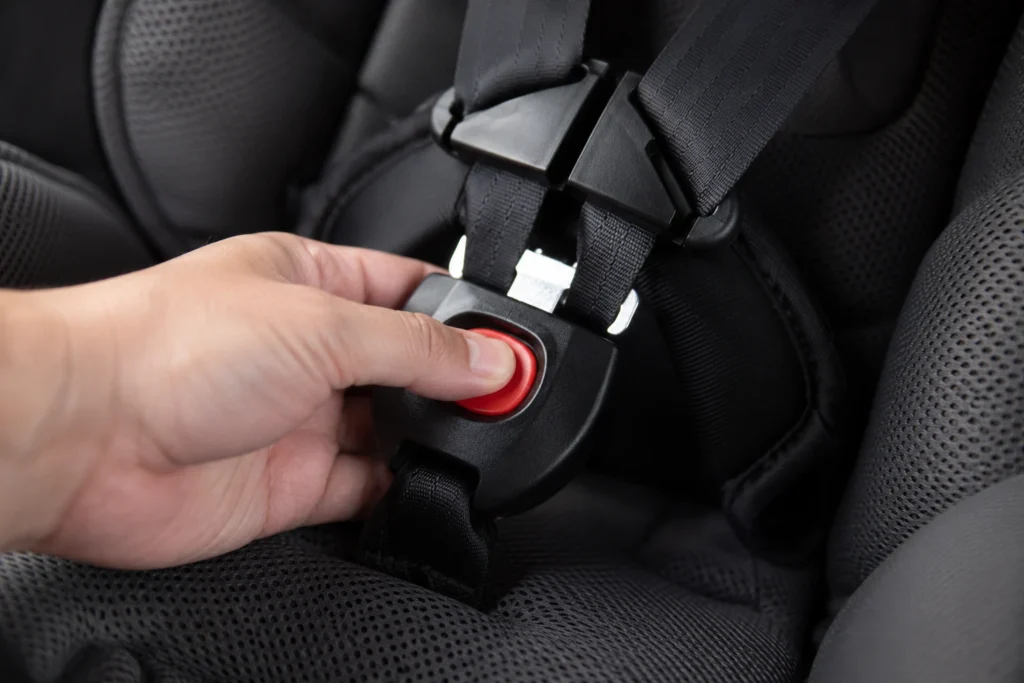
Food and Debris Buildup
Children are experts at leaving crumbs behind. Goldfish crackers. Cookies. Granola bars. Pretzels. Over time, small particles work their way into the buckle housing. Eventually, these particles interfere with the movement of internal components, making the buckle difficult to operate. Common debris found inside buckles includes:
| Debris Type | Potential Effect |
|---|---|
| Crumbs | Block moving parts |
| Dirt | Creates friction |
| Sand | Causes wear |
| Pet hair | Restricts movement |
| Lint | Collects inside housing |
As a result, a buckle may begin sticking or fail to release completely.
Liquid Spills
Spilled drinks are another major cause of buckle problems. Unfortunately, liquids rarely stay on the surface. Instead, they seep deep into the mechanism. Common examples include:
- Juice
- Formula
- Milk
- Soda
- Sports drinks
Once the liquid dries, sticky residue remains behind. Consequently, the release button may become harder to press, and eventually the car seat buckle won’t release at all.
Misaligned Buckle Tongues
Sometimes the buckle itself is functioning properly. The issue may involve the buckle tongues instead. If one tongue enters the buckle slightly differently than the other, uneven pressure can develop inside the locking mechanism. This may happen when:
- A child moves excessively
- The harness is twisted
- One tongue is inserted before the other
- The seat is adjusted incorrectly
In these situations, slight repositioning often resolves the issue.
Normal Wear and Tear
Every buckle has a lifespan. Think about how many times you buckle and unbuckle your child each week. The number adds up quickly. After years of use, internal springs can weaken and moving components can become less responsive. Although manufacturers design buckles for durability, mechanical wear remains unavoidable.
Extreme Temperatures
Weather can contribute to buckle issues as well. During hot summer months, plastic components expand slightly. Meanwhile, freezing temperatures can make plastic and internal springs less flexible. Although temperature alone rarely causes complete failure, it can worsen existing problems.
Manufacturing Defects
Defects are uncommon, but they do occur. If a relatively new seat develops recurring buckle issues despite proper cleaning and maintenance, contacting the manufacturer is a smart next step. Many brands offer replacement components or warranty support.
Signs That Your Car Seat Buckle Has a Problem
Most buckle failures don’t happen suddenly. Instead, warning signs usually appear first. Recognizing them early can help prevent a more serious malfunction later.
Difficulty Pressing the Release Button
The button requires noticeably more force than before. This often indicates debris buildup or residue inside the mechanism.
Delayed Release
You press the button. Nothing happens. Then, a second later, the buckle releases. Although the delay may seem minor, it often signals internal contamination or wear.
Sticky Button Movement
A sticky or sluggish button is another common warning sign. Typically, dried liquids are responsible. However, dirt accumulation can create similar symptoms.
Clicking Without Releasing
You hear the mechanism move. Yet the buckle tongues remain locked. In many cases, damaged internal parts are causing the problem.
Complete Failure to Release
This is the most serious warning sign. When a car seat buckle won’t release despite repeated attempts, immediate troubleshooting becomes necessary. Interestingly, many parents dealing with Uneven Shoulder Straps discover related buckle issues during routine inspections. Likewise, guides such as Select Car Seat Straps Keep Twisting: Causes, Fixes, and Prevention Tips often emphasize checking both the harness and buckle because the two systems work together to protect a child.
What To Do Immediately When a Car Seat Buckle Won’t Release
A stuck buckle can create panic. Nevertheless, staying calm is critical. The wrong reaction can make the situation worse.
Avoid Excessive Force
First, resist the urge to yank aggressively on the buckle. Force can damage internal components and may make future repairs impossible. Instead, apply steady pressure.
Check for Visible Obstructions
Look carefully around the buckle openings. Check for:
- Crumbs
- Dirt
- Sticky residue
- Small objects
- Fabric interference
Even tiny obstructions can prevent normal operation.
Apply Firm, Consistent Pressure
Repeatedly stabbing the release button often doesn’t help. Instead, press firmly and steadily while supporting the buckle housing. This approach may allow the mechanism to disengage more effectively.
Wiggle the Buckle Tongues
Sometimes slight movement relieves pressure on the locking tabs. Gently wiggle the tongues while pressing the release button. Do not force them.
Reduce Harness Tension
If possible, loosen the harness slightly. Excessive tension can place additional load on the buckle mechanism. Reducing that pressure may allow smoother release.
How to Fix a Car Seat Buckle That Won’t Release
If the buckle remains stuck, cleaning becomes the next logical step. Fortunately, many buckle problems can be resolved without replacing parts.
Inspect the Buckle Thoroughly
Begin with a careful visual inspection. Use bright lighting. Look for:
- Cracks
- Dirt accumulation
- Sticky residue
- Bent components
- Missing pieces
The goal is to identify obvious causes before proceeding further.
Clean the Buckle Properly
Always consult the owner’s manual first. Different manufacturers may provide different cleaning instructions. However, many recommend a simple water-based cleaning process.
Materials Needed
| Item | Purpose |
|---|---|
| Warm water | Loosens debris |
| Mild soap | Removes residue |
| Soft cloth | Gentle cleaning |
| Towel | Drying |
Basic Cleaning Process
- Remove the buckle if manufacturer instructions allow.
- Rinse thoroughly using warm water.
- Work the release button repeatedly while rinsing.
- Remove loosened debris.
- Allow the buckle to air dry completely.
Patience is important. A buckle should be fully dry before being reinstalled.
Test the Buckle Mechanism
After cleaning, insert and remove the buckle tongues several times. The action should feel smooth and consistent. If the buckle still sticks, a deeper mechanical issue may exist.
Check for Physical Damage
Cleaning cannot repair structural problems. Therefore, inspect carefully for:
- Cracked plastic
- Bent metal tongues
- Broken buttons
- Missing components
- Warped housing
In some cases, internal parts may experience degradation over time. Similar long-term durability concerns are studied in materials science, which examines how materials respond to stress, environmental exposure, and repeated use. When physical damage is present, replacement is generally the safest option.
When Cleaning Doesn’t Solve the Problem
Unfortunately, not every buckle issue can be fixed with cleaning. Sometimes the underlying problem involves:
- Broken internal springs
- Damaged locking tabs
- Corrosion
- Permanent contamination
- Manufacturing defects
When internal components fail, replacement is usually necessary. Attempting homemade repairs may compromise the seat’s safety performance. And when child safety is involved, guessing is never worth the risk.
Can Lubricants Fix a Stuck Car Seat Buckle?
When a car seat buckle won’t release, many parents start looking for a quick fix. Naturally, lubricants seem like an easy solution. However, most car seat manufacturers strongly discourage using lubricants inside the buckle mechanism. Why? Because lubricants often create new problems instead of solving the original one.
Why Lubricants Can Make Things Worse
Although a lubricant may temporarily loosen a sticky buckle, it can also:
- Attract dirt and dust
- Trap crumbs inside the mechanism
- Leave residue behind
- Damage plastic components
- Affect long-term buckle performance
Consequently, a buckle that initially feels smoother may become even harder to operate weeks later.
Better Alternatives
Instead of reaching for a lubricant, try:
- Cleaning the buckle thoroughly
- Removing trapped debris
- Following manufacturer instructions
- Allowing the buckle to dry completely
In many situations, proper cleaning solves the issue without introducing additional risks.
When to Replace the Buckle
Unfortunately, some buckle problems cannot be repaired. If a car seat buckle won’t release repeatedly despite cleaning and inspection, replacement may be necessary.
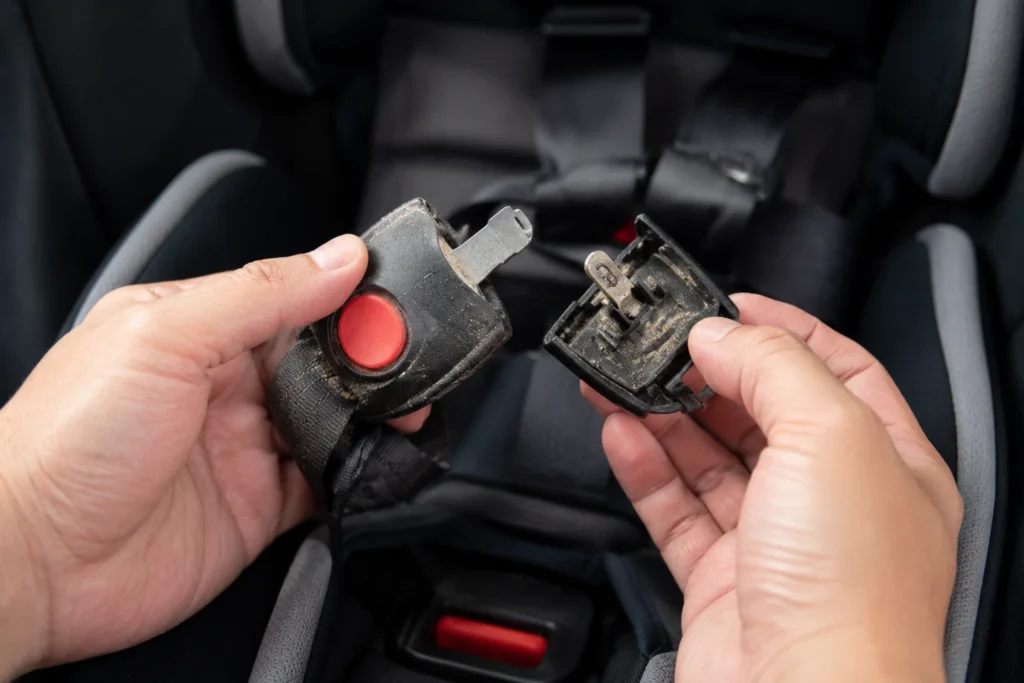
Signs the Buckle Needs Replacement
Look for the following warning signs:
| Issue | Replace the Buckle? |
|---|---|
| Cracked housing | Yes |
| Broken release button | Yes |
| Bent buckle tongue | Yes |
| Missing components | Yes |
| Internal spring failure | Yes |
| Frequent sticking after cleaning | Usually |
If any of these issues are present, continuing to use the buckle may compromise safety.
Contact the Manufacturer First
Before replacing anything, contact the car seat manufacturer. Be prepared to provide:
- Model number
- Date of manufacture
- Description of the issue
- Photographs if requested
Many manufacturers offer replacement parts or warranty assistance.
Avoid Generic Parts
Although generic replacements may appear similar, they are not always tested with your specific car seat. Therefore, only use manufacturer-approved components. Safety should never be based on guesswork.
How to Remove a Car Seat Buckle for Cleaning
Many car seats allow buckle removal for cleaning. However, every manufacturer uses different procedures. As a result, checking the owner’s manual is essential.
Review the Manual Carefully
The manual will explain:
- Whether removal is permitted
- How to detach the buckle
- Cleaning instructions
- Reinstallation procedures
Skipping these instructions can create unnecessary problems.
Safety Precautions
Before removing the buckle:
- Place the seat on a flat surface
- Take photos of the assembly
- Keep all parts organized
- Follow each step carefully
A few minutes of preparation can save considerable frustration later.
Reinstalling the Buckle
After cleaning:
- Allow the buckle to dry completely.
- Reattach it according to manufacturer instructions.
- Test the buckle multiple times.
- Confirm proper locking and release.
Only use the seat once everything functions normally.
Preventing Future Buckle Problems
The best way to fix a stuck buckle is to prevent it from happening in the first place. Fortunately, a few simple habits can dramatically reduce the chances that a car seat buckle won’t release again.
Perform Regular Inspections
Check the buckle monthly. Look for:
- Dirt buildup
- Sticky residue
- Cracks
- Unusual wear
- Button resistance
Small problems are much easier to address early.
Limit Snacks and Drinks
Children love snacks in the car. Nevertheless, food and beverages are among the leading causes of buckle contamination. Reducing mess inside the seat can significantly improve buckle longevity.
Clean Spills Immediately
Accidents happen. However, acting quickly can prevent sticky residue from settling inside the buckle. Pay particular attention to:
- Juice
- Milk
- Formula
- Soda
These liquids commonly cause sticking problems.
Test the Buckle Regularly
Once a month:
- Buckle the harness
- Release the buckle
- Check button movement
- Listen for smooth engagement
This simple habit can reveal developing issues before they become serious.
Store the Seat Properly
If the seat is not being used:
- Keep it indoors
- Protect it from moisture
- Avoid direct sunlight
- Store it in a clean location
Proper storage helps preserve both plastic and mechanical components.
Car Seat Buckle Safety Mistakes to Avoid
Even experienced parents occasionally make mistakes when troubleshooting buckle issues. Avoid these common errors.
Forcing the Button
When a car seat buckle won’t release, pressing harder may seem logical. Unfortunately, excessive force can break internal components. Instead, investigate the cause systematically.
Using Household Lubricants
As discussed earlier, lubricants often create more problems than they solve.
Modifying the Buckle
Never:
- File components
- Trim parts
- Alter the mechanism
- Disassemble internal pieces beyond manufacturer instructions
Such modifications may affect crash performance.
Ignoring Warning Signs
A buckle that sticks occasionally today may fail completely tomorrow. Therefore, address problems early.
Using a Damaged Buckle
If visible damage exists, replacement is usually the safest option. No convenience is worth compromising child safety.
Conclusion
A car seat buckle won’t release problem can be frustrating; however, many cases are caused by debris, spills, or routine wear rather than major mechanical failure. Therefore, regular inspections, prompt cleaning, and proper maintenance can prevent most issues. Most importantly, if the buckle remains unreliable, replace it with an approved component and prioritize safety above everything else.
FAQs
Food crumbs, dried liquids, dirt, or worn internal components are the most common reasons a buckle becomes stuck.
No. Most manufacturers recommend avoiding lubricants because they can attract dirt and interfere with buckle performance.
Follow the manufacturer’s instructions, which often involve rinsing the buckle with warm water and allowing it to air dry completely.
It can be. A buckle that does not release or lock properly may affect your ability to safely secure or remove your child.
A quick monthly inspection is a good habit and can help identify developing issues before they worsen.
Yes. Sugary liquids can leave sticky residue inside the buckle mechanism and cause it to stick.
In many cases, replacing the buckle is sufficient if the manufacturer offers approved replacement parts.
Contact the manufacturer for guidance, as the buckle may have internal damage that requires replacement.
Yes. Temperature extremes can influence plastic and mechanical components, especially if other issues already exist.
It’s best to use only manufacturer-approved replacement buckles to ensure proper fit and safety performance.

