

This post contains affiliate links. As an Amazon Associate, 360 Car Seat earns from qualifying purchases, at no extra cost to you.
A rotating car seat can make daily travel much easier. However, when a rotating car seat won’t click into place, that convenience quickly turns into frustration. More importantly, a seat that fails to lock properly can raise serious safety concerns. If you’ve recently searched for answers because your Rotating Car Seat Won’t Lock, you’re certainly not alone. Fortunately, many locking issues are caused by simple problems that can often be fixed at home. In this guide, we’ll explore the most common causes, troubleshooting steps, and practical solutions to help restore proper operation.
What Does the Click Mechanism Do on a Rotating Car Seat?
Rotating car seats are designed to simplify loading and unloading children. Unlike traditional car seats, they can rotate toward the vehicle door, reducing strain on parents and caregivers. However, this convenience depends on a reliable locking system.
How Rotating Car Seats Work
Most rotating car seats contain several key components:
- Fixed base attached to the vehicle
- Rotating seat platform
- Locking pins or latches
- Release mechanisms
- Position indicators
As the seat rotates into a designated travel position, the locking system engages. Once fully aligned, the seat produces a click or similar indication that it has secured itself. Without this lock, the seat may remain partially engaged, which is not suitable for travel.
Why the Click Sound Matters
The click serves an important purpose. It confirms:
- Proper seat positioning
- Full lock engagement
- Safe travel readiness
- Correct alignment of components
Therefore, if the click is missing, further inspection is necessary before driving.
Signs Your Rotating Car Seat Is Not Properly Locked
Sometimes the issue is obvious. Other times, it may be subtle. Knowing what to look for can help you identify problems early.
No Audible Click
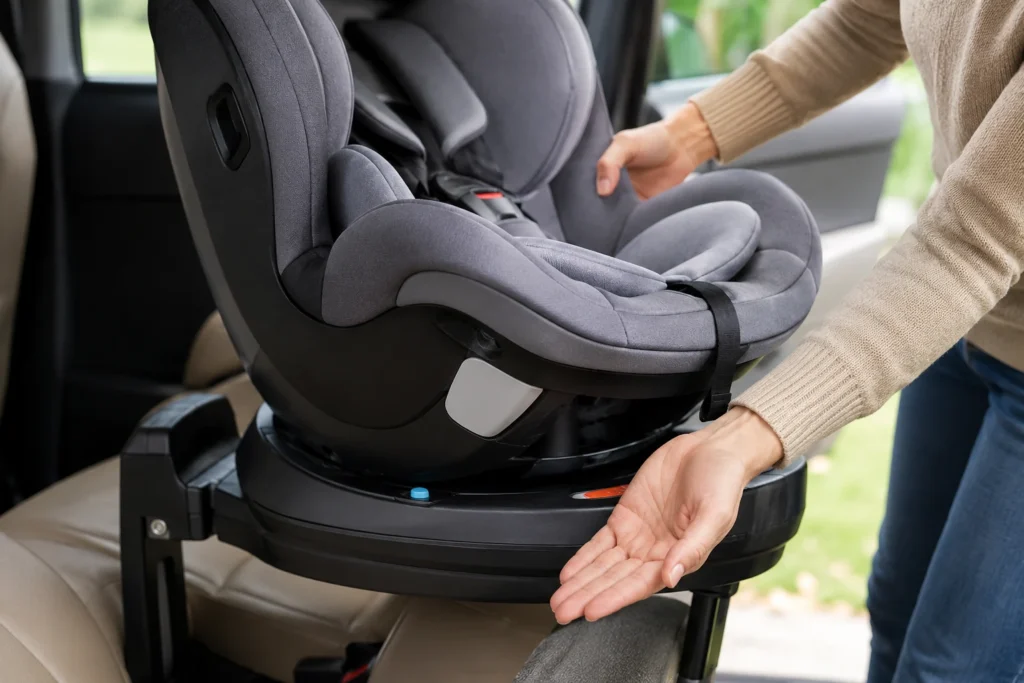
The most common warning sign is the absence of the click itself. Although some models produce softer sounds than others, you should typically hear or feel some form of engagement when the seat locks.
The Seat Continues to Rotate
A locked seat should remain stable. If the seat continues moving after reaching its intended position, the locking mechanism may not be fully engaged.
Difficulty Changing Positions
Another common symptom involves resistance during rotation. You may notice:
- Sticking points
- Jerky movement
- Incomplete rotation
- Excessive force required
These symptoms often indicate alignment or obstruction issues.
Warning Indicators Remain Red
Many modern rotating car seats include visual indicators.
| Indicator Color | Meaning |
|---|---|
| Green | Properly locked |
| Red | Not locked |
| Yellow | Transitional position |
Always verify what your specific model’s indicators mean by consulting the owner’s manual.
Common Reasons a Rotating Car Seat Won’t Click Into Place
If your rotating car seat refuses to lock, several possible causes may be responsible. Let’s examine the most common ones.
Dirt and Debris in the Rotation Track
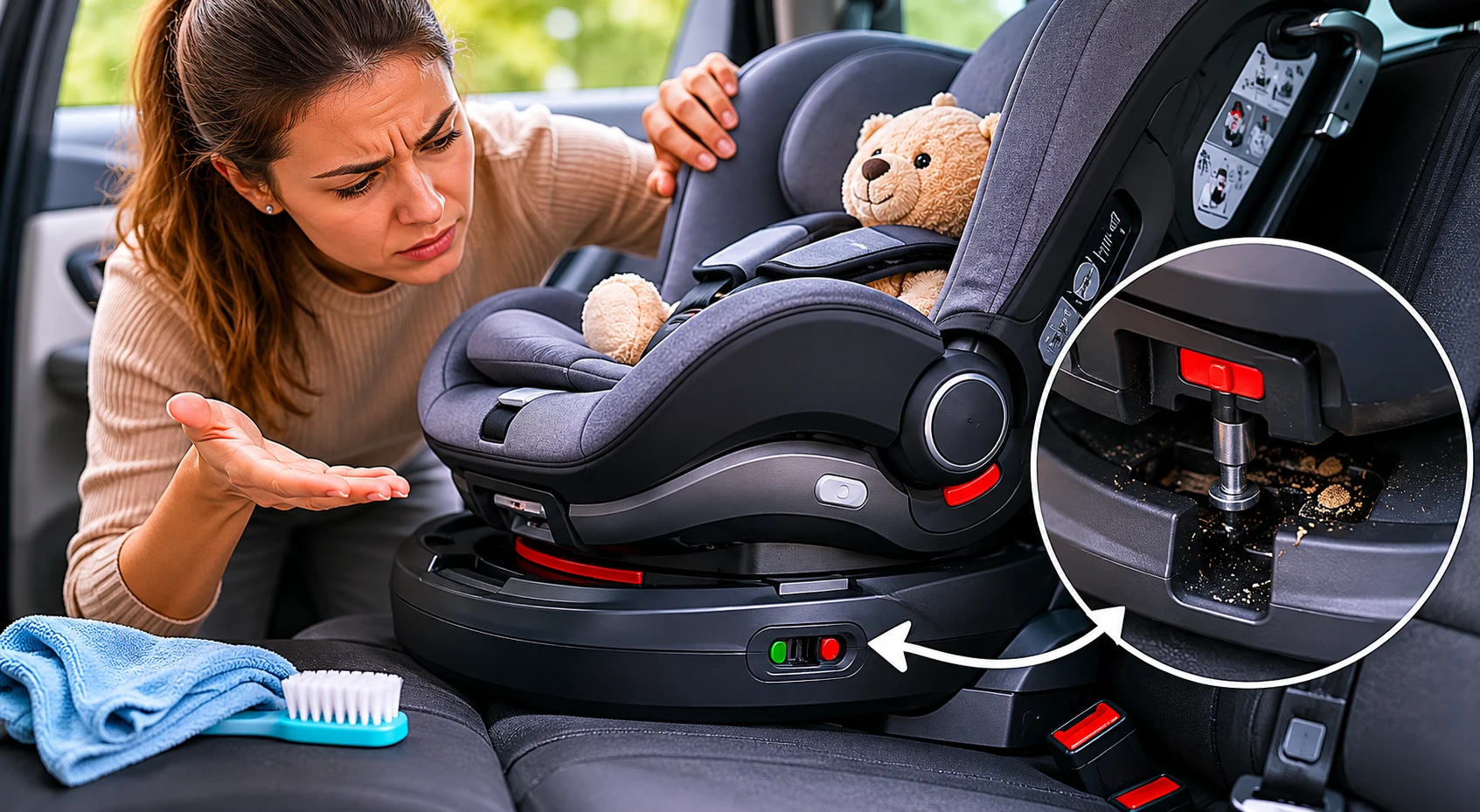
Children are experts at creating messes. Over time, debris accumulates in the seat’s moving parts. Common culprits include:
- Cracker crumbs
- Dust
- Sand
- Hair
- Pet fur
- Small toy pieces
- Fabric fibers
Even tiny particles can interfere with the locking system. As a result, a seat that worked perfectly yesterday may suddenly stop locking today.
Misaligned Components
Rotating mechanisms depend on precision. Even slight shifts can prevent proper lock engagement. Rotating systems rely on precise alignment. In many ways, the process resembles principles of Kinematics , where the motion and positioning of interconnected parts determine whether a mechanism functions correctly. Misalignment may occur because of:
- Improper installation
- Rough handling
- Vehicle seat contours
- Long-term use
Consequently, the locking pin may no longer align perfectly with its receiving slot.
Incomplete Rotation
Sometimes the issue isn’t mechanical at all. Parents often stop rotating the seat before it reaches its final locking point. This frequently happens when:
- Rushing to leave
- Loading a child simultaneously
- Encountering mild resistance
- Misjudging the lock position
Therefore, always rotate the seat slowly until it reaches its full endpoint.
Installation Problems
A poorly installed base can affect much more than overall stability. It can also interfere with rotation and locking. Common installation errors include:
- Loose LATCH connections
- Improper seat belt routing
- Incorrect recline settings
- Uneven base positioning
If the foundation isn’t stable, the locking system may struggle to function correctly.
Harness and Fabric Interference
Not every locking problem originates inside the mechanism itself. Sometimes the obstruction is external. Check for:
- Twisted harness straps
- Buckle tongues trapped beneath the seat
- Bunched-up seat covers
- Loose blankets
- Accessories caught near moving parts
Even minor interference can prevent complete lock engagement.
Wear and Tear
Every moving system eventually experiences wear. Over time, repeated use can affect critical components. Engineers often study long-term material degradation through concepts such as Tribology, the science of friction, wear, and lubrication between moving surfaces. While parents don’t need an engineering background to troubleshoot a car seat, understanding that repeated motion naturally creates wear helps explain why some locking mechanisms become less responsive over time. Potential wear-related issues include:
| Component | Potential Problem |
|---|---|
| Locking pin | Deformation |
| Spring | Loss of tension |
| Rotation track | Increased friction |
| Release handle | Reduced responsiveness |
| Plastic guides | Cracks or wear |
The older the seat, the more likely wear may contribute to locking issues.
How to Fix a Rotating Car Seat That Won’t Click Into Place
Fortunately, many locking problems can be resolved without professional assistance. Follow these steps carefully.
Step 1: Remove Your Child Safely
Before troubleshooting, remove your child from the seat. Never inspect or attempt repairs while a child is seated. Safety should always come first.
Step 2: Inspect the Rotation Track
Next, examine the entire rotating mechanism. Use a flashlight if needed. Pay attention to:
- Track grooves
- Locking slots
- Hidden corners
- Moving joints
- Debris accumulation areas
A thorough inspection often reveals the source of the problem.
Step 3: Clean the Locking Mechanism
Cleaning can solve many locking issues. Recommended cleaning tools include:
- Soft-bristle brush
- Vacuum with crevice attachment
- Microfiber cloth
- Compressed air (if approved by the manufacturer)
Avoid:
- Grease
- Oil-based lubricants
- Harsh cleaners
- Excessive water
These products can attract debris or damage components.
Step 4: Check for Obstructions
After cleaning, inspect surrounding areas.
Look for:
- Misaligned fabric
- Harness interference
- Trapped accessories
- Loose padding
Removing an obstruction may immediately restore proper operation.
Step 5: Rotate the Seat Slowly
Next, test the seat. Rotate it slowly through its full range of motion. Listen carefully. Feel for resistance. In many cases, moving deliberately helps the locking mechanism engage correctly.
Step 6: Verify Proper Installation
If the problem persists, revisit the installation.
Check:
- Base tightness
- LATCH connections
- Seat belt routing
- Recline settings
- Position indicators
Even small installation mistakes can affect lock performance.
Step 7: Test Every Lock Position
Finally, test all available positions. These may include:
- Rear-facing mode
- Side-loading position
- Forward-facing mode
This helps determine whether the problem affects one lock point or the entire system.
Rotating Car Seat Won’t Click Into Place After Cleaning
Although cleaning is often the solution, it can occasionally create new issues. This usually occurs when:
- Seat covers are reinstalled incorrectly
- Padding shifts position
- Moisture remains in moving components
- Harness routing changes during reassembly
Therefore, if the seat stops locking after cleaning, review every component that was removed. Compare your setup carefully with the manufacturer’s instructions. Even small mistakes can interfere with proper operation.
Rotating Car Seat Won’t Click Into Place After an Accident
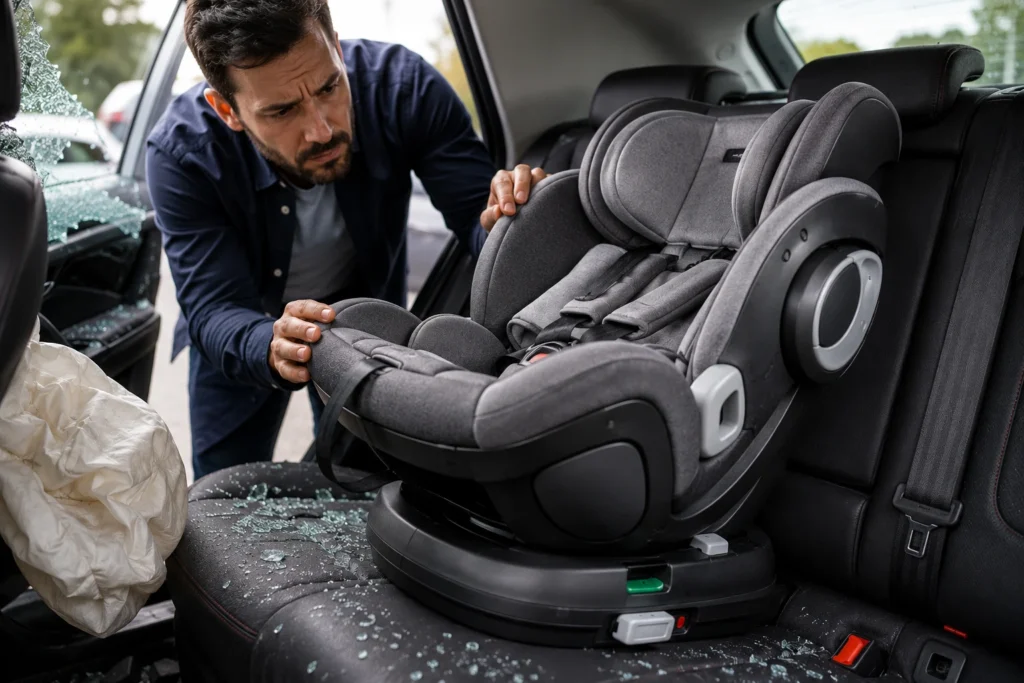
Accidents can affect a car seat’s internal structure even when visible damage is absent. Potential hidden damage includes:
- Bent locking pins
- Cracked support structures
- Misaligned tracks
- Damaged release mechanisms
As a result, any seat involved in a collision should be inspected according to manufacturer guidelines. If a rotating car seat won’t click into place following an accident, discontinue use immediately until the issue is properly evaluated.
Brand-Specific Locking Issues
While many rotating car seat problems share similar causes, some brands have unique designs that can create specific troubleshooting challenges. Understanding how your particular model functions can save significant time.
Evenflo Revolve 360 Locking Problems
The Evenflo Revolve 360 is one of the most popular rotating car seats on the market. However, some users report occasional locking concerns. Common causes include:
- Debris inside the rotational track
- Improper recline settings
- Incomplete seat rotation
- Misaligned seat covers
When troubleshooting, ensure the seat reaches its full rotational endpoint before expecting the lock to engage.
Baby Jogger City Turn Locking Issues
The City Turn’s compact rotating system can sometimes become sensitive to installation errors. Potential issues include:
- Uneven base positioning
- Seat belt tension problems
- Restricted rotational movement
Therefore, carefully verify installation if locking problems occur.
Cybex Sirona Rotation Concerns
The Cybex Sirona incorporates multiple safety systems that interact with its rotation feature. Users may encounter:
- Position indicator errors
- Rotation resistance
- Lock engagement delays
Fortunately, many issues can be resolved through proper cleaning and alignment checks.
Nuna REVV Lock Troubleshooting
The Nuna REVV is known for smooth rotation. Nevertheless, problems can occasionally arise. Common causes include:
- Debris accumulation
- Incomplete rotation
- Fabric interference
- Wear-related issues
If cleaning and inspection do not resolve the issue, contacting customer support is often the best next step.
When the Locking Mechanism May Need Professional Service
Not every problem can be solved at home. Sometimes the locking mechanism itself develops a mechanical fault. Recognizing these situations is important.
Warning Signs of Mechanical Failure
Certain symptoms suggest professional assistance may be necessary. Watch for:
- Grinding noises
- Broken release handles
- Missing lock positions
- Excessive looseness
- Cracked components
- Sudden failure after normal operation
These issues often indicate internal damage.
Contacting Customer Support
Before contacting the manufacturer, gather useful information. Prepare:
- Model number
- Manufacturing date
- Purchase information
- Photos of the issue
- Video of the malfunction if possible
Providing detailed information helps customer service diagnose the problem more efficiently.
Understanding Warranty Coverage
Many car seat manufacturers offer warranties covering manufacturing defects. Coverage may include:
| Warranty Benefit | Possible Coverage |
|---|---|
| Replacement parts | Certain components |
| Full replacement | Manufacturing defects |
| Technical support | Troubleshooting guidance |
| Inspection assistance | Case-dependent |
Review your warranty documentation before attempting major repairs.
Preventing Future Rotation Lock Problems
Prevention is always easier than repair. A few simple habits can dramatically reduce the chances of future locking issues.
Perform Regular Cleaning
Rotating car seats experience constant use. As a result, debris naturally accumulates. Consider this maintenance schedule:
| Task | Frequency |
|---|---|
| Visual inspection | Weekly |
| Surface cleaning | Biweekly |
| Track inspection | Monthly |
| Deep cleaning | Every 3-6 months |
Regular maintenance helps prevent small problems from becoming larger ones.
Avoid Excessive Force
Parents are often in a hurry. However, forcing the seat can create new issues. Instead:
- Rotate smoothly
- Use controlled pressure
- Follow manufacturer instructions
- Stop if unusual resistance occurs
Gentle operation protects internal components.
Inspect the Seat Monthly
A quick monthly inspection can identify early warning signs. Look for:
- Cracks
- Loose parts
- Missing indicators
- Excessive wear
- Debris buildup
Early detection often prevents more expensive repairs later.
Follow Weight and Usage Limits
Every rotating car seat is designed with specific limits. Exceeding those limits can place additional stress on moving components. Always follow:
- Weight restrictions
- Height restrictions
- Usage recommendations
- Expiration dates
Ignoring these limits may affect both safety and performance.
Store and Transport Properly
Improper storage can damage sensitive mechanisms. If transporting or storing the seat:
- Keep it upright
- Avoid heavy objects on top
- Protect moving components
- Store in a dry environment
These simple precautions help extend the seat’s lifespan.
Rotating Car Seat Safety Checklist
Even when everything appears normal, performing routine safety checks is worthwhile.
Before Every Trip
Take a few seconds to verify:
- Seat is fully locked
- Indicators show proper engagement
- Harness is correctly adjusted
- Base remains secure
- No visible damage exists
This quick check can provide valuable peace of mind.
Monthly Inspection Routine
In addition to daily checks, perform a more thorough review each month. Inspect:
- Rotation mechanism
- Locking points
- Harness system
- Base installation
- Seat shell condition
Documenting inspections can help identify gradual changes over time.
Conclusion
A rotating car seat won’t click into place for several possible reasons, including debris, alignment issues, installation errors, or worn components. Fortunately, many problems can be identified and resolved through careful inspection and routine maintenance. However, if troubleshooting does not solve the issue, contacting the manufacturer is the safest course of action. Ultimately, ensuring the seat locks properly before every trip helps protect both your child and your peace of mind.
FAQs
This usually happens when the seat has not reached the full locking position or when debris is blocking the mechanism.
Yes. Small crumbs, sand, pet hair, and other debris can interfere with the locking track and prevent proper engagement.
No. The seat should always be fully locked before driving to ensure it performs as intended during sudden stops or collisions.
A visual inspection every few weeks and a more thorough cleaning every few months can help prevent locking issues.
Check that all seat covers, padding, and harness components were reinstalled correctly, as misalignment can affect the locking system.
Yes. Even if no visible damage exists, internal components may become misaligned or weakened after a crash.
Grinding sounds often indicate debris in the track, excessive wear, or damage to moving components that should be inspected promptly.
Most models provide an audible click or a noticeable tactile signal, although the sound level varies between manufacturers.
Absolutely. A loose base or incorrect installation can affect alignment and make it difficult for the locking mechanism to engage.
You should contact the manufacturer if cleaning, reinstalling, and basic troubleshooting do not resolve the issue or if any components appear damaged.

