

This post contains affiliate links. As an Amazon Associate, 360 Car Seat earns from qualifying purchases, at no extra cost to you.
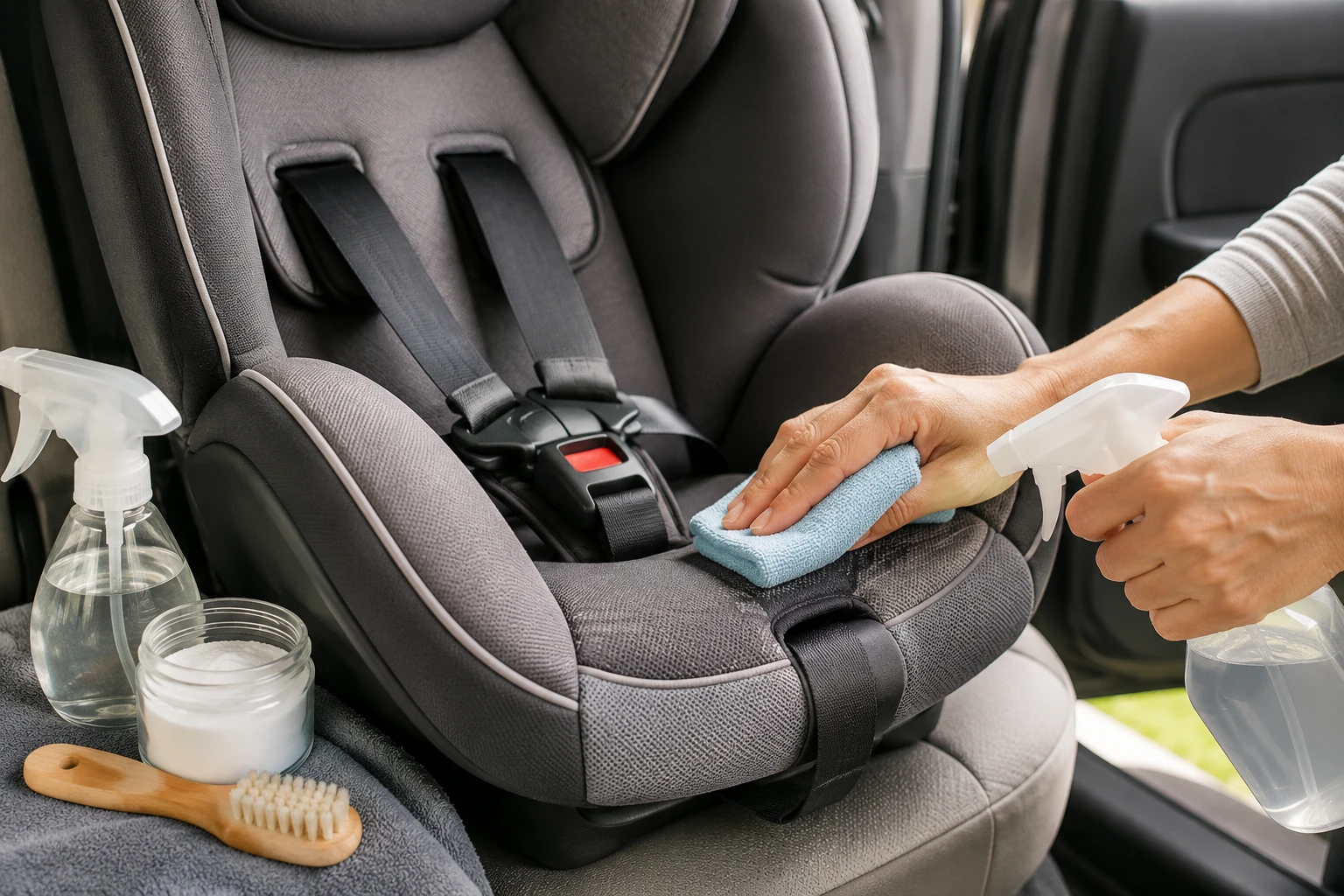
Milk spills happen fast. Unfortunately, the smell can linger for weeks if it seeps into your car seat’s fabric and foam. If you’re searching for how to remove milk smell from car seat surfaces effectively, the solution involves more than simply wiping away the visible mess. Moreover, many parents researching How to Wash Evenflo 360 Car Seat Cover materials face a similar challenge because both odors can become trapped deep inside hidden layers. Fortunately, with the right cleaning process, you can eliminate stubborn milk odors and restore a fresh-smelling car seat. In this guide, you’ll learn exactly where odors hide, how to clean safely, and what steps help prevent smells from returning.
Why Milk Smell Becomes So Strong in Car Seats
A small milk spill can create a surprisingly powerful odor. The reason is simple. Milk contains proteins, fats, and sugars that begin breaking down when left inside a warm vehicle. As bacteria multiply, unpleasant odors develop and become trapped within the seat. Furthermore, hot temperatures inside a vehicle accelerate this process, making the smell even stronger.
Why Car Seats Trap Odors So Easily
Child car seats contain multiple layers that can absorb liquids. These often include:
- Fabric covers
- Foam padding
- Harness slots
- Buckle openings
- Infant inserts
- Plastic shells
As a result, spilled milk rarely stays on the surface. Instead, it travels into hidden areas where cleaning becomes more difficult.
The Science Behind the Odor
As milk begins to spoil, complex biological processes occur. Similar to how microorganisms participate in the decomposition of organic materials, bacteria break down proteins and fats trapped inside the car seat. This process can create persistent odors that become more noticeable in warm environments. Readers interested in the science behind biological decomposition may find the Wikipedia article on Autolysis.
Step 1: Locate the Source of the Milk Spill
Before cleaning, identify every area affected by the spill. Many parents focus on visible stains while overlooking hidden contamination. Consequently, the smell often returns shortly after cleaning.
Inspect Visible Areas First
Carefully examine:
- Seat cover fabric
- Headrest area
- Side cushions
- Harness straps
- Cup holders
- Seams and stitching
Look for:
- White residue
- Sticky spots
- Discoloration
- Dried milk deposits
- Damp areas
Check Hidden Areas
Next, inspect areas that are often missed. These include:
- Under removable covers
- Around harness openings
- Beneath infant inserts
- Around buckle slots
- Between the cover and shell
You may discover dried milk in places you never expected.
Signs Milk Has Reached the Foam
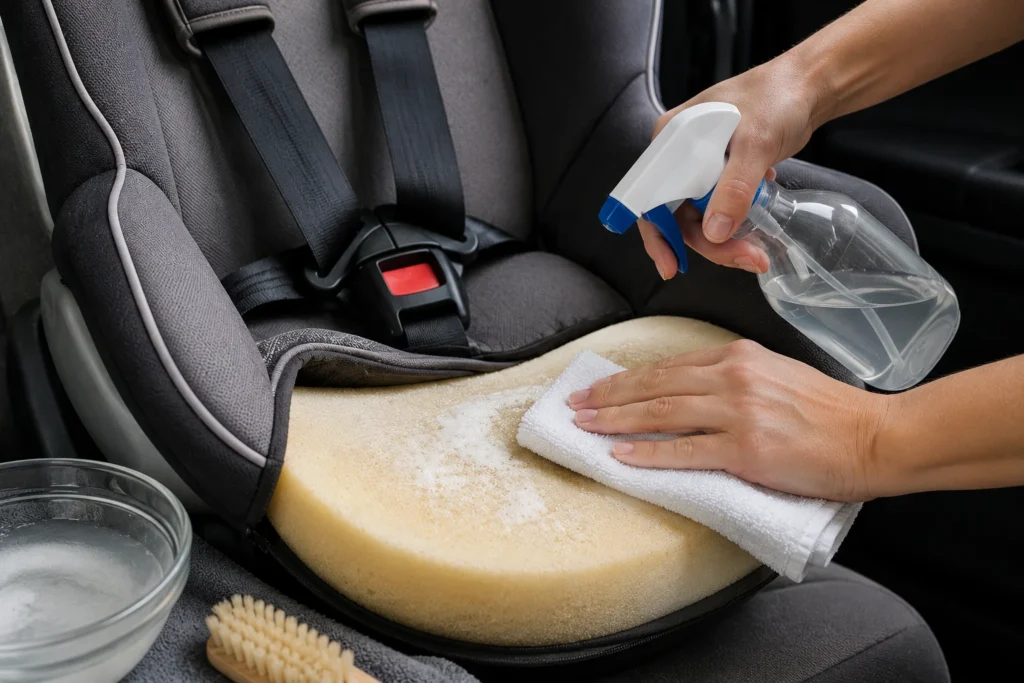
When milk reaches the foam padding, odor removal becomes more challenging.
| Sign | Possible Cause |
|---|---|
| Smell returns after cleaning | Milk remains below surface |
| Strong odor in warm weather | Foam contamination |
| Yellow discoloration | Deep penetration |
| Persistent sour smell | Active bacterial growth |
If these signs are present, deeper cleaning will be necessary.
Step 2: Remove Loose Debris and Dried Milk Residue
Before using any cleaner, remove loose contamination. This prevents spreading residue during the cleaning process.
Vacuum Thoroughly
Use a vacuum with upholstery attachments. Pay attention to:
- Fabric seams
- Creases
- Harness slots
- Cup holders
- Under removable inserts
Take your time. A thorough vacuuming session often removes more contamination than expected.
Remove Crusted Milk Deposits
Dried milk can cling tightly to fabric. Use a soft-bristle brush to loosen residue. Afterward:
- Brush gently.
- Vacuum loosened particles.
- Repeat if necessary.
Avoid aggressive scrubbing because it may damage delicate materials.
Step 3: Clean the Car Seat Cover Properly
Once debris is removed, clean the seat cover itself. However, always start with the manufacturer’s instructions.
Check the Manual First
Every car seat model is different. Manufacturers often provide specific guidance regarding:
- Approved detergents
- Water temperatures
- Washing methods
- Drying procedures
Following these instructions helps maintain both cleanliness and safety.
Washing Removable Covers
If the cover can be removed, washing becomes much easier. Generally, mild detergents are the safest option.
Avoid:
- Bleach
- Harsh chemicals
- Strong stain removers
- Fabric softeners
These products can damage materials or leave unwanted residues.
Hand Washing Delicate Covers
Some covers require hand washing. In that case:
- Fill a basin with lukewarm water.
- Add a small amount of mild soap.
- Gently clean affected areas.
- Rinse thoroughly.
Most importantly, avoid oversaturating the material.
Dry the Cover Completely
Proper drying is just as important as cleaning. For best results:
- Air dry when possible.
- Use a well-ventilated area.
- Follow manufacturer instructions.
- Ensure complete dryness before reassembly.
Otherwise, trapped moisture can create new odor problems.
Step 4: Clean the Harness System Safely
When learning how to remove milk smell from car seat components, harness straps require special attention. However, they must be cleaned carefully.
Why Harness Straps Are Different
Harnesses are critical safety components. Therefore, many manufacturers prohibit:
- Machine washing
- Soaking
- Bleach use
- Harsh chemical cleaners
Ignoring these guidelines could damage the straps.
Safe Harness Cleaning Process
Most manufacturers recommend:
- Warm water
- Mild soap
- Soft cloth
- Spot cleaning
Wipe each strap carefully and remove any visible residue. Pay special attention to areas near the chest clip and buckle where milk commonly accumulates.
What to Avoid
Never use:
- Bleach
- Degreasers
- Pressure washers
- Strong cleaning agents
- Extended soaking methods
Protecting the harness is more important than removing an odor quickly.
Step 5: Clean the Buckle and Harness Slots
Many persistent odors originate from the buckle assembly. Unfortunately, this area is often overlooked.
How Milk Becomes Trapped
Milk naturally follows gravity. As it drips downward, it can collect inside:
- Buckle openings
- Harness slots
- Creases near the buckle
Once trapped, the milk may dry and remain unnoticed.
Safe Buckle Cleaning
Always consult your car seat manual first. Generally, manufacturers recommend:
- Removing the buckle if permitted.
- Rinsing with warm water.
- Allowing it to air dry completely.
- Testing functionality before use.
Check Buckle Performance
Before reinstalling:
- Insert the buckle tongue.
- Listen for a firm click.
- Verify smooth operation.
- Confirm proper locking.
Safety should never be compromised during cleaning.
Step 6: Remove Odors From the Foam Padding
Foam padding is often responsible for lingering smells. Even after the visible stain disappears, odor-causing bacteria may remain deep within the foam.
Why Foam Holds Odors
Foam contains thousands of tiny air pockets that can trap liquids and odors below the surface. This structure behaves similarly to certain Porous materials, which absorb and retain moisture within microscopic spaces.
Safe Foam Cleaning Techniques
The goal is removing contamination without soaking the foam. A simple process includes:
- Using mild soap and water
- Applying moisture sparingly
- Blotting instead of scrubbing
- Removing excess moisture immediately
Less water is often better.
Preventing Mold and Mildew
After cleaning:
- Allow extended drying time.
- Increase airflow around the seat.
- Avoid reinstalling damp components.
Patience is essential. In many cases, proper drying is what ultimately eliminates the odor rather than the cleaning product itself.
Step 7: Use Natural Odor Neutralizers
After cleaning the affected areas, you may still notice a faint odor. Fortunately, several natural odor absorbers can help remove lingering smells.
Baking Soda Treatment
Baking soda remains one of the most effective household odor absorbers. To use it:
- Ensure the seat is completely dry.
- Sprinkle a light layer of baking soda over affected areas.
- Allow it to sit for several hours or overnight.
- Vacuum thoroughly.
As a result, many remaining odors are absorbed before they can return.
Activated Charcoal
For persistent smells, activated charcoal can be extremely effective. Place charcoal odor absorbers inside the vehicle for several days. Benefits include:
- Absorbing odor molecules
- Reducing moisture
- Working without fragrances
- Reaching areas that cleaners cannot
Fresh Air and Sunlight
Additionally, fresh air can significantly improve odor removal. Whenever possible:
- Park in a shaded but ventilated area.
- Open vehicle doors periodically.
- Allow fresh air circulation.
However, avoid prolonged direct sunlight if the manufacturer advises against it, as excessive heat can damage certain materials.
Common Mistakes That Make Milk Smell Worse
Sometimes the odor isn’t caused by the original spill anymore. Instead, it’s caused by cleaning mistakes. Avoiding these common errors can save a tremendous amount of time and frustration.
Using Too Much Water
Many people assume more water equals better cleaning. Unfortunately, the opposite is often true. Excess moisture can:
- Push milk deeper into foam
- Extend drying time
- Encourage mold growth
- Create additional odors
Therefore, always use moisture sparingly.
Spraying Air Fresheners Over the Smell
Air fresheners only mask odors temporarily. They do not remove:
- Milk residue
- Bacteria
- Contaminated foam
Consequently, the smell usually returns once the fragrance fades.
Ignoring Hidden Compartments
The visible stain is not always the source. Milk frequently accumulates inside:
- Buckle housings
- Harness slots
- Foam layers
- Seat creases
As a result, thorough inspection is essential.
Reassembling the Seat Too Soon
Even a slightly damp seat can develop new odors. Before reassembly:
- Check every component.
- Confirm complete dryness.
- Allow extra drying time when uncertain.
Patience often produces better results than additional cleaning products.
Using Unapproved Cleaning Chemicals
Strong chemicals may damage:
- Fabric fibers
- Harness materials
- Plastic components
Moreover, some products leave residues that attract dirt and create additional maintenance issues.
How to Remove Sour Milk Smell From a Car Seat After Several Days
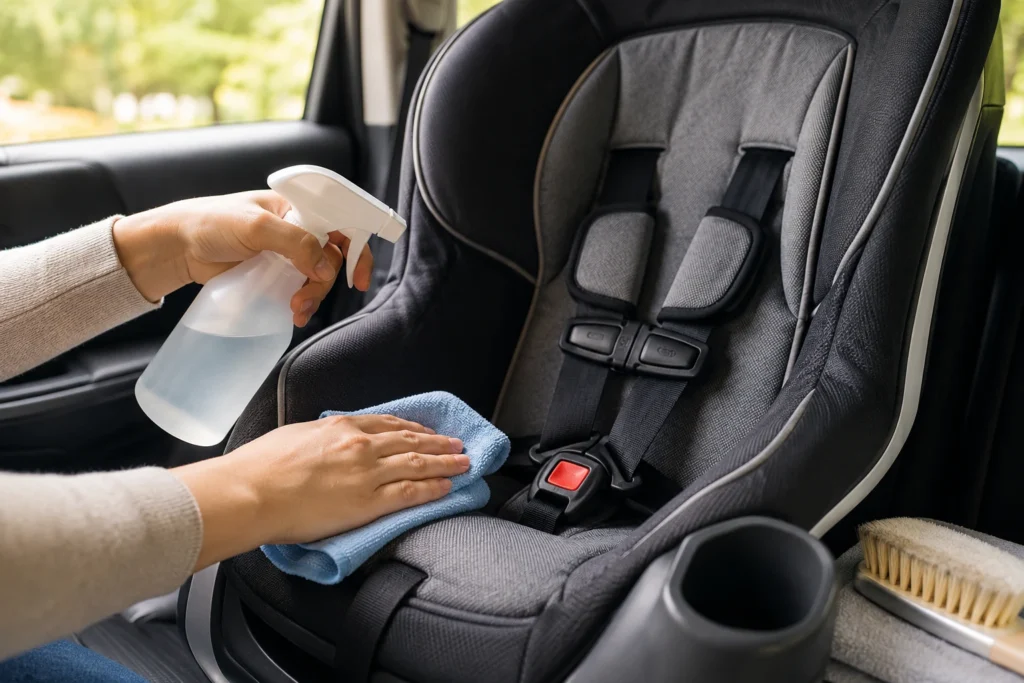
Fresh spills are easier to handle. However, older milk spills require a more aggressive approach.
Perform a Deep Inspection
If several days have passed, inspect every removable component again. Focus on:
- Foam inserts
- Buckle openings
- Harness pathways
- Under-seat padding
Even small amounts of dried milk can generate strong odors.
Repeat the Cleaning Process
Sometimes one cleaning session is not enough. A second cleaning may be necessary if:
- Odor remains noticeable
- Weather has been hot
- Foam contamination was extensive
Repeated cleaning often removes residue missed during the first attempt.
Evaluate the Vehicle Surroundings
In some situations, milk may have spread beyond the car seat itself. Check:
- Vehicle upholstery
- Carpet
- Floor mats
- Seat cushions
Otherwise, you may remove the smell from the car seat while leaving the actual source untouched.
Signs the Odor Source Has Been Eliminated
You’ll know progress has been made when:
- No odor is present in warm weather.
- Smells do not return after several days.
- The seat remains fresh after reassembly.
- No visible residue remains.
At that point, the contamination has likely been removed successfully.
How to Prevent Milk Smells in the Future
Prevention is always easier than odor removal. Fortunately, a few simple habits can dramatically reduce the likelihood of future problems.
Clean Spills Immediately
Speed matters. The faster milk is removed, the less likely it is to reach the foam. Even a quick wipe can make a major difference.
Inspect the Car Seat Regularly
Many spills go unnoticed. A weekly inspection can identify:
- Hidden residue
- Crumbs
- Sticky areas
- Small leaks from cups or bottles
Consequently, minor problems are addressed before they become major odors.
Keep Bottles Secure
Many milk spills occur because containers tip over during travel. Consider:
- Secure cup holders
- Spill-resistant cups
- Proper bottle placement
Reducing spills is the simplest solution.
Follow a Routine Cleaning Schedule
Routine maintenance helps prevent buildup. A simple schedule may include:
| Task | Frequency |
|---|---|
| Quick wipe-down | Weekly |
| Vacuuming | Every two weeks |
| Full inspection | Monthly |
| Deep cleaning | As needed |
Consistency keeps odors from gaining a foothold.
When Milk Odor Won’t Go Away
Occasionally, even thorough cleaning fails. When that happens, deeper contamination may be present.
Determine Whether Foam Is Permanently Affected
Severe spills can saturate large portions of foam. Warning signs include:
- Strong odor after repeated cleaning
- Odor increases during hot weather
- Smell returns quickly after drying
In these cases, the foam may be holding contamination beyond what cleaning can remove.
Contact the Manufacturer
Some manufacturers offer:
- Replacement padding
- Replacement covers
- Cleaning guidance
- Approved maintenance procedures
Therefore, contacting customer support can be worthwhile before replacing the entire seat.
Consider Replacement
If contamination is extensive and odors remain severe, replacement may become the most practical option. Factors to consider include:
- Seat age
- Extent of contamination
- Cost of replacement components
- Overall seat condition
Safety should always remain the highest priority.
Conclusion
Removing spoiled milk odors takes more than a quick wipe-down. However, by locating hidden contamination, cleaning each component properly, and allowing everything to dry completely, most odors can be eliminated successfully. Furthermore, routine inspections and fast cleanup of future spills can help prevent the problem from returning. With patience and the right approach, your car seat can stay clean, fresh, and ready for every trip.
FAQs
Start by locating the spill, cleaning all affected areas, and thoroughly drying the seat. The faster you address the spill, the easier it is to eliminate the odor.
Milk may have soaked into the foam padding, buckle assembly, or hidden crevices. A deeper inspection and cleaning are often needed to remove the source completely.
Baking soda can help absorb lingering odors after cleaning. However, it works best when the milk residue itself has already been removed.
Some manufacturers allow diluted vinegar solutions, while others do not. Always check the car seat manual before using any cleaning product.
Without proper cleaning, the odor can remain for weeks or even months. Heat and humidity often make the smell more noticeable.
Milk typically won’t damage the foam itself, but it can create persistent odors if absorbed deeply into the padding.
Most manufacturers advise against machine washing harness straps because it can weaken the material and affect safety performance.
Remove and clean the buckle according to the manufacturer’s instructions. Milk trapped inside the buckle is a common cause of lingering odors.
Professional cleaning may help with severe contamination, especially when odors have penetrated deep into the foam or other hard-to-reach areas.
Replacement should be considered if the odor remains after multiple cleaning attempts or if contamination has become severe enough to affect the seat’s condition.

