

This post contains affiliate links. As an Amazon Associate, 360 Car Seat earns from qualifying purchases, at no extra cost to you.
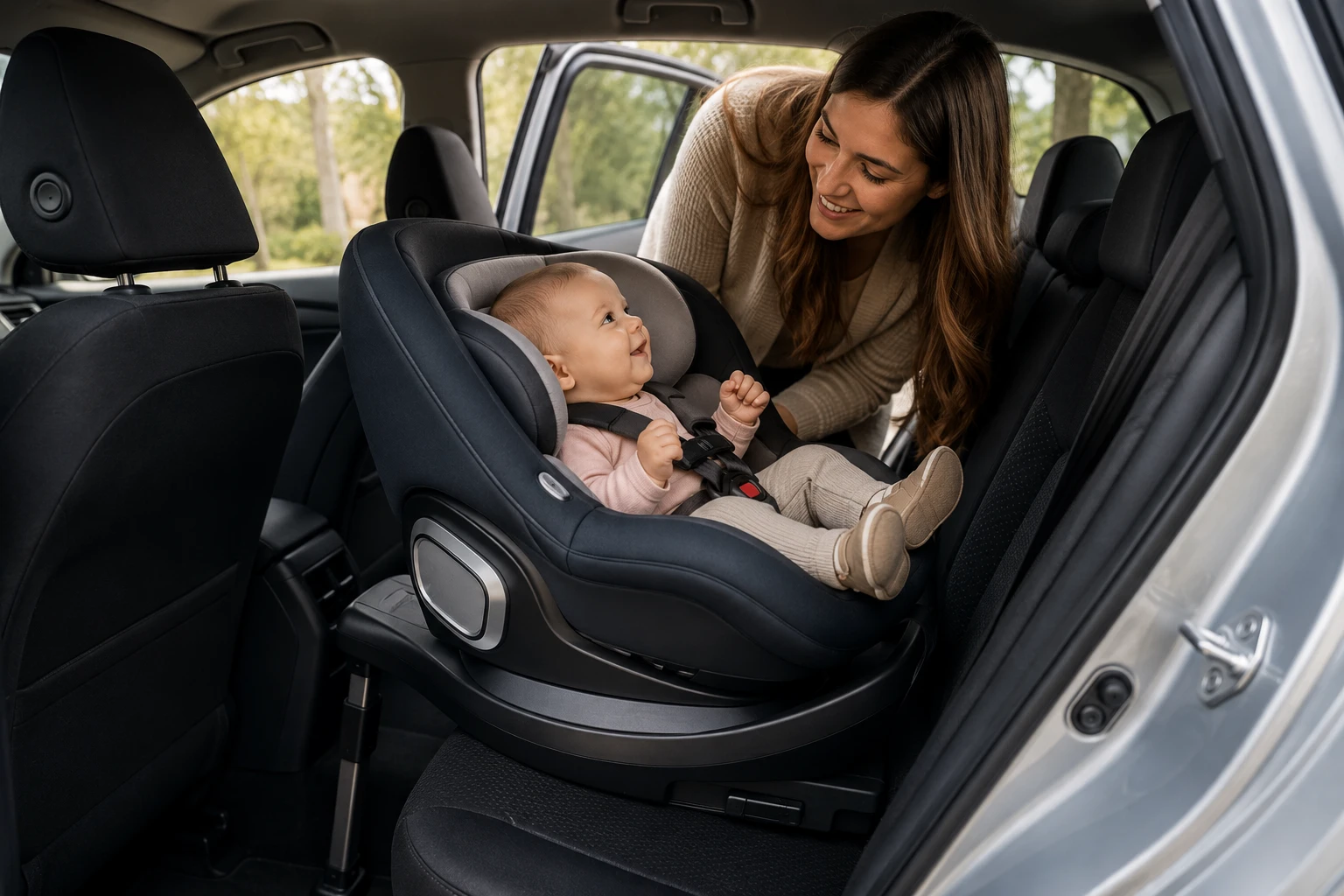
Finding the best rotating car seat for compact cars is not always easy. Parents want top-tier safety, simple daily use, and a seat that actually fits inside a smaller vehicle. Fortunately, modern rotating car seats are becoming more compact while still offering the convenience families love. In this guide, we’ll explore what makes a rotating seat ideal for small vehicles and review some of the best options available today.
Why Compact Cars Require Special Consideration
Larger SUVs give parents plenty of room to work with. Compact cars don’t. As a result, every inch matters when selecting a car seat. A model that fits comfortably in a midsize SUV may feel oversized inside a Honda Civic, Toyota Corolla, Hyundai Elantra, Mazda3, Kia Forte, or Volkswagen Jetta. Common challenges include:
- Limited rear-seat legroom
- Restricted front-seat adjustment
- Smaller door openings
- Narrow rear seating areas
- Reduced installation flexibility
Furthermore, rear-facing seats typically require more front-to-back space, making fitment even more important during the first few years of a child’s life. Therefore, choosing the best rotating car seat for compact cars requires more than simply looking at safety ratings.
What Makes a Rotating Car Seat Ideal for Compact Cars?
Not all rotating car seats are built with smaller vehicles in mind. However, certain design features can make a dramatic difference.
Compact Front-to-Back Design
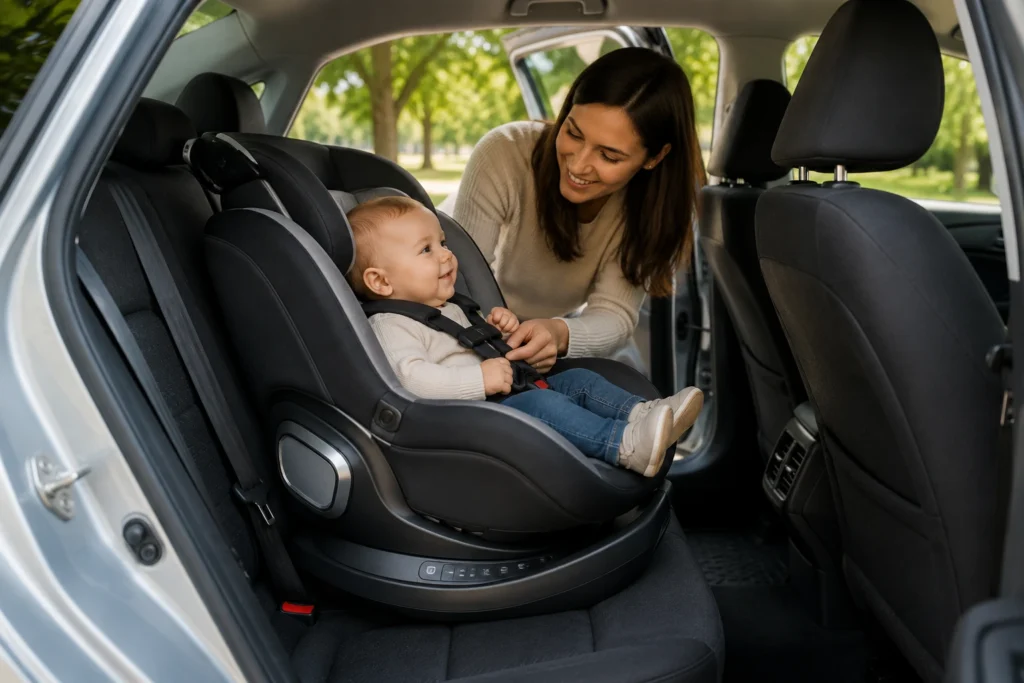
First and foremost, look at the seat’s depth. A shorter front-to-back footprint helps preserve valuable front-seat space. Consequently, both drivers and passengers can sit more comfortably without sacrificing safety.
Slim Width
Likewise, seat width plays a significant role. A narrower seat can provide:
- Easier access to buckles
- Better passenger comfort
- Additional flexibility for growing families
- Potential three-across configurations
Even a small reduction in width can noticeably improve rear-seat usability.
Smooth Rotation Mechanism
Next, evaluate how the seat rotates. The rotation system should function smoothly and require minimal effort. After all, convenience is one of the primary reasons parents invest in rotating car seats.
Extended Usability
Additionally, long-term value matters. Many of today’s best models can accommodate children through multiple growth stages, including:
- Rear-facing infancy
- Forward-facing toddler years
- Preschool-age use
As a result, parents often get several years of use from a single purchase.
Quality Safety Features
Most importantly, convenience should never outweigh safety. Look for:
- Side-impact protection
- Reinforced frames
- Energy-absorbing materials
- Adjustable harness systems
- Multiple recline positions
These features work together to provide enhanced protection during travel.
Engineering Behind Modern Rotating Seats
When evaluating modern child safety systems, it’s worth remembering that automotive safety engineering relies heavily on principles of biomechanics. Manufacturers design rotating car seats to better support a child’s body during everyday travel while maintaining proper positioning throughout different stages of growth. Likewise, advanced car seat development benefits from research involving ergonomics, the science of designing products that improve comfort, efficiency, and usability. Consequently, many parents find rotating car seats significantly easier to use than traditional fixed-position models.
Benefits of Rotating Car Seats in Smaller Vehicles
Initially, many parents focus solely on the rotation feature. However, the real benefits often become apparent after daily use.
Easier Child Loading
Traditional car seats often require awkward bending and twisting. In contrast, a rotating seat turns toward the door, making it much easier to place and secure a child. This becomes especially helpful when:
- Parking spaces are narrow
- Children become heavier
- Weather conditions are poor
- Multiple trips occur throughout the day
Reduced Physical Strain
Furthermore, repeated lifting and twisting can place stress on your back, shoulders, and knees. A rotating seat minimizes these movements and creates a more comfortable loading experience. For parents with existing back issues, this benefit alone can justify the investment.
Better Access in Tight Parking Spaces
Compact cars are popular because they’re easy to maneuver. Unfortunately, parking spaces aren’t always generous. Fortunately, rotating seats can simplify loading and unloading when doors cannot fully open.
Improved Harness Positioning
Another advantage is visibility. Since the seat rotates toward you, it’s easier to properly position the harness and chest clip. Consequently, children are more likely to be secured correctly every time.
Key Features to Look for Before Buying
Choosing the best rotating car seat for compact cars involves evaluating several important details.
Vehicle Compatibility
Before purchasing, verify compatibility with your specific vehicle. Many manufacturers offer fit guides that can help determine whether a particular seat works in your car.
Rear-Facing Requirements
Next, think beyond your child’s current size. Rear-facing travel generally offers the highest level of protection. Therefore, ensuring the seat fits comfortably in this position is critical.
Installation Method
Additionally, installation should be straightforward. Look for:
- Clear installation indicators
- Easy-to-understand instructions
- Stable base systems
- Secure locking mechanisms
The easier the installation process, the more likely parents are to achieve a proper fit.
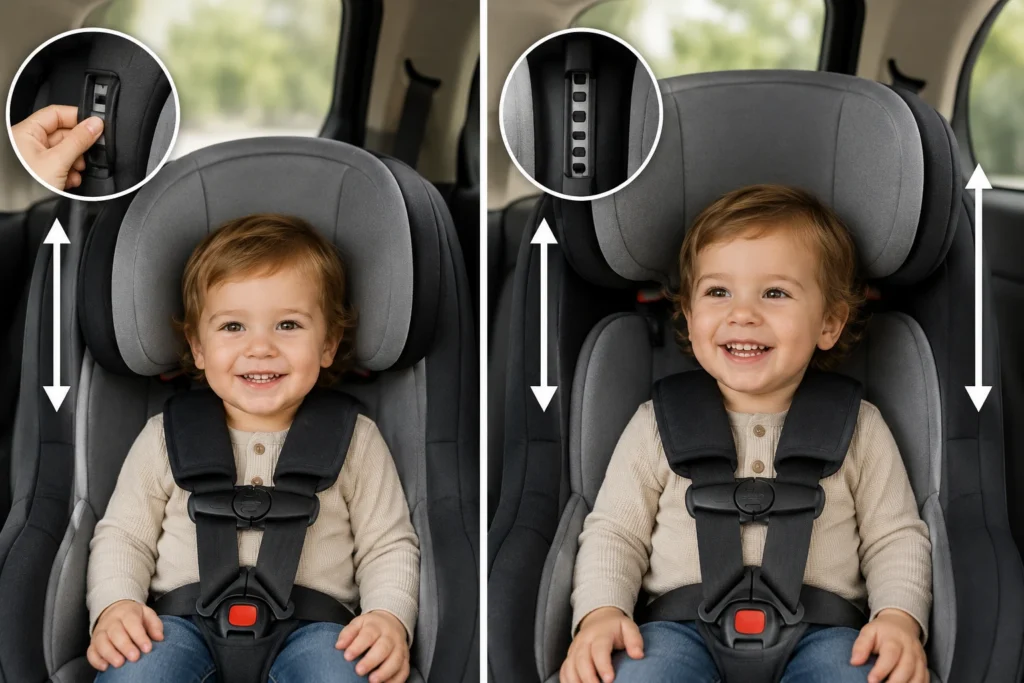
Adjustable Headrest and Harness
Children grow quickly. As a result, seats with multiple adjustment positions tend to provide better long-term value.
Fabric Quality
Finally, don’t overlook fabric maintenance. Spills, crumbs, and muddy shoes are inevitable. Therefore, removable and washable fabrics can save considerable time and frustration.
Best Rotating Car Seat for Compact Cars: Top Picks
Now let’s examine several of the strongest contenders currently available.
1. Evenflo Revolve360 Slim
Many parents consider this the leading candidate for the best rotating car seat for compact cars. Unlike many bulkier competitors, it was specifically designed to maximize space efficiency while maintaining full rotation capability.
Why It Stands Out
- Slim profile
- Full 360-degree rotation
- Extended rear-facing support
- User-friendly installation
Pros
- Excellent fit in smaller vehicles
- Easy daily use
- Strong value proposition
- Space-saving design
Cons
- Heavier than some traditional seats
- Premium pricing
2. Baby Jogger City Turn
The City Turn focuses heavily on accessibility. As a result, parents who prioritize convenience often rank it among their favorites.
Pros
- Smooth turning mechanism
- High comfort levels
- Premium materials
- Easy child access
Cons
- Larger footprint than some compact-focused models
- Higher price point
3. Cybex Sirona S
The Sirona S remains one of the most recognized rotating seats on the market. Furthermore, it combines advanced safety technology with premium construction.
Pros
- Excellent safety reputation
- Premium materials
- Strong side-impact protection
- Multiple comfort adjustments
Cons
- May feel bulky in very small vehicles
- Expensive compared to some competitors
4. Maxi-Cosi Emme 360
Comfort is one of the Emme 360’s biggest selling points. Consequently, many parents appreciate its plush materials and smooth operation.
Pros
- Comfortable seating
- Attractive design
- Easy harness adjustments
- Smooth rotation
Cons
- Larger dimensions
- May reduce front-seat space in compact sedans
5. Chicco Fit360 ClearTex
The Chicco Fit360 has quickly become a strong contender for the best rotating car seat for compact cars. It delivers an excellent balance of safety, convenience, and everyday practicality.
Pros
- Straightforward installation
- Comfortable design
- High-quality construction
- User-friendly operation
Cons
- Limited availability in some areas
- Premium pricing
Comparison Table: Top Rotating Car Seats for Compact Cars
Before making a final decision, compare the leading options side by side.
| Car Seat | Approx. Width | Rotation Type | Rear-Facing Capability | Best For |
|---|---|---|---|---|
| Evenflo Revolve360 Slim | Slim | 360° Rotation | Extended Rear-Facing | Small vehicles |
| Baby Jogger City Turn | Moderate | Turn-to-Access | Extended Rear-Facing | Ease of use |
| Cybex Sirona S | Moderate | 360° Rotation | Extended Rear-Facing | Premium safety |
| Maxi-Cosi Emme 360 | Moderate | 360° Rotation | Extended Rear-Facing | Comfort |
| Chicco Fit360 ClearTex | Slim | 360° Rotation | Extended Rear-Facing | Growing families |
Although every model offers unique advantages, the best choice ultimately depends on your vehicle dimensions, budget, and daily needs.
How to Measure Your Vehicle Before Buying
Many parents focus exclusively on car seat specifications. However, vehicle measurements are equally important.
Step 1: Measure Rear Seat Depth
First, measure the distance between the back seat cushion and the rear of the front seat. This measurement provides a clearer picture of how much front-to-back room is available.
Step 2: Check Front Seat Clearance
Next, position the driver and passenger seats where they normally sit. Then measure the remaining space behind each seat. This is especially important if one or both front-seat occupants are tall.
Step 3: Review Manufacturer Compatibility Guides
Most manufacturers publish compatibility information. Therefore, always review these resources before purchasing.
Step 4: Test Fit If Possible
Whenever possible, test the seat inside your vehicle. A seat that appears compact online may feel very different once installed. Consequently, a real-world test can prevent expensive mistakes.
Common Mistakes Parents Make When Choosing Rotating Car Seats
Even experienced parents can overlook important details. Fortunately, most mistakes are easy to avoid.
Choosing Features Over Fit
A seat may offer impressive features. However, none of those features matter if the seat doesn’t fit properly in your vehicle. Fit should always come first.
Ignoring Rear-Facing Space
Many shoppers focus on forward-facing use. Unfortunately, rear-facing configurations typically require more room. Therefore, always evaluate the seat in its rear-facing position.
Assuming All Rotating Seats Are Compact
Not every rotating seat is designed for smaller vehicles. In fact, some premium models have significantly larger footprints.
Overlooking Daily Convenience
Parents interact with their car seat multiple times every day. As a result, small usability issues can become major frustrations over time.
Failing to Research Installation Requirements
Installation complexity varies considerably between models. Therefore, ease of installation should be part of your evaluation process.
Installation Tips for Compact Cars
Even the best rotating car seat for compact cars performs poorly if installed incorrectly. Fortunately, a few simple practices can improve both safety and convenience.
Position Front Seats Correctly
Before installation, adjust the front seats to their normal positions. This provides a more realistic assessment of available space.
Follow Manufacturer Instructions Carefully
Although installation videos can be helpful, the manufacturer’s instructions should always be your primary reference. Vehicle and car seat combinations can vary considerably.
Verify Rotation Clearance
Before finalizing the installation, test the seat’s full range of motion several times. In some compact vehicles, limited door opening angles or improper installation can interfere with the rotation mechanism. If your Rotating Car Seat Won’t Click Into Place, carefully review the manufacturer’s instructions, confirm the seat is installed at the correct recline angle, and ensure no vehicle components are obstructing the rotation path. Addressing these issues early can prevent daily frustration and help maintain proper functionality.
Check Harness Position Frequently
Children grow quickly. Therefore, harness adjustments should be checked regularly to ensure proper fit.
Schedule a Car Seat Inspection
Many communities offer certified child passenger safety inspections. Consequently, a professional review can provide additional peace of mind.
Are Rotating Car Seats Safe for Compact Cars?
This is one of the most common questions parents ask. The short answer is yes. When installed correctly, rotating car seats are designed to meet the same safety standards as traditional car seats.
Understanding Safety Standards
All car seats sold in the United States must comply with federal safety requirements. Therefore, rotating seats undergo extensive testing before reaching consumers.
Proper Installation Matters Most
A correctly installed seat is far safer than a premium seat installed incorrectly. As a result, installation quality often has a greater impact on safety than additional features.
Side-Impact Protection
Many rotating models include enhanced side-impact protection systems.These features can help manage crash forces and improve occupant protection.
Engineering and Safety Research
Modern child restraint systems continue to evolve through research involving biomechanics and advanced crash analysis. Likewise, manufacturers often rely on principles of ergonomics to improve both usability and child positioning within the seat. Therefore, today’s rotating car seats often combine convenience with highly sophisticated safety engineering.
Who Should Buy a Rotating Car Seat?
While rotating seats offer broad appeal, certain families benefit the most.
First-Time Parents
New parents often appreciate anything that simplifies daily routines. Consequently, rotating seats can reduce much of the learning curve associated with car seat use.
Families Driving Compact Cars
Naturally, this group benefits most from selecting the best rotating car seat for compact cars. A properly chosen model can maximize every available inch of space.
Parents With Back Pain
Repeated lifting and twisting can become physically demanding. Therefore, the rotation feature may significantly reduce strain.
Grandparents and Caregivers
Older caregivers often find rotating seats easier to use than traditional models.
Urban Families
Tight parking spaces are common in cities. As a result, the ability to rotate a seat toward the door becomes especially valuable.
Cost vs. Value: Are Rotating Car Seats Worth It?
Rotating car seats typically cost more than traditional options. However, price alone doesn’t tell the full story.
Initial Investment
Most rotating models fall within the premium category. Therefore, buyers should expect higher upfront costs.
Daily Convenience
Unlike many premium features, the rotation function delivers benefits every single day. Over time, that convenience adds up significantly.
Long-Term Use
Many rotating seats support multiple growth stages. As a result, families may avoid purchasing additional seats later.
Improved Quality of Life
Perhaps most importantly, rotating seats often make daily routines easier. Loading children becomes simpler. Harnessing becomes faster. Physical strain decreases. For many families, those benefits alone justify the investment.
Final Thoughts
Choosing the best rotating car seat for compact cars requires balancing safety, convenience, and vehicle fit. However, once you identify a model that works well in your vehicle, the benefits can be substantial. Ultimately, prioritize proper fit before extra features. Then focus on safety, ease of use, and long-term value. By doing so, you’ll be far more likely to choose a rotating car seat that makes everyday travel easier for both you and your child.
FAQs
The best rotating car seat for compact cars is typically one with a slim profile, a compact footprint, and smooth rotation functionality.
Some rotating car seats are larger than traditional models, but many newer designs are built to fit compact vehicles. Always compare dimensions and check vehicle compatibility before buying.
Yes, many rotating car seats are designed for newborns and include rear-facing configurations that meet current safety standards. Be sure to follow the manufacturer’s height and weight guidelines.
Yes, several rotating car seats are compatible with compact sedans such as the Honda Civic and Toyota Corolla. However, fit can vary by model year and seat design, so checking compatibility is important.
This can happen if the seat is not installed correctly, the recline angle is incorrect, or an obstruction is interfering with the rotation mechanism.
For many families, the added convenience, easier loading process, and reduced physical strain make the extra cost worthwhile. The value often becomes more noticeable with daily use.
Most rotating car seats are convertible models that support both rear-facing and forward-facing positions. Many also accommodate children through multiple growth stages.
Usage depends on the specific model, but many rotating car seats can be used from infancy through the toddler and preschool years. Always follow the seat’s height and weight limits.
Not necessarily. Many modern rotating seats include installation guides, visual indicators, and simplified systems designed to make installation easier and more secure.
Measure the available rear-seat space, front-seat clearance, and overall seating area in your vehicle. These measurements help ensure the car seat will fit comfortably while maintaining passenger comfort.

