

This post contains affiliate links. As an Amazon Associate, 360 Car Seat earns from qualifying purchases, at no extra cost to you.
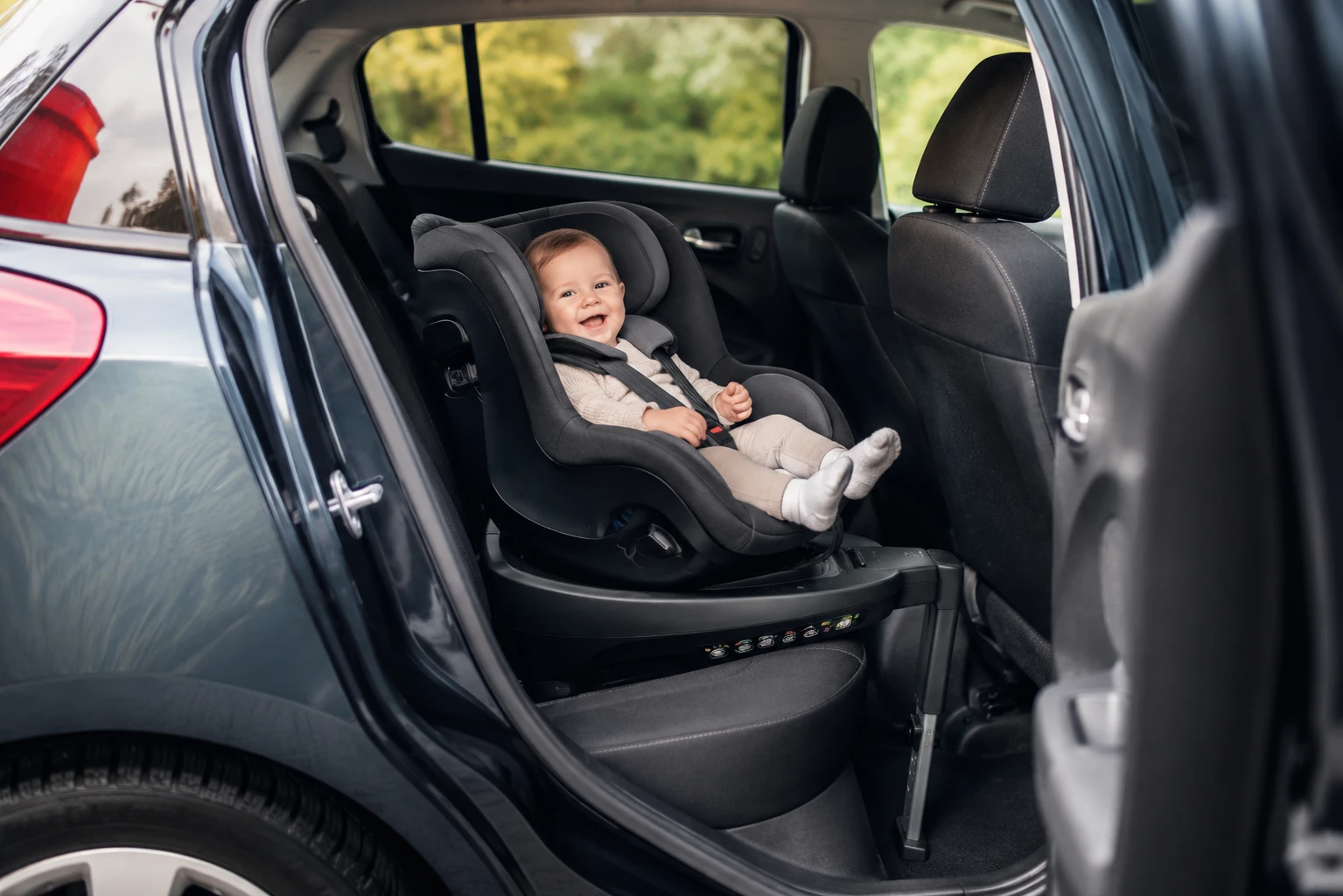
Finding the best rotating car seat for hatchbacks is not always easy. While hatchbacks are practical, fuel-efficient, and simple to maneuver, they often provide less room for child car seats. Consequently, loading and securing a child can become frustrating. Fortunately, rotating car seats help solve many of these challenges. Instead of awkward bending and twisting, parents can turn the seat toward the door for easier access. Therefore, choosing the right model can improve both convenience and comfort. In this guide, you’ll learn exactly what to look for and how to find the best rotating car seat for your hatchback.
What Makes Hatchbacks Different for Car Seat Installation?
Although hatchbacks offer excellent practicality, they present unique car seat challenges. Therefore, understanding these limitations is the first step toward making the right purchase.
Limited Rear Seat Space
Most hatchbacks are designed to maximize efficiency. As a result, rear-seat dimensions are often more compact than those found in larger vehicles. Consequently, parents may encounter:
- Reduced rear legroom
- Less space for rear-facing seats
- Tighter installation angles
- Limited room for rotation mechanisms
Moreover, a seat that fits comfortably in an SUV may feel oversized in a hatchback.
Common Hatchback Models Parents Drive
Many families choose hatchbacks because they combine affordability with versatility. Popular examples include:
- Honda Fit
- Toyota Yaris
- Volkswagen Golf
- Hyundai i20
- Ford Fiesta
- Mazda2
- Kia Rio
Although these vehicles vary slightly in size, they all benefit from compact car seat solutions.
Why Standard Car Seats Can Be Difficult
Traditional car seats require parents to lean deeply into the vehicle. Over time, this repetitive movement can become uncomfortable. Furthermore, common frustrations include:
- Back strain
- Shoulder discomfort
- Difficult harness adjustments
- Limited visibility while buckling children
Therefore, many parents eventually consider rotating alternatives.
Why Choose a Rotating Car Seat for a Hatchback?
Rotating car seats offer more than convenience. In fact, they can significantly improve everyday usability.
Easier Child Loading and Unloading
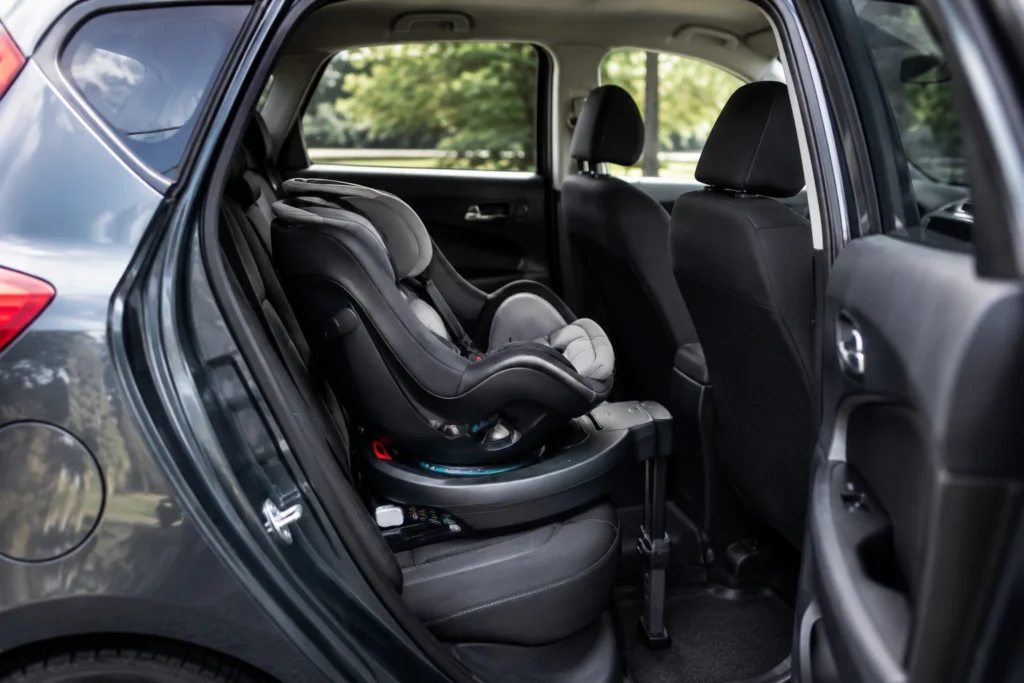
Instead of reaching across the seat, parents can rotate it toward the vehicle door. As a result, they can:
- Secure harnesses more easily
- Maintain better posture
- Reduce twisting motions
- Improve loading efficiency
Consequently, daily trips become less stressful.
Better Access in Tight Parking Spaces
Many hatchbacks spend their lives in crowded parking lots and urban environments. However, limited door-opening space often creates problems. Fortunately, rotating seats help overcome these challenges. Even when another vehicle is parked nearby, the swivel function provides easier access to the child.
Reduced Physical Strain
Repeated lifting eventually affects most parents. Therefore, reducing unnecessary movements can make a meaningful difference. Many parents report:
- Less lower back discomfort
- Reduced shoulder strain
- Improved comfort during daily use
As children grow heavier, these benefits become even more noticeable.
Longer Rear-Facing Use
Safety experts generally recommend extended rear-facing travel whenever possible. However, rear-facing seats often consume more cabin space. Fortunately, many modern rotating models feature compact designs that work exceptionally well in smaller vehicles. As a result, hatchback owners can maintain safer rear-facing positions for longer periods.
Improved Everyday Convenience
Convenience should never be underestimated. After all, parents use car seats every single day. Therefore, a design that simplifies loading and harnessing can improve both safety and consistency.
Key Features to Look for in the Best Rotating Car Seat for Hatchbacks
Not all rotating car seats are equally suitable for small vehicles. Therefore, evaluating specific features is essential.
Compact Front-to-Back Design
This factor is often the most important. A shorter seat helps preserve valuable front-seat legroom. Consequently, both drivers and passengers remain more comfortable. Look for seats specifically marketed for:
- Compact vehicles
- Small family cars
- City vehicles
- Hatchbacks
Slim Seat Width
A narrow profile provides additional flexibility. For example, it may:
- Create more passenger space
- Improve access to seatbelt buckles
- Enhance rear-seat usability
Therefore, slimmer models often perform better in compact interiors.
One-Hand Rotation Mechanism
Not every rotating system operates smoothly. Some seats rotate effortlessly. Others require significantly more effort. Therefore, testing the mechanism beforehand is highly recommended whenever possible.
Extended Rear-Facing Limits
Children grow quickly. Consequently, selecting a seat with higher rear-facing limits can provide greater long-term value. Important features include:
| Feature | Benefit |
|---|---|
| Higher weight limits | Longer rear-facing use |
| Adjustable headrest | Accommodates growth |
| Multiple recline positions | Improved comfort |
| Compact shell design | Better hatchback fit |
Easy Installation
Even the safest seat can become problematic if installation is overly complicated. Therefore, prioritize features such as:
- ISOFIX compatibility
- Clear installation indicators
- Secure support legs
- Simple adjustment systems
As a result, installation becomes quicker and more reliable.
Weight and Height Limits
Because a rotating car seat represents a significant investment, long-term usability matters. Therefore, consider seats that support children from infancy through toddlerhood. Additionally, generous height and weight limits can delay the need for replacement.
Advanced Engineering and Rotation Systems
Modern rotating seats rely on sophisticated engineering to balance strength and usability. Interestingly, some design concepts are similar to those found in the study of Anisotropy which examines how materials behave differently depending on the direction of applied force. Likewise, manufacturers continuously refine swivel systems to improve durability and smoothness. In some cases, these improvements involve principles related to Tribology, the study of friction and wear between moving surfaces.
Best Rotating Car Seat for Hatchbacks:
Top Picks
Although individual needs vary, several categories consistently stand out for hatchback owners.
Best Overall Rotating Car Seat for Hatchbacks
The ideal all-around model typically combines:
- Compact dimensions
- Smooth rotation
- Strong safety features
- Long-term usability
- Comfortable padding
Consequently, it delivers a balance of convenience and practicality.
Best Compact Rotating Car Seat
Small hatchbacks require maximum efficiency. Therefore, compact models should feature:
- Short bases
- Space-saving shells
- Efficient recline systems
As a result, they fit more comfortably behind drivers and passengers.
Best Budget Rotating Car Seat for Hatchbacks
Affordable options can still provide excellent functionality. While premium features may be limited, many budget-friendly models offer:
- Reliable safety performance
- User-friendly rotation
- Compact dimensions
Therefore, they remain attractive choices for cost-conscious families.
Best Premium Rotating Car Seat
Premium models typically offer additional refinements. For example:
- Enhanced side-impact protection
- Premium fabrics
- Improved recline adjustments
- More advanced rotation systems
Consequently, they often provide a more luxurious user experience.
Best Newborn-to-Toddler Rotating Car Seat
Parents seeking maximum value should focus on versatility. Therefore, look for seats that include:
- Infant inserts
- Adjustable headrests
- Extended rear-facing limits
- Multiple height settings
As a result, one purchase may accommodate several years of growth.
Comparison Table: Best Rotating Car Seats for Hatchbacks
| Category | Primary Advantage | Best For |
|---|---|---|
| Overall Winner | Balanced performance | Most families |
| Compact Choice | Small footprint | Small hatchbacks |
| Budget Option | Lower cost | Budget-conscious parents |
| Premium Option | Additional comfort features | Frequent travelers |
| Newborn-to-Toddler Choice | Long-term use | Growing families |
How to Measure Your Hatchback Before Buying a Rotating Car Seat
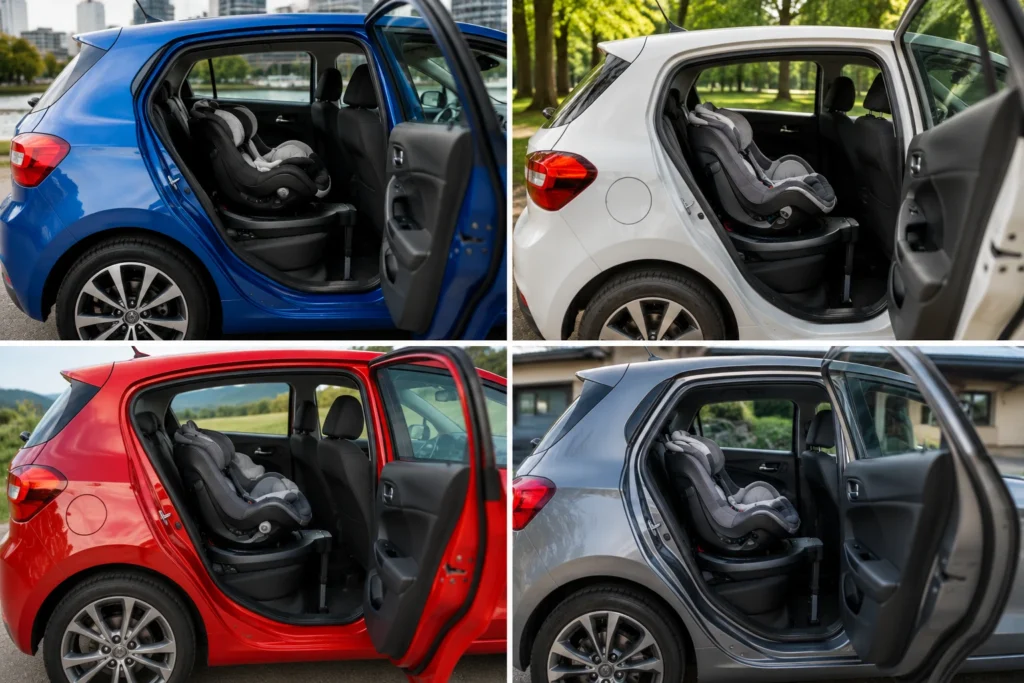
Even the best rotating car seat for hatchbacks can disappoint if measurements are ignored. Therefore, taking a few simple measurements beforehand can prevent costly mistakes.
Check Rear Seat Width
Measure the actual seating area rather than relying solely on vehicle specifications. Consequently, you’ll gain a more accurate understanding of available space.
Measure Front-to-Back Space
Position the driver’s seat where it normally sits. Then measure the distance between the front and rear seating positions. As a result, you’ll know exactly how much room remains for the car seat.
Consider Driver Height
Driver height significantly affects available space. Therefore, taller drivers should pay special attention to front-to-back dimensions.
Evaluate Door Opening Clearance
The rotation feature requires adequate clearance. Consequently, verify that the seat can rotate freely without contacting door panels or interior trim.
Verify Manufacturer Compatibility Lists
Most manufacturers provide compatibility guides. However, these lists should serve as a starting point rather than the final decision. Whenever possible, test the seat in your specific hatchback before purchasing.
Best Rotating Car Seat for Different Hatchback Types
Although hatchbacks share many characteristics, they are not all identical. Therefore, selecting the best rotating car seat for hatchbacks often depends on the specific type of vehicle you drive.
Small City Hatchbacks
City-focused hatchbacks prioritize maneuverability and fuel efficiency. Consequently, interior space is often limited. Examples include:
- Toyota Yaris
- Kia Rio
- Mazda2
- Hyundai i20
Therefore, compact rotating car seats with shorter front-to-back dimensions are usually the best choice. Additionally, a slim seat width can help maximize passenger comfort.
Family Hatchbacks
Family-oriented hatchbacks typically provide slightly more interior room. As a result, parents may have more flexibility when choosing larger rotating models. Popular examples include:
- Volkswagen Golf
- Honda Fit
- Ford Focus Hatchback
Nevertheless, measuring available space before purchasing remains essential.
Hybrid and Electric Hatchbacks
Many hybrid and electric hatchbacks have unique floor designs. Therefore, parents should verify compatibility with support legs and installation systems. Furthermore, checking the vehicle manual can help avoid installation issues.
Three-Door Hatchbacks
Three-door vehicles create additional accessibility challenges. Consequently, the rotating feature becomes even more valuable. Instead of climbing awkwardly into the rear area, parents can rotate the seat toward the door and secure the child more comfortably.
Five-Door Hatchbacks
Five-door hatchbacks generally offer easier rear-seat access. However, convenience still matters. Therefore, a rotating car seat can continue to provide significant benefits during daily use.
Common Mistakes Hatchback Owners Make When Choosing Rotating Car Seats
Many parents focus exclusively on product reviews. Unfortunately, that approach can lead to expensive mistakes. Therefore, understanding common purchasing errors is extremely helpful.
Buying Based Solely on Reviews
A seat may receive outstanding reviews while still fitting poorly in your vehicle. Consequently, vehicle compatibility should always take priority. Reviews provide guidance. Measurements provide answers.
Ignoring Vehicle Dimensions
Some parents assume all rotating car seats fit all hatchbacks. However, that assumption often creates problems. Therefore, measuring available space beforehand is one of the smartest steps you can take.
Overlooking Front Passenger Comfort
A car seat may fit technically. However, if the front passenger must sit uncomfortably close to the dashboard, the setup may not be practical. Consequently, overall cabin comfort should be part of the decision-making process.
Choosing the Largest Seat Available
Many parents believe bigger automatically means better. However, oversized seats can create unnecessary challenges in compact vehicles. Therefore, choosing a properly sized model often delivers a better experience.
Forgetting Future Growth Needs
Short-term thinking frequently results in additional purchases. Instead, consider:
- Rear-facing limits
- Height limits
- Adjustable headrests
- Growth-friendly design
As a result, the seat may serve your child for several years.
Ignoring Rotation Mechanism Maintenance
Even high-quality rotating seats require occasional inspection. Although problems are uncommon, dirt or improper installation can affect performance. In fact, searches such as Evenflo Revolve 360 Won’t Rotate often result from installation errors or obstructions rather than mechanical failures. Therefore, regular checks can help maintain smooth operation.
Tips for Installing a Rotating Car Seat in a Hatchback
Even the best rotating car seat for hatchbacks will perform poorly if installed incorrectly. Therefore, proper installation deserves careful attention.
Read Both Manuals Thoroughly
This may seem obvious. However, many installation errors occur because parents skip instructions. Therefore, always review:
- Vehicle manual
- Car seat manual
Together, they provide the information needed for a secure installation.
Verify ISOFIX Connections
If your seat uses ISOFIX anchors, confirm that each connection is properly secured. Additionally, check installation indicators whenever available. Consequently, you’ll have greater confidence in the setup.
Test Rotation Before Daily Use
A seat may appear correctly installed. However, rotation should always be tested before transporting a child. Therefore, rotate the seat multiple times to ensure smooth operation.
Confirm Recline Position
Proper recline angles are particularly important for infants. Consequently, verify the manufacturer’s recommendations before every major adjustment.
Check Support Leg Placement
Many rotating seats use support legs for additional stability. Therefore, ensure the leg sits firmly on the vehicle floor. Furthermore, avoid placing the leg on storage compartments unless specifically approved by the manufacturer.
Perform Regular Safety Inspections
Installation should not be a one-time task. Instead, inspect the seat periodically for:
- Loose connections
- Excessive movement
- Damaged components
- Rotation issues
As a result, safety remains consistent over time.
Is a Rotating Car Seat Worth It in a Hatchback?
This question appears frequently among parents. Fortunately, the answer is often straightforward.
Advantages
Rotating car seats offer numerous benefits. For example:
| Benefit | Why It Matters |
|---|---|
| Easier access | Simplifies loading and unloading |
| Better ergonomics | Reduces strain on parents |
| Improved convenience | Faster daily routines |
| Extended rear-facing support | Encourages safer travel |
| Better harness positioning | Improves proper usage |
Consequently, many families quickly appreciate the added convenience.
Potential Drawbacks
No product is perfect. Therefore, understanding limitations is equally important. Potential drawbacks include:
- Higher purchase price
- Additional weight
- Slightly larger bases on some models
However, many parents find these disadvantages relatively minor compared to the benefits.
Who Benefits Most?
Rotating car seats are especially valuable for:
- Parents with newborns
- Families using compact vehicles
- Caregivers with back discomfort
- Parents making frequent daily trips
Therefore, hatchback owners often experience some of the greatest advantages.
How to Choose the Right Model for Your Vehicle
Even after narrowing your options, selecting the best rotating car seat for hatchbacks requires careful evaluation. Therefore, focus on these priorities:
Prioritize Fit First
Safety ratings are important. However, proper fit inside your vehicle comes first. Consequently, always verify compatibility before purchasing.
Consider Your Child’s Age
Different stages require different features. For example:
- Newborns need infant support inserts
- Toddlers benefit from extended rear-facing capability
- Older children require adjustable headrests
Therefore, choose a model that matches your child’s current and future needs.
Think About Daily Use
A seat may perform well in testing. However, daily convenience matters too. Consequently, evaluate:
- Rotation smoothness
- Harness accessibility
- Cleaning requirements
- Ease of adjustment
These factors significantly affect long-term satisfaction.
Balance Budget and Features
The most expensive model is not always the best choice. Likewise, the cheapest option may lack desirable features. Therefore, focus on overall value rather than price alone.
Final Thoughts
Choosing the best rotating car seat for hatchbacks ultimately comes down to balancing safety, space efficiency, and everyday convenience. While hatchbacks present unique challenges, the right rotating seat can make loading, unloading, and securing your child significantly easier. Therefore, prioritize compact dimensions, smooth rotation, and vehicle compatibility above all else. By taking accurate measurements and selecting a model designed for smaller vehicles, you’ll enjoy a safer, more comfortable experience every time you get behind the wheel.
FAQs
Yes, many modern rotating car seats are designed with compact dimensions specifically for smaller vehicles.
The best rotating car seat for hatchbacks is typically one that combines a compact footprint, smooth rotation, strong safety features, and extended rear-facing capability.
Some models do require slightly more space because of the rotating base. However, many newer designs are engineered to fit comfortably in compact hatchbacks.
Yes, rotating car seats must meet the same safety standards as traditional car seats. When installed correctly, they provide excellent protection while adding convenience.
Many rotating car seats are designed for newborns and include infant inserts for proper positioning. Always verify the minimum weight and height requirements before use.
Usage varies by model, but many rotating seats accommodate children from birth through toddlerhood and sometimes into the preschool years. Check the seat’s weight and height limits for specific guidance.
Most rotating car seats are designed to work with ISOFIX systems because they simplify installation. However, availability depends on both the seat and your vehicle.
Yes, provided there is enough clearance for both rotation and proper installation. Taller drivers should verify front-seat legroom before making a final decision.
The most common causes include installation errors, debris in the rotation mechanism, or the seat not being in the correct position for rotation. Reviewing the manufacturer’s instructions usually resolves the issue.
For many parents, the convenience, reduced physical strain, and easier child loading make the investment worthwhile. These benefits become especially noticeable during daily use in compact hatchbacks.

