

This post contains affiliate links. As an Amazon Associate, 360 Car Seat earns from qualifying purchases, at no extra cost to you.
Finding the best 360 car seat for small cars isn’t just about choosing a seat that rotates. More importantly, it’s about finding one that fits comfortably inside a compact vehicle while still providing excellent safety and convenience. A bulky car seat can quickly make a small cabin feel cramped. Fortunately, several modern rotating car seats are designed specifically with space-saving features in mind. In this guide, you’ll learn what makes a 360 car seat suitable for smaller vehicles, which models stand out, and how to choose the right option for your family’s needs.
What Is a 360 Car Seat?
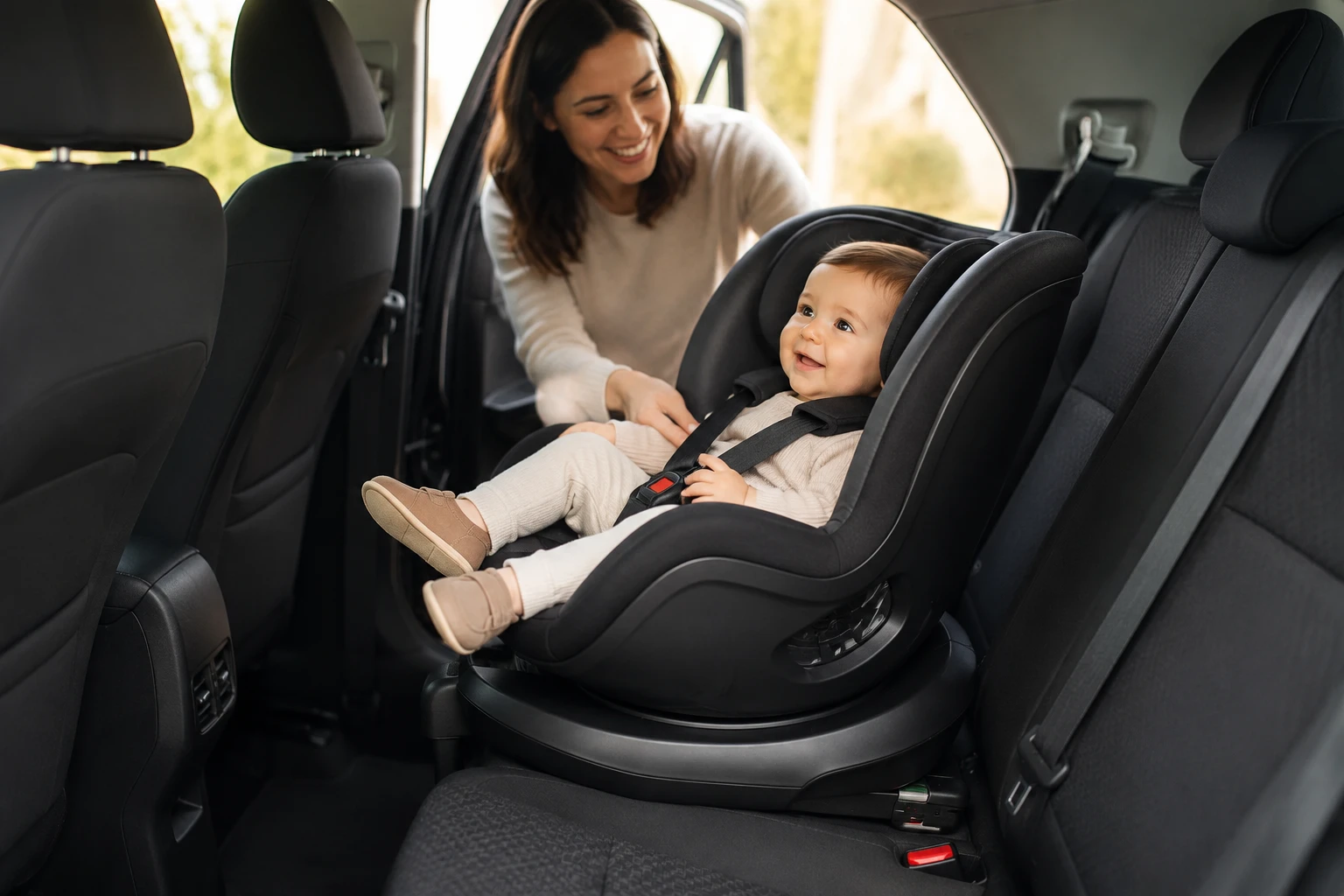
A 360 car seat is a child safety seat that rotates toward the vehicle door, allowing parents to place and secure their child more easily. Unlike traditional car seats that remain fixed, rotating models can turn sideways and, in many cases, rotate fully between rear-facing and forward-facing positions.
How the Rotation System Works
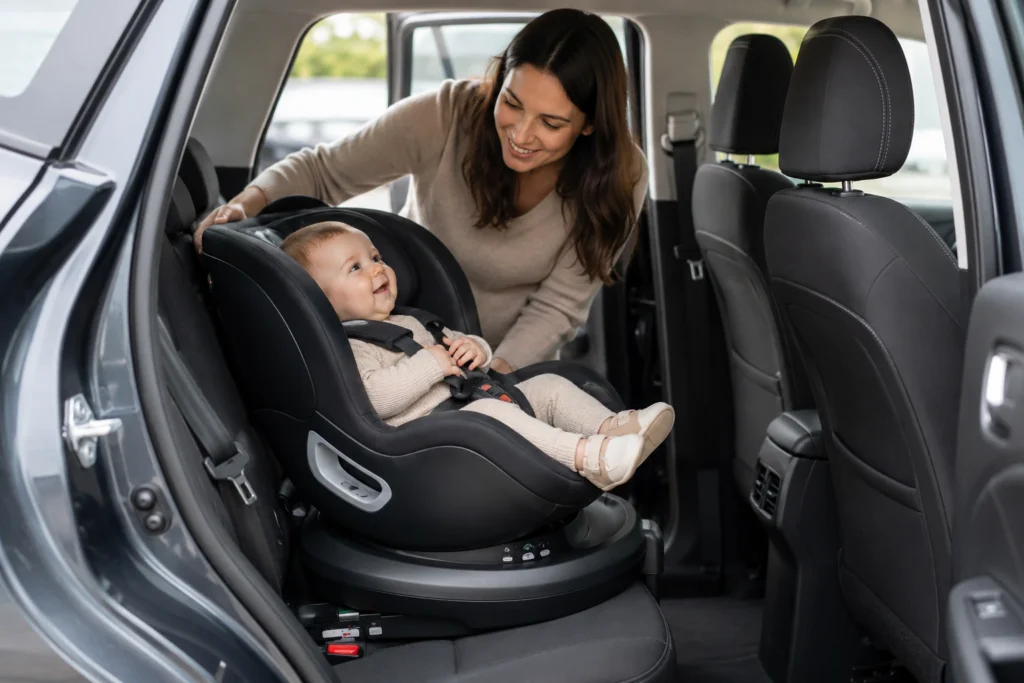
Most rotating car seats use a fixed base that stays installed in the vehicle. The seat itself rotates on top of the base. Depending on the model, rotation may include:
- 90-degree rotation for loading and unloading
- 180-degree rotation for easier access
- Full 360-degree rotation for position changes
As a result, parents spend less time bending and twisting when securing their children.
Why Parents Prefer Rotating Car Seats
Convenience is the biggest advantage. However, the benefits extend far beyond ease of use. Rotating car seats can provide:
- Easier child loading and unloading
- Reduced strain on the back and shoulders
- Faster daily routines
- Simplified harness adjustments
- Better access in tight parking spaces
For many parents, especially those lifting infants and toddlers multiple times per day, a rotating car seat can be the Best Way to Reduce Back Pain associated with daily loading and unloading. Instead of bending, twisting, and reaching into a tight rear seat area, parents can rotate the seat toward the door and secure their child in a much more comfortable position. Consequently, many families consider the rotating feature a practical upgrade rather than a luxury.
Challenges of Installing Car Seats in Small Cars
Not every car seat is a good fit for every vehicle. In fact, small cars often present unique installation challenges that can affect both comfort and usability.
Limited Rear Seat Space
Rear-facing car seats require significant room. As a result, some parents find themselves sacrificing front-seat legroom after installation. This becomes especially noticeable in:
- Compact sedans
- Hatchbacks
- Subcompact crossovers
Therefore, choosing a space-efficient seat becomes critical.
Narrow Door Openings
Many smaller vehicles have tighter door openings. Although traditional seats can make loading difficult, rotating seats help solve this problem by turning toward the parent. Consequently, buckling a child becomes faster and significantly more comfortable.
Compact Cabin Layouts
Small vehicles often feature:
- Narrow rear benches
- Reduced seat depth
- Lower rooflines
- Limited passenger space
Because of these limitations, selecting the best 360 car seat for small cars requires more than simply comparing safety ratings. Size matters just as much.
Key Features to Look for in the Best 360 Car Seat for Small Cars
Before making a purchase, focus on features that directly impact compatibility with compact vehicles.
Compact Footprint
First and foremost, evaluate the overall dimensions. Pay close attention to:
- Width
- Depth
- Height
- Base size
Even a difference of one or two inches can dramatically improve comfort inside a small vehicle.
Slim Base Design
A narrow base helps preserve valuable cabin space. Furthermore, slim designs often make installation easier. Benefits include:
- Better fit in compact cars
- More room for passengers
- Improved flexibility for multiple car seats
For growing families, this feature can be particularly valuable.
Rear-Facing Space Efficiency
Rear-facing travel remains the safest option for younger children. However, it often consumes the most space. Look for seats offering:
- Adjustable recline positions
- Compact shell designs
- Space-saving engineering
As a result, front passengers can maintain more legroom.
Easy Rotation Mechanism
Not all rotation systems perform equally well. Ideally, the seat should:
- Rotate smoothly
- Lock securely
- Operate with one hand
- Remain accessible after installation
After all, convenience is one of the primary reasons parents choose a rotating car seat.
Weight and Portability
Although most 360 car seats are relatively heavy, some are easier to handle than others. If you regularly move the seat between vehicles, weight becomes an important consideration.
Safety Features
Convenience should never come at the expense of safety. Instead, look for features such as:
- Side-impact protection
- Energy-absorbing materials
- Extended rear-facing capability
- Installation indicators
- Federal safety compliance
Many modern designs also incorporate engineering concepts similar to crumple zones, helping absorb and redirect crash energy during an impact.
Best 360 Car Seats for Small Cars
Several rotating car seats perform exceptionally well in compact vehicles. Let’s examine some of the strongest options.
1. Baby Jogger City Turn
Best Overall for Small Cars
The Baby Jogger City Turn consistently earns praise for combining convenience, accessibility, and a relatively compact design.
Pros:
- Innovative turning system
- Excellent accessibility
- Strong safety ratings
- Comfortable materials
Cons:
- Premium price
- Heavier than some competitors
Best For:
Parents seeking an excellent all-around option for everyday use.
2. Maxi-Cosi Emme 360
Best for Comfort
The Maxi-Cosi Emme 360 balances comfort and functionality remarkably well. Additionally, many parents appreciate its premium fabrics and smooth operation.
Pros:
- Comfortable padding
- Smooth rotation
- Multiple recline positions
- Attractive design
Cons:
- Slightly larger footprint
Best For:
Families prioritizing comfort during daily travel.
3. Cybex Sirona S
Best Premium Option
The Cybex Sirona S remains one of the most recognizable rotating car seats available today. Its advanced safety technology and premium construction appeal to many buyers.
Pros:
- High-end materials
- Excellent safety features
- Durable design
- Smooth rotation system
Cons:
- Higher cost
- Can require additional space
Best For: Parents seeking premium quality and advanced safety innovations.
4. Evenflo Revolve360 Slim
Best Space-Saving Choice
When discussing the best 360 car seat for small cars, the Evenflo Revolve360 Slim deserves special attention. Its compact footprint is specifically designed to maximize available space.
Pros:
- Slim profile
- Excellent value
- Easy installation
- Multiple usage modes
Cons:
- Slightly less premium padding
Best For: Parents who need maximum space efficiency.
5. Chicco Fit360
Best for Easy Installation
Chicco developed the Fit360 with installation simplicity as a priority. As a result, parents often find setup less intimidating compared to other rotating seats.
Pros:
- User-friendly installation
- Strong safety features
- Smooth adjustments
- High-quality construction
Cons:
- Limited long-term ownership data
Best For: Parents who want a straightforward installation process.
Comparison Table
| Model | Space Efficiency | Rotation Ease | Value | Best For |
|---|---|---|---|---|
| Baby Jogger City Turn | Very Good | Excellent | Good | Overall Performance |
| Maxi-Cosi Emme 360 | Good | Excellent | Good | Comfort |
| Cybex Sirona S | Good | Excellent | Fair | Premium Buyers |
| Evenflo Revolve360 Slim | Excellent | Very Good | Excellent | Small Cars |
| Chicco Fit360 | Very Good | Excellent | Good | Easy Installation |
How to Measure Your Vehicle Before Buying
Even the best car seat can become frustrating if it doesn’t fit your vehicle properly. Therefore, taking a few measurements beforehand is essential.
Measure Rear Seat Width
Start by measuring:
- Rear bench width
- Distance between seat belt anchors
- Available seating area
These measurements provide a solid starting point for compatibility checks.
Measure Front Seat Clearance
Next, place the front seats in their normal driving positions. Then measure the distance between the front seatbacks and the rear seat area. This becomes particularly important when using rear-facing configurations.
Check Door Opening Dimensions
A rotating seat needs room to rotate effectively. Therefore, evaluate:
- Door opening width
- Entry angle
- Clearance around the seat
A vehicle with wider rear door openings often provides a better overall experience.
Review Manufacturer Compatibility Guides
Finally, review the vehicle compatibility information provided by manufacturers. Many brands publish approved vehicle lists and installation guidance to help buyers avoid costly mistakes. By taking these simple steps before purchasing, you’ll dramatically increase your chances of finding the best 360 car seat for small cars that fits both your vehicle and your lifestyle.
Best Small Cars for 360 Car Seat Compatibility
Not all small cars are created equal. Although two vehicles may appear similar in size, interior dimensions can vary significantly. Therefore, it’s important to evaluate rear-seat space rather than relying solely on exterior measurements.
Compact SUVs
Compact SUVs often provide the best balance between maneuverability and interior space. Popular examples include:
- Honda CR-V
- Toyota RAV4
- Mazda CX-5
- Hyundai Tucson
- Subaru Forester
Because these vehicles typically offer taller rooflines and deeper rear seating areas, installing the best 360 car seat for small cars becomes much easier.
Sedans
Many parents successfully use rotating seats in compact and midsize sedans.
Good options include:
- Honda Civic
- Toyota Corolla
- Hyundai Elantra
- Mazda3
- Nissan Sentra
However, rear-facing installations may reduce front passenger legroom. Therefore, always test fitment before purchasing.
Hatchbacks
Hatchbacks remain popular among urban families. Advantages include:
- Easy loading access
- Flexible cargo space
- Compact exterior dimensions
However, shorter rear cabins can sometimes limit compatibility with larger rotating seats. Consequently, slim-profile models often perform best in hatchbacks.
Common Mistakes Parents Make When Buying a 360 Car Seat
Even experienced parents occasionally overlook important factors. Fortunately, these mistakes are easy to avoid.
Choosing Rotation Over Size
Many shoppers focus entirely on the rotating feature. However, a seat that rotates perfectly but overwhelms your vehicle isn’t the right choice. Instead, prioritize both functionality and dimensions.
Ignoring Front Passenger Comfort
A car seat may fit physically while still creating everyday frustrations. For example, if the front passenger must sit uncomfortably close to the dashboard, overall usability suffers. Therefore, always evaluate passenger comfort during installation.
Skipping Compatibility Checks
Many manufacturers provide vehicle compatibility guides. Yet some parents skip this step. As a result, they sometimes discover fitment issues after purchase. Spending a few minutes reviewing compatibility information can prevent significant headaches later.
Forgetting Future Growth
Children grow quickly. Consequently, selecting a seat with higher height and weight limits often delivers better long-term value. Look for models that support:
- Extended rear-facing use
- Forward-facing use
- Booster transitions when applicable
This approach maximizes your investment.
Are 360 Car Seats Safe for Small Cars?
This is one of the most common questions parents ask. The short answer is yes. When installed correctly, rotating car seats are just as safe as traditional car seats.
Understanding Safety Standards
Before reaching store shelves, car seats must meet strict safety requirements. Manufacturers conduct extensive testing to evaluate:
- Frontal impacts
- Side impacts
- Structural integrity
- Harness performance
Many aspects of this testing involve principles of biomechanics, which examines how the human body responds to forces during collisions. Therefore, properly certified rotating seats undergo rigorous evaluation before they reach consumers.
Installation Matters Most
Even the safest seat cannot perform effectively if installed incorrectly. As a result, installation quality matters more than brand preference. Always:
- Follow manufacturer instructions
- Verify recline angles
- Tighten installation points properly
- Confirm harness positioning
Many modern seats include visual indicators that simplify this process.
Tips for Maximum Protection
To improve safety even further:
- Keep children rear-facing as long as possible
- Ensure harness straps remain snug
- Avoid bulky winter clothing under harnesses
- Perform regular installation checks
Small adjustments can make a meaningful difference.
Maintenance and Long-Term Use Tips
A quality rotating seat represents a significant investment. Therefore, proper maintenance helps maximize both safety and longevity.
Clean the Seat Regularly
Children are experts at creating messes. Food crumbs, spilled drinks, and dirt can accumulate quickly. Regular cleaning helps:
- Maintain comfort
- Prevent odors
- Preserve fabric condition
Always follow the manufacturer’s cleaning recommendations.
Inspect the Rotation Mechanism
The rotation feature should operate smoothly. If movement becomes stiff or difficult:
- Check for debris
- Review cleaning instructions
- Contact the manufacturer if needed
Avoid using unauthorized lubricants unless specifically recommended.
Monitor Harness Condition
The harness system experiences daily wear. Regularly inspect:
- Straps
- Buckles
- Adjustment mechanisms
If components become damaged, replacement may be necessary.
Watch for Expiration Dates
Most parents are surprised to learn that car seats expire. Materials naturally degrade over time. Therefore, check the expiration label and replace the seat when recommended.
Which Is the Best 360 Car Seat for Small Cars?
After evaluating space efficiency, ease of use, safety features, and long-term value, several models stand out.
Best Overall
Baby Jogger City Turn
Its balance of accessibility, safety, and compact design makes it an excellent all-around choice.
Best Space-Saving Option
Evenflo Revolve360 Slim
For parents prioritizing every inch of interior space, this model delivers exceptional efficiency.
Best Premium Choice
Cybex Sirona S
Premium materials, advanced safety technology, and refined engineering justify its higher price tag.
Best for Comfort
Maxi-Cosi Emme 360
Families focused on everyday comfort will appreciate its thoughtful design and plush materials.
Best for Easy Installation
Simple installation features make this an appealing option for busy parents. Ultimately, the best 360 car seat for small cars depends on your vehicle dimensions, family needs, and budget. Nevertheless, choosing a model specifically designed for compact spaces will almost always lead to a better ownership experience.
Conclusion
Choosing the best 360 car seat for small cars requires balancing safety, convenience, and space efficiency. While rotating seats offer tremendous everyday benefits, fitment remains critical. Therefore, measure your vehicle carefully, compare dimensions closely, and prioritize models designed for compact interiors. With the right choice, you’ll enjoy easier daily routines, improved comfort, and greater confidence every time you hit the road.
FAQs
The best option depends on your vehicle and needs, but compact models like the Evenflo Revolve360 Slim are often popular because they maximize available space.
Yes, 360 car seats are safe for small cars when they are properly installed and used according to the manufacturer’s instructions.
Some do, but many newer models are specifically designed to be compact and fit comfortably in smaller vehicles.
Yes, many hatchbacks can accommodate a 360-car seat, although checking the seat’s dimensions and vehicle compatibility is recommended.
Many parents find the added convenience, easier access, and reduced physical strain well worth the higher purchase price.
Space-saving models such as the Evenflo Revolve360 Slim are designed to preserve as much front-seat space as possible.
Most rotating car seats allow both rear-facing and forward-facing use, making them suitable for multiple growth stages.
This depends on the seat’s height and weight limits, but many models can accommodate children for several years before a transition is needed.
No, most use either the vehicle seat belt or LATCH system, although installation procedures vary by manufacturer.
Measure your available rear-seat space, review the manufacturer’s fit guide, and compare the seat dimensions before purchasing.

