

This post contains affiliate links. As an Amazon Associate, 360 Car Seat earns from qualifying purchases, at no extra cost to you.
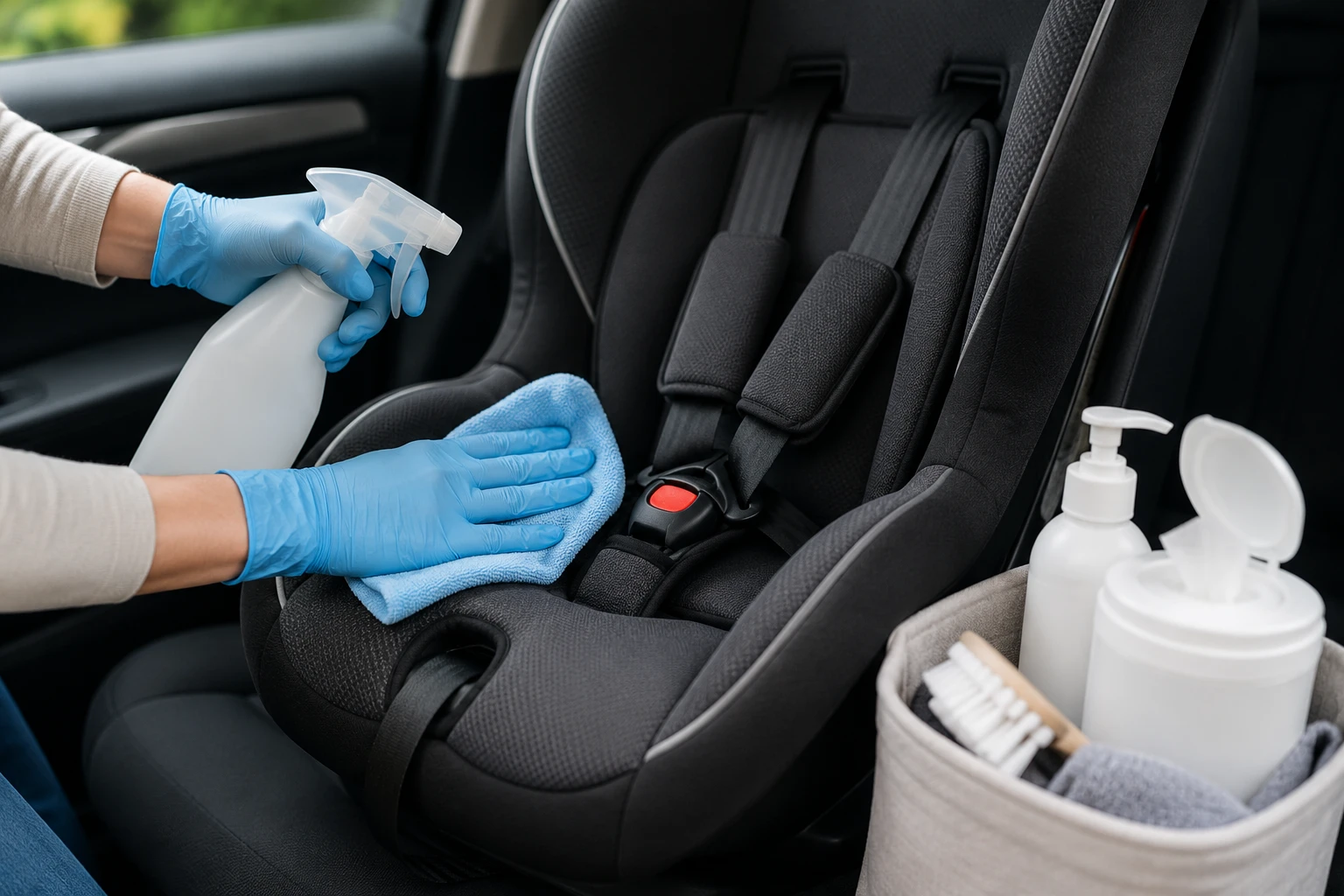
Car seats handle a lot more than transportation. They collect crumbs, spills, germs, and bacteria during everyday use. Therefore, learning how to disinfect a car seat safely is essential for keeping your child healthy while preserving the seat’s safety features. Fortunately, proper disinfecting doesn’t require harsh chemicals. Instead, a few safe cleaning methods can help eliminate germs without damaging fabrics, harnesses, or critical components.
Understanding Car Seat Materials Before Disinfecting
Before grabbing cleaning supplies, it’s important to understand what you’re cleaning. Unlike regular furniture, a car seat is engineered safety equipment. Every component plays a role in protecting your child during a crash. Consequently, using the wrong cleaning products can damage materials and potentially reduce the seat’s effectiveness.
Why Material Type Matters
Different materials respond differently to moisture and cleaning products. Using aggressive disinfectants may:
- Damage fabric fibers
- Break down foam padding
- Cause plastic surfaces to weaken
- Affect harness performance
- Void manufacturer warranties
Therefore, safe cleaning should always balance hygiene and safety.
Common Car Seat Components
Most car seats contain several different materials:
| Component | Purpose |
|---|---|
| Fabric Cover | Comfort and protection |
| Foam Padding | Impact absorption |
| Plastic Shell | Structural support |
| Harness Straps | Child restraint |
| Buckles and Clips | Secure fastening |
Because each component serves a different function, cleaning methods should be adjusted accordingly.
Check Manufacturer Instructions First
Before beginning any deep cleaning process:
- Locate the owner’s manual
- Read cleaning instructions carefully
- Check care labels on removable covers
- Visit the manufacturer’s website if needed
Some covers can be machine washed. Others require hand washing only. Therefore, following manufacturer recommendations helps prevent accidental damage. Modern car seats are engineered using advanced materials and manufacturing processes that require careful maintenance. Similar to the concept of Tribology (the study of friction, wear, and lubrication), understanding how surfaces interact can help explain why certain cleaning products may damage fabrics, plastics, or harness components.
When Should You Disinfect a Car Seat?
Many parents clean only when they notice a stain. However, germs are often present long before visible dirt appears. Routine disinfecting can help maintain a healthier environment for your child.
After Illness
When a child is sick, germs can easily spread throughout the car seat. Consider disinfecting after:
- Colds
- Flu
- Respiratory infections
- Stomach viruses
- COVID-19
Additionally, cleaning after illness may help reduce the risk of lingering contamination.
After Food or Drink Spills
Spills are one of the most common reasons parents need to disinfect a car seat. Common messes include:
- Milk
- Formula
- Juice
- Sports drinks
- Yogurt
- Snacks
Even small spills can soak into padding and create odors over time. In fact, many parents search for How to Clean Evenflo Revolve 360 Car Seat after discovering that spilled milk can leave a stubborn odor if not cleaned quickly and thoroughly.
Following Vomiting or Diaper Leaks
These situations require immediate attention. Organic material trapped inside the seat can contribute to:
- Unpleasant odors
- Mold growth
- Bacterial buildup
- Fabric deterioration
Therefore, prompt cleaning is always recommended.
Routine Preventive Cleaning
Even without visible messes, routine maintenance helps keep the seat fresh. A practical schedule may include:
| Task | Frequency |
|---|---|
| Quick Inspection | Weekly |
| Vacuuming | Every 2–4 Weeks |
| Light Cleaning | Monthly |
| Deep Disinfecting | Every Season |
As a result, regular care often prevents major cleaning challenges later.
Supplies You’ll Need to Disinfect a Car Seat Safely
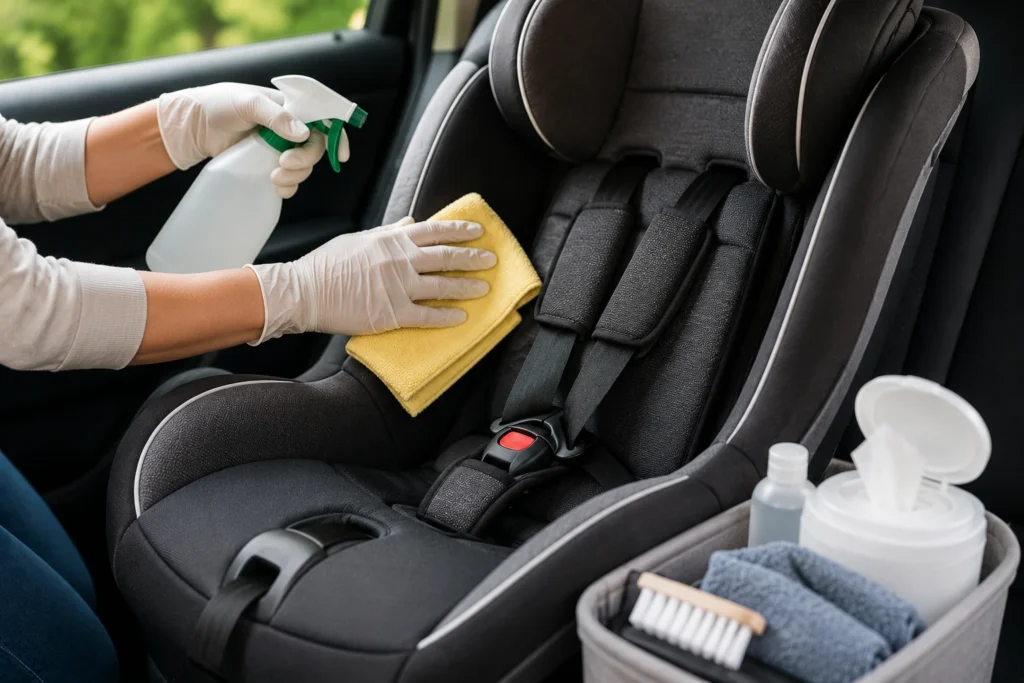
Having the right supplies makes the process easier and safer.
Safe Cleaning Products
Recommended cleaning products include:
- Mild dish soap
- Warm water
- Child-safe cleaning solutions
- Manufacturer-approved disinfectants
- Alcohol-free wipes when permitted
Generally, gentle products provide excellent results without risking material damage.
Helpful Cleaning Tools
Gather these items before starting:
- Vacuum cleaner
- Crevice attachment
- Microfiber cloths
- Soft-bristle brush
- Small bucket
- Spray bottle
These simple tools are often more effective than aggressive cleaning equipment.
Products to Avoid
Some products can cause serious damage to car seat materials.
Avoid:
- Bleach
- Ammonia
- Solvents
- Strong degreasers
- Undiluted disinfectants
- Steam cleaners unless specifically approved
Although these products kill germs effectively, they may weaken important safety components.
Step-by-Step Guide: How to Disinfect a Car Seat Safely
Now let’s walk through the safest process.
Step 1: Remove the Car Seat
Whenever possible, remove the seat from the vehicle. This allows for:
- Better visibility
- Easier access
- Improved airflow
- More thorough cleaning
Additionally, working outdoors or in a well-ventilated area speeds drying.
Step 2: Vacuum Thoroughly
Before applying any moisture, remove loose debris. Focus on:
- Creases
- Harness slots
- Buckle openings
- Under removable inserts
You may be surprised by how many crumbs hide inside a car seat. Removing debris first prevents dirt from turning into muddy residue later.
Step 3: Remove Washable Components
Many car seats include removable:
- Seat covers
- Infant inserts
- Head supports
- Additional padding
Before removal, consider taking photos. This makes reassembly much easier later.
Step 4: Wash Fabric Components
If machine washing is allowed:
- Use a gentle cycle
- Use mild detergent
- Avoid bleach
- Follow manufacturer instructions
If hand washing is required:
- Mix mild soap with warm water
- Gently clean the fabric
- Rinse thoroughly
Avoid aggressive scrubbing because it may damage fibers.
Step 5: Clean the Plastic Shell
The shell typically tolerates routine cleaning well. Use:
- Warm water
- Mild soap
- Soft microfiber cloth
Pay special attention to:
- Armrests
- Side impact panels
- Cup holders
- Carry handles
These surfaces often collect the highest concentration of germs.
Step 6: Disinfect High-Touch Areas
This is one of the most important steps when learning how to disinfect a car seat safely. Instead of soaking surfaces, apply disinfectant carefully. Best practices include:
- Using manufacturer-approved products
- Following label directions
- Avoiding oversaturation
- Allowing proper contact time
Target:
- Plastic surfaces
- Handles
- Armrests
- Exterior touch points
As a result, you can eliminate germs while preserving material integrity.
Step 7: Allow Complete Air Drying
Drying is just as important as cleaning. Moisture trapped inside a car seat can lead to:
- Mold
- Mildew
- Lingering odors
- Material breakdown
Place all components in a well-ventilated area until completely dry. Moisture management is important because trapped water can contribute to material degradation over time. In materials science, the study of how substances absorb and release moisture is often connected to Hygroscopy, a property that affects many fabrics and foams used in consumer products.
Step 8: Reassemble Carefully
Once every component is completely dry:
- Reinstall covers
- Reattach inserts
- Verify harness routing
- Test buckle operation
Finally, inspect the entire seat before placing your child back inside. A properly cleaned and correctly assembled car seat provides both cleanliness and safety for every trip.
How to Disinfect Car Seat Harness Straps Safely
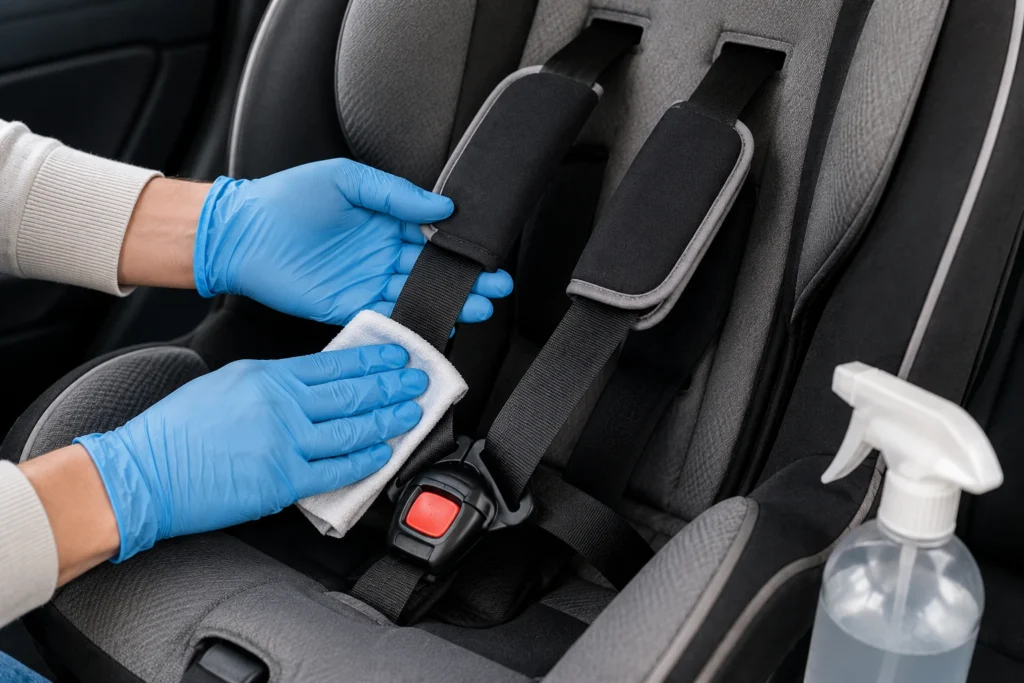
Harness straps are among the most important components of any car seat. While they may appear durable, they require special care during cleaning. Many parents make the mistake of treating harnesses like regular fabric. However, harsh cleaning methods can weaken the webbing and affect performance during a collision.
Why Harness Straps Require Special Care
Car seat manufacturers design harness straps to withstand significant crash forces. Unfortunately, certain cleaning methods can compromise those safety properties. Potential risks include:
- Frayed fibers
- Reduced strength
- Material stretching
- Premature wear
Therefore, it’s essential to follow approved cleaning methods.
Approved Cleaning Methods
Most manufacturers recommend:
- Warm water
- Mild soap
- Soft cloths
- Gentle spot cleaning
To clean harness straps:
- Dampen a cloth with mild soapy water.
- Wipe the straps carefully.
- Remove soap residue with a clean damp cloth.
- Allow the straps to air dry completely.
Additionally, avoid excessive scrubbing because it may damage the fibers.
Common Mistakes Parents Make
Avoid these common errors:
- Soaking harness straps
- Machine washing harnesses
- Using bleach
- Applying strong disinfectants
- Drying with high heat
Although these shortcuts may seem effective, they can permanently damage the harness system.
How to Clean and Disinfect Car Seat Buckles
Buckles often become one of the dirtiest parts of a car seat. Food particles, juice residue, and dirt frequently become trapped inside the mechanism.
Why Buckles Collect Germs
Buckles experience constant use. Children spill snacks. Drinks leak. Sticky fingers touch every surface. As a result, debris accumulates inside the buckle housing.
Safe Buckle Cleaning Process
Most manufacturers recommend a simple approach. Steps include:
- Remove loose debris.
- Rinse the buckle with warm water if permitted by the manufacturer.
- Avoid adding soap inside the mechanism unless instructed.
- Shake excess water out.
- Allow complete air drying.
Patience is important because trapped moisture can affect operation.
Testing Buckle Function After Cleaning
Before using the seat again:
- Listen for a clear clicking sound
- Ensure smooth insertion
- Verify easy release
- Check for sticking or resistance
If the buckle does not operate normally, consult the manufacturer before continued use.
Safe Disinfecting Methods for Infant Car Seats
Infant car seats require additional care because newborns have sensitive skin and developing immune systems. Therefore, selecting gentle cleaning products becomes even more important.
Extra Precautions for Newborns
Avoid products that contain:
- Strong fragrances
- Bleach
- Ammonia
- Harsh solvents
Instead, use products specifically approved by the manufacturer whenever possible.
Cleaning Infant Inserts and Padding
Many infant inserts are removable. Before washing:
- Read care labels
- Follow washing instructions
- Use gentle detergent
- Avoid fabric softeners
Afterward, allow complete drying before reinstallation.
Maintaining a Cleaner Infant Environment
Small habits can reduce the need for frequent deep cleaning. Helpful practices include:
- Wiping spills immediately
- Removing crumbs regularly
- Inspecting straps weekly
- Vacuuming monthly
Consequently, routine maintenance often keeps infant seats cleaner between major cleanings.
Common Disinfecting Mistakes That Can Damage a Car Seat
Many well-intentioned parents accidentally damage their car seats while trying to clean them. Fortunately, these mistakes are easy to avoid.
Using Too Much Water
More water does not equal better cleaning. Excess moisture can:
- Saturate foam
- Encourage mold growth
- Cause lingering odors
- Extend drying times
Therefore, use moisture sparingly.
Applying Harsh Chemicals
Powerful cleaners can cause:
- Fabric fading
- Plastic deterioration
- Strap damage
- Skin irritation
Whenever possible, stick with approved cleaning solutions.
Reassembling Before Everything Is Dry
This mistake is surprisingly common. Even slightly damp materials can create conditions for:
- Mold
- Mildew
- Unpleasant odors
Thus, allow every component to dry completely before reassembly.
Ignoring Manufacturer Instructions
Manufacturer recommendations exist for a reason. Ignoring them may:
- Void warranties
- Damage materials
- Reduce safety performance
Therefore, always start with the owner’s manual.
Tips for Keeping a Car Seat Clean Between Deep Cleanings
Deep cleaning is important. However, daily habits often have a greater impact on long-term cleanliness.
Establish a No-Food Rule
Food creates most car seat messes. Limiting eating in the vehicle can significantly reduce:
- Crumbs
- Sticky residue
- Odors
- Stains
While not always practical, it can make a noticeable difference.
Use Approved Seat Protectors
Some manufacturers allow specific seat protectors. If approved, they may help:
- Catch spills
- Reduce wear
- Simplify cleaning
However, always verify compatibility first.
Vacuum Regularly
A quick vacuum session every few weeks removes debris before it becomes embedded. Focus on:
- Creases
- Buckle areas
- Harness openings
- Under inserts
Regular vacuuming takes only minutes but can dramatically improve cleanliness.
Address Spills Immediately
The longer a spill remains, the harder it becomes to remove. Therefore:
- Blot liquids quickly
- Clean affected areas promptly
- Allow proper drying
Fast action often prevents stains and odors from developing.
Quick Reference Cleaning Guide
| Situation | Recommended Action |
|---|---|
| Child was sick | Disinfect approved surfaces and wash removable covers |
| Milk spill | Clean immediately and dry thoroughly |
| Vomit accident | Deep clean affected areas and inspect padding |
| Sticky buckle | Rinse and air dry according to manufacturer guidance |
| Routine maintenance | Vacuum and wipe monthly |
| Seasonal cleaning | Perform full inspection and disinfecting |
Conclusion
Keeping a car seat clean is about more than appearance. It is also about maintaining a safe and healthy environment for your child. Fortunately, once you understand how to disinfect a car seat safely, the process becomes straightforward. By using gentle cleaning products, following manufacturer instructions, and addressing spills quickly, you can protect both your child and the integrity of the car seat. Most importantly, regular maintenance today can help prevent bigger cleaning challenges tomorrow.
FAQs
Yes, but only if the manufacturer permits them. Always check the owner’s manual before using any disinfecting product on car seat materials.
A thorough disinfecting every few months is usually sufficient, although seats exposed to illness or spills may require more frequent cleaning.
No, bleach can damage fabrics, harness straps, and plastic components. Mild soap and manufacturer-approved cleaners are safer choices.
Many covers are machine washable, but requirements vary by manufacturer. Always follow the care instructions provided with the seat.
Clean and disinfect approved surfaces as soon as possible, and wash any removable fabric components according to manufacturer guidelines.
Steam cleaning is generally not recommended unless the manufacturer specifically approves it. Excessive heat and moisture may damage important safety components.
Allow every component to dry completely, which may take several hours or longer depending on humidity and airflow.
Some harsh disinfectants can damage strap fibers over time. Therefore, spot cleaning with mild soap and water is usually the safest option.
Address the source of the odor by thoroughly cleaning affected areas and ensuring all components dry completely before reassembly.
Clean the spill immediately using mild soap and water, then allow the seat to dry thoroughly to help prevent lingering odors and bacterial growth.

