

This post contains affiliate links. As an Amazon Associate, 360 Car Seat earns from qualifying purchases, at no extra cost to you.
Vomit accidents happen. However, the smell that follows can linger long after the mess is gone. If you’re trying to figure out how to remove vomit smell from car seat surfaces, acting quickly is essential. Otherwise, odors can seep into upholstery and foam, making them much harder to eliminate later. Fortunately, with the right cleaning methods, you can remove both the stain and the odor completely. This guide explains exactly how to clean, deodorize, and restore your car seat so it smells fresh again.
Understanding Why Vomit Smell Lingers
Before cleaning, it helps to understand why vomit odors are so difficult to remove.
What Causes the Odor?
The smell comes from a combination of substances, including:
- Stomach acids
- Partially digested food
- Bacteria
- Digestive enzymes
- Moisture trapped inside upholstery
As these materials break down, they continue releasing unpleasant odors. Consequently, even a clean-looking seat can still smell bad days later. Odors become particularly stubborn when organic material breaks down and interacts with bacteria inside porous surfaces. This process is somewhat similar to the way complex biological systems function in a microenvironment, where surrounding conditions influence chemical and biological activity. In a car seat, trapped moisture and limited airflow create ideal conditions for odor-causing compounds to persist.
Why Car Seats Hold Odors Longer Than Other Surfaces
Car seats contain several layers that can absorb contamination.
| Layer | Purpose |
|---|---|
| Fabric Cover | Comfort and appearance |
| Foam Padding | Cushioning |
| Seat Frame | Structural support |
Unfortunately, once vomit reaches the foam layer, odors become significantly more difficult to remove. The foam acts like a sponge. As a result, surface cleaning alone may not solve the problem.
Step One: Remove Any Remaining Vomit Immediately
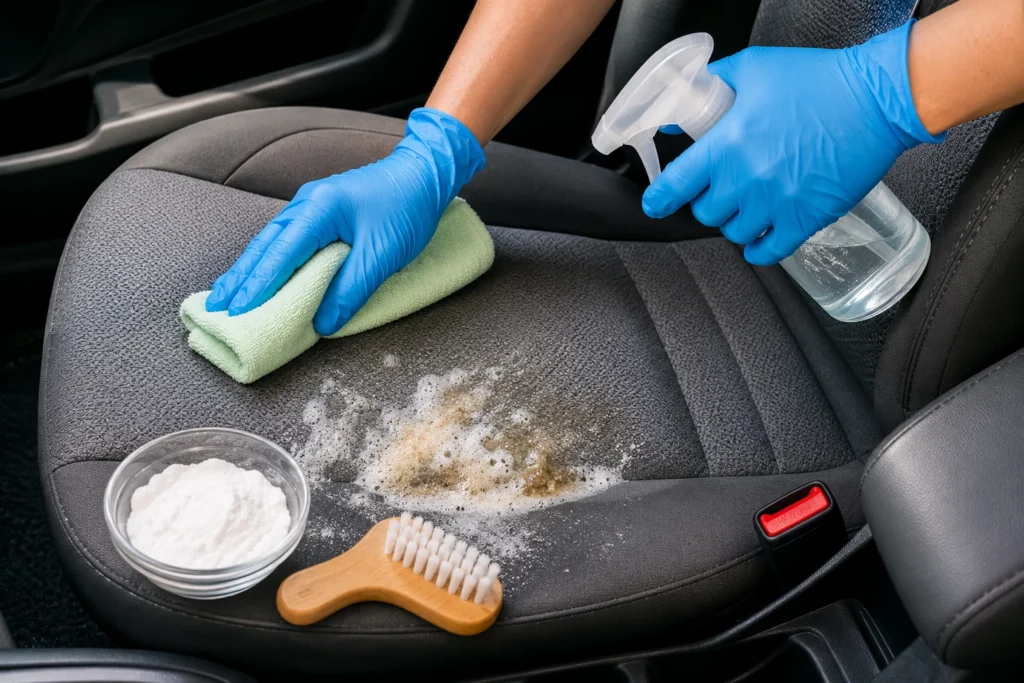
Time matters. The faster you clean the area, the easier odor removal becomes.
Gather Cleaning Supplies
Before starting, collect:
- Disposable gloves
- Paper towels
- Plastic scraper or spoon
- Trash bags
- Microfiber cloths
- Warm water
- Mild dish soap
Having everything ready allows you to work efficiently.
Remove Solids Carefully
First, remove any remaining solid material. Avoid rubbing or pressing debris into the upholstery. Instead:
- Use a plastic scraper or spoon.
- Lift solids gently.
- Place waste directly into a trash bag.
- Seal the bag immediately.
This simple step prevents contamination from spreading deeper into the seat.
Step Two: Blot Excess Moisture
Many people instinctively scrub. Unfortunately, scrubbing often makes things worse.
Why Blotting Works Better
Blotting helps:
- Absorb liquid
- Reduce staining
- Prevent deeper penetration
- Limit odor spread
Press a clean towel firmly against the affected area. Then lift. Repeat until very little moisture transfers onto the towel.
Best Materials for Blotting
The following materials work best:
- Microfiber towels
- White cotton cloths
- Absorbent paper towels
Avoid colored fabrics that may transfer dye onto the upholstery.
Step Three: Clean the Affected Area Thoroughly
Once visible contamination has been removed, it’s time for a deeper cleaning.
Make a Gentle Cleaning Solution
A simple mixture often works well. Combine:
- 2 cups warm water
- 1 teaspoon mild dish soap
This solution effectively removes residue without damaging most upholstery materials.
Proper Cleaning Technique
Follow these steps:
- Dampen a microfiber cloth.
- Gently dab the affected area.
- Work from the outside toward the center.
- Continue until residue disappears.
- Blot excess moisture afterward.
Patience is important here. Rushing can leave contamination behind.
Avoid Over-Saturating the Seat
Using excessive water creates additional problems. Too much moisture can:
- Reach the foam layer
- Increase drying time
- Encourage mildew growth
- Cause odors to return
Therefore, use only the amount of liquid necessary for cleaning.
Cleaning Car Seat Harness Straps Safely
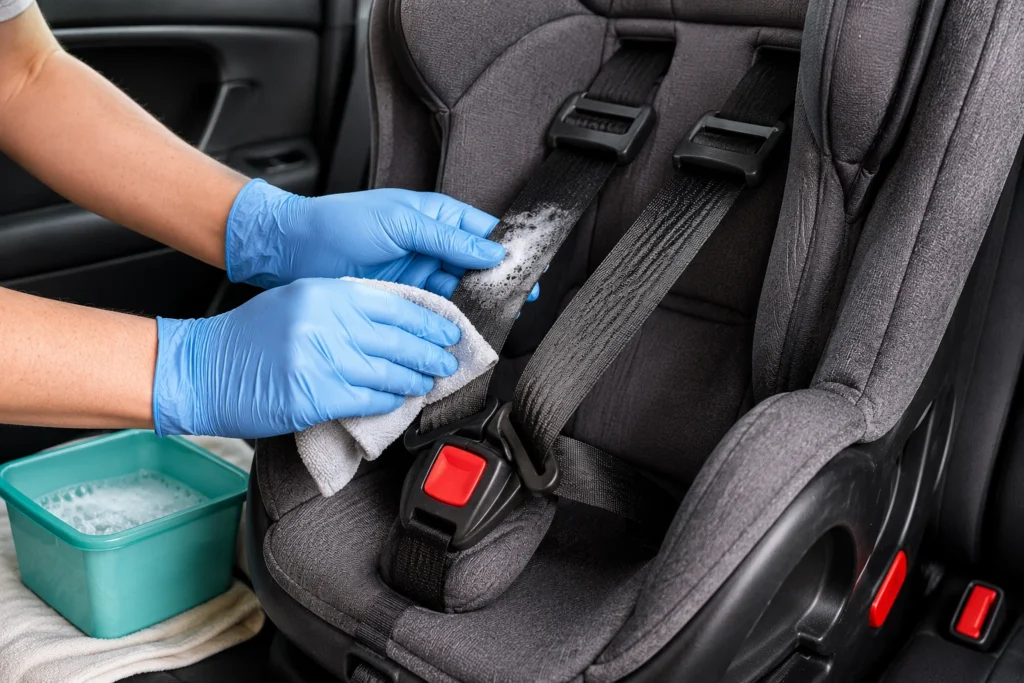
If the accident involved a child safety seat, additional caution is necessary. Many parents Washing Evenflo 360 Car Seat want to remove odors without compromising safety. That’s important because harness straps are engineered to withstand crash forces and should always be cleaned according to manufacturer recommendations.
What Products Should Be Avoided?
Never use:
- Bleach
- Strong detergents
- Solvents
- Harsh stain removers
- Abrasive brushes
These products may weaken harness webbing over time.
Safe Cleaning Method
Instead:
- Use mild soap and water
- Wipe straps gently
- Avoid soaking the webbing
- Allow straps to air dry completely
- Follow manufacturer instructions
When it comes to child restraints, safety should always take priority over aggressive cleaning.
Step Four: Neutralize the Vomit Odor
Cleaning removes contamination. However, odor neutralization targets lingering smells that remain behind.
Using Baking Soda
Baking soda remains one of the most effective and affordable odor removers available.
How to Apply Baking Soda
Follow these steps:
- Allow the area to become mostly dry.
- Sprinkle a generous amount of baking soda over the affected section.
- Let it sit overnight.
- Vacuum thoroughly the next day.
The longer the baking soda remains in contact with the upholstery, the better it can absorb odors.
Why It Works
Unlike air fresheners, baking soda doesn’t simply cover smells. Instead, it helps neutralize odor-causing compounds at the source.
Using White Vinegar Solution
White vinegar is another highly effective odor-fighting tool. Although vinegar has its own scent initially, that smell disappears as it dries.
Vinegar Mixture
Combine:
- 1 part white vinegar
- 1 part warm water
Lightly spray or dab the solution onto the affected area. Avoid soaking the upholstery.
When Vinegar Works Best
Vinegar is particularly effective when:
- The accident happened recently
- Food residue remains
- Mild odors persist after cleaning
After application, allow the seat to dry completely.
Activated Charcoal: A Powerful Odor Absorber
Many professional detailers rely on activated charcoal for stubborn odors. There is a good reason for that. It works extremely well. Activated charcoal functions through a process known as adsorption, where odor molecules attach themselves to the surface of the charcoal. Because activated charcoal has an enormous surface area, it can effectively capture and hold odor-causing compounds.
How to Use Activated Charcoal
Place charcoal odor absorbers:
- On the affected seat
- Under seats
- In cup holders
- Throughout the vehicle cabin
Leave them in place for several days.
What Results to Expect
Activated charcoal works gradually. Most people notice improvement within 24 to 72 hours. For stronger odors, additional time may be necessary. Nevertheless, it remains one of the simplest and most effective odor-removal tools available.
Step Five: Deep Clean the Seat Cushion and Padding
Sometimes the smell persists despite cleaning. If that happens, contamination has likely reached the foam beneath the upholstery.
Signs the Foam Is Contaminated
Look for these warning signs:
- Odors returning after cleaning
- Strong smells during warm weather
- Sour odors after humidity increases
- Lingering smells despite multiple cleanings
These indicators often suggest that hidden contamination remains beneath the surface.
Remove the Seat Cover If Allowed
Many child car seats feature removable covers. Always consult the manufacturer’s instructions first. If removal is permitted:
- Remove the cover carefully.
- Wash according to manufacturer guidelines.
- Allow it to dry completely.
- Inspect the foam underneath for hidden residue.
In many cases, this deeper inspection reveals the true source of persistent odors.
Cleaning Foam Padding Carefully
If residue has reached the foam, surface cleaning will not be enough. Instead, use a cloth lightly dampened with warm water and mild soap to clean the affected area. Avoid saturating the foam. Excess moisture can become trapped inside and create mold or mildew issues later. After cleaning:
- Blot thoroughly with dry towels
- Allow maximum airflow
- Use a fan if possible
- Let the foam dry completely before reassembly
Remember, incomplete drying is one of the most common reasons odors return.
Step Six: Dry Everything Completely
Even the best cleaning job can fail if moisture remains.
Why Drying Matters
Lingering moisture creates the perfect environment for:
- Bacteria
- Mildew
- Mold
- Musty odors
As a result, a seat that smells clean today may smell unpleasant again within a few days.
Effective Drying Methods
Try combining several drying techniques:
| Method | Benefit |
|---|---|
| Open Windows | Improves airflow |
| Portable Fan | Accelerates drying |
| Sunlight | Helps eliminate moisture |
| Dehumidifier | Removes excess humidity |
Whenever possible, allow the seat to dry for several hours before using the vehicle again.
Common Mistakes That Make Vomit Smell Worse
Sometimes the odor problem isn’t the vomit itself. It’s the cleanup process.
Using Too Much Water
Flooding upholstery often pushes contamination deeper into the padding. Less is usually better.
Skipping the Foam Layer
Many people clean only what they can see. Unfortunately, odors frequently hide underneath the fabric.
Using Harsh Chemicals
Strong chemicals may damage upholstery, discolor fabrics, or leave behind their own unpleasant smells.
Reassembling Too Soon
Even slightly damp materials can develop odors. Always allow every component to dry completely.
Masking Instead of Removing
Air fresheners can help temporarily. However, they rarely solve the actual problem. The goal should always be odor removal, not odor concealment.
How to Remove Old Vomit Smell From a Car Seat
Fresh accidents are easier to handle. Older odors require more effort. If you’re still wondering how to remove vomit smell from car seat materials weeks after an accident, deeper cleaning methods may be necessary.
Check Hidden Areas
Inspect carefully:
- Seams
- Creases
- Cushion edges
- Under removable covers
- Beneath padding
Small amounts of residue often hide in these locations.
Repeat the Cleaning Process
Sometimes one cleaning simply isn’t enough. A second or even third treatment may be necessary when dealing with deeply embedded odors. Patience often produces the best results.
Using Enzyme-Based Cleaners
For stubborn odors, enzyme cleaners can be extremely effective.
How Enzyme Cleaners Work
Unlike standard cleaners, enzyme products break down organic matter at a molecular level. This includes:
- Food particles
- Bodily fluids
- Odor-causing bacteria
Instead of covering smells, they eliminate the source.
How to Use Them
Follow product instructions carefully. Generally:
- Apply the cleaner to the affected area.
- Allow adequate dwell time.
- Blot excess moisture.
- Let the area dry completely.
Enzyme cleaners often provide excellent results for older contamination that standard soap and water cannot fully remove.
Natural Remedies for Vomit Odor Removal
Many homeowners prefer natural cleaning solutions. Fortunately, several options can help.
Baking Soda
Still one of the best choices. Its odor-absorbing properties make it highly effective.
White Vinegar
Useful for neutralizing many odor-causing compounds.
Activated Charcoal
Excellent for long-term odor absorption.
Coffee Grounds
Dry coffee grounds can help absorb lingering smells when placed inside the vehicle overnight.
Fresh Air and Sunlight
Simple. Free. Often surprisingly effective. Fresh air improves ventilation, while sunlight helps reduce moisture and odors.
When Professional Cleaning May Be Necessary
Most vomit odors can be handled at home. However, certain situations may require professional help.
Severe Contamination
Large accidents affecting multiple seats may require extraction equipment.
Deep Foam Saturation
If contamination has reached multiple layers, professional cleaning may be the fastest solution.
Recurring Odors
When smells repeatedly return despite cleaning, deeper contamination likely remains hidden.
Mold or Mildew Concerns
If moisture has been trapped for an extended period, professional assessment may be necessary.
How to Prevent Future Vomit Smells in Car Seats
The easiest odor problem is the one that never develops.
Keep Emergency Supplies in the Vehicle
Consider storing:
- Paper towels
- Disposable gloves
- Plastic bags
- Wet wipes
- Small cleaning spray
Quick response makes a huge difference.
Use Waterproof Seat Protectors
Protective covers can prevent liquids from reaching upholstery and foam.
Clean Accidents Immediately
The sooner cleanup begins, the easier odor removal becomes.
Maintain Regular Interior Cleaning
Routine vacuuming and upholstery cleaning help prevent lingering odors from building over time.
Conclusion
Vomit odors can be stubborn. However, they are rarely permanent. By acting quickly, cleaning thoroughly, and addressing contamination deep within the upholstery, you can successfully remove unpleasant smells and restore your vehicle’s interior. Most importantly, focus on eliminating the source rather than masking the odor. As a result, your car seat can stay fresh, clean, and comfortable long after the accident is forgotten.
FAQs
If cleaned quickly, most car seats can be restored without permanent damage. However, prolonged exposure to stomach acids may cause staining or fabric deterioration.
Baking soda and enzyme-based cleaners are among the most effective options because they target odor-causing compounds rather than simply masking smells.
For best results, leave baking soda on the affected area overnight. Severe odors may benefit from 24 hours of contact time before vacuuming.
Steam cleaning can help sanitize upholstery and loosen trapped residue. However, excessive moisture should be avoided because it can penetrate the foam padding.
Odors often remain when contamination has reached the foam, seams, or hidden areas beneath the seat cover. A deeper cleaning may be necessary.
White vinegar is generally safe when diluted properly, but it’s always wise to test a small hidden area first to check for discoloration or material sensitivity.
Yes. Heat can reactivate odor-causing compounds trapped in upholstery and foam, making smells more noticeable during warm weather.
If the manufacturer allows cover removal, washing it separately can improve odor removal. Always follow the cleaning instructions provided by the manufacturer.
Air fresheners may temporarily improve the scent inside the vehicle, but they do not eliminate the source of the odor. Thorough cleaning is still required.
Keep cleaning supplies in your car, use seat protectors when possible, and clean accidents immediately before liquids have a chance to soak into the upholstery.

