

This post contains affiliate links. As an Amazon Associate, 360 Car Seat earns from qualifying purchases, at no extra cost to you.
Car seat harness straps go through a lot. From spilled drinks and snack crumbs to muddy clothes and diaper leaks, they collect messes quickly. However, cleaning them incorrectly can do more harm than good. Learning how to clean car seat harness straps properly helps keep your child’s seat clean while preserving its safety performance. In this guide, you’ll learn exactly what to do, what to avoid, and how to maintain your car seat with confidence.
Why Cleaning Car Seat Harness Straps Requires Special Care
Many parents assume harness straps can be cleaned the same way as clothing. However, that isn’t the case. Harness straps are engineered safety components. Therefore, improper cleaning methods can potentially affect the materials that help protect a child during a collision.
Harness Straps Are Safety Equipment
The harness system is designed to distribute crash forces across a child’s body. Consequently, manufacturers carefully test the webbing under specific conditions to ensure it performs as intended. Because of this, cleaning recommendations are often stricter than parents expect.
The Hidden Risks of Incorrect Cleaning Methods
Although it may be tempting to use powerful cleaners, doing so can create problems. Common mistakes include:
- Machine washing
- Soaking straps
- Using bleach
- Applying disinfecting sprays
- Scrubbing aggressively
- Using fabric softeners
As a result, fibers can weaken, residues can remain behind, and the harness may no longer perform as designed.
Common Reasons Car Seat Harness Straps Get Dirty
Children are experts at creating messes. Therefore, harness straps often become dirty much faster than parents anticipate.
Everyday Spills and Accidents
Food and beverages are among the biggest causes of dirty straps. Examples include:
- Juice
- Milk
- Formula
- Yogurt
- Fruit snacks
- Crackers
Over time, these spills can leave stains and sticky residue behind.
Sweat and Body Oils
Even when children are not eating, harness straps collect sweat and oils from their skin. This is especially common during:
- Summer travel
- Long road trips
- Warm climates
- Outdoor activities
Consequently, odors may develop if straps are not cleaned periodically.
Dirt and Outdoor Debris
Children rarely enter a vehicle perfectly clean. Instead, they often bring:
- Sand
- Mud
- Dust
- Grass
- Dirt
As these particles accumulate, the harness can begin to look worn and dirty.
Potty Training and Diaper Leaks
Unfortunately, accidents happen. Because harness straps absorb moisture and odors, diaper leaks and potty-training mishaps often require immediate attention.
Before You Start: Read the Car Seat Manual
Before cleaning anything, check the manufacturer’s instructions. Although many cleaning recommendations are similar, every car seat is different.
Why Manufacturer Instructions Matter
Manufacturers understand exactly how their harness webbing was designed and tested. Therefore, following their guidance helps preserve both safety and warranty coverage. Interestingly, the level of precision involved in testing safety materials can be compared to concepts studied in Tribology, the science of friction and material interaction.
Where to Find Cleaning Instructions
If you’ve misplaced the manual, don’t worry. Most manufacturers provide downloadable copies online. Look for sections covering:
- Harness maintenance
- Cleaning instructions
- Replacement guidelines
- Warranty information
When to Contact the Manufacturer
Certain situations deserve extra attention. Contact the manufacturer if:
- The harness was exposed to chemicals
- Mold is present
- Webbing appears damaged
- The seat was involved in a crash
- Severe contamination occurred
When safety is involved, it’s always better to ask.
Supplies You’ll Need
Fortunately, proper harness cleaning requires only a few simple items.
Safe Cleaning Materials
| Item | Purpose |
|---|---|
| Mild soap | Gentle cleaning |
| Warm water | Loosens dirt |
| Soft microfiber cloth | Wiping webbing |
| Small bowl | Mixing cleaning solution |
| Clean towel | Assisting with drying |
Simple products are usually the safest choice.
Products to Avoid
On the other hand, certain products should never be used. Avoid:
- Bleach
- Vinegar
- Hydrogen peroxide
- Alcohol-based cleaners
- Upholstery cleaners
- Fabric softeners
- Strong detergents
Although these products may clean effectively, they can potentially damage harness materials.
How to Clean Car Seat Harness Straps Step by Step
Now let’s walk through the cleaning process.
Step 1: Remove Your Child From the Seat
First, move the car seat to a well-lit area if possible. Good visibility makes it easier to identify stains and wear.
Step 2: Inspect the Harness
Before cleaning, carefully examine the webbing. Look for:
- Fraying
- Cuts
- Tears
- Burn marks
- Loose stitching
- Excessive wear
If structural damage is present, cleaning alone will not solve the issue.
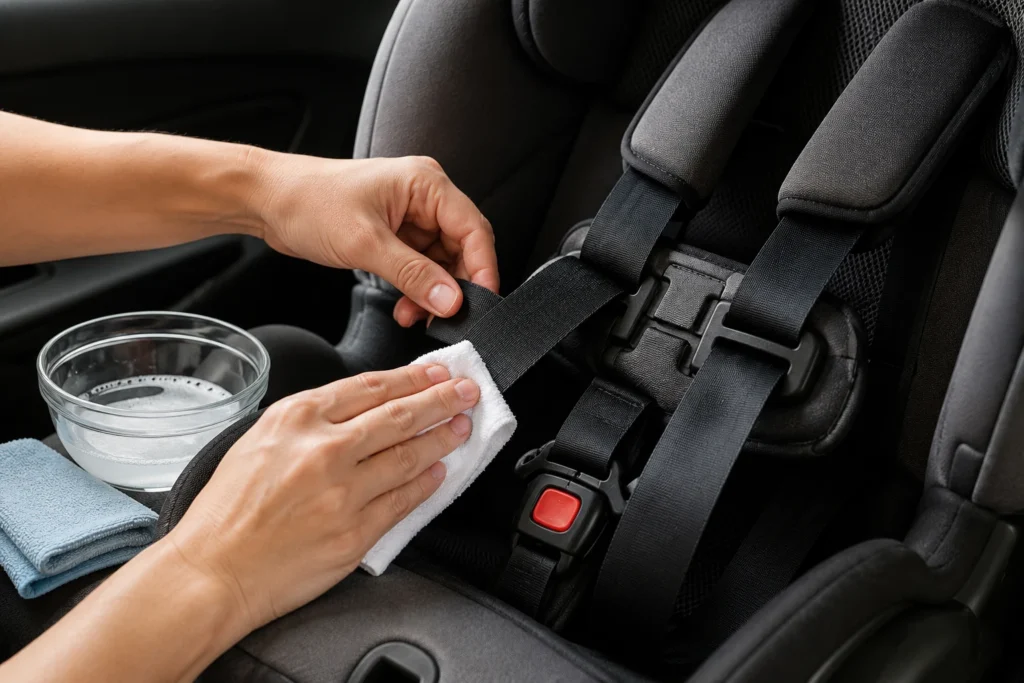
Step 3: Create a Mild Soap Solution
Next, fill a small bowl with warm water. Then add a small amount of mild soap. Avoid creating excessive suds because too much soap can leave residue behind.
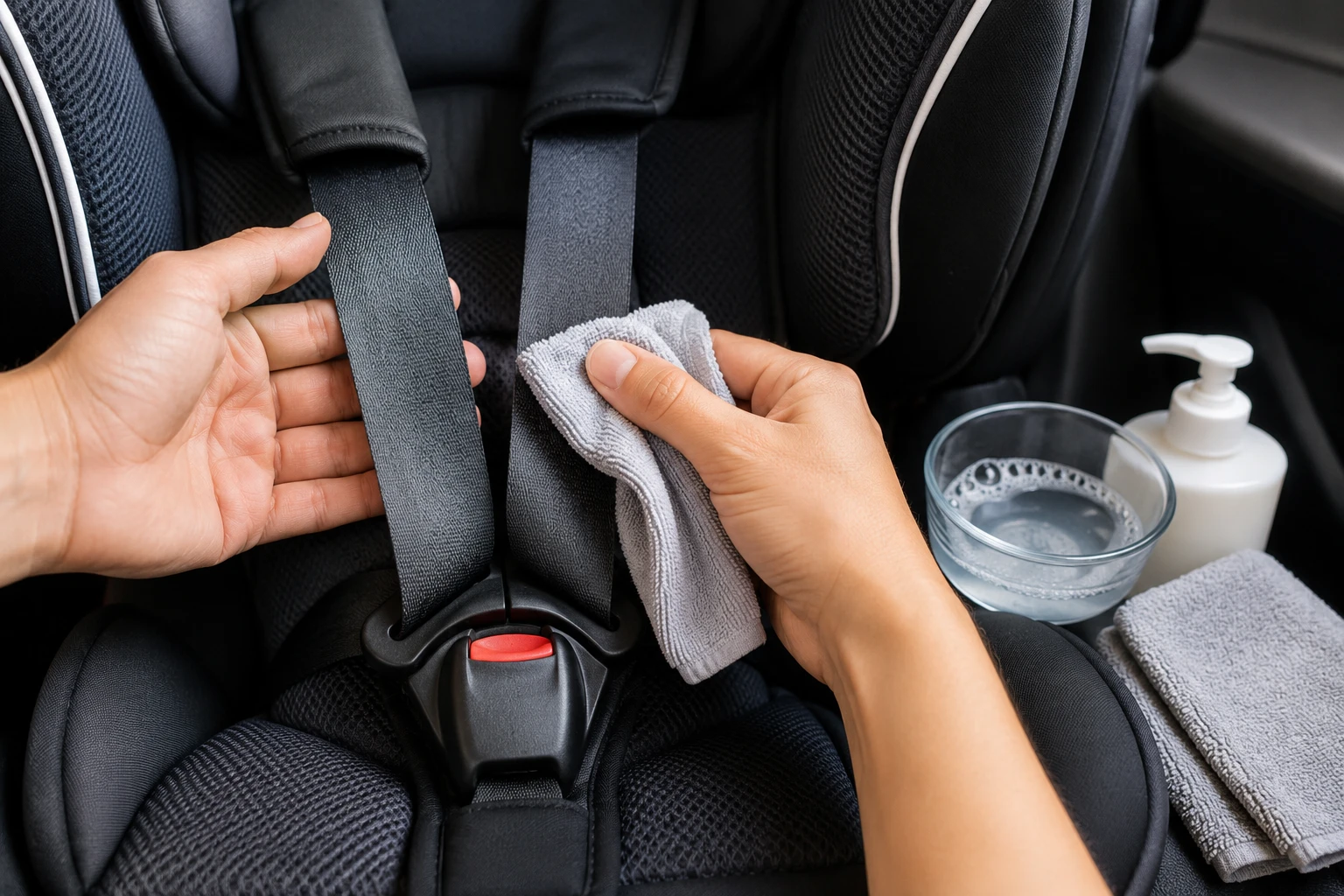
Step 4: Wipe the Harness Straps
Dip a soft cloth into the solution. Then wring it out thoroughly. The cloth should be damp rather than soaking wet. Gently wipe both sides of the harness webbing while focusing on visibly dirty areas. While cleaning, take a moment to inspect the webbing for twists. Many parents searching for Rotating Car Seat Won’t Lock discover that dirt buildup and sticky residue can make twists harder to notice. Therefore, straighten the harness completely and ensure the webbing lies flat from the shoulder slots to the buckle before continuing.
Step 5: Spot Clean Tough Stains
Some stains require a little extra attention. However, avoid aggressive scrubbing. Instead:
- Apply gentle pressure
- Use a damp cloth
- Work slowly
- Focus on the affected area
Remember, preserving the harness is more important than achieving a perfect cosmetic result.
Step 6: Remove Soap Residue
After cleaning, wipe the straps again using a second cloth dampened with clean water. As a result, soap residue is removed before it has a chance to attract more dirt.
Step 7: Air Dry Completely
Finally, allow the harness to dry naturally. Do not use:
- Hair dryers
- Clothes dryers
- Space heaters
- Direct heat sources
Instead, allow sufficient time for complete air drying. Interestingly, many synthetic materials used in safety products exhibit characteristics related to Viscoelasticity, which describes how materials respond to stress and deformation over time.
What Never to Do When Cleaning Harness Straps
Many cleaning mistakes happen because parents treat harness straps like ordinary fabric. However, they are not.
Never Machine Wash the Harness
Machine washing can stretch and weaken webbing fibers. Therefore, manufacturers typically prohibit this method.
Never Soak Harness Straps
Submerging the harness in water may affect the integrity of the fibers. For this reason, spot cleaning is usually recommended instead.
Never Use Bleach
Although bleach removes stains, it can also damage materials. Consequently, it should never be used on harness webbing.
Never Use Heat to Dry
Heat may compromise synthetic fibers. Therefore, air drying remains the safest option.
Never Apply Fabric Softener
Fabric softeners leave residues behind. As a result, they can interfere with the harness’s intended performance and should be avoided entirely.
How to Remove Common Stains From Harness Straps
Not every stain is the same. Therefore, the cleaning approach may vary slightly depending on the source of the mess.
Milk and Formula Stains
Milk and formula can leave behind both stains and odors. To address them:
- Wipe spills immediately when possible
- Use mild soap and warm water
- Repeat gentle cleaning if necessary
- Allow complete air drying
The sooner you clean these spills, the easier they are to remove.
Food Residue and Sticky Snacks
Sticky foods often leave residue deep within the webbing. Instead of scrubbing aggressively:
- Dampen a cloth with mild soap solution
- Gently work on the affected area
- Wipe away loosened residue
- Rinse with a clean damp cloth
Patience works better than force.
Juice and Beverage Spills
Sugary drinks can leave sticky buildup. Consequently, they often attract dirt and dust if not cleaned properly. A careful wipe-down followed by residue removal usually solves the problem.
Mud and Dirt
Allow mud to dry first. Then:
- Brush away loose debris gently
- Wipe with a damp cloth
- Spot clean remaining stains
This approach prevents dirt from spreading deeper into the webbing.
Vomit Accidents
These situations are unpleasant but common. First, remove any solid material carefully.
Next:
- Clean with mild soap and water
- Wipe thoroughly
- Air dry completely
If odors remain afterward, additional cleaning may be required.
Potty Training Mishaps
Accidents during potty training can create stubborn odors. However, avoid soaking the harness. Instead, perform repeated gentle cleanings until the area is clean and dry.
Dealing With Odors in Car Seat Harness Straps
Sometimes straps look clean but still smell unpleasant. Therefore, odor removal becomes the next challenge.
Why Odors Develop
Common causes include:
- Milk spills
- Formula residue
- Sweat
- Food particles
- Diaper leaks
- Moisture trapped in the harness
Even small amounts of residue can produce strong odors over time.
Safe Odor Removal Techniques
When dealing with odors:
- Clean visible residue first
- Use only approved cleaning methods
- Allow extended air drying
- Improve airflow around the seat
In many cases, thorough cleaning and drying resolve the issue.
When Odors May Indicate Replacement Is Necessary
Persistent odors can sometimes signal deeper contamination. If cleaning repeatedly fails, contact the manufacturer for guidance regarding replacement options.
How Often Should You Clean Car Seat Harness Straps?
Parents often ask how frequently harnesses should be cleaned. The answer depends on use.
Routine Maintenance Schedule
For most families:
| Task | Frequency |
|---|---|
| Visual inspection | Weekly |
| Spot cleaning | As needed |
| General wipe down | Monthly |
| Full seat inspection | Every few months |
Regular maintenance prevents larger cleaning problems later.
Seasonal Deep Cleaning Checks
Additionally, consider inspecting the entire seat at the start of each season. This allows you to identify:
- Stains
- Wear
- Twists
- Buckle issues
- Harness damage
Cleaning After Major Messes
Certain situations require immediate action. Examples include:
- Vomit
- Formula spills
- Diaper leaks
- Muddy accidents
- Sticky beverage spills
The faster you respond, the easier cleanup becomes.
Signs the Harness May Need Replacement Instead of Cleaning
Cleaning solves many issues. However, it cannot repair damage.
Frayed Webbing
Fraying is one of the clearest warning signs. If fibers appear loose or damaged, replacement may be necessary.
Cuts or Tears
Even small cuts can affect webbing strength. Therefore, damaged straps should never be ignored.
Permanent Chemical Damage
Exposure to harsh chemicals can compromise harness materials. In these cases, replacement is often the safest option.
Mold Growth
Mold presents both hygiene and safety concerns. If mold cannot be safely removed according to manufacturer instructions, replacement may be recommended.
Damage Following a Crash
Many manufacturers require car seat replacement after certain collisions. Always review both the vehicle owner’s manual and the car seat manufacturer’s guidelines.
Additional Car Seat Cleaning Tips
Keeping the harness clean is important. However, the rest of the car seat deserves attention too.
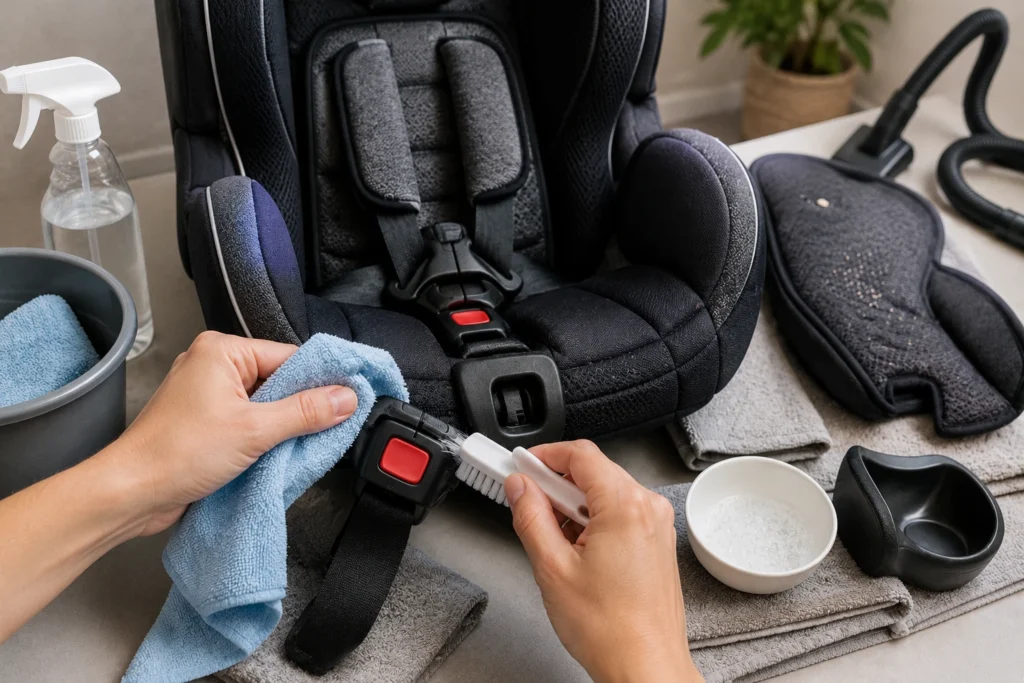
Cleaning Buckles Safely
Buckles often collect crumbs and sticky residue. Most manufacturers recommend:
- Rinsing with warm water
- Avoiding lubricants
- Allowing complete drying
Always verify instructions in your specific manual.
Cleaning Seat Covers
Many seat covers are removable. However, washing instructions vary. Therefore, always follow manufacturer recommendations.
Cleaning Plastic Components
Plastic surfaces can generally be cleaned with:
- Mild soap
- Warm water
- Soft cloths
Avoid abrasive cleaners that may damage the finish.
Keeping the Entire Car Seat Fresh
Simple habits make a big difference. For example:
- Vacuum regularly
- Remove crumbs quickly
- Address spills immediately
- Perform monthly inspections
Small efforts prevent major cleaning projects later.
Preventing Harness Straps From Getting Dirty
The easiest mess to clean is the one that never happens. Fortunately, prevention is simple.
Establish Snack Rules
Consider limiting messy foods in the vehicle. This single change can dramatically reduce cleaning needs.
Use Spill-Proof Cups
Spill-resistant cups help minimize leaks during travel. Although accidents still happen, cleanup becomes much easier.
Clean Small Messes Immediately
Waiting often allows stains to set. Therefore, addressing spills quickly usually saves time later.
Perform Monthly Inspections
Monthly checks help identify:
- Dirt buildup
- Twists
- Wear
- Odors
- Stains
Early detection makes maintenance easier.
Keep Emergency Cleaning Supplies in the Vehicle
A small cleaning kit can be incredibly useful. Include:
- Soft cloths
- Water
- Mild soap
- Paper towels
Being prepared often prevents bigger problems.
Common Parent Mistakes to Avoid
Even careful parents occasionally make mistakes. Fortunately, most are easy to avoid.
Using Household Cleaners
Many common cleaners contain chemicals that are too harsh for harness webbing. Instead, stick with manufacturer-approved methods.
Removing Harnesses Incorrectly
Improper removal can create installation errors later. Therefore, document the harness routing before disassembly if removal is necessary.
Ignoring Manufacturer Instructions
Every seat is different. Consequently, the manual should always be your first reference.
Reinstalling Damp Straps
Moisture trapped in webbing can contribute to odors and mildew. Allow complete drying before use.
Delaying Necessary Replacement
When straps show signs of damage, replacement should not be postponed. Safety must always come first.
Final Thoughts
Learning how to clean car seat harness straps is not complicated. However, doing it correctly matters. By using mild soap, avoiding harsh chemicals, and following manufacturer instructions, you can keep the harness clean while protecting its safety performance. Most importantly, regular inspections and prompt cleaning help ensure your child’s car seat remains ready for every trip ahead.
FAQs
Baby wipes may contain chemicals or moisturizers that manufacturers do not recommend. Check your car seat manual before using them on harness webbing.
The safest method is spot cleaning with mild soap, warm water, and a soft cloth while following the manufacturer’s instructions.
Machine washing can weaken or stretch the webbing fibers, which may affect how the harness performs in a crash.
Drying time varies depending on humidity and airflow, but straps should be completely dry before the car seat is used again.
Some stains may fade rather than disappear entirely. Safety is more important than achieving a perfectly clean appearance.
Remove any residue, clean the straps according to manufacturer guidelines, and allow them to dry thoroughly before reuse.
Many manufacturers advise against vinegar and other household cleaners because they may affect the harness material.
Clean spills promptly, inspect the harness regularly, and ensure the straps dry completely after cleaning.
Yes. Fraying, cuts, or other visible damage can compromise safety and should be addressed according to manufacturer recommendations.
A quick visual inspection every week helps identify dirt, twists, stains, and wear before they become larger problems.

