
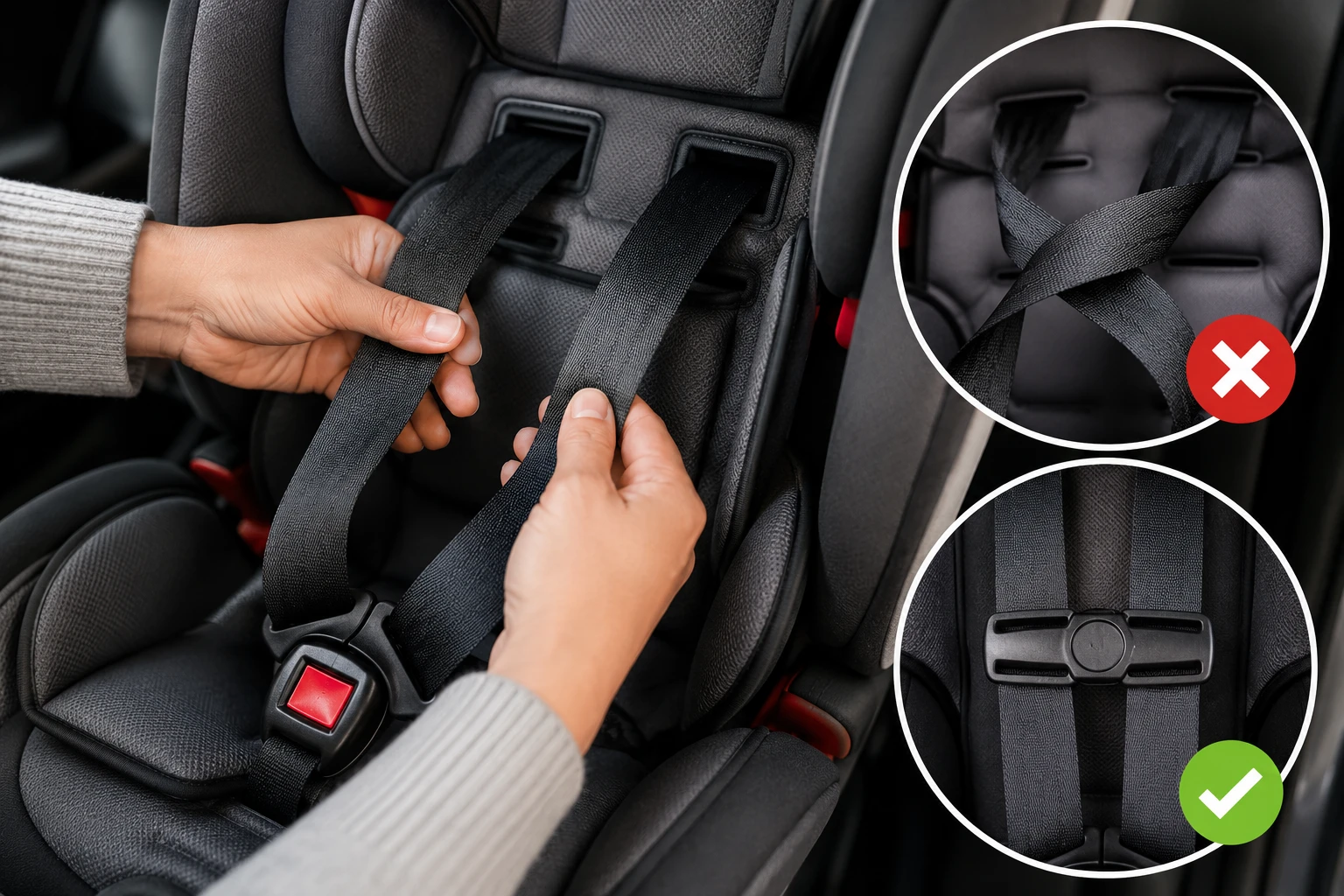

Twisted car seat straps are a common frustration for parents. However, they are more than just an inconvenience. A twisted harness can make tightening difficult, create pressure points, and affect overall comfort. If you’ve been searching for how to fix twisted car seat straps, you’re in the right place. Fortunately, most twists can be corrected in just a few minutes. In this guide, you’ll learn why straps twist, how to identify the problem, and the steps needed to restore a properly functioning harness. Parents often start searching for solutions when a Car Seat Stuck only to discover that twisted harness straps are causing the problem.
Understanding Why Car Seat Straps Twist
Before fixing the problem, it’s important to understand why it happens.
How a Car Seat Harness Is Designed to Work
A car seat harness is designed to lie completely flat across a child’s shoulders, chest, and hips. When properly positioned, the harness distributes crash forces evenly and helps keep a child securely restrained. A properly functioning harness should:
- Lay flat against the body
- Tighten smoothly
- Remain evenly positioned
- Provide consistent support during travel
Therefore, any twist in the webbing can interfere with how the harness fits and feels.
Why Twisted Straps Are a Problem
At first glance, a small twist may seem harmless. However, even minor twists can create issues.
| Problem | Potential Effect |
|---|---|
| Uneven pressure | Child discomfort |
| Reduced harness contact | Less consistent fit |
| Increased friction | Harder tightening |
| Strap bunching | Poor positioning |
Additionally, twisted straps often become more difficult to adjust over time. When a harness becomes twisted, additional friction develops between the webbing and the adjustment system. This concept is closely related to Tribology the scientific study of friction and wear, which helps explain why twisted straps often become harder to tighten smoothly.
Common Causes of Twisted Car Seat Straps
Most twists develop during everyday use. Common causes include:
- Children climbing into the seat independently
- Frequent harness adjustments
- Pulling one strap more than the other
- Twisting buckle tongues during buckling
- Cleaning or reinstalling harness components
- Children moving around while being buckled
As a result, even well-maintained car seats can develop occasional twists.
Signs Your Car Seat Straps Are Twisted
Some twists are obvious. Others remain hidden until they begin causing problems.

Visible Twists Along the Harness
The most obvious sign is a visible rotation in the webbing. A properly positioned harness should remain flat from top to bottom. If the webbing resembles a spiral or fold, a twist is present. Inspect:
- Shoulder straps
- Hip straps
- Areas near buckle tongues
- Harness sections behind the seat shell
Uneven Strap Lengths
Sometimes parents assume one side of the harness has stretched. In reality, a twist can make one strap appear shorter than the other. If one side consistently feels tighter, check for hidden twists before making adjustments.
Difficulty Tightening the Harness
A smooth harness should tighten with minimal resistance. However, twisted webbing creates friction that may cause:
- Jerky tightening
- Uneven tension
- Increased resistance
- Difficulty achieving a snug fit
Consequently, correcting the twist often restores normal harness operation immediately.
Child Complaints and Discomfort
Children often notice problems before adults do. Common complaints include:
- “The strap hurts.”
- “It’s too tight.”
- “Something is poking me.”
Although younger children may not explain the issue clearly, sudden discomfort can be an important warning sign. Additionally, car seat manufacturers carefully consider comfort because proper harness fit is a key aspect of Ergonomics, the study of designing products that interact safely and comfortably with the human body.
Step-by-Step: How to Fix Twisted Car Seat Straps
Now let’s focus on the actual solution.
Step 1: Remove Your Child from the Seat
Begin by removing your child from the car seat. Working with an empty seat allows you to inspect the harness thoroughly and avoid creating additional twists. If possible, move the vehicle into a well-lit area.
Step 2: Loosen the Harness Completely
Next, loosen the harness as much as possible. Most car seats allow you to press the harness release button while pulling the shoulder straps forward. This extra slack makes twists easier to identify and correct. Trying to untangle a tight harness is significantly more difficult.
Step 3: Locate Every Twist
Carefully inspect the entire harness system. Start at the shoulder straps and work downward toward the buckle. Look for:
- Twisted webbing
- Folded sections
- Rotated strap segments
- Areas where the strap overlaps itself
Importantly, do not stop after finding the first twist. Multiple twists can exist throughout the harness.
Step 4: Untwist the Harness Webbing
Once you locate the twisted section, gently rotate the strap until it lays completely flat. Work slowly. A useful method is to:
- Start near the buckle.
- Follow the twist upward.
- Rotate the webbing gradually.
- Smooth the strap with your fingers.
Continue until the harness lays flat from one end to the other.
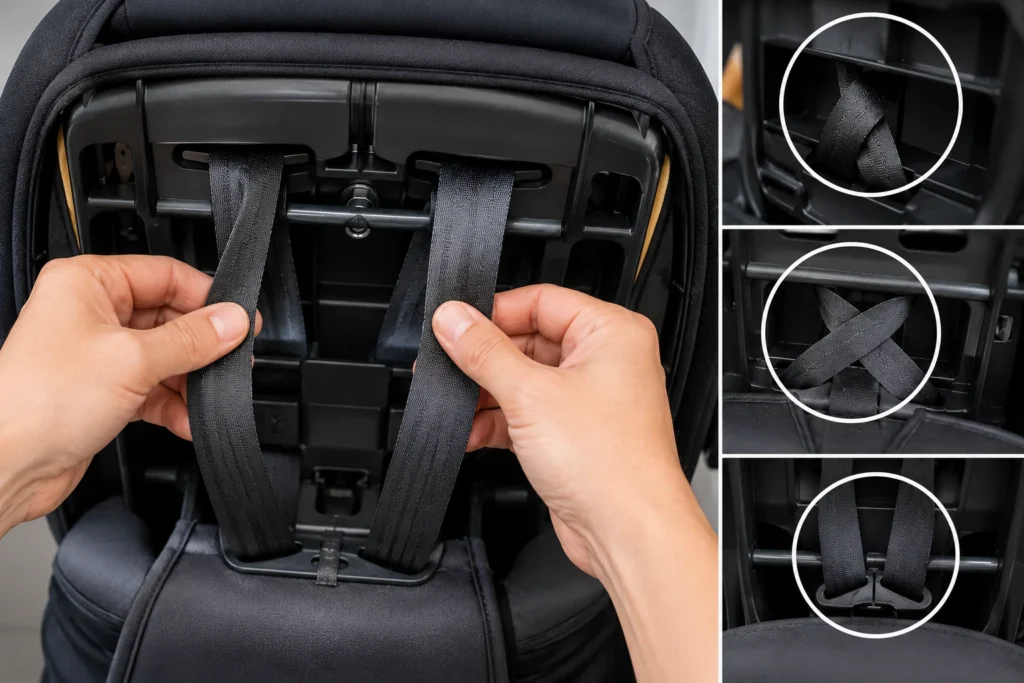
Step 5: Check the Rear Harness Routing
This step is often overlooked. However, hidden twists frequently develop behind the car seat shell. Inspect:
- Harness attachment points
- Splitter plate connections
- Rear webbing pathways
- Harness anchor locations
A twist hidden behind the seat can quickly recreate visible twists on the front side. Therefore, always inspect both sides of the harness system.
Step 6: Re-Tighten and Test the Harness
After correcting all twists, tighten the harness gradually. Observe how the straps move. A properly positioned harness should:
- Tighten evenly
- Slide smoothly
- Remain flat
- Stay centered
If tightening still feels uneven, inspect the harness again for additional twists.
How to Fix Twists Near the Buckle Area
The buckle area is one of the most common locations for harness twists. Children often rotate buckle tongues while climbing into their seats, which can create twists that spread throughout the harness.
Common Buckle Strap Problems
Typical issues include:
- Twisted crotch buckle straps
- Rotated buckle tongues
- Webbing wrapped around hardware
- Misaligned buckle components
Although these problems may seem minor, they can affect overall harness performance.
Simple Correction Methods
Fortunately, buckle-area twists are usually simple to fix. Start by:
- Loosening the harness completely
- Rotating the buckle tongue back into position
- Flattening the webbing
- Rechecking alignment before tightening
Avoid forcing any component during the process.
When Buckle Components Need Inspection
While examining the buckle area, inspect for signs of wear. Look for:
- Fraying
- Cuts
- Damaged stitching
- Excessive fuzzing
If you notice damage, consult the car seat manufacturer before continuing to use the seat.
How to Fix Twists Behind the Car Seat
Many recurring twists originate behind the seat shell. As a result, fixing only the visible portions may not solve the problem.
Hidden Twists Parents Often Miss
Common hidden locations include:
- Splitter plates
- Harness adjustment channels
- Shoulder strap anchors
- Harness height adjustment slots
Because these areas are difficult to see during daily use, twists often go unnoticed.
Accessing the Rear Harness System
Always consult your owner’s manual before accessing the rear harness system. Generally, you should:
- Remove the seat if necessary
- Access the rear harness area
- Inspect both shoulder straps
- Verify proper routing
Taking photos before making adjustments can help ensure everything is reassembled correctly.
Correctly Reattaching Harness Straps
If the harness becomes disconnected during inspection, carefully follow manufacturer instructions when reconnecting components. Double-check:
- Strap routing
- Splitter plate attachment
- Harness alignment
- Overall webbing position
A properly routed harness should remain flat and untwisted from front to back.
Preventing Car Seat Straps from Twisting Again
Fixing a twisted harness is helpful. Preventing future twists is even better. Fortunately, a few simple habits can dramatically reduce how often this problem occurs.
Teach Proper Buckling Habits
As children grow, many begin climbing into their car seats on their own. While independence is great, it can also create twisting problems. Teach children to:
- Sit down before handling straps
- Keep straps on each side of their body
- Avoid spinning buckle tongues
- Wait for assistance when needed
Although younger children may not follow these instructions perfectly, building good habits early can help.
Tighten the Harness Correctly Every Ride
Many twists begin when harnesses are left excessively loose. A loose harness allows straps to rotate more freely as children move. Therefore, after every buckle-up:
- Remove excess slack
- Confirm straps lie flat
- Check harness alignment
- Verify proper chest clip placement
These quick checks take only a few seconds.
Perform Quick Visual Inspections
Parents often assume the harness is fine because it worked correctly yesterday. However, twists can develop during a single trip. Before driving, quickly inspect:
| Inspection Point | What to Check |
|---|---|
| Shoulder straps | Flat webbing |
| Buckle area | No rotations |
| Hip straps | Even positioning |
| Chest area | Proper alignment |
This simple routine can prevent larger problems later.
Keep Harness Straps Organized
When loading children into the seat, straps often fall underneath them. As a result, twisting becomes more likely. Instead:
- Pull straps to the sides before seating your child
- Position buckle tongues where they are easy to access
- Smooth the webbing before buckling
These small actions can save significant time.
Avoid Common Cleaning Mistakes
Cleaning can unintentionally create twists. Whenever cleaning your car seat:
- Follow manufacturer instructions
- Avoid removing harness components unnecessarily
- Take photos before disassembly
- Recheck harness routing after reassembly
Additionally, always verify that straps remain flat once the seat is reassembled.
Mistakes to Avoid When Fixing Twisted Car Seat Straps
Many parents solve one problem while accidentally creating another. Avoiding these mistakes can make the process safer and easier.
Forcing the Harness
When a harness refuses to move smoothly, it may be tempting to pull harder. Don’t. Excessive force can:
- Tighten existing twists
- Increase webbing wear
- Create additional routing problems
Instead, stop and identify the source of resistance.
Disassembling Components Unnecessarily
Some parents immediately remove large portions of the harness system. However, most twists can be corrected without complete disassembly. Unless manufacturer instructions specifically require it, keep disassembly to a minimum.
Ignoring Manufacturer Instructions
Every car seat is different. Harness routing, attachment points, and adjustment systems vary between brands. Therefore, always consult your owner’s manual before making significant adjustments.
Using Unauthorized Accessories
Third-party products sometimes promise improved comfort or easier harness management. However, many accessories can:
- Alter harness positioning
- Increase twisting
- Interfere with proper fit
Use only accessories approved by your car seat manufacturer.
When Twisted Straps May Indicate a Bigger Problem
Most twists are harmless and easily corrected. Occasionally, though, recurring twists can point to a larger issue.
Damaged Harness Webbing
Inspect harness straps regularly. Look for:
- Frayed edges
- Cuts
- Excessive wear
- Torn stitching
If webbing damage is present, the harness may require replacement.
Buckle Malfunctions
The buckle should operate smoothly. Warning signs include:
- Difficulty latching
- Difficulty releasing
- Sticking components
- Uneven movement
Because the buckle is a critical safety component, any malfunction deserves attention.
Harness Adjustment Problems
A harness should tighten and loosen consistently. If you notice:
- Persistent uneven tightening
- One side tightening faster
- Sudden slipping
- Increased resistance
Further inspection may be necessary.
When to Contact the Manufacturer
Reach out to the manufacturer if:
- Twists return repeatedly despite correction
- Components appear damaged
- Harness routing remains unclear
- Buckle operation changes unexpectedly
Most manufacturers provide detailed support resources and can help determine whether replacement parts are needed.
Final Thoughts
Twisted harness straps are common. However, they are usually easy to correct when caught early. By performing regular inspections, keeping straps flat, and following proper buckling habits, you can prevent most twisting issues before they become frustrating. Most importantly, a few extra seconds spent checking the harness before each trip can help keep your child comfortable and ensure the car seat functions as intended.
FAQs
Straps usually twist due to daily use, loose harnesses, or children moving while getting in and out of the seat.
Twisted straps can affect harness fit and comfort, so they should be straightened before every trip.
Yes. Most twists can be corrected by loosening the harness and rotating the webbing back into a flat position.
A quick inspection before each ride helps catch twists and other harness issues early.
A hidden twist or improper routing behind the seat can make one strap feel tighter than the other.
Yes. Straps may become twisted if they are removed or reassembled incorrectly during cleaning.
Inspect the rear harness routing and splitter plate, as hidden twists behind the seat are often the cause.
Yes. Twisted webbing creates additional friction, which can make harness adjustments more difficult.
Yes. Damaged or frayed harness webbing should be addressed according to the manufacturer’s recommendations.
Contact the manufacturer if you notice damaged components, unclear harness routing, or recurring twisting that won’t stay corrected.

