
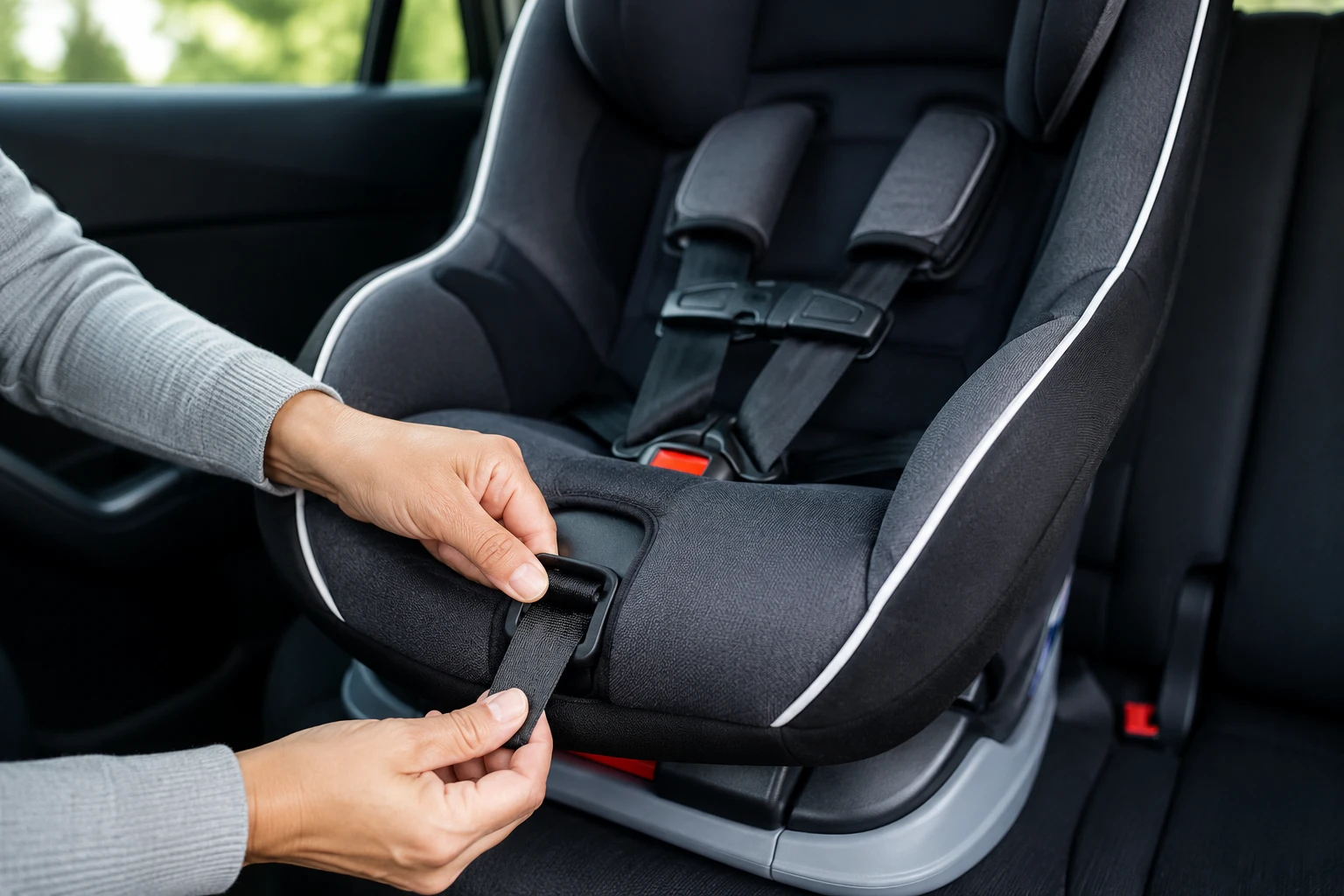

A car seat won’t tighten properly problem can quickly turn a normal drive into a stressful experience. Whether the harness feels loose, the adjustment strap gets stuck, or one side tightens differently than the other, the issue should never be ignored. Moreover, some parents discover multiple problems at once, such as a loose harness and a Revolve 360 Straps Won’t Tighten .Fortunately, most tightening problems have identifiable causes and practical solutions. In this guide, we’ll explore why a car seat won’t tighten properly, how to diagnose the issue, and what steps you can take to restore safe operation.
Why a Properly Tightened Car Seat Matters
A properly tightened car seat helps keep your child positioned correctly during everyday travel and unexpected collisions. When the harness fits snugly, it limits excessive movement and helps distribute crash forces more effectively. However, if the harness remains loose, a child may shift out of the safest position during an impact. Even a high-quality car seat cannot provide maximum protection if it is not adjusted correctly.
Signs Your Car Seat Is Not Tightened Correctly
Look for these common warning signs:
- Harness straps can be pinched between your fingers
- Child can lean forward excessively
- Chest clip repeatedly slides downward
- One harness strap feels looser than the other
- Seat moves more than one inch at the belt path
- Harness loosens during travel
- Adjustment strap feels difficult to pull
If any of these symptoms appear, further inspection is necessary.
Common Reasons a Car Seat Won’t Tighten Properly
Several different issues can prevent a harness from tightening correctly. Let’s examine the most common causes.
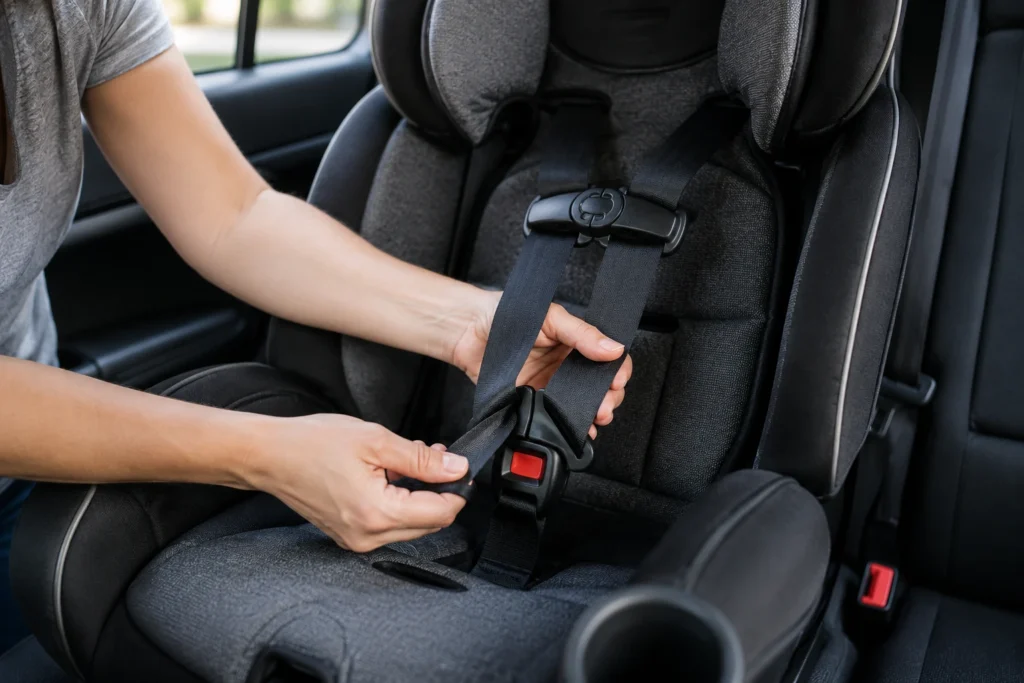
Twisted Harness Straps
Twisted straps often create resistance within the harness system. Although the twist may seem minor, it can prevent smooth movement through the adjustment mechanism. Common causes include:
- Frequent use
- Improper storage
- Cleaning mistakes
- Children moving excessively in the seat
Before investigating more complex problems, always check for twists along the full length of the harness.
Debris Inside the Adjustment Mechanism
Children often bring snacks, toys, and dirt into the car. Over time, crumbs and debris can accumulate around the adjuster strap and internal components. As a result, tightening becomes difficult or inconsistent. Common signs include:
| Symptom | Possible Cause |
|---|---|
| Adjustment strap feels stuck | Dirt buildup |
| Tightening feels inconsistent | Debris interference |
| Clicking sounds | Foreign object obstruction |
| Sudden resistance | Material trapped inside mechanism |
A careful cleaning may restore normal operation.
Incorrect Harness Routing
Harness straps must follow specific paths through the seat. If they become disconnected and are reassembled incorrectly, tightening issues frequently occur. Common routing mistakes include:
- Crossed harness straps
- Incorrect shoulder slots
- Twisted harness routing
- Improper splitter plate attachment
Even a small routing error can affect harness performance.
Harness Strap Wear and Damage
Harness webbing experiences repeated stress throughout the life of a car seat. Over time, wear can develop. Look for:
- Fraying
- Stretching
- Discoloration
- Permanent creases
- Fuzzy edges
Damaged harness straps should be addressed immediately because they may compromise both adjustment and safety.
Faulty Adjuster Strap
The adjuster strap is responsible for tightening the harness. When it becomes worn or damaged, problems can develop quickly. Signs of adjuster failure include:
- Strap slipping during tightening
- Excessive resistance
- Uneven tightening
- No harness movement when pulled
In many cases, parents assume the harness is defective when the adjuster itself is the actual problem.
Problems With the LATCH System
Sometimes the issue isn’t the harness at all. Instead, the car seat installation may be loose. Potential LATCH-related problems include:
- Improper anchor attachment
- Excess slack
- Damaged connectors
- Exceeding manufacturer weight limits
A loose installation can create the impression that the harness is not tightening correctly.
Vehicle Seat Belt Installation Issues
Car seats installed with seat belts can also experience tightening challenges. Common mistakes include:
- Incorrect belt path usage
- Twisted seat belts
- Unlocked retractors
- Remaining slack in the system
Therefore, it’s important to evaluate both the harness and the installation method when troubleshooting.
How to Diagnose the Problem
Finding the exact cause is the first step toward fixing it. Rather than guessing, follow a systematic inspection process.
Step 1: Perform a Visual Inspection
Start with a complete examination of the seat. Inspect:
- Harness straps
- Buckle
- Chest clip
- Adjuster strap
- Seat shell
- Recline mechanism
Look for:
- Twists
- Damage
- Fraying
- Missing components
- Debris buildup
Take your time.
Many issues become obvious during a careful inspection. In some situations, parents discover more than one problem. For example, a Car Seat Recline Won’t Move issue may occur alongside a harness that refuses to tighten because dirt or damaged components are affecting multiple parts of the seat.
Step 2: Test the Harness Adjustment Strap
Next, loosen the harness completely. Then pull the adjustment strap and observe how it responds. Ask yourself:
- Does it move smoothly?
- Is resistance consistent?
- Does one side tighten faster?
- Does the harness slip backward?
These observations often reveal whether the adjuster mechanism is functioning correctly.
Step 3: Inspect the Splitter Plate
Most convertible car seats use a metal splitter plate located behind the seat. This component connects both harness straps. Problems can occur when:
- One strap becomes partially disconnected
- Straps twist around the plate
- Harness routing becomes incorrect
Even minor misalignment may prevent proper tightening.
Step 4: Verify Installation
Finally, review the manufacturer’s instructions. Confirm:
- Correct belt path
- Proper harness slot selection
- Appropriate seat angle
- Correct LATCH attachment
- Compliance with weight limits
Many tightening problems can be traced back to installation errors rather than damaged components.
How to Fix a Car Seat That Won’t Tighten Properly
Once you’ve identified the cause, you can begin making corrections.
Remove Harness Twists
Start with the simplest solution. To remove twists:
- Loosen the harness completely.
- Follow each strap from front to back.
- Straighten every twist.
- Reconnect components if necessary.
- Test the tightening mechanism again.
This quick fix solves many tightening issues.
Clean the Adjustment Area
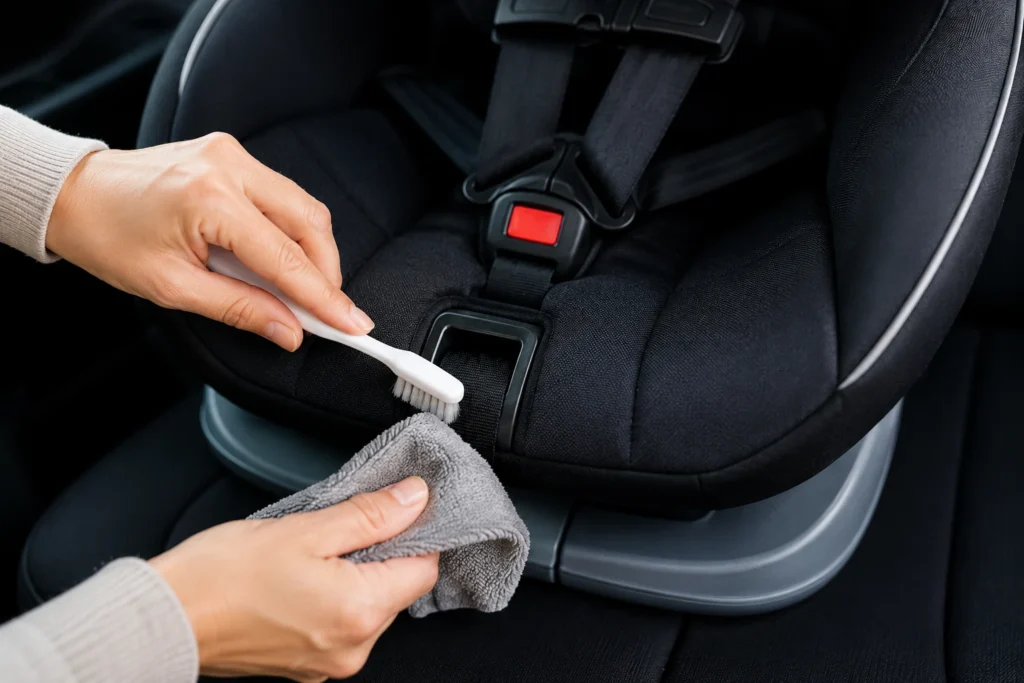
Debris is one of the most common causes of adjuster problems. Use:
- A soft brush
- Mild soap if approved
- A damp cloth
Avoid:
- Lubricants
- Harsh cleaners
- Solvents
- Chemical sprays
Interestingly, friction plays an important role in how adjustment systems function. The scientific study of friction and wear is known as Tribology and understanding it helps explain why dirt buildup can interfere with moving parts.
Re-Thread the Harness Correctly
If the harness was recently removed, verify every part of its routing. Pay close attention to:
- Shoulder slots
- Strap orientation
- Splitter plate attachment
- Harness alignment
Follow the manufacturer’s instructions carefully.
Reinstall the Car Seat
If installation appears loose, start over.
LATCH Installation Tips
- Use approved anchor points
- Remove all slack
- Apply pressure while tightening
- Follow weight restrictions
Seat Belt Installation Tips
- Lock the vehicle seat belt
- Route through the correct belt path
- Pull slack completely out
- Verify movement is less than one inch
A secure installation provides the foundation for proper harness performance.
Adjust Harness Position
Proper harness height improves both comfort and effectiveness. For rear-facing children:
- Harness straps should be at or below shoulder level
For forward-facing children:
- Harness straps should be at or above shoulder level
Additionally, many harness systems rely on principles related to Mechanical Advantage, which helps explain how a small pull on the adjustment strap generates enough force to tighten the harness securely.
Car Seat Won’t Tighten Properly After Washing: What to Do
Cleaning a car seat can make it look brand new. However, many tightening problems begin immediately after the cleaning process. Parents often remove harness components for washing and accidentally reassemble them incorrectly. Consequently, the harness may no longer tighten as intended.
Common Post-Cleaning Mistakes
Several mistakes frequently occur after washing:
- Harness straps reinstalled incorrectly
- Twisted straps hidden behind the seat shell
- Splitter plate attached improperly
- Harness routed through wrong slots
- Components not fully dried before reassembly
Even one small error can create significant tightening problems.
Why Some Components Should Never Be Soaked
Not every part of a car seat is designed for deep cleaning. Many manufacturers specifically prohibit soaking:
- Harness straps
- Buckle assemblies
- Adjustment mechanisms
Excess moisture may weaken materials or affect internal components. Therefore, always follow the cleaning instructions provided in the owner’s manual.
Reassembling the Harness Correctly
Before placing your child back in the seat, verify. Harness straps lie flat, Splitter plate is connected properly, Shoulder straps are routed correctly, Buckle functions normally, Harness tightens evenly Taking a few extra minutes can prevent hours of frustration later.
Car Seat Won’t Tighten Properly on One Side
Sometimes one harness strap tightens while the other remains loose. This issue can be confusing because the adjuster appears to work normally. Fortunately, the cause is usually identifiable.
Uneven Harness Straps
Uneven straps often result from:
- Twisted webbing
- Improper routing
- Splitter plate misalignment
- Harness assembly errors
Begin by loosening the harness completely. Then compare both sides carefully. In many cases, correcting the routing immediately restores proper function.
Splitter Plate Problems
The splitter plate plays a critical role in harness operation. If one strap slips partially off the plate, tension becomes uneven. Look for:
- Twisted attachment points
- Partial disconnection
- Incorrect routing behind the seat
Because the splitter plate is hidden from view, many parents overlook it during inspections.
When Professional Assistance May Be Needed
If you’ve completed every troubleshooting step and the problem remains, professional help may be necessary. Consider:
- Contacting the manufacturer
- Reviewing product support resources
- Consulting a Certified Child Passenger Safety Technician (CPST)
An expert can often identify issues that are difficult to spot at home.
When the Car Seat May Need Replacement
Not every tightening problem can be repaired. Sometimes replacement is the safest solution.
Damaged Harness Components
Replace the seat or affected components if you find:
- Frayed harness straps
- Cracked plastic parts
- Broken adjusters
- Damaged buckles
- Excessively worn webbing
Safety equipment should never be used beyond its intended condition.
Expired Car Seats
Every car seat has an expiration date. Over time:
- Plastic can weaken
- Materials can degrade
- Safety standards may evolve
Check the label or owner’s manual to determine your seat’s expiration period.
After a Crash
Many manufacturers recommend replacing a car seat after certain collisions. Factors may include:
| Consideration | Why It Matters |
|---|---|
| Crash severity | Hidden damage may occur |
| Manufacturer guidelines | Replacement requirements vary |
| Structural integrity | Internal damage may not be visible |
| Future performance | Safety could be compromised |
When in doubt, consult the manufacturer directly.
Tips to Prevent Future Tightening Problems
Preventive maintenance reduces the likelihood of future issues. Small habits can make a big difference.
Perform Regular Inspections
Inspect your car seat monthly. Check:
- Harness condition
- Buckle function
- Adjustment strap movement
- Installation security
Regular inspections help identify minor issues before they become major problems.
Keep the Harness Clean
Children naturally create messes. Nevertheless, routine cleaning prevents debris from accumulating inside moving components. Remove crumbs and dirt whenever possible.
Follow Weight and Height Limits
Every car seat has specific limitations. Exceeding those limits may place unnecessary stress on:
- Harness systems
- Adjusters
- LATCH components
- Seat structure
Always verify your child’s current measurements against manufacturer recommendations.
Read the Manual Carefully
It sounds simple. Yet many installation and adjustment issues originate from skipped instructions. Reviewing the manual periodically helps ensure:
- Correct installation
- Proper harness adjustment
- Appropriate cleaning procedures
- Safe ongoing use
Conclusion
A car seat won’t tighten properly problem should never be ignored. Fortunately, many issues stem from twisted straps, debris, installation errors, or simple maintenance concerns. However, if troubleshooting does not solve the problem, professional assistance or replacement may be necessary. Ultimately, regular inspections and proper care help ensure your child’s car seat remains safe, secure, and ready for every journey.
FAQs
This can happen if the adjuster mechanism is worn, debris is interfering with the harness, or the straps are routed incorrectly.
Yes. Twisted harness straps create friction and can stop the harness from tightening smoothly and evenly.
No. A loose harness may not restrain your child correctly during a sudden stop or collision.
Uneven harness tension is often caused by twisted straps, incorrect routing, or a misaligned splitter plate.
Yes. Debris can accumulate inside the adjustment mechanism and make tightening difficult or inconsistent.
A correctly installed car seat should not move more than one inch side-to-side or front-to-back at the belt path.
Start by inspecting the harness for twists, debris, damaged components, and incorrect routing.
Extreme temperatures can sometimes make straps and components feel stiffer, but they should still function correctly when properly maintained.
Yes. Frayed, stretched, or damaged harness straps should be replaced according to the manufacturer’s recommendations.
Contact the manufacturer if troubleshooting doesn’t solve the problem or if you suspect a damaged safety component.

