
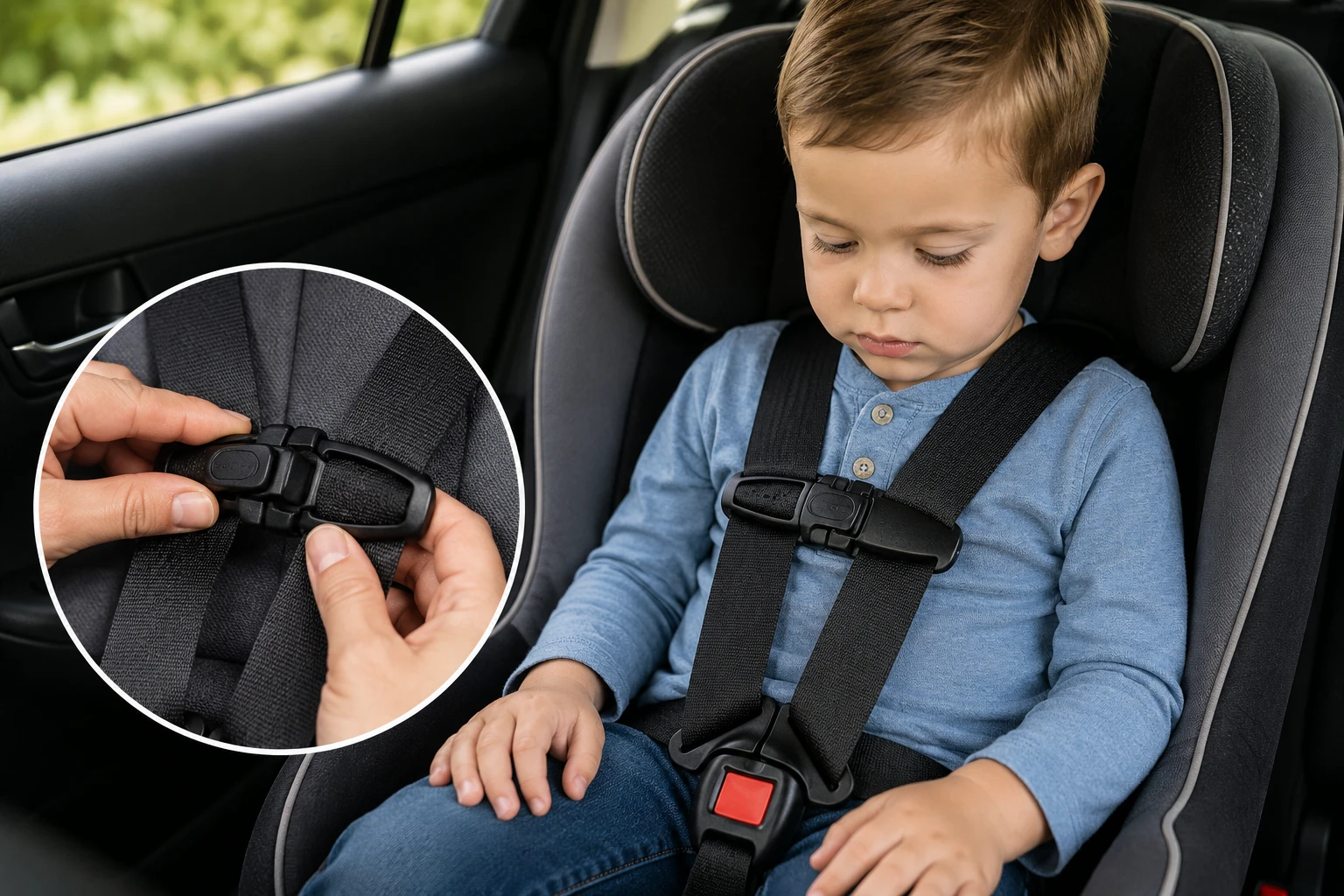

Few things are more frustrating than buckling your child into a car seat only to notice the chest clip keeps sliding down during the ride. Although it may seem like a minor issue, it can affect harness positioning and overall safety. Fortunately, the cause is often easy to identify and fix. In this guide, you’ll learn why chest clips slide down, the risks involved, and the practical steps you can take to keep your child properly secured.
What Is the Chest Clip on a Car Seat?
Before looking at solutions, it helps to understand the purpose of the chest clip.
Purpose of the Chest Clip
Many parents assume the chest clip is what holds a child in the seat during a collision. However, that isn’t its primary job. The harness straps are the main restraint system. The chest clip simply helps keep those straps correctly positioned over the child’s shoulders. As a result, the harness can function more effectively during normal travel and in the event of a crash. Think of the chest clip as a guide that helps maintain proper harness alignment.
Where the Chest Clip Should Be Positioned
Car seat manufacturers generally recommend placing the chest clip at armpit level. This position is important because it helps keep the shoulder straps centered and secure. If the clip sits too low, the straps may spread apart more easily. On the other hand, a clip positioned too high may cause discomfort near the child’s neck. Therefore, checking chest clip placement before every trip is a simple but important safety habit.
Why Does the Chest Clip Keep Sliding Down?
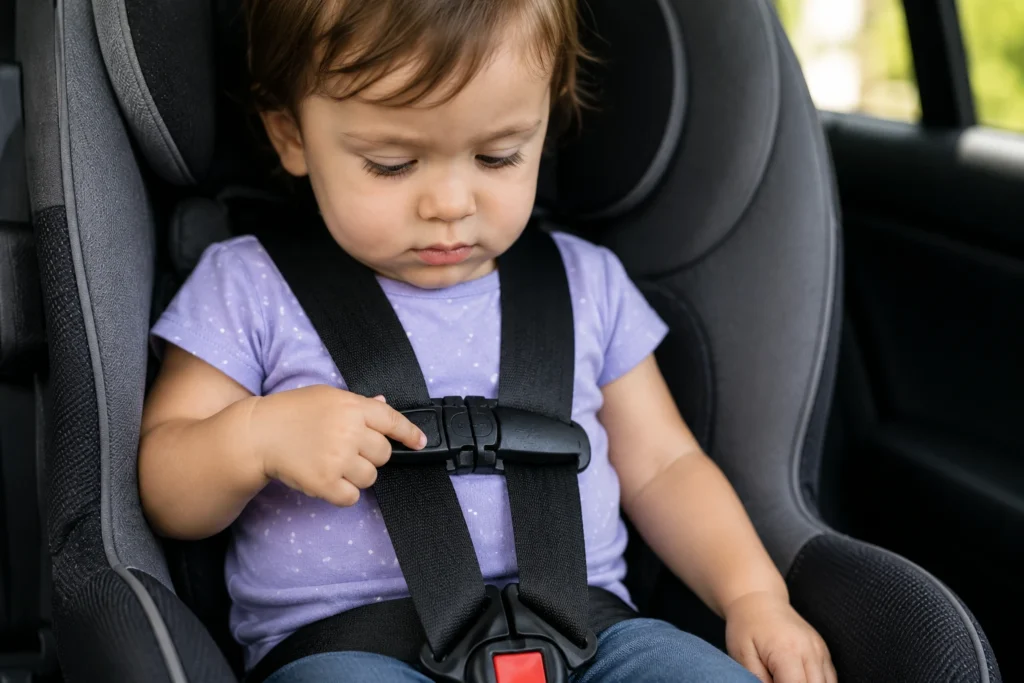
If you constantly find yourself repositioning the clip, there is usually a reason behind it. Let’s look at the most common causes.
Loose Harness Straps
One of the biggest reasons a chest clip moves downward is a loose harness. When extra slack exists in the straps, the clip can slide freely along the webbing. Consequently, normal movement, bumps in the road, and shifting body positions can gradually pull the clip lower. Common signs of a loose harness include:
- Excess webbing that can be pinched at the shoulder
- Visible gaps between the child and the harness
- Shoulder straps that frequently slip
- Chest clip movement during travel
Fortunately, correcting harness tension often solves the issue immediately.
Incorrect Chest Clip Placement
Sometimes the problem starts before the vehicle even leaves the driveway. If the chest clip begins below armpit level, it has a greater chance of moving farther down throughout the trip. Many parents focus on buckling the harness but forget the final adjustment. Therefore, always slide the clip into position after tightening the harness.
Slippery Clothing Materials
Clothing can play a surprisingly large role. Certain materials reduce friction between the harness and the child’s body, making it easier for the clip to move. Examples include:
| Clothing Type | Potential Problem |
|---|---|
| Winter coats | Creates excess slack |
| Rain jackets | Slippery outer surface |
| Fleece layers | Compresses during travel |
| Synthetic fabrics | Allows easier movement |
In addition, bulky clothing can give the impression that the harness is tight when it actually isn’t.
Twisted Harness Straps
Twists in the harness webbing can create uneven pressure across the restraint system. As a result, the chest clip may gradually shift downward. Even a small twist can affect how the harness performs. For this reason, it’s a good idea to inspect the straps regularly and straighten any twists you find. Sometimes a chest clip problem is connected to a Evenflo Revolve 360 Stuck in Position issue. When one harness strap is tighter than the other due to twisting, improper adjustment, or incorrect routing, the chest clip may gradually slide downward as tension becomes uneven across the restraint system.
Child Pulling the Chest Clip Down
Sometimes the car seat isn’t the problem at all. Curious toddlers often discover the chest clip and begin pulling or playing with it during the ride. Eventually, repeated tugging can move the clip well below its proper position. If this happens regularly, observe your child during travel to determine whether their own actions are causing the issue.
Worn or Damaged Components
Like any frequently used product, car seats experience wear over time. Older seats may develop:
- Worn harness webbing
- Damaged chest clips
- Cracked plastic components
- Reduced harness performance
If any part appears damaged, consult the manufacturer’s instructions before continuing to use the seat.
Is a Sliding Chest Clip Dangerous?
Parents naturally worry when they notice a chest clip moving out of position. The level of risk depends on how far the clip slides and whether the harness remains properly adjusted.
What Happens During a Crash?
Vehicle collisions generate significant forces in a very short period of time. During a crash, the harness distributes those forces across stronger areas of a child’s body, including the shoulders and hips. Understanding concepts such as Kinematics helps explain how occupant motion occurs during sudden impacts. Likewise, safety engineers often rely on the Finite Element Method to evaluate how products perform under crash-related stress conditions. Because of this, maintaining proper harness positioning is essential.
Risks of a Low Chest Clip
When a chest clip slides too low, several issues may occur:
- Shoulder straps may shift more easily
- Upper body movement may increase
- Harness alignment may be compromised
- Crash protection may be reduced
While a low chest clip does not automatically mean a child will be injured, it can reduce the effectiveness of the restraint system. Therefore, correcting the issue before every trip is important.
When to Stop Using the Car Seat
Certain situations require immediate attention. Stop using the seat and contact the manufacturer if you notice:
- A broken chest clip
- Missing harness components
- Cracked plastic parts
- Severely frayed webbing
- Active safety recalls
Never attempt to modify or repair safety components yourself. Instead, use only manufacturer-approved replacement parts.
How to Fix a Chest Clip That Keeps Sliding Down
Fortunately, most chest clip problems have straightforward solutions.
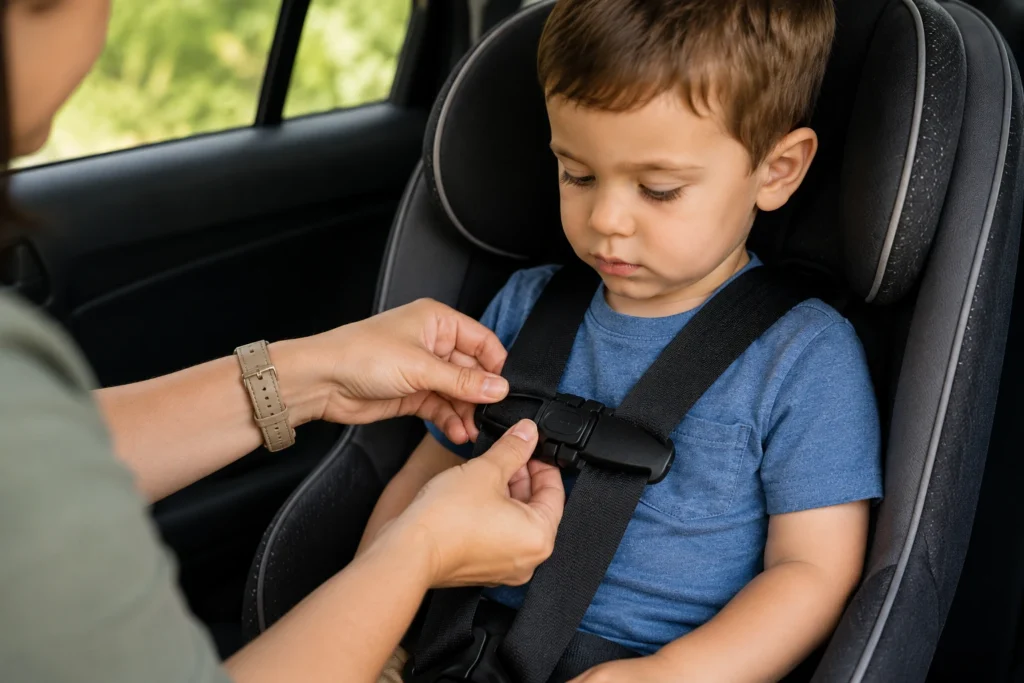
Tighten the Harness Correctly
The first step is ensuring the harness is properly tightened. One of the easiest methods is the pinch test. Follow these steps:
- Buckle your child into the seat.
- Tighten the harness fully.
- Attempt to pinch the harness webbing at the shoulder.
- If excess material can be pinched, tighten further.
Once you cannot pinch any additional webbing, the harness is generally snug enough. As a result, the chest clip is less likely to slide downward.
Reposition the Chest Clip at Armpit Level
After tightening the harness, slide the chest clip into the correct position. The center of the clip should align with the child’s armpits. Although this sounds simple, many parents overlook this final adjustment.
Remove Bulky Clothing
Heavy coats and thick outerwear often interfere with proper harness fit. Instead, consider:
- Thin thermal layers
- Lightweight fleece jackets
- Long-sleeve shirts
- Blankets placed over the secured harness
This approach allows the harness to fit directly against the child’s body.
Untwist the Harness Straps
Finally, inspect the entire harness system for twists. Check:
- Shoulder strap areas
- Areas behind the child
- Sections beneath padding
- Areas near the buckle
Straightening twisted straps helps maintain even tension and can significantly reduce chest clip movement.
Why Some Children Cause the Chest Clip to Slide Down
Even when the harness is adjusted correctly, some children can still contribute to chest clip movement. Therefore, understanding child behavior is often part of solving the problem.
Frequent Wigglers
Some children simply never stop moving. They shift positions, lean forward, twist sideways, and constantly adjust themselves throughout the ride. Over time, all that movement can gradually pull the chest clip downward. This is especially common on longer trips when children become restless. To help minimize movement:
- Schedule breaks on long drives
- Offer travel-friendly activities
- Ensure the harness is snug before departure
- Check clip placement during stops
Children Learning Independence
Toddlers love testing boundaries. Unfortunately, that often includes experimenting with car seat buckles and chest clips. Many children discover they can grab the clip and move it down the harness. As a result, parents may repeatedly find the clip sitting below armpit level. If your child frequently manipulates the clip:
- Explain its purpose using simple language
- Reinforce that it must stay in place
- Praise them when they leave it alone
- Perform quick visual checks during travel
Consistency can make a big difference.
Sensory Preferences
Some children are sensitive to how clothing, harnesses, or clips feel against their bodies. Consequently, they may tug at the harness system because it feels uncomfortable. Parents may notice:
- Frequent pulling at straps
- Complaints about tightness
- Constant shifting in the seat
- Attempts to move the chest clip
In these situations, ensure the harness is adjusted correctly and consult the car seat manufacturer if concerns persist.
Can You Use Accessories to Stop the Chest Clip from Sliding?
When parents become frustrated, they often start looking for quick fixes online. However, not every solution is safe.
Aftermarket Products and Their Risks
Many third-party products claim to improve harness positioning. Examples include:
- Clip stabilizers
- Strap positioners
- Harness accessories
- Additional padding devices
The problem is that many of these products were not crash-tested with your specific car seat. As a result, they may interfere with how the restraint system performs during a collision. Even products with positive reviews may create unintended safety risks.
What Car Seat Manufacturers Recommend
Most manufacturers recommend using only the components that came with the car seat. Therefore, avoid adding accessories unless they are specifically approved by the manufacturer. When in doubt:
- Review the owner’s manual.
- Contact customer support.
- Use manufacturer-approved replacement parts only.
Following these guidelines helps ensure the seat performs as designed.
Preventing Chest Clip Problems in the Future
Fixing the problem is great. Preventing it from happening again is even better.
Perform a Quick Safety Check Before Every Trip
A thirty-second inspection can prevent many common car seat issues. Check the following:
| Item | What to Look For |
|---|---|
| Harness tension | Passes the pinch test |
| Chest clip | Positioned at armpit level |
| Harness straps | Flat and untwisted |
| Buckle | Fully engaged |
| Clothing | Not bulky or interfering |
This quick routine becomes second nature over time.
Teach Older Children About Car Seat Safety
As children grow, they become more capable of understanding safety rules. Explain:
- Why the chest clip matters
- Why straps should remain flat
- Why buckles should stay fastened
- How the car seat helps protect them
When children understand the purpose behind the rules, they are often more willing to cooperate.
Regularly Clean and Inspect the Harness System
Dirt, debris, and everyday wear can affect harness performance. Therefore, inspect your car seat regularly. Look for:
- Frayed webbing
- Damaged clips
- Broken stitching
- Cracked plastic parts
Always follow the manufacturer’s cleaning instructions because improper cleaning can weaken harness materials.
Schedule Periodic Car Seat Reviews
Many parents install a car seat correctly at first but never revisit the setup. Children grow quickly. Consequently, adjustments may become necessary. Every few months:
- Review the owner’s manual
- Verify harness height settings
- Check expiration dates
- Inspect all safety components
These routine reviews can catch problems before they become serious.
Common Myths About Sliding Chest Clips
There is plenty of misinformation online regarding car seat safety. Let’s clear up some common myths.
“The Clip Holds the Child in the Seat”
This is one of the biggest misconceptions. The harness system provides the primary restraint. The chest clip simply helps position the shoulder straps correctly.
“A Lower Chest Clip Is Fine If the Harness Is Tight”
Not necessarily. Even with a tight harness, a low chest clip may allow the shoulder straps to spread farther apart than intended. Therefore, proper placement still matters.
“Adding a Strap Cover Will Fix the Problem”
Additional accessories may create new problems. Unless approved by the manufacturer, avoid adding aftermarket products to the harness system.
“All Chest Clips Slide Down Eventually”
A properly fitted harness and correctly positioned chest clip should remain relatively stable throughout normal travel. If significant movement occurs repeatedly, an adjustment issue is usually present.
When to Contact the Car Seat Manufacturer
Sometimes troubleshooting doesn’t solve the problem. In those cases, contacting the manufacturer is the best next step.
Signs You May Need Assistance
Reach out if:
- The clip continues sliding despite proper adjustment
- The harness cannot be tightened correctly
- Components appear damaged
- Parts are missing
- You suspect a defect
Manufacturers can provide model-specific guidance that general advice cannot.
Information to Have Ready
Before contacting customer support, gather:
| Information Needed | Why It Matters |
|---|---|
| Model number | Identifies the seat |
| Manufacture date | Confirms compatibility |
| Serial number | Helps with support requests |
| Description of issue | Speeds troubleshooting |
Having this information ready can make the process much easier.
Conclusion
If a chest clip keeps sliding down, the cause is usually loose harness straps, incorrect positioning, twisted webbing, bulky clothing, or child movement. Fortunately, most of these issues are easy to fix. Therefore, by checking harness tension, keeping the clip at armpit level, and performing regular safety inspections, you can help ensure your child’s car seat functions as intended every time you travel.
FAQs
The most common causes are loose harness straps, bulky clothing, twisted webbing, or a child pulling on the clip.
The chest clip should sit at armpit level to help keep the shoulder straps properly positioned.
A low chest clip can reduce harness effectiveness by allowing the shoulder straps to spread apart more easily.
The harness should be snug enough that you cannot pinch any excess webbing at your child’s shoulders.
Yes. Thick coats can create extra slack in the harness, making it easier for the clip to slide down.
No. Only use accessories approved by the car seat manufacturer, as aftermarket products may affect safety performance.
Yes. Twisted harness straps can create uneven tension and contribute to chest clip movement.
Teach your child that the clip must stay in place and check its position regularly during travel.
Replace it immediately if it is cracked, broken, or damaged, following the manufacturer’s instructions.
Inspect the harness regularly for twists, wear, damage, and proper adjustment before trips.

