
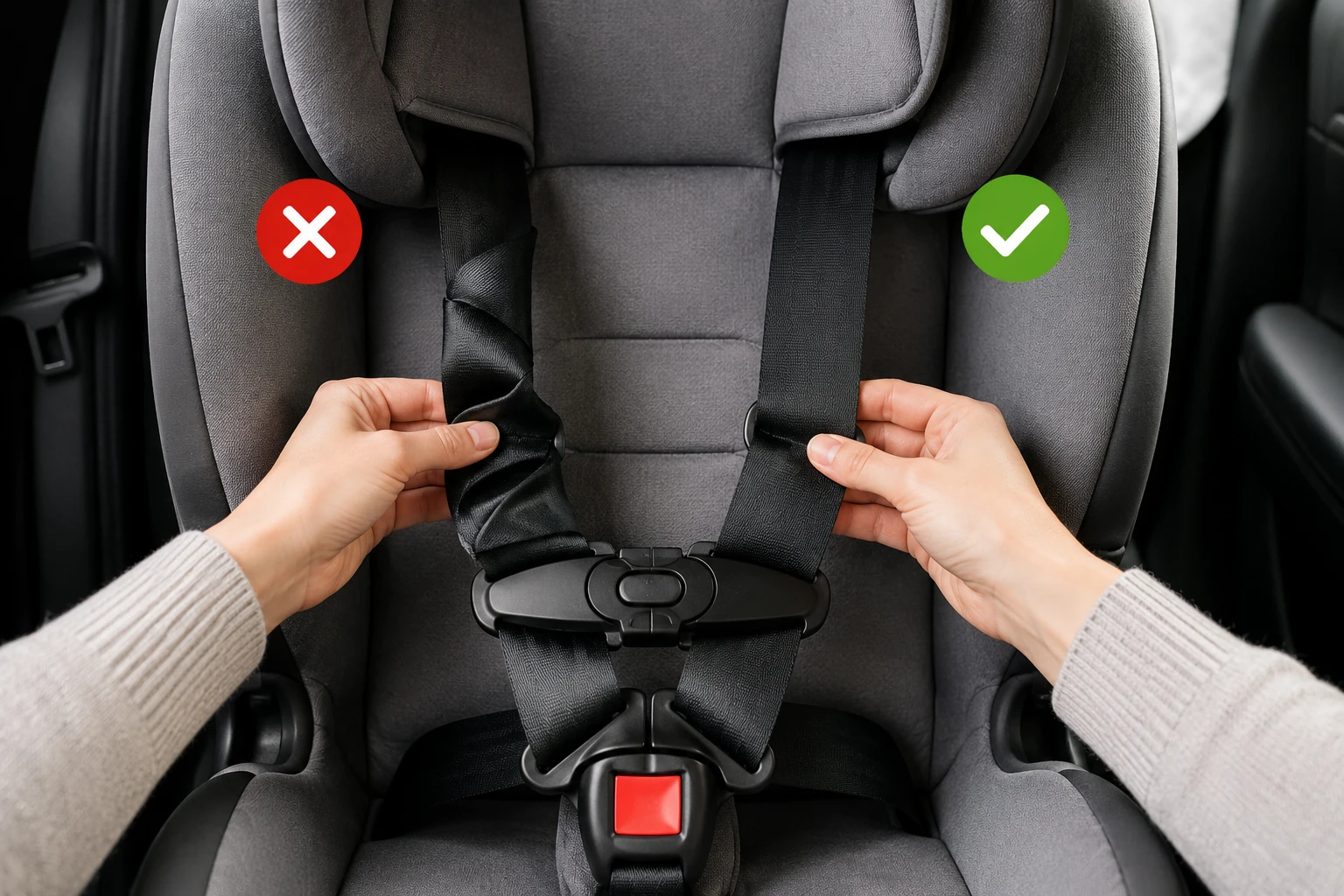

A car seat harness uneven problem can quickly grab a parent’s attention. One strap looks longer. The other feels tighter. As a result, many parents wonder whether the car seat is still safe to use. Fortunately, most harness issues are fixable. However, identifying the cause is important because an uneven harness can affect comfort, fit, and potentially safety. In some cases, parents troubleshooting a Car Seat Won’t Click issue may also discover harness alignment problems caused by dirt, improper routing, or worn components. In this guide, we’ll explain why a car seat harness uneven condition happens, whether it’s dangerous, and how to inspect your seat before the problem gets worse.
What Does an Uneven Car Seat Harness Mean?
A car seat harness is designed to tighten evenly across both shoulders. Therefore, when one side becomes noticeably tighter, looser, or longer than the other, something may be interfering with the harness system. Sometimes the difference is small. Other times, it’s impossible to miss. Regardless of severity, it’s worth investigating.
Signs Your Car Seat Harness Is Uneven
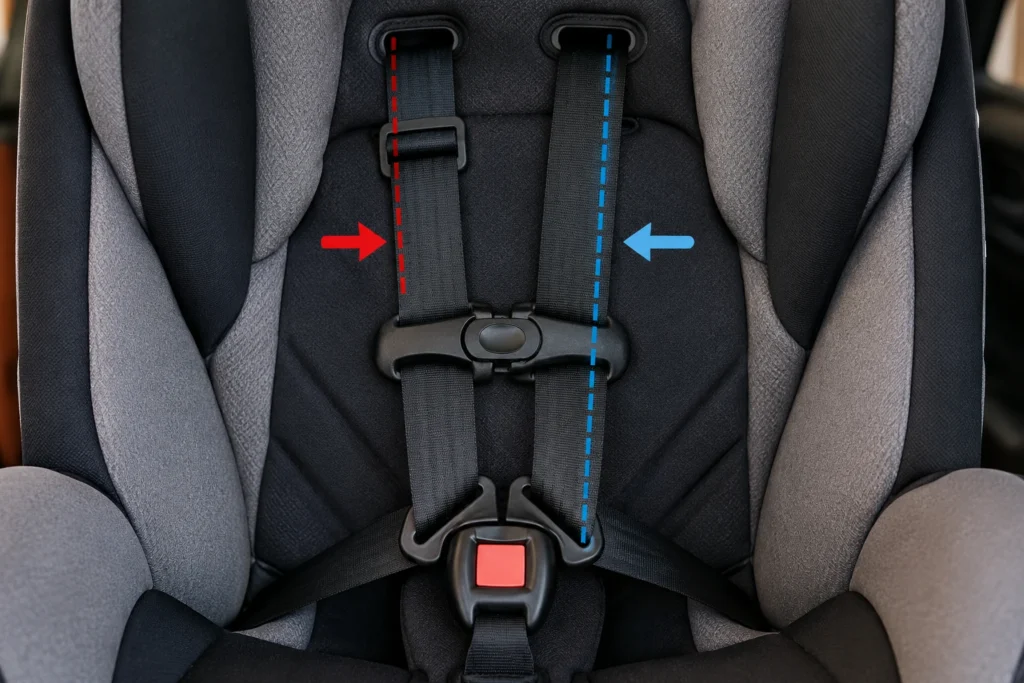
Parents commonly notice several warning signs when a harness becomes uneven. These include:
- One shoulder strap sits lower than the other
- One side tightens faster than the opposite side
- The chest clip shifts off-center
- One strap appears longer
- The harness feels uneven after tightening
- The child leans slightly to one side
While some issues are cosmetic, others may indicate a problem within the harness routing system.
Why Parents Notice This Problem
Several situations can contribute to harness imbalance. For example:
- Cleaning the car seat
- Removing harness straps
- Adjusting harness height
- Frequent daily use
- Children pulling repeatedly on one shoulder strap
Over time, these small actions can gradually affect how the harness moves and tightens.
Is an Uneven Car Seat Harness Dangerous?
The answer depends on the cause. A minor visual difference may not indicate a safety concern. However, if one strap is significantly looser or tighter than the other, the harness may not distribute forces evenly during a collision. Because of this, every uneven harness should be inspected.
How Harness Fit Affects Crash Protection
A properly adjusted harness helps distribute crash forces across stronger areas of a child’s body. These areas include:
- Shoulders
- Upper chest
- Hips
When the harness is balanced, force spreads more evenly throughout the restraint system. However, if one side is much looser, the child may move farther during a crash. That additional movement matters. Even small differences can affect how effectively the restraint performs. Engineers often evaluate force distribution using principles similar to stress concentration, where uneven loads create additional strain on specific areas.
Potential Risks of Ignoring the Problem
Ignoring a persistent car seat harness uneven condition can create several potential issues.
| Potential Issue | Why It Matters |
|---|---|
| Excess movement | Child may shift farther during impact |
| Harness misalignment | Reduced restraint performance |
| Shoulder slippage | Strap may move off the shoulder |
| Uneven tension | One side bears more force |
| Improper chest clip position | Reduced harness effectiveness |
Although these risks vary depending on the severity of the problem, correcting harness issues quickly is always the safest approach.
Common Causes of a Car Seat Harness Being Uneven
Finding the root cause makes fixing the issue much easier. Fortunately, most harness problems fall into a few common categories.
Harness Strap Twisting
Twisted straps are one of the most common reasons a harness becomes uneven. A twist changes the shape of the webbing and creates additional resistance. As a result:
- One side may appear shorter
- Tightening becomes uneven
- The harness may feel rough when adjusting
Sometimes the twist is easy to see. Other times, it hides beneath the seat pad. For this reason, inspect the entire strap from shoulder slot to buckle.
Uneven Harness Tightening
Many car seats use a central adjuster that tightens both shoulder straps simultaneously. However, if one side encounters resistance, the opposite side may tighten more easily. Common causes include:
- Dirt buildup
- Twisted webbing
- Internal routing issues
- Harness bunching
If one strap consistently feels tighter, the harness path should be examined carefully.
Chest Clip Position Problems
The chest clip plays a larger role than many parents realize. When positioned incorrectly, it can pull the harness off-center and create the appearance of uneven straps. Ideally, the chest clip should sit level with the child’s armpits. Not lower. Not higher. Therefore, before adjusting the harness itself, verify that the chest clip is positioned correctly.
Harness Slipping Off the Splitter Plate
The splitter plate sits behind many convertible and all-in-one car seats. Its job is to connect both shoulder straps to the adjustment mechanism. If one harness loop slips off or becomes improperly attached, the harness may immediately become uneven. Common signs include:
- One strap much longer than the other
- Difficulty tightening
- Sudden changes in harness length
- Uneven movement when adjusting
This issue often appears after cleaning or reassembling the seat.
Incorrect Reassembly After Cleaning
Many harness issues begin after routine maintenance. Parents often remove seat covers and harness components for cleaning. Unfortunately, reassembly mistakes can occur. Examples include:
- Crossed harness straps
- Incorrect routing
- Twisted webbing
- Improper splitter plate attachment
Even a small installation error can affect harness performance. Therefore, always follow the manufacturer’s instructions carefully when reinstalling any harness component.
Child Positioning Issues
Sometimes the harness is working perfectly. The child isn’t. Children naturally move around during travel. For example, they may:
- Lean toward a sibling
- Hold a toy to one side
- Shift their weight
- Sit unevenly
These movements can temporarily make a harness appear uneven. Before assuming a mechanical issue exists, reposition the child and reassess the harness fit.
How to Check Your Car Seat Harness for Problems
A thorough inspection requires only a few minutes. However, it can reveal issues before they become more serious.
Perform a Visual Inspection
Start with a careful visual examination. Inspect:
- Both shoulder straps
- Harness slots
- Buckle area
- Chest clip
- Visible harness routing
Look for twists, folds, or signs of wear. Small irregularities can sometimes create larger effects over time, a concept related to propagation in technical analysis.
Inspect the Back of the Car Seat
Next, examine the rear of the seat. Many harness problems originate where parents rarely look. Check:
- Splitter plate connections
- Strap routing
- Harness loops
- Attachment points
Both sides should appear symmetrical. If one side differs, that may reveal the source of the problem.
Compare Strap Lengths
Fully loosen the harness. Then pull both shoulder straps forward. Compare them carefully. Ideally:
- Both sides should match
- Both should move freely
- Both should tighten evenly
If one side remains longer, further troubleshooting is necessary.
Review the User Manual
Every car seat model has unique harness routing requirements. Even experienced parents occasionally make mistakes. The user manual provides:
- Harness diagrams
- Splitter plate instructions
- Adjustment procedures
- Manufacturer recommendations
Therefore, always verify your setup against the manual before making significant adjustments. At this point, you’ve identified the most common causes of a car seat harness uneven problem and completed a full inspection. Next, we’ll walk through the exact steps to fix the issue and prevent it from returning.
Step-by-Step: How to Fix an Uneven Car Seat Harness
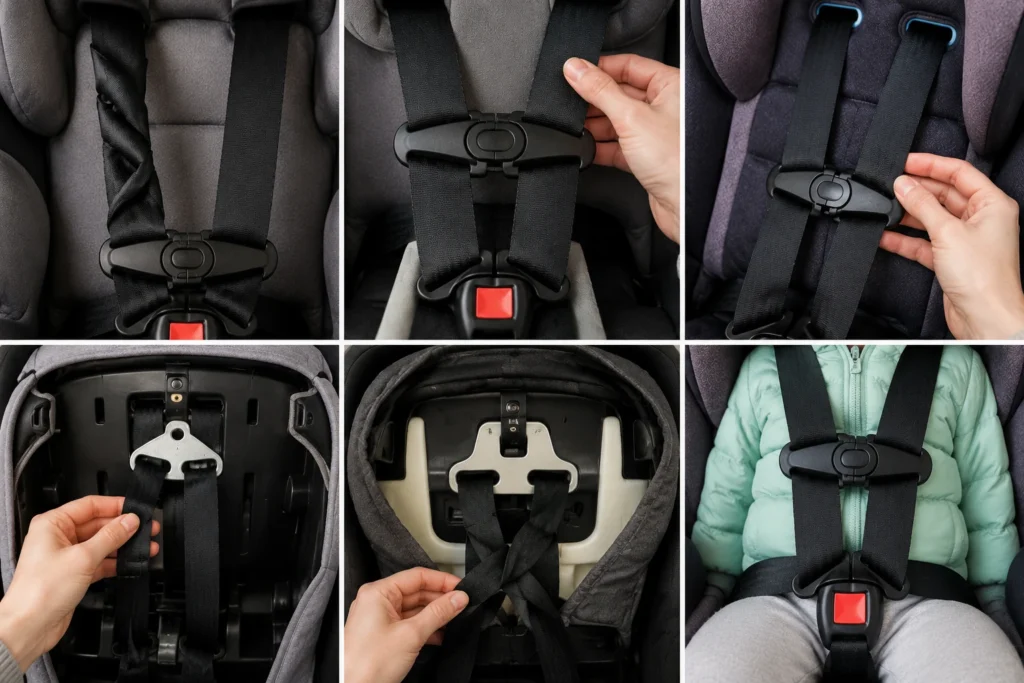
Once you’ve identified a car seat harness uneven issue, the next step is fixing it correctly. Fortunately, most problems can be resolved without replacing the entire seat. Work slowly. Pay attention to details. Small mistakes can create bigger problems later.
Step 1: Remove Your Child From the Seat
Before making adjustments, place the car seat on a stable surface. Then:
- Unbuckle the harness
- Open the chest clip
- Fully loosen the straps
This gives you better access to every component. More importantly, it allows you to inspect the harness without tension affecting your observations.
Step 2: Straighten Any Twisted Straps
Twisted webbing is often the culprit. Follow each shoulder strap from the shoulder slot down to the buckle. Look for:
- Folds
- Twists
- Bunching
- Wrinkled sections
If you find a twist, carefully rotate the strap until it lies completely flat. A properly positioned harness should look smooth and uniform from top to bottom.
Step 3: Equalize Harness Length
With the harness loosened, pull both shoulder straps forward. Compare them side by side. If one side is longer:
- Gently pull the shorter side
- Check for hidden twists
- Verify smooth movement through the harness path
Continue adjusting until both sides appear equal. This simple step resolves many uneven harness complaints.
Step 4: Inspect the Splitter Plate
Turn the seat around and inspect the rear harness connections. The splitter plate should securely hold both harness loops. Check for:
| Inspection Point | What to Look For |
|---|---|
| Harness loops | Proper attachment |
| Splitter plate | No bending or damage |
| Strap routing | Symmetrical paths |
| Connection points | Secure placement |
If one loop has slipped or been attached incorrectly, reconnect it according to the manufacturer’s instructions.
Step 5: Re-thread the Harness if Necessary
Sometimes the harness must be completely re-routed. This is especially common after cleaning. Follow the manual carefully. Verify that:
- Both straps pass through the same shoulder-height slots
- Webbing remains flat
- Harness routing matches manufacturer diagrams
- No twists occur behind the seat shell
Although re-threading takes time, it often solves stubborn harness issues.
Step 6: Test Harness Operation
Once everything is reassembled, test the system thoroughly. Tighten and loosen the harness multiple times. Pay attention to:
- Smooth movement
- Equal tightening
- Balanced strap length
- Proper chest clip positioning
If the harness now moves evenly, the issue has likely been resolved.
Why Car Seat Harnesses Become Uneven After Cleaning
Many parents first notice a car seat harness uneven problem after cleaning their car seat. This isn’t surprising. Cleaning often requires partial disassembly.
Harness Removal Mistakes
Even careful parents can accidentally:
- Cross straps
- Reverse harness loops
- Twist webbing
- Route straps incorrectly
The harness may look normal at first glance. However, once tightened, the imbalance becomes obvious. Therefore, take photos before disassembly whenever possible. Those photos can become invaluable during reassembly.
Strap Shrinkage Concerns
Many manufacturers prohibit machine washing harness straps. Why? Because aggressive cleaning methods may weaken or alter the webbing. Potential problems include:
- Material distortion
- Fiber damage
- Reduced flexibility
- Uneven movement
Always review the owner’s manual before cleaning harness components.
Internal Components Shifting
While cleaning, hidden parts sometimes move out of position. Examples include:
- Splitter plates
- Adjuster mechanisms
- Harness loops
- Routing guides
Even if everything appears connected, a shifted component can affect how the harness tightens.
How to Prevent an Uneven Harness in the Future
Prevention is much easier than troubleshooting. Fortunately, a few simple habits can reduce the chances of future harness problems.
Conduct Regular Harness Checks
A quick inspection takes less than a minute. Check:
- Strap length
- Chest clip position
- Visible twists
- Smooth operation
Weekly inspections can catch small issues before they become larger problems.
Tighten Both Sides Evenly
Although most modern harnesses use a central adjuster, parents still influence how the straps settle. Before tightening:
- Position both straps evenly
- Remove visible slack
- Verify shoulder placement
Then tighten gradually. This helps maintain balanced tension.
Keep Straps Flat
Flat straps function better. They also improve comfort. Whenever buckling your child:
- Smooth the webbing
- Remove folds
- Straighten twists
Making this a habit can significantly reduce future issues.
Follow Manufacturer Cleaning Guidelines
Cleaning mistakes cause countless harness problems every year. Therefore:
- Read the manual first
- Use approved cleaning methods
- Avoid unauthorized modifications
- Reassemble carefully
A few extra minutes can prevent hours of troubleshooting later.
When You Should Contact the Manufacturer
Most harness issues can be fixed at home. However, some situations require professional assistance.
Signs of Possible Harness Damage
Contact the manufacturer if you notice:
- Frayed webbing
- Cuts or tears
- Stretched straps
- Cracked components
- Broken adjusters
Damaged harness parts should never be ignored.
When Replacement Parts May Be Needed
Certain components simply wear out over time. These may include:
| Component | Potential Issue |
|---|---|
| Splitter plate | Bending or damage |
| Adjuster mechanism | Uneven tightening |
| Chest clip | Cracking or sticking |
| Harness webbing | Wear or stretching |
Always use manufacturer-approved replacement parts. Generic alternatives may not meet safety requirements.
Warranty and Customer Support Options
Many manufacturers provide helpful troubleshooting support. Before calling, gather:
- Model number
- Manufacturing date
- Photos of the problem
- Purchase information
The more information you provide, the faster they can assist.
Conclusion
A car seat harness uneven problem may seem minor at first. However, it can affect harness fit, comfort, and potentially safety. Fortunately, most causes such as twisted straps, routing errors, or splitter plate issues can be identified and corrected with a careful inspection. Therefore, check your harness regularly, follow cleaning instructions closely, and address problems as soon as they appear. By taking these simple steps, you’ll help ensure your child’s car seat continues to perform as intended every time you hit the road.
FAQs
A car seat harness uneven issue is usually caused by twisted straps, improper routing, or a problem with the splitter plate behind the seat.
Yes. If one side is significantly looser than the other, the harness may not restrain your child as effectively during a crash.
Fully loosen the harness, inspect for twists, and check that both straps are routed correctly through the splitter plate and harness slots.
No. Both straps should tighten evenly, so uneven tightening often indicates resistance or incorrect routing on one side.
Yes. Removing and reinstalling harness components incorrectly after cleaning is a common cause of uneven straps.
Start by inspecting the straps for twists and verifying that the chest clip and shoulder straps are positioned correctly.
Yes. Thick jackets or uneven layers can change how the harness sits on your child and create the appearance of imbalance.
The splitter plate connects both shoulder straps to the harness adjuster, helping ensure equal tension on both sides.
Not necessarily. First inspect the routing and hardware, but replace damaged components if recommended by the manufacturer.
Sometimes. Debris, worn components, or routing issues that affect the harness may also contribute to a Car Seat Buckle Won’t Release problem.

