
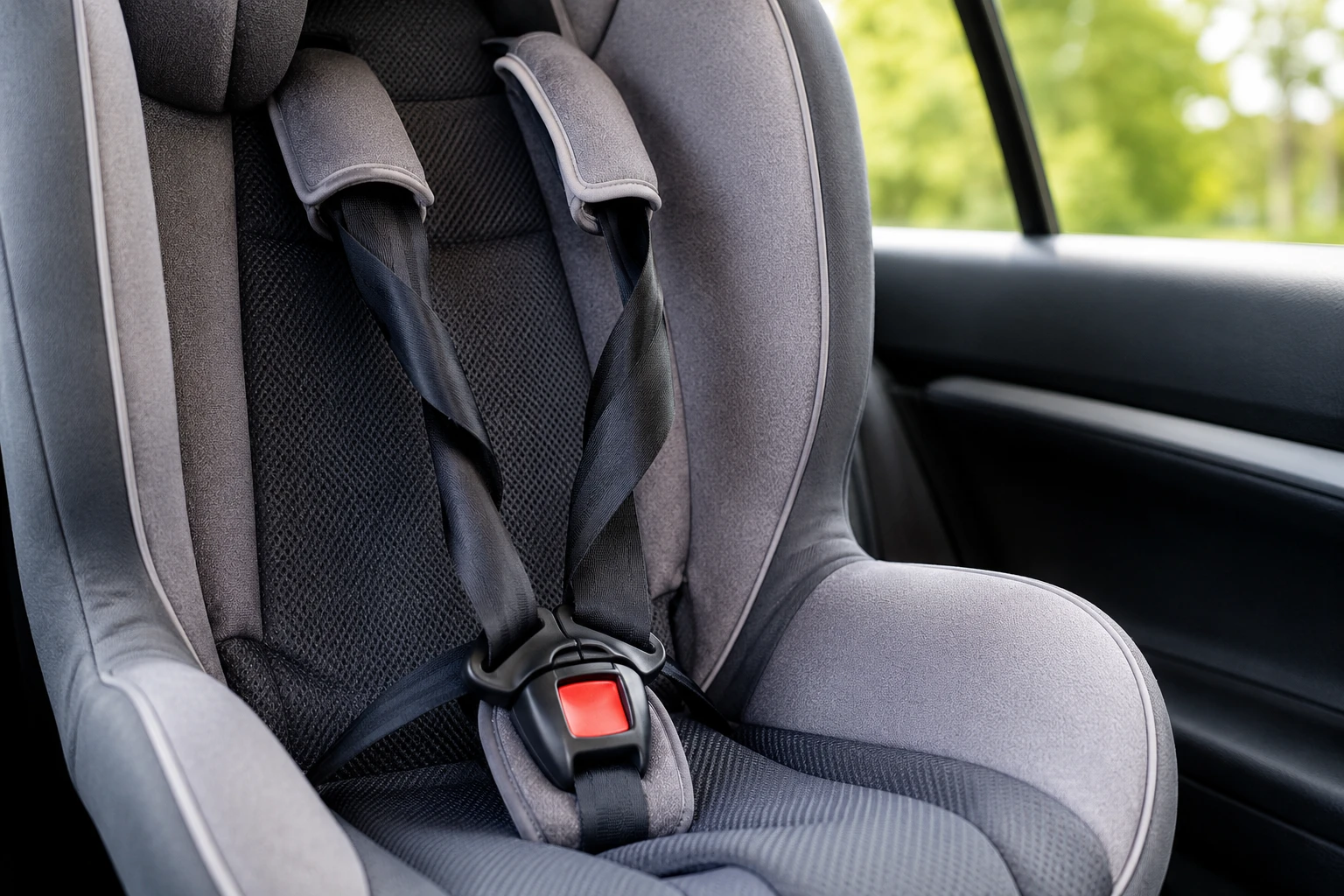

When car seat straps keep twisting, even a quick trip across town can become frustrating. You straighten the harness before one ride, only to find it twisted again the next day. While this may seem like a minor inconvenience, twisted straps can affect comfort, make adjustments more difficult, and create challenges when securing your child correctly. Fortunately, most harness twisting problems have simple causes and practical solutions. By understanding why straps twist and how to prevent it, parents can spend less time untangling harnesses and more time focusing on safe travel.
What Happens When Car Seat Straps Keep Twisting?
Car seat harnesses are designed to lie completely flat across a child’s body. This allows the harness to distribute force properly and maintain a secure fit. However, when car seat straps keep twisting, the harness may no longer sit as intended. Although a single twist might appear harmless, repeated twisting can create several issues over time.
Understanding Harness Strap Design
Every child restraint system relies on durable webbing that moves through designated harness slots and adjustment mechanisms. The harness is engineered to:
- Remain flat against the body
- Tighten evenly
- Stay aligned through the seat shell
- Provide consistent restraint performance
When these conditions are maintained, the harness functions efficiently.
Why Twisted Straps Are a Concern
Twisted webbing can lead to:
| Issue | Potential Impact |
|---|---|
| Uneven tightening | One side may feel tighter than the other |
| Child discomfort | Harness may rub against the neck or shoulders |
| Harder adjustments | Tightening becomes less smooth |
| Increased wear | Twisting places extra stress on webbing |
Therefore, correcting twists before every trip is always recommended.
Common Reasons Car Seat Straps Keep Twisting
The first step toward solving the issue is understanding why it happens. In many cases, the cause is surprisingly simple.
Frequent Harness Adjustments
Every time parents loosen or tighten the harness, the webbing moves through multiple contact points. Over weeks and months, these movements can gradually introduce twists. This commonly occurs when:
- Multiple children use the same seat
- Harness heights are adjusted frequently
- Straps are tightened unevenly
Although each movement seems insignificant, the effects can accumulate.
Incorrect Buckling Habits
Sometimes twisting starts during the buckling process. For example, one shoulder strap may fold slightly while securing the chest clip. Initially, the fold is barely noticeable. However, after repeated use, the fold becomes a full twist. Consequently, paying attention during buckling can prevent many harness issues before they develop.
Child Movement During Travel
Children rarely sit perfectly still. Instead, they:
- Reach for toys
- Lean forward
- Shift positions
- Climb into the seat independently
As a result, harness straps can rotate gradually during everyday use. The more active the child, the greater the likelihood that twisting will occur.
Strap Material and Design
Not all harness webbing behaves the same way. Some materials are softer and more flexible, which can improve comfort but also increase the tendency to twist. Additionally, factors such as friction, surface interaction, and material wear can influence webbing performance over time. These characteristics are studied in the field of tribology. This does not indicate a defect. Rather, it reflects normal behavior of certain materials.
Improper Harness Routing
Sometimes the twist isn’t visible from the front of the seat. Instead, it develops behind the shell where parents rarely look. This is especially common after:
- Deep cleaning
- Harness removal
- Reinstallation
- Harness height adjustments
Consequently, many parents repeatedly straighten the visible section while missing the hidden source of the problem.
How to Inspect Twisted Car Seat Straps
Before fixing anything, perform a complete inspection. A careful inspection often reveals the exact location of the twist.
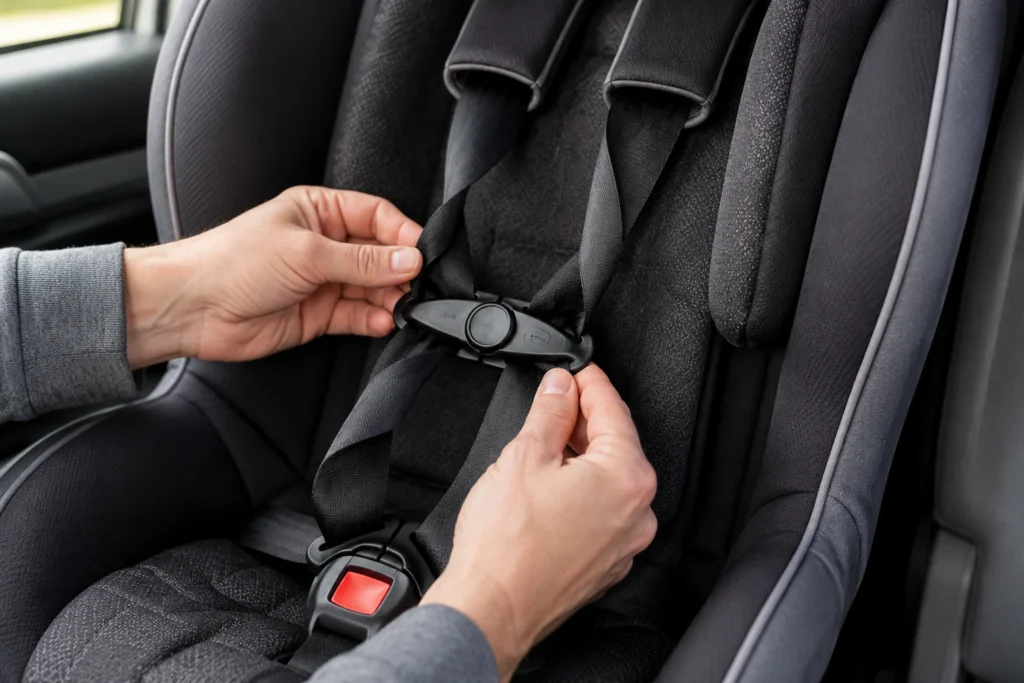
Start at the Harness Slots
Begin where the shoulder straps emerge from the seat. Look for:
- Folded webbing
- Rotated sections
- Uneven positioning
Both shoulder straps should appear identical.
Examine the Rear of the Car Seat
Next, inspect the back side of the seat. This step is frequently overlooked. Yet many persistent twists originate behind the shell where the harness connects to the adjustment system.
Inspect the Splitter Plate
The splitter plate is often responsible when car seat straps keep twisting repeatedly. Check for:
- Crossed loops
- Twisted connections
- Uneven attachment points
A small twist here can affect the entire harness system.
Check the Buckle Area
Now move toward the lower portion of the harness. Inspect:
- Buckle tongues
- Lower webbing
- Crotch buckle area
Occasionally, twisting starts at the bottom and gradually travels upward through regular use.
Think About the Entire Harness Path
When examining the harness, consider the entire routing system rather than focusing on one visible twist. A problem in one location often affects another. This idea is somewhat similar to principles studied in topology, where connected structures can influence the behavior of an entire system. Therefore, always inspect the full harness path before making corrections.
How to Fix Twisted Car Seat Straps
Fortunately, most twisting issues can be corrected without replacing any components. The key is identifying the source before attempting a repair.
Method 1: Straighten the Harness From Top to Bottom
This is often the quickest solution. Start at the shoulder area and work downward. Use your fingers to:
- Flatten the webbing
- Remove folds
- Align both sides evenly
Afterward, tighten and loosen the harness several times to verify the correction remains in place.
Method 2: Unthread and Re-Thread the Harness
For severe twists, a complete harness reset may be necessary. Always follow the manufacturer’s instructions. Generally, the process includes:
- Loosening the harness completely
- Disconnecting straps from the splitter plate
- Removing the harness from the seat shell
- Straightening all webbing
- Reinstalling the harness correctly
Although this requires additional time, it often eliminates stubborn twisting problems.
Method 3: Correct Splitter Plate Twists
Many recurring issues originate at the splitter plate. To inspect it properly:
- Fully loosen the harness
- Examine both attachment loops
- Verify each strap lies flat
- Ensure neither loop crosses the other
This small adjustment frequently resolves ongoing twisting concerns.
Method 4: Adjust the Buckle Area
Sometimes the source of the twist is near the buckle assembly. If so:
- Unbuckle all harness components
- Flatten the webbing
- Realign the buckle tongues
- Reconnect everything carefully
Finally, inspect the entire harness path one more time to confirm the twist has been eliminated.
Preventing Car Seat Straps From Twisting
Fixing twists is helpful. Preventing them is even better. Fortunately, a few simple habits can significantly reduce how often car seat straps keep twisting.
Buckle the Harness Carefully
Before securing the chest clip, quickly inspect both shoulder straps. Verify that:
- The harness lies flat
- No folds are present
- Both sides are aligned
Although this takes only seconds, it can prevent future twisting.
Tighten Both Sides Evenly
Parents often pull one side more aggressively than the other. Instead, tighten gradually and evenly. Balanced tension helps maintain proper strap alignment.
Teach Children Proper Entry Habits
As children become more independent, they frequently climb into their seats without assistance. Encourage them to:
- Sit down first
- Avoid stepping on straps
- Place arms through carefully
- Wait for harness adjustments
These habits can dramatically reduce twisting over time.
Perform Routine Harness Checks
Finally, develop a simple inspection routine. A quick visual check before each trip can catch small twists before they become larger problems. This proactive approach saves time and helps maintain a properly functioning harness system.
Car Seat Straps Keep Twisting After Cleaning
Many parents first notice harness problems immediately after cleaning their car seat. The seat looks spotless. However, the straps suddenly seem different. In many cases, the cleaning process itself introduces twists into the harness system.
Common Cleaning Mistakes
Although cleaning is important, mistakes during reassembly can create ongoing strap issues. Common examples include:
- Reinstalling straps upside down
- Crossing harness loops behind the seat
- Routing straps through incorrect slots
- Failing to inspect the splitter plate
Consequently, even a perfectly cleaned seat can develop harness problems if reassembled incorrectly.
Follow Manufacturer Instructions
Every car seat model has unique routing requirements. Therefore, always refer to the owner’s manual before removing any harness components. Many manufacturers specifically warn against:
- Twisting webbing
- Altering harness routing
- Using unauthorized cleaning products
- Disassembling components unnecessarily
Following those instructions helps ensure the harness continues functioning as intended.
Double-Check After Reinstallation
Before placing your child back into the seat:
- Inspect the front harness path.
- Examine the rear harness routing.
- Verify splitter plate connections.
- Tighten and loosen the harness several times.
- Confirm both shoulder straps remain flat.
A few extra minutes can prevent weeks of frustration later.
Car Seat Straps Keep Twisting on Rotating Car Seats
Rotating car seats offer convenience. However, they also introduce additional moving parts that can affect harness positioning. As a result, some parents find themselves dealing with twisting issues more frequently.
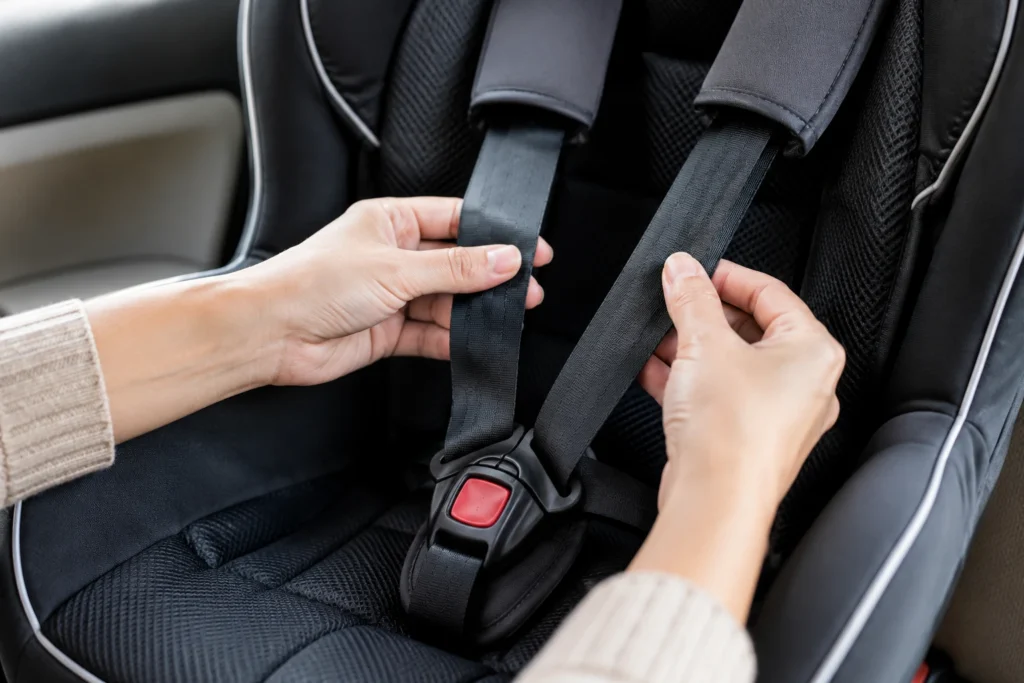
Unique Challenges of Rotating Seats
Unlike traditional car seats, rotating models allow the seat shell to turn toward the vehicle door. This makes loading and unloading children easier. However, the added movement can sometimes shift harness positioning. Over time, repeated rotation may contribute to:
- Strap misalignment
- Harness bunching
- Uneven tension
- Twisting near adjustment points
How Rotation Can Affect Harness Alignment
Every rotation creates movement throughout the seat structure. Although the harness is designed to accommodate this motion, improper use can occasionally cause problems. For example:
- Rotating the seat while straps are tangled
- Allowing straps to hang loosely
- Turning the seat with objects trapped beneath the harness
These situations may increase the likelihood that car seat straps keep twisting.
Rotating Car Seat Won’t Click Into Place
Parents sometimes notice twisting issues while troubleshooting other rotating seat concerns. For example, if a Rotating Car Seat Won’t Click Into Place, the seat may be repeatedly turned back and forth while attempting to engage the locking mechanism. This additional movement can occasionally shift harness webbing, contribute to strap misalignment, and make twisting more likely over time. Therefore, performing a quick harness inspection after resolving rotation issues is a smart habit.
Prevention Tips for Rotating Models
To reduce twisting problems:
- Rotate the seat slowly
- Keep straps organized when not in use
- Inspect harness alignment regularly
- Remove toys or objects before rotating
- Confirm the seat locks properly before travel
These small steps can make a noticeable difference.
Signs the Harness May Need Professional Inspection
Most twisting issues can be resolved at home. However, there are situations where professional assistance is warranted.
Persistent Twisting Despite Corrections
If you’ve corrected the harness multiple times and the issue immediately returns, a deeper problem may exist. For example:
- Improper internal routing
- Damaged hardware
- Worn harness components
In these situations, further inspection is advisable.
Visible Harness Damage
While inspecting the straps, look for:
- Fraying
- Cuts
- Excessive folding
- Permanent creases
- Discoloration from wear
Damage may weaken the webbing and should never be ignored.
Hardware Problems
The harness itself may not be the problem. Instead, associated components could be responsible. Inspect:
- Chest clips
- Buckle tongues
- Adjuster mechanisms
- Splitter plates
If anything appears damaged, discontinue use until the issue is evaluated.
Contact the Manufacturer
When in doubt, contact the car seat manufacturer directly. Most companies offer:
- Technical support
- Replacement part guidance
- Harness inspection assistance
- Troubleshooting resources
As a result, many issues can be resolved quickly and accurately.
Mistakes Parents Make When Fixing Twisted Straps
Good intentions sometimes create bigger problems. Therefore, it’s important to avoid common repair mistakes.
Ignoring the Rear Harness Routing
Many parents focus only on visible twists. Unfortunately, the actual source often sits behind the seat shell. Always inspect both sides of the harness system.
Twisting the Strap in the Opposite Direction
Sometimes a parent attempts to correct a twist but accidentally introduces another one farther down the harness. Consequently, the issue appears solved temporarily but returns later. Follow the entire strap path when making corrections.
Using Unauthorized Modifications
Never attempt to solve twisting problems with:
- Tape
- Clips
- Fasteners
- Aftermarket accessories
These products can interfere with harness performance and may violate manufacturer guidelines.
Reassembling Components Incorrectly
After cleaning or maintenance, some parents rush through reinstallation. Instead, slow down. Verify every connection before placing a child in the seat. A careful reassembly process prevents many recurring issues.
Conclusion
When car seat straps keep twisting, the problem is usually frustrating rather than complicated. Fortunately, most causes are easy to identify and fix. By inspecting the entire harness system, correcting routing issues, and developing good daily habits, parents can dramatically reduce twisting problems. Most importantly, take a few seconds before each trip to verify the harness lies flat. That simple habit helps ensure the seat remains comfortable, properly adjusted, and ready to protect your child whenever you hit the road.
FAQs
Car seat straps often twist because of daily adjustments, child movement, or improper harness routing. Regular inspections can help prevent the issue.
Twisted straps may affect harness fit and comfort. It’s best to straighten them before every trip.
Yes. Minor twists can usually be corrected by flattening the webbing and working along the strap from top to bottom.
A hidden twist behind the seat shell or near the splitter plate may still be present. Inspect the entire harness path to find the source.
Not necessarily, but the additional seat movement can sometimes contribute to harness misalignment if the straps are not properly positioned.
A quick visual inspection before each ride is ideal. This helps catch twists and other harness issues early.
Yes. Twists often occur when the harness is removed and reinstalled incorrectly during cleaning.
No. Only manufacturer-approved components should be used, as aftermarket accessories may interfere with harness performance.
Review the manufacturer’s instructions and inspect the rear harness routing. If the problem persists, contact the manufacturer for assistance.
Replace harness straps if they become frayed, cut, damaged, or if the manufacturer recommends replacement after wear or an incident.

