

This post contains affiliate links. As an Amazon Associate, 360 Car Seat earns from qualifying purchases, at no extra cost to you.
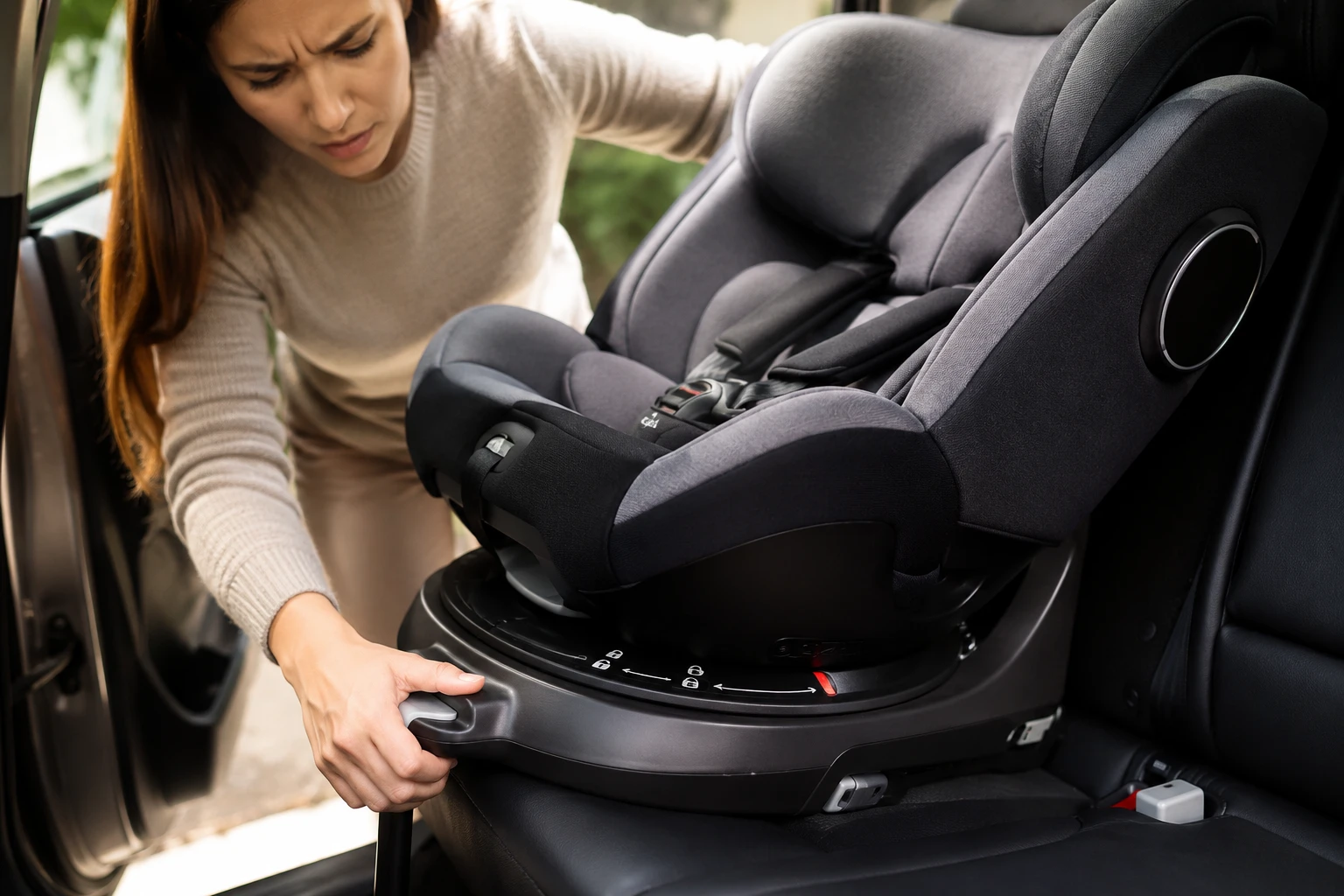
A rotating car seat can make everyday travel much easier. However, when a rotating car seat won’t lock, convenience quickly turns into a safety concern. The seat is designed to rotate smoothly and then lock securely into position before every trip. If that locking mechanism fails, parents naturally start looking for answers. In fact, many people searching “Why Is My Rotating Car Seat Stuck“ are dealing with the same underlying issue. Fortunately, many locking problems can be identified and fixed before they become serious. In this guide, you’ll learn why a rotating car seat may fail to lock, how to troubleshoot common causes, and what steps to take to keep your child safe.
Understanding How a Rotating Car Seat Locking System Works
Before attempting any repair, it helps to understand how the locking mechanism functions. A rotating car seat contains several components that work together to secure the seat in designated positions. From an engineering perspective, many locking systems rely on precise mechanical relationships similar to concepts studied in kinematics, where the motion of interconnected components determines whether a mechanism engages correctly. Most rotating car seats include:
- Rotating base
- Locking pin
- Rotation track
- Release handle
- Internal safety mechanisms
When the seat rotates, the locking pin temporarily disengages from one position. Once the seat reaches the correct travel position, the pin drops into place and secures the seat. Typically, parents hear a noticeable click. That click matters. It usually confirms that the seat has locked correctly. Most rotating seats support multiple positions:
| Position | Purpose |
|---|---|
| Rear-facing | Travel for infants and young toddlers |
| Forward-facing | Travel for older children |
| Loading position | Easier child placement and removal |
If any component fails to align properly, the locking process may not complete.
Signs Your Rotating Car Seat Is Not Locking Properly
Sometimes the issue is obvious. Other times, it develops gradually. Watch for these common warning signs.
Seat Continues Rotating After Release
A properly locked seat should remain firmly in place. If the seat continues to move after releasing the handle, the locking mechanism may not be fully engaged.
Missing Locking Click
Most parents become familiar with the normal sounds their car seat makes. Therefore, if the click suddenly disappears, it’s worth investigating.
Excessive Movement
A small amount of movement can be normal. However, excessive side-to-side rotation may indicate a locking problem.
Incorrect Indicator Status
Many modern rotating seats include color indicators. If the indicator remains red or fails to change after rotation, the seat may not be secure.
Difficulty Rotating Between Positions
A seat that becomes harder to rotate over time may have debris buildup, alignment issues, or internal wear.
Most Common Reasons a Rotating Car Seat Won’t Lock
When a rotating car seat won’t lock, the cause is often simpler than parents expect. Let’s look at the most common culprits.
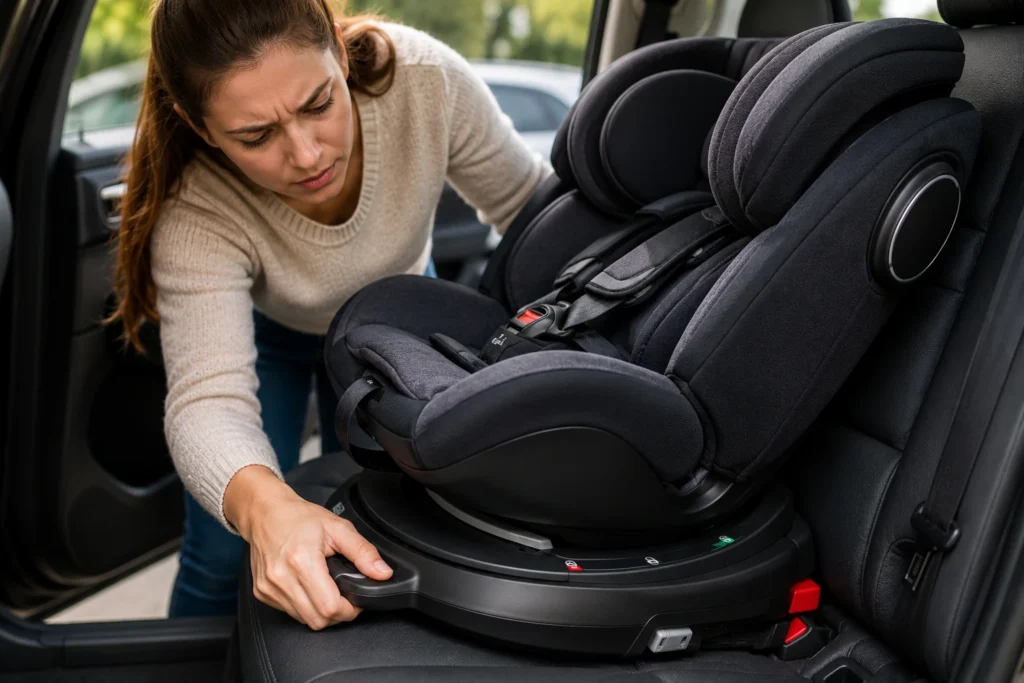
Dirt and Debris in the Rotation Track
Children are experts at creating crumbs. Unfortunately, those crumbs often find their way into the seat’s rotating mechanism. Common contaminants include:
- Snack crumbs
- Dirt
- Sand
- Pet hair
- Dust
In some cases, the buildup behaves much like an unwanted layer within a mechanical system, creating interference that affects movement and alignment. Engineers often analyze similar behavior through principles related to tribology, the study of friction, wear, and interacting surfaces in motion. Even tiny particles can prevent the locking pin from fully engaging.
Harness Straps Blocking the Mechanism
Loose straps can create unexpected problems. Twisted harnesses, misplaced buckle tongues, or excess webbing may block part of the rotation pathway. As a result, the seat may rotate but fail to lock.
Base Misalignment
Improper installation is another frequent cause. If the base sits unevenly or experiences excessive tension, the rotating components may become slightly misaligned. Even small alignment issues can affect locking performance.
Incomplete Rotation
This issue occurs more often than many parents realize. Sometimes the seat stops just short of the final locking position. Although it appears aligned, the locking pin never fully engages.
Mechanical Wear
Moving parts eventually wear down. Over time, the following components may deteriorate:
- Locking pins
- Springs
- Release handles
- Internal engagement parts
When this happens, professional support may be required.
Manufacturing Defects
Although uncommon, factory defects occasionally occur. If the issue develops shortly after purchase, contacting the manufacturer should be one of the first steps.
How to Fix a Rotating Car Seat That Won’t Lock
Fortunately, many locking problems can be resolved with a systematic inspection.
Step 1: Stop Using the Rotation Feature Temporarily
First, prioritize safety. If you’re uncertain whether the seat is locking correctly, avoid using the rotating function until the issue is identified.
Step 2: Inspect the Rotation Path
Next, use a flashlight to inspect:
- Rotation tracks
- Locking slots
- Base openings
- Engagement points
Look carefully. Small obstructions are easy to miss.
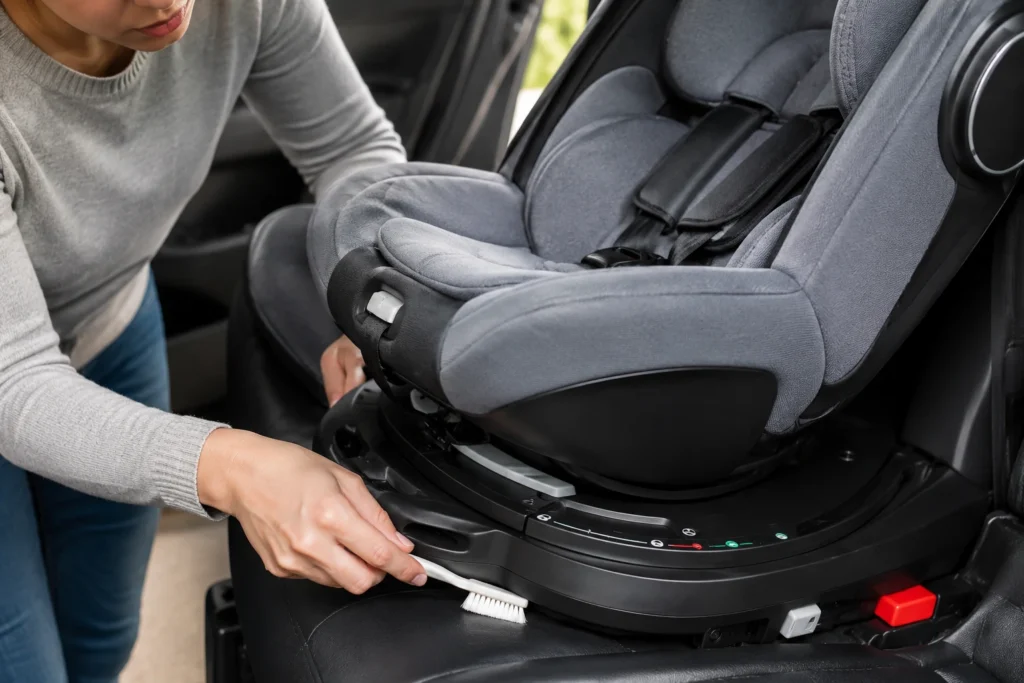
Step 3: Remove Debris Carefully
If debris is present:
- Vacuum loose particles
- Wipe accessible surfaces
- Follow manufacturer cleaning instructions
However, avoid inserting tools into the mechanism. Doing so may cause damage.
Step 4: Check Harness Placement
Then inspect:
- Shoulder straps
- Chest clip
- Buckle tongues
- Harness pads
Ensure nothing interferes with the seat’s rotation pathway.
Step 5: Rotate Slowly
Many parents rotate seats quickly during busy routines. Instead, rotate the seat slowly and deliberately. Listen carefully for the locking click and confirm the indicator changes appropriately.
Step 6: Verify Installation
Afterward, review your installation. Confirm:
- Proper belt routing
- Correct recline angle
- Secure base attachment
- Vehicle compatibility requirements
In many cases, reinstalling the seat resolves the problem.
Rotating Car Seat Won’t Lock After Cleaning
Surprisingly, cleaning can sometimes create new locking issues. Parents often notice a rotating car seat won’t lock immediately after removing covers or deep-cleaning the seat. Several factors may contribute.
Excess Moisture
Water can temporarily affect certain components. If moisture reaches areas intended to remain dry, locking performance may suffer until everything dries completely.
Improper Reassembly
After cleaning, covers and padding must be reinstalled correctly. Even a small section of fabric can interfere with rotation.
Cleaning Product Residue
Some cleaners leave residue behind. Eventually, that residue can attract dirt and increase friction inside the mechanism. For this reason, always follow the manufacturer’s cleaning instructions.
Rotating Car Seat Won’t Lock After Installation
Many locking issues appear immediately after installation. Fortunately, that often means the solution is relatively simple. Common installation-related causes include:
| Installation Issue | Potential Result |
|---|---|
| Uneven tightening | Rotation resistance |
| Incorrect recline angle | Alignment problems |
| Base movement | Locking difficulty |
| Vehicle seat interference | Restricted rotation |
If the issue begins right after installation, carefully removing and reinstalling the seat according to the manufacturer’s instructions frequently solves the problem.
Can Temperature Affect the Locking Mechanism?
Many parents overlook environmental conditions when troubleshooting a seat that won’t lock. However, temperature can sometimes influence how rotating components perform.
Extreme Heat
During summer months, vehicles can become extremely hot. Prolonged exposure to heat may cause:
- Plastic expansion
- Increased friction
- Temporary stiffness in moving components
Although quality car seats are designed to withstand temperature changes, excessive heat can occasionally affect operation.
Cold Weather Conditions
Likewise, freezing temperatures can create challenges. Cold weather may:
- Reduce component flexibility
- Increase resistance within moving parts
- Make rotation feel stiffer than normal
As a result, parents may mistakenly believe the locking mechanism is broken.
Material Expansion and Contraction
Repeated heating and cooling cycles cause materials to expand and contract over time. While manufacturers account for this, long-term exposure can contribute to wear. Therefore, storing the vehicle in a garage or shaded area when possible may help reduce stress on the mechanism.
Model-Specific Locking Problems Parents Often Report
Not all locking issues look the same. In fact, certain complaints appear repeatedly across different rotating seat models.
Seat Locks Rear-Facing but Not Forward-Facing
This often points to:
- Debris in one locking position
- Alignment issues
- Partial mechanical wear
Because each position uses specific engagement points, one position can fail while another continues working.
Seat Gets Stuck Between Positions
A seat stuck midway typically indicates:
- Obstruction in the track
- Incomplete rotation
- Damaged locking components
Forcing the seat rarely helps and may worsen the problem.
Indicator Shows Locked but Seat Still Moves
This issue deserves immediate attention. The indicator may appear correct while an internal component remains partially disengaged. Whenever this occurs, further inspection is necessary.
Handle Releases but Seat Won’t Engage
In some cases, the release handle functions normally, yet the locking pin fails to secure the seat. This can indicate:
- Spring damage
- Pin wear
- Internal mechanism failure
When a Rotating Car Seat Becomes Unsafe to Use
Not every locking issue creates an immediate danger. However, some situations require urgent action.
Warning Signs That Should Never Be Ignored
Stop using the seat if you notice:
- Significant seat movement
- Repeated lock failures
- Broken plastic components
- Cracked base sections
- Missing locking sounds
- Loose engagement points
These symptoms may indicate a compromised safety system.
When Replacement May Be Necessary
Sometimes repair is not the best solution. Replacement should be considered when:
| Situation | Recommended Action |
|---|---|
| Structural damage | Replace seat |
| Failed locking mechanism | Contact manufacturer |
| Post-crash damage | Follow manufacturer guidance |
| Expired seat | Replace immediately |
| Repeated unresolved failures | Replace seat |
Safety should always outweigh convenience.
Preventing Future Locking Issues
The best repair is often prevention. Fortunately, a few simple habits can help keep the rotation system working properly.
Establish a Cleaning Routine
Children create messes. That’s unavoidable. However, regular cleaning prevents debris from accumulating inside critical components. A simple monthly inspection can make a significant difference.
Rotate the Seat Properly
Avoid forcing the seat. Instead:
- Use the release handle fully
- Rotate smoothly
- Stop only when the seat reaches its designated position
- Confirm the locking click
Consistent operation reduces unnecessary wear.
Perform Monthly Safety Checks
Every month, inspect:
- Base security
- Harness condition
- Rotation smoothness
- Lock indicators
- Visible damage
These quick checks often reveal small problems before they become larger ones.
Avoid Excessive Force
Many locking issues occur after parents force a seat that feels stuck. If resistance develops, investigate the cause rather than applying more pressure.
When to Contact Customer Support
Sometimes troubleshooting reaches its limit. If the problem persists, contacting the manufacturer becomes the next logical step.
Gather Important Information First
Before calling, collect:
- Model number
- Serial number
- Date of manufacture
- Purchase information
- Description of the problem
Having this information ready often speeds up support.
Review Warranty Coverage
Many rotating car seats include manufacturer warranties. Depending on the issue, the company may:
- Provide replacement parts
- Offer troubleshooting assistance
- Authorize a replacement seat
- Arrange further inspection
Ask About Replacement Components
Certain models allow replacement of specific parts. However, always use manufacturer-approved components rather than third-party alternatives.
Real-World Example of a Locking Problem
Consider a common scenario. A parent notices their rotating seat occasionally fails to click when moving from the loading position to rear-facing mode. Initially, the problem seems random. Soon, the issue becomes more frequent. After inspection, they discover crushed snack crackers lodged inside the rotation track. The debris prevents the locking pin from fully engaging. A thorough cleaning restores normal operation. The lesson? Even small obstructions can create significant locking problems.
Quick Troubleshooting Checklist
If your rotating car seat won’t lock, work through this checklist: Check for debris inside the track, Inspect harness straps for obstructions, Verify proper installation, Rotate the seat slowly, Confirm lock indicators, Listen for the locking click, Review the owner’s manual, Contact customer support if the issue continues Following these steps often helps identify the cause quickly.
Conclusion
A rotating car seat won’t lock for many reasons, ranging from simple debris buildup to more serious mechanical failures. Fortunately, most issues can be diagnosed through careful inspection and proper troubleshooting. Therefore, if you notice unusual movement, missing clicks, or inconsistent locking behavior, address the problem immediately. Ultimately, a properly functioning locking mechanism is essential for both convenience and, more importantly, your child’s safety on every trip.
FAQs
The most common causes are debris in the rotation track, improper installation, harness interference, or a worn locking mechanism.
No. A rotating car seat should always be fully locked in its designated travel position before driving.
Yes. Even small food particles can obstruct the locking pin or rotation track and prevent proper engagement.
The seat may not be reaching its final locking position, or debris and alignment issues may be preventing the locking mechanism from engaging.
Most models provide an audible click and a lock indicator that confirms the seat is securely positioned.
Yes. Excess moisture, cleaning product residue, or incorrectly reinstalled covers can interfere with the locking system.
Only if the manufacturer specifically recommends it. Using unauthorized lubricants may damage components or attract dirt.
This often happens because of debris buildup, an obstruction in the track, or a damaged locking component.
Extreme temperatures can temporarily affect how materials move and interact, making the seat feel stiffer or harder to rotate.
Consider replacement if the locking mechanism repeatedly fails, structural parts are damaged, or the manufacturer determines the seat is no longer safe to use.

