
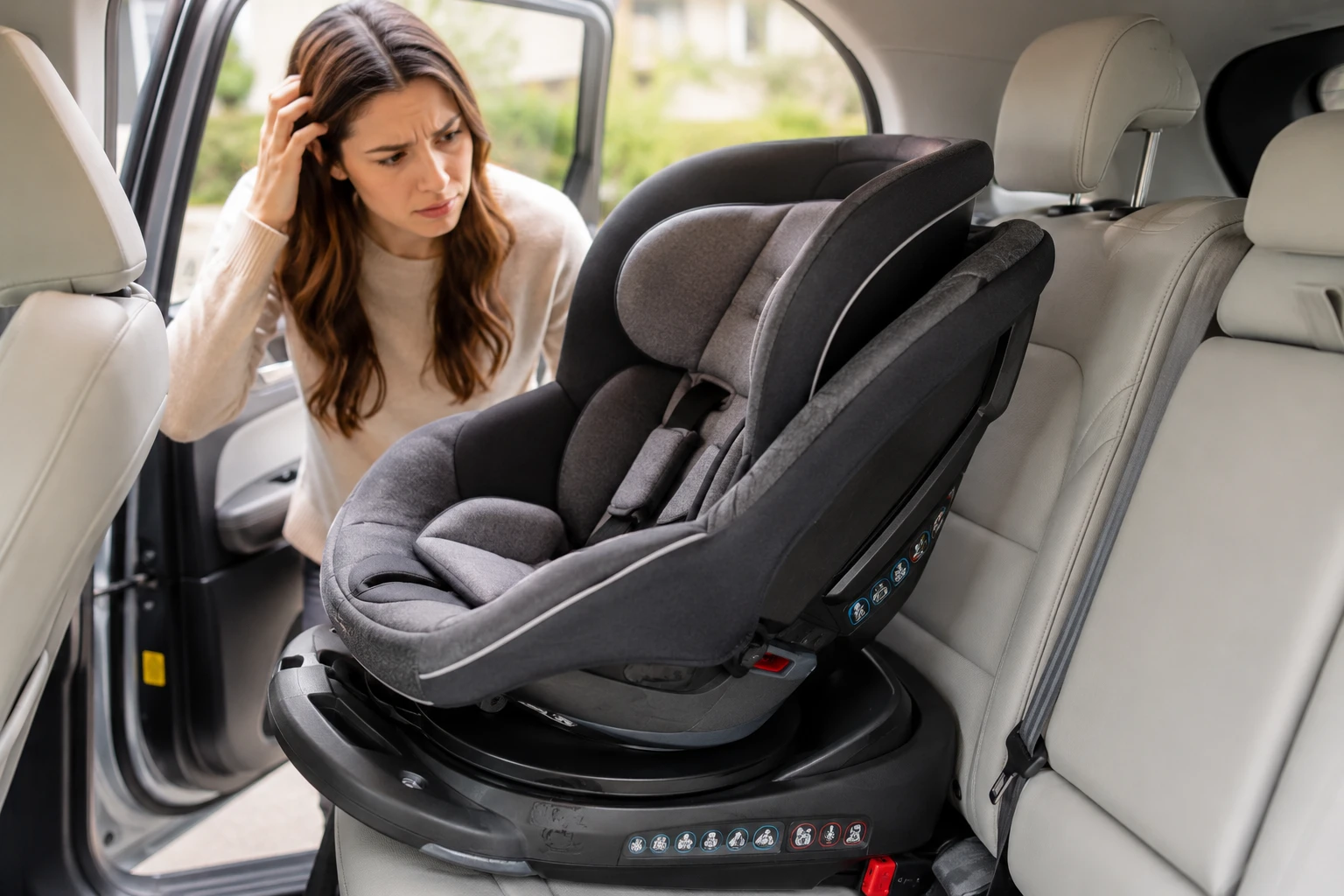

A rotating car seat can make everyday travel much easier. However, when the seat suddenly refuses to turn, frustration sets in quickly. If you’ve found yourself asking “why is my rotating car seat stuck”, you’re not alone. Fortunately, most rotation problems have simple explanations. Whether the issue involves debris, installation, safety locks, or even questions about How to Reset Evenflo Revolve 360, understanding the cause is the first step toward fixing it safely. In this guide, we’ll explore the most common reasons a rotating car seat gets stuck and the practical solutions that can help restore smooth operation.
Understanding How a Rotating Car Seat Works
Before troubleshooting, it’s important to understand the basic design. Rotating car seats use a swivel base that allows the seat to turn toward the vehicle door. This feature makes it easier to place children in the seat and secure harnesses without awkward twisting or lifting. Most rotating seats include:
- A swivel track
- Locking mechanisms
- Rotation release handles
- Safety stops
- Internal bearings
These components work together to provide controlled movement while maintaining crash protection. Because safety is the priority, manufacturers intentionally limit rotation under certain conditions. Therefore, a seat that appears stuck may actually be functioning exactly as designed.
Why Safety Features Can Affect Rotation
Many parents assume rotating car seats should spin freely. In reality, that’s rarely the case. Most manufacturers include safeguards that prevent rotation unless specific conditions are met. Consequently, the seat may lock automatically if it detects an unsafe position. Common requirements include:
- Specific recline settings
- Approved rotation positions
- Fully engaged locking points
- Proper seat orientation
As a result, many people searching “why is my rotating car seat stuck” are actually encountering a built-in safety feature rather than a mechanical failure.
Most Common Reasons a Rotating Car Seat Gets Stuck
Let’s look at the most likely causes.
Debris Blocking the Rotation Track
Children drop things constantly. Crackers become crumbs. Snacks become dust. Small toys disappear into impossible places. Eventually, many of those items end up inside the rotation mechanism. Even tiny particles can interfere with smooth movement. Interestingly, engineers who study tribology the science of friction, wear, and lubrication understand how small contaminants can significantly affect moving mechanical parts. Common obstructions include:
- Food crumbs
- Sand
- Dirt
- Pet hair
- Fabric fibers
- Small toy pieces
If your seat suddenly stops rotating, checking for debris should be one of your first steps.
The Seat Is Not Properly Positioned
Many rotating car seats only swivel when placed in specific positions. For example, some models require:
- A fully upright setting
- A particular recline angle
- Proper alignment with the base
- A designated loading position
Even slight misalignment can activate the locking mechanism. Therefore, before assuming the seat is broken, verify that it is positioned exactly as recommended by the manufacturer.
Harness Straps Are Interfering
Sometimes the problem is surprisingly simple. Loose harness straps can slip into the swivel area and block movement. Likewise, buckles can become wedged between moving parts. Inspect for:
- Twisted harnesses
- Hanging buckles
- Excess slack
- Straps caught under padding
These small issues can completely prevent rotation.
Installation Is Too Tight
Parents often believe tighter always equals safer. However, excessive installation pressure can occasionally affect rotating mechanisms. This can happen when:
- LATCH connectors are over-tightened
- Vehicle seat belts are pulled excessively tight
- Seat cushions compress unevenly
Although the seat remains secure, additional pressure may reduce the freedom of movement within the swivel base.
Child Weight Distribution Issues
Some rotating seats perform differently when a child is seated. Uneven weight distribution can place additional stress on the mechanism. You may notice increased resistance when:
- A child leans heavily to one side
- The seat approaches its weight limits
- The child shifts during rotation
Consequently, removing your child and testing the seat empty can help determine whether weight is contributing to the issue.
Rotation Lock Is Engaged
Many rotating car seats contain built-in locking systems. Occasionally, these locks remain partially engaged. This often happens when:
- The seat stops between positions
- The release handle is not fully activated
- Rotation is interrupted midway
As a result, the seat may feel completely jammed despite having no actual damage. Always test the release mechanism carefully before assuming a major problem exists.
Mechanical Wear and Tear
Like any moving component, swivel systems experience wear over time. Daily use eventually affects internal parts. Signs of wear may include:
| Symptom | Possible Cause |
|---|---|
| Grinding noise | Bearing wear |
| Clicking without movement | Locking mechanism issue |
| Jerky movement | Track wear |
| Increased resistance | Internal friction |
The study of kinematics examines how objects move, and even minor misalignment inside a swivel mechanism can disrupt smooth rotation. Older seats that receive frequent daily use may naturally experience these problems.
How to Troubleshoot a Stuck Rotating Car Seat
If you’re still wondering why is my rotating car seat stuck, follow a systematic approach instead of forcing the seat.
Step 1: Remove Your Child Safely
First, remove your child from the seat. This allows you to:
- Reduce weight on the mechanism
- Inspect components more easily
- Troubleshoot safely
Never apply force while your child is seated.
Step 2: Check for Obstructions
Next, perform a thorough inspection. Look carefully:
- Under the seat
- Around the swivel track
- Near the base
- Around locking components
A flashlight can help reveal hidden debris. Many parents are surprised by what they discover.
Step 3: Verify Proper Seat Position
Now check the seat’s configuration. Confirm:
- Recline settings
- Rotation position
- Lock indicators
- Alignment markers
Even a slight positioning error may prevent the seat from turning.
Step 4: Inspect the Harness System
Examine the harness thoroughly. Look for:
- Twisted webbing
- Trapped straps
- Misplaced buckles
- Excess slack
Correcting these issues may immediately restore rotation.
Step 5: Test the Rotation Release Mechanism
Operate the release handle exactly as instructed by the manufacturer. When testing:
- Press fully
- Hold continuously
- Rotate gently
- Avoid sudden force
A partially activated release handle can leave the locking system engaged.
Step 6: Review Installation Tightness
After checking the release mechanism, inspect how the seat is installed. Excessive tightening can sometimes place unnecessary pressure on the swivel base and make rotation difficult. If you own an Evenflo model, you may also come across guides explaining How to Reset Evenflo Revolve 360 systems when the seat becomes difficult to rotate or appears locked in position. Always follow the manufacturer’s instructions carefully and verify that all components are properly aligned before attempting a reset procedure. A properly installed seat should be secure without restricting the movement of the rotation mechanism.
Step 7: Consult the User Manual
Finally, review the owner’s manual. Manufacturers often include:
- Model-specific troubleshooting guides
- Reset procedures
- Locking system explanations
- Safety notices
Because rotating car seat designs vary significantly, the manual may contain the exact solution to your problem.
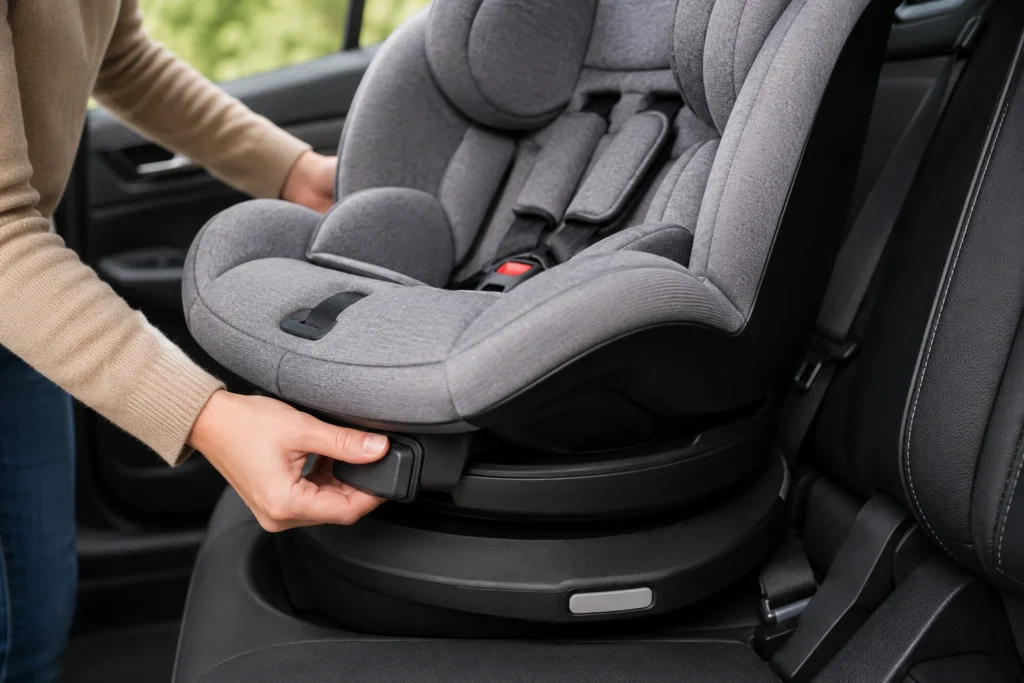
Rotating Car Seat Stuck in One Direction Only
Sometimes a rotating car seat will turn normally in one direction but refuse to move in the other. This can be confusing. After all, if the swivel mechanism works one way, shouldn’t it work both ways? Not always. Several issues can cause one-direction rotation problems.
Why This Happens
Common causes include:
- Partial track blockage
- Misaligned locking tabs
- Debris trapped on one side
- Uneven wear within the swivel mechanism
- Bent internal components
Even a small obstruction can prevent movement in one direction while allowing movement in the other.
How to Fix It
Start by cleaning the swivel track thoroughly. Next:
- Inspect the locking points
- Check for visible damage
- Verify proper alignment
- Test rotation slowly
If resistance remains consistent, professional inspection may be necessary. Avoid forcing the seat. Excessive force can damage internal components and create larger safety concerns.
Rotating Car Seat Stuck After Cleaning
Ironically, cleaning can sometimes create rotation issues. Many parents clean their car seat and then discover the swivel mechanism no longer operates properly.
Common Cleaning Mistakes
Several mistakes can contribute to this problem:
- Excess moisture entering the mechanism
- Soap residue buildup
- Improper reassembly
- Misaligned covers and padding
Water and cleaning products can temporarily affect moving parts if not fully removed.
Corrective Actions
If the seat becomes difficult to rotate after cleaning:
- Allow the seat to dry completely.
- Inspect all removable components.
- Verify covers are installed correctly.
- Confirm no fabric is interfering with rotation.
In many cases, proper drying resolves the issue within a short period.
Rotating Car Seat Stuck After an Accident
A car seat involved in a collision requires special attention. Even if damage is not visible, internal components may be affected.
Why You Should Be Careful
Rotating mechanisms rely on precise alignment. An accident may cause:
- Hidden cracks
- Bent structural components
- Damaged locking systems
- Compromised bearings
These issues are not always visible during a casual inspection.
When Replacement Is Necessary
Many manufacturers recommend replacing a car seat after certain types of crashes. Check:
- Manufacturer guidelines
- Insurance recommendations
- Vehicle accident severity
If there is any uncertainty regarding safety, replacement is usually the safest option.
Signs Your Rotating Car Seat Needs Professional Service
Most rotation issues can be resolved through basic troubleshooting. However, some situations require expert assistance.
Warning Signs to Watch For
Pay attention to symptoms such as:
- Grinding sounds
- Loud clicking noises
- Jerky movement
- Broken release handles
- Incomplete rotation
- Excessive resistance
These warning signs often indicate internal mechanical problems.
Contacting the Manufacturer
Before attempting repairs, contact the manufacturer. Prepare the following information:
| Information Needed | Why It Matters |
|---|---|
| Model number | Identifies specific design |
| Date of manufacture | Helps determine warranty status |
| Purchase date | Supports warranty claims |
| Description of issue | Assists troubleshooting |
| Photos or videos | Helps diagnose problems |
Many manufacturers provide detailed troubleshooting support and replacement guidance.
How to Prevent a Rotating Car Seat From Getting Stuck
Prevention is easier than repair. A few simple habits can significantly reduce the likelihood of rotation problems.
Maintain a Regular Cleaning Schedule
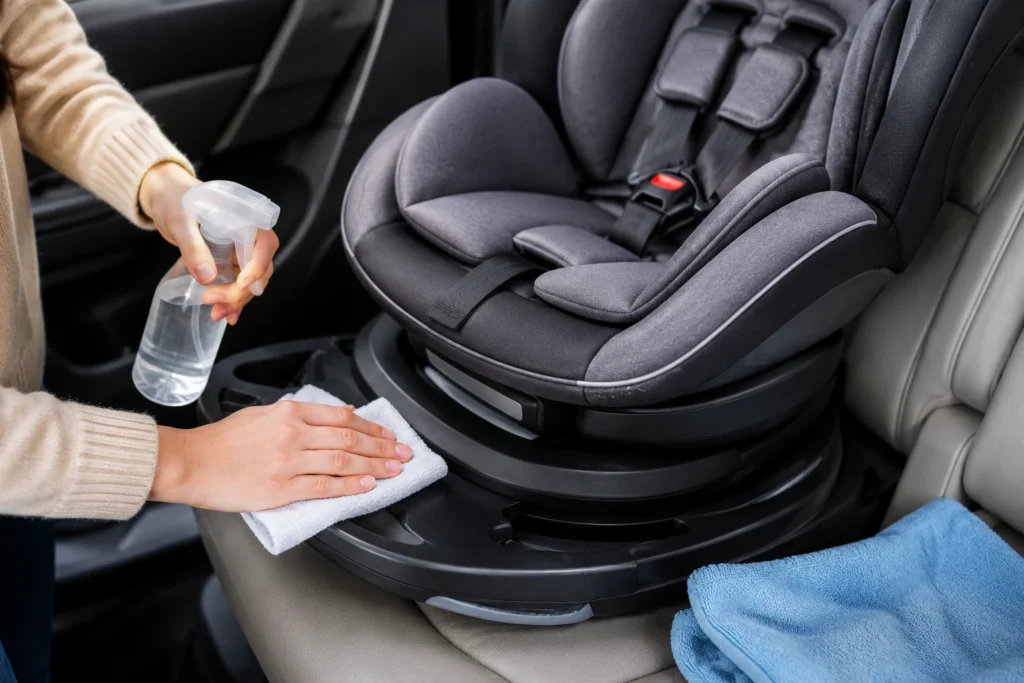
Clean the seat periodically rather than waiting until debris accumulates. Focus on:
- Swivel tracks
- Base components
- Harness areas
- Hard-to-reach crevices
Routine maintenance prevents buildup before it becomes problematic.
Avoid Forcing the Seat
When resistance occurs, stop. Forcing rotation can:
- Damage locking mechanisms
- Wear internal components
- Create alignment issues
Instead, identify the source of resistance first.
Perform Routine Inspections
Monthly inspections can reveal developing issues before they become major problems. Check:
- Release handles
- Rotation smoothness
- Harness condition
- Locking points
- Visible wear
A few minutes of inspection can prevent significant frustration later.
Follow Weight and Usage Guidelines
Manufacturers establish limits for a reason. Exceeding weight recommendations can increase strain on the swivel mechanism. Always follow:
- Weight limits
- Height limits
- Installation instructions
- Usage guidelines
Proper use helps maximize the lifespan of the seat.
Conclusion
If you’ve been asking why is my rotating car seat stuck, the cause is often simpler than it first appears. In many cases, debris, positioning errors, installation issues, or engaged safety locks are responsible. However, persistent grinding, broken components, or accident-related damage may require professional assistance. By performing regular inspections, following manufacturer guidelines, and addressing problems early, you can keep your rotating car seat operating smoothly and safely for years to come.
FAQs
Debris may not be the only cause. Improper reassembly, trapped fabric, or an engaged safety lock can also prevent rotation.
Yes, extreme temperatures can make moving components feel stiffer, although temperature alone is rarely the primary cause of a stuck seat.
No. Applying excessive force can damage the swivel mechanism and potentially compromise the seat’s safety features.
A clicking sound often indicates that the release mechanism is engaging but something is preventing the seat from completing its movement.
Yes. In some cases, excessive tension from the seat belt or LATCH system can place pressure on the swivel base and restrict movement.
A quick inspection once a month can help identify debris, wear, or alignment issues before they become larger problems.
Check for obstructions, verify the recline position, and ensure the seat is aligned properly with the base according to the manufacturer’s instructions.
Only use products specifically approved by the manufacturer. Unapproved lubricants can attract dirt and damage internal components.
Yes. Even if there is no visible damage, a collision can affect internal parts and alignment within the swivel system.
You should contact the manufacturer if basic troubleshooting fails, the seat makes grinding noises, or you notice broken or damaged components.

