
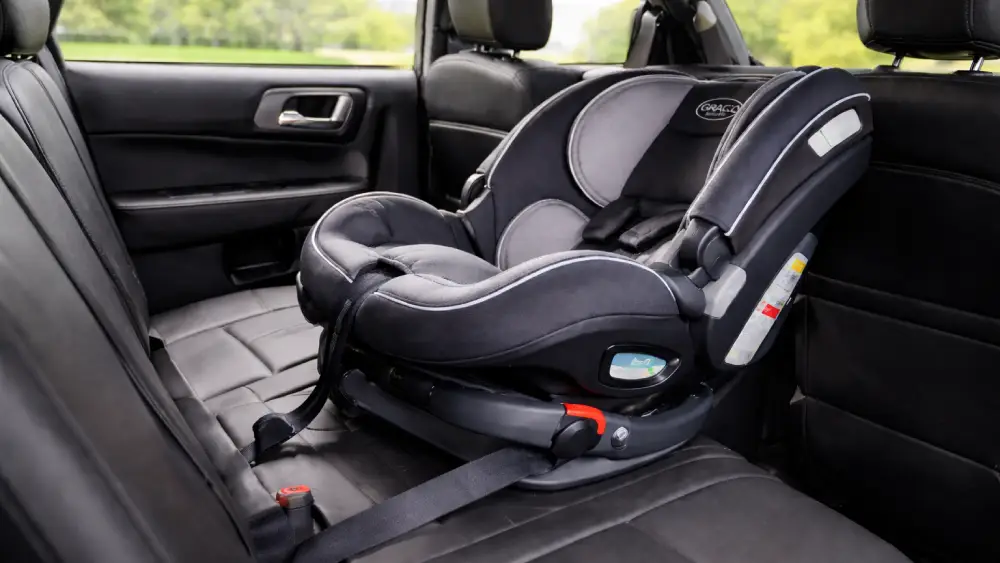
Learning how to fit Graco car seat models correctly is one of the most important safety skills a parent or caregiver can develop. It’s precision work that protects your child in the one place accidents happen most often — the road.
I’ve seen confident, capable parents second-guess themselves at this step. That’s normal. Car seat installation feels technical because it is technical. But it doesn’t have to be overwhelming.
This guide walks you through exactly how to fit Graco car seat models properly — rear-facing, forward-facing, and booster — using clear steps you can apply immediately.
Let’s get it right.
Before You Start: Set Yourself Up for Success
Before touching the seat, pause. Preparation matters.
1. Identify Your Graco Model
Graco makes several types of car seats. The installation approach varies slightly depending on the category:
| Type | Examples | Typical Age Range |
| Infant | SnugRide series | Newborn–12 months+ |
| Convertible | 4Ever, Extend2Fit, SlimFit | Birth–5+ years |
| Booster | TurboBooster | 4–10 years |
Convertible seats are the most common — and the most misunderstood — because they change modes.
If you want to truly understand how to fit Graco car seat models safely, read the manual for your specific seat. Not just skim it. Read it.
2. Confirm Your Child’s Height and Weight
Every seat has limits. They matter.
- Rear-facing has a minimum and maximum weight range
- Forward-facing has its own limits
- LATCH systems have weight caps
Measure your child. Weigh them. Don’t guess.
3. Read Your Vehicle Manual
Your car’s manual tells you:
- Where LATCH anchors are located
- Top tether anchor positions
- Seat belt locking mechanisms
- LATCH weight limits
This is not busywork. This is compatibility.
Now you’re ready.
Understanding Installation Methods
When learning how to fit Graco car seat systems, you’ll use one of two installation methods.
Option 1: LATCH System
LATCH stands for Lower Anchors and Tethers for Children.
It uses built-in anchors in your vehicle and connectors on the car seat. It’s often simpler and reduces user error.
Important: LATCH has weight limits. Once your child + car seat exceed the vehicle’s LATCH weight limit (often 65 lbs combined), you must switch to seat belt installation.
Option 2: Seat Belt Installation
Seat belt installation is equally safe when done correctly. In fact, many professionals prefer it for heavier children.
Modern seat belts lock in one of two ways:
- Switchable retractor (pull belt all the way out to engage locking)
- Locking latchplate
Test yours before installing.
Never use both LATCH and seat belt together unless your Graco manual explicitly allows it.
Now let’s install.
How to Fit Graco Car Seat Rear-Facing
Rear-facing is the safest position for young children. Period.
Keep your child rear-facing as long as your seat allows within height and weight limits.
Step 1: Choose the Right Seating Position
- Back seat only
- Center seat is often safest, but only if proper anchors exist
- Avoid front seat
Place the car seat flat against the vehicle seat.
Step 2: Check the Recline Angle
Graco seats include a level indicator — bubble or line marker.
Infants need more recline to protect their airway. Older babies can sit more upright.
If the indicator isn’t level:
- Adjust the recline foot
- Use a tightly rolled towel or pool noodle at the seat crease if allowed in the manual
Angle matters. Too upright can compromise safety.
Step 3: Install with LATCH (Rear-Facing)
- Locate lower anchors in the seat crease.
- Attach connectors to anchors.
- Press down firmly into the seat using your body weight.
- Pull LATCH strap tight.
Apply pressure where the child’s feet would go. Tighten gradually.
Test it.
Grab the seat at the belt path and pull side-to-side and front-to-back. It should not move more than 1 inch.
If it moves more than that, tighten again.
Step 4: Install with Seat Belt (Rear-Facing)
If using the seat belt:
- Thread belt through rear-facing belt path.
- Buckle it.
- Lock the belt (pull all the way out if switchable).
- Press down firmly while pulling slack out.
Again — test for less than 1 inch of movement at the belt path.
This is how to fit Graco car seat rear-facing securely. Precision over speed.
Step 5: Adjust the Harness
Now place your child in the seat.
- Straps should be at or below shoulders.
- Perform the pinch test: if you can pinch harness material at the shoulder, it’s too loose.
- Chest clip at armpit level.
Snug. Not tight enough to hurt. Tight enough to protect.
How to Fit Graco Car Seat Forward-Facing
Transition only when your child meets the minimum forward-facing requirements. Later is better.
Step 1: Switch to Forward-Facing Mode
Adjust:
- Harness height (at or above shoulders now)
- Recline setting per manual
- Belt path to forward-facing slot
Small detail. Big difference.
Step 2: Install Using LATCH
- Route LATCH strap through forward-facing belt path.
- Attach to lower anchors.
- Press knee into seat.
- Tighten strap fully.
Now the critical step.
Step 3: Attach the Top Tether
This is non-negotiable.
The top tether:
- Reduces head movement in a crash
- Significantly improves protection
Attach tether hook to vehicle anchor behind the seat. Tighten until snug.
Many parents skip this. Don’t.
If you want to fully understand how to fit Graco car seat forward-facing, master the tether.
Step 4: Seat Belt Installation (Forward-Facing)
If using seat belt:
- Route belt through forward-facing belt path.
- Lock the seat belt.
- Apply downward pressure.
- Remove slack.
- Attach top tether.
Test again. Less than 1 inch movement at belt path.
Consistency builds confidence.
How to Fit Graco Booster Seat
Boosters are simpler. But still critical.
There are two types: high-back and backless.
High-Back Booster
Some Graco boosters include LATCH connectors to stabilize the seat when empty.
Installation:
- Attach LATCH if available (optional for safety, but helps stability).
- Child sits in seat.
- Route vehicle seat belt across body.
Proper positioning:
- Shoulder belt crosses center of chest.
- Lap belt sits low across upper thighs.
Not stomach. Not neck.
Backless Booster
Place booster flat on seat.
Check:
- Child’s knees bend naturally at seat edge.
- Back rests against vehicle seat.
- Belt lies flat without twisting.
When learning how to fit Graco car seat booster models, focus on belt positioning. That’s the entire safety system.
How to Check If Installation Is Correct
Here’s your safety checklist:
- Moves less than 1 inch at belt path
- Proper recline angle
- Harness passes pinch test
- Chest clip at armpit level
- Top tether attached (forward-facing)
- No twisted straps
If it passes all of that, you’ve likely installed it correctly.
But don’t rush this step. Take 60 seconds. Recheck everything.
Common Mistakes to Avoid
Even careful parents make these errors.
1. Installing Too Loosely
Most common issue. Use your body weight when tightening.
2. Using the Wrong Belt Path
Rear-facing and forward-facing belt paths are different. Double-check before tightening.
3. Forgetting the Top Tether
Forward-facing without tether reduces protection. Always attach it.
4. Bulky Clothing Under Harness
Winter coats compress in crashes. Tight harness over coat becomes loose.
Remove coat. Buckle child. Place coat over top if needed.
5. Moving to Forward-Facing Too Soon
Rear-facing offers better head and neck protection. Stay rear-facing as long as possible within limits.
When parents ask me how to fit Graco car seat correctly, these mistakes come up repeatedly. Avoid them and you’re already ahead.
When to Get Professional Help
Even after mastering how to fit Graco car seat models, a second set of trained eyes helps.
Look for:
- Certified Child Passenger Safety Technicians (CPST)
- Local inspection stations
- Safety events hosted by hospitals or community centers
They won’t judge. They’ll help.
Peace of mind matters.
Final Thoughts
Learning how to fit Graco car seat systems properly isn’t just about passing a test. It’s about reducing risk in real-world driving conditions.
Rear-facing requires attention to angle and harness placement. Forward-facing demands top tether discipline. Boosters depend entirely on correct belt positioning.
Every stage matters.
Take your time. Apply pressure when tightening. Test for that 1-inch rule. Check the harness again. And again.
Confidence doesn’t come from guessing. It comes from doing it correctly — step by step.
Now you know exactly how to fit Graco car seat models safely. And that knowledge travels with you every time you buckle your child in.
That’s powerful.
Frequently Asked Questions
A properly installed seat should not move more than 1 inch at the belt path when pulled side-to-side or front-to-back.
Only if your specific manual allows it; most Graco models require choosing one installation method, not both.
Switch when your child plus the car seat exceeds your vehicle’s LATCH weight limit, as listed in the vehicle manual.
Pull the belt all the way out; if it clicks while retracting and won’t extend freely, it has a locking retractor.
Place the chest clip at armpit level to keep harness straps properly aligned over the shoulders.
Keep your child rear-facing as long as possible within the height and weight limits of your Graco seat.
Yes, always use the top tether when forward-facing to reduce head movement in a crash.
Car seats should be installed in the back seat unless your vehicle manual specifically states otherwise.
Check for tightness and proper harness fit regularly, especially after adjusting the seat or long trips.
Ensuring less than 1 inch of movement at the belt path and proper harness snugness are the two most critical safety checks.