
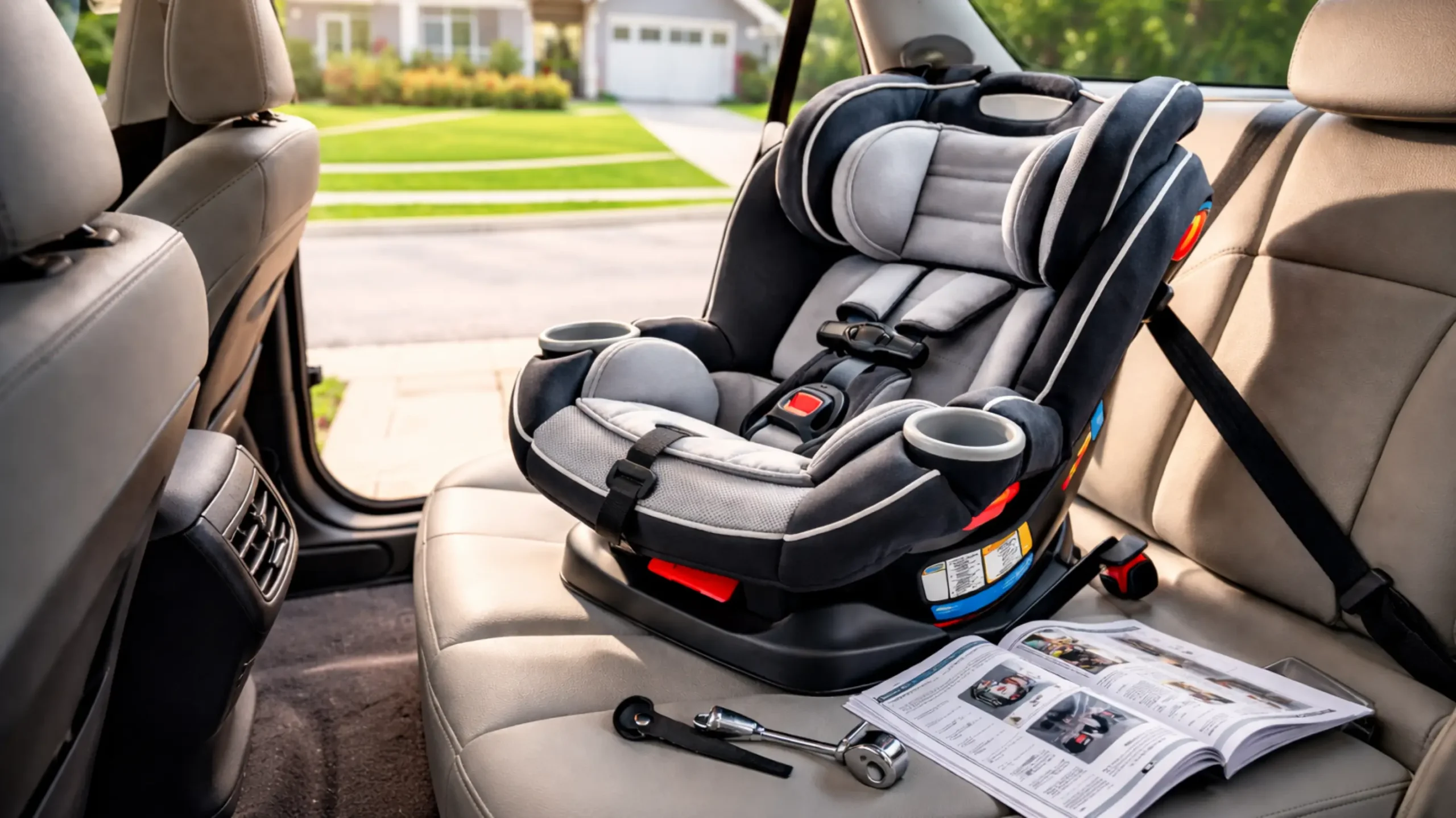

Learning how to install a forward facing Graco car seat correctly is one of the most important safety steps you’ll take as a parent. It’s not complicated, but it does require precision. A properly installed seat can dramatically reduce injury risk in a crash. A loosely installed one can fail when it matters most. I’ve walked many parents through this process, and the difference between “installed” and “installed correctly” is often just a few small adjustments.
If you’re ready to transition your child and want clear, actionable steps, this guide will walk you through exactly how to install a forward facing Graco car seat with confidence.
When Should You Switch to Forward-Facing?
Before diving into how to install a forward facing Graco car seat, we need to address timing. Many parents switch too early.
Rear-facing is significantly safer because it supports the head, neck, and spine during a crash. Most safety experts recommend keeping children rear-facing as long as possible, often until they reach the maximum height or weight limit of their rear-facing seat.
Forward-facing typically begins when:
- Your child meets the minimum age listed in the Graco manual (often 2+ years, though many experts recommend longer).
- Your child exceeds rear-facing height or weight limits.
- Your specific Graco model allows forward-facing use.
Always verify limits in your seat’s manual. Graco models vary, and the label on the side of the seat provides precise numbers. Don’t guess. Check.
What You Need Before Installation
Preparation saves frustration. Before starting how to install a forward facing Graco car seat, gather:
- Your Graco car seat manual
- Your vehicle owner’s manual
- Access to your vehicle’s LATCH anchors
- Knowledge of your vehicle’s top tether anchor location
Those two manuals matter more than you think. Your vehicle manual tells you where anchors are located and whether there are restrictions. Your car seat manual explains belt paths and weight limits.
Five minutes of reading can prevent major mistakes.
LATCH vs. Seat Belt: Understanding Your Options
When learning how to install a forward facing Graco car seat, you’ll choose between two installation methods:
- LATCH (Lower Anchors and Tethers for Children)
- Vehicle seat belt
Both are safe when used correctly. You do not use both lower anchors and seat belt simultaneously unless your manual explicitly allows it.
The LATCH System
LATCH uses built-in anchors in your vehicle seat. It simplifies installation and reduces belt-routing errors.
However, LATCH has weight limits. Many vehicles cap combined child + seat weight at 65 pounds, though limits vary. Once your child exceeds the lower anchor weight limit, you must switch to seat belt installation.
The Vehicle Seat Belt
Seat belt installation is equally safe and often necessary for larger children. It works in every seating position that allows a car seat.
The Top Tether Is Non-Negotiable
Forward-facing installation requires a top tether. Always.
The tether reduces forward head movement in a crash. It can significantly decrease head excursion. If you remember nothing else about how to install a forward facing Graco car seat, remember this: use the tether.
How to Install a Forward Facing Graco Car Seat with LATCH
Now let’s walk step-by-step through how to install a forward facing Graco car seat using the LATCH system.
Step 1: Position the Seat
Place the seat in the back seat of your vehicle. Never install a forward-facing seat in front of an active airbag.
Ensure the seat is in forward-facing mode. Check the recline indicator. Many Graco models have adjustable recline positions that must be set appropriately.
Step 2: Locate Lower Anchors
Look between the seat cushion and seat back. You may see small anchor symbols. Confirm in your vehicle manual.
Step 3: Attach Lower Anchor Connectors
Connect each LATCH hook to its anchor. You should hear or feel a click.
Make sure connectors are not twisted. Twisted straps reduce strength.
Step 4: Tighten the LATCH Strap
This is where most people struggle.
Place your knee or hand firmly into the car seat while pulling the LATCH strap tight. Apply downward pressure while pulling straight through the belt path.
Remove all slack.
Step 5: Attach and Tighten the Top Tether
Locate the tether anchor. It may be behind the seat, on the rear shelf, floor, or ceiling depending on your vehicle.
Connect the tether hook. Pull the strap until snug.
Step 6: Perform the 1-Inch Test
Grab the seat at the belt path—not the top.
Attempt to move it side-to-side and front-to-back. If it moves more than one inch in any direction, it’s too loose.
This final check determines whether you’ve truly mastered how to install a forward facing Graco car seat correctly.
How to Install a Forward Facing Graco Car Seat with a Seat Belt
If LATCH isn’t an option or your child exceeds weight limits, here’s how to install a forward facing Graco car seat using the seat belt.
Step 1: Position the Seat
Place it flush against the vehicle seat back. Confirm forward-facing mode and proper recline angle.
Step 2: Thread the Seat Belt
Route the vehicle seat belt through the forward-facing belt path. Graco typically marks this path clearly in red.
Make sure the belt is flat. No twists.
Step 3: Buckle the Seat Belt
Click it securely.
Step 4: Lock the Seat Belt
Most modern vehicles use a switchable retractor system.
Pull the shoulder belt all the way out slowly. When it retracts, you should hear clicking. That clicking means the belt is now in locking mode.
If your vehicle doesn’t lock this way, consult your manual about a locking clip.
Step 5: Tighten
Press firmly into the seat while pulling the shoulder portion tight. Feed excess slack back into the retractor.
It should feel solid.
Step 6: Attach the Top Tether
Again, always use the tether for forward-facing. Tighten until snug.
Step 7: Perform the 1-Inch Test
Movement greater than one inch means you need to tighten further.
When parents ask me how to install a forward facing Graco car seat securely, this is the step I emphasize most.
Adjusting the Harness for Your Child
Installation is only half the equation. Proper harness fit completes the safety system.
For forward-facing:
- Harness straps must be at or above your child’s shoulders.
- The chest clip sits at armpit level.
- Perform the pinch test—if you can pinch excess webbing at the collarbone, it’s too loose.
Avoid bulky jackets. Thick clothing creates hidden slack. I recommend removing coats and using blankets over the harness instead.
Check headrest height if your model allows adjustment. Many Graco seats have a no-rethread harness, which makes adjustment easy.
Common Mistakes I See
Even after learning how to install a forward facing Graco car seat, parents sometimes make these errors:
- Skipping the top tether
- Installing too loosely
- Routing the belt through the wrong belt path
- Using lower anchors past weight limits
- Allowing twisted straps
- Placing harness straps below shoulders
Each mistake compromises protection. None are difficult to fix.
Take your time.
How to Know It’s Installed Correctly
Here’s a quick reference checklist:
| Checkpoint | What You’re Looking For |
| Movement | Less than 1 inch at belt path |
| Tether | Attached and snug |
| Belt Path | Correct forward-facing path used |
| Harness | At/above shoulders |
| Recline | Within manufacturer range |
If all five are correct, you’ve successfully completed how to install a forward facing Graco car seat the right way.
When to Get Professional Help
Confidence is good. Verification is better.
Certified Child Passenger Safety Technicians (CPSTs) can inspect your installation for free in many communities. Local fire departments, hospitals, and police stations often host check events.
If you’ve been in a crash, replace the seat according to manufacturer guidelines.
Even after installing hundreds of seats, I still appreciate a second set of trained eyes.
Final Thoughts
Knowing how to install a forward facing Graco car seat gives you control over one of the most important safety decisions you’ll make. The process isn’t difficult, but it demands attention to detail. Use either LATCH or seat belt correctly. Always attach the top tether. Perform the one-inch test every time.
Small adjustments make a big difference.
Take ten extra minutes today to double-check your work. Your child’s safety is worth every second.
Frequently Asked Questions
No, forward-facing seats should be installed in the back seat away from active airbags.
Yes, the top tether is required because it significantly reduces head movement during a crash.
Only if your Graco manual specifically allows it; otherwise, use one method at a time.
It should not move more than one inch side-to-side or front-to-back at the belt path.
It varies by vehicle and seat, so check both manuals before deciding which installation method to use.
For forward-facing, the straps must be at or above the shoulders and pass the pinch test.
Follow Graco’s crash replacement guidelines, as some accidents require immediate replacement.
Pull the shoulder belt all the way out to activate the locking retractor, then let it retract while tightening.
Yes, only test movement at the belt path; slight movement at the top is normal.
A Certified Child Passenger Safety Technician (CPST) can inspect your setup and ensure you’ve followed how to install a forward facing Graco car seat correctly.

