
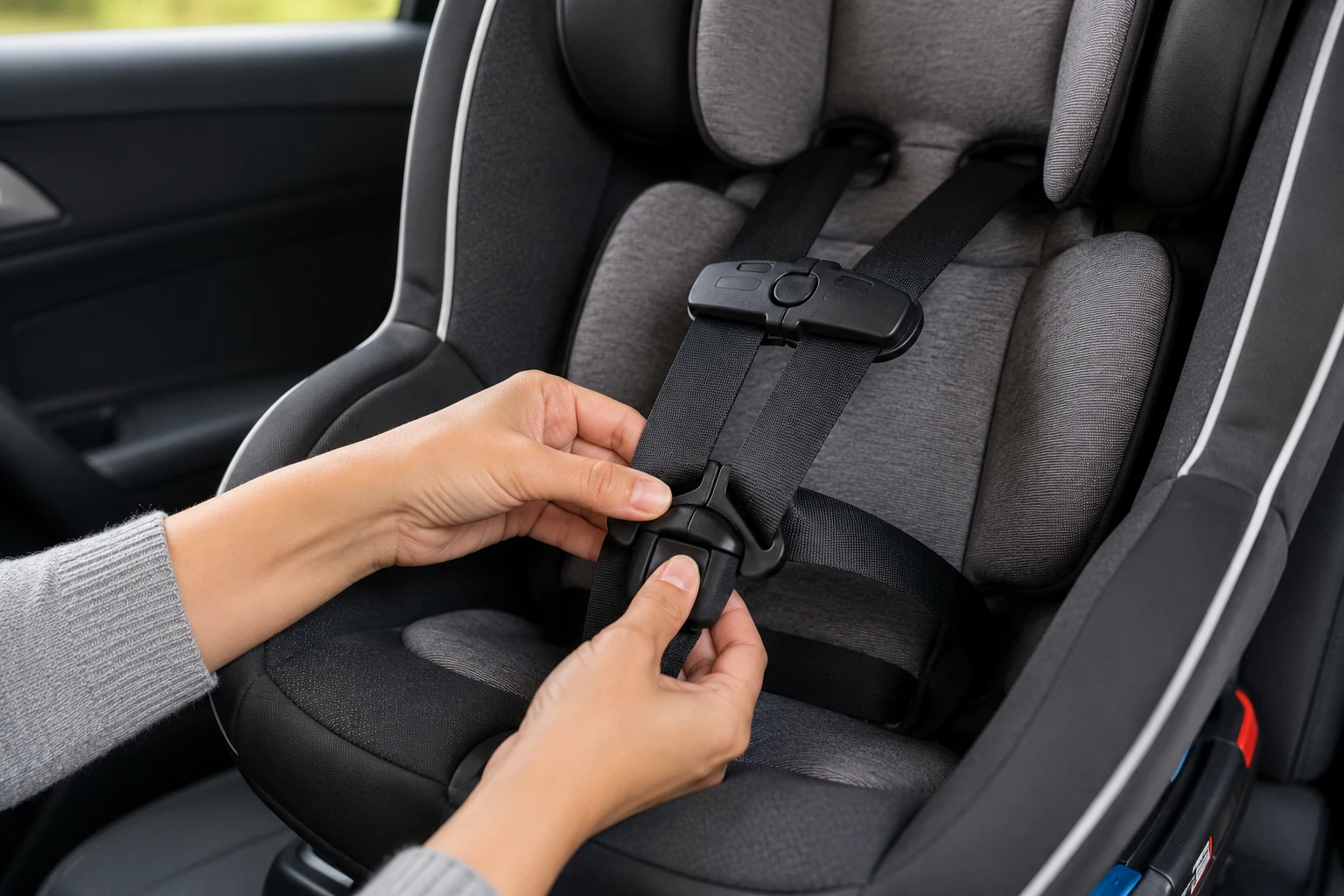
When your Evenflo Revolve 360 straps won’t loosen, even a routine trip can become frustrating. You press the release button, pull the harness, and nothing happens. Fortunately, most harness adjustment problems have simple explanations and practical solutions. Moreover, identifying the cause early helps ensure your child remains comfortable and properly secured. This guide explains why the problem occurs, how to diagnose it correctly, and what steps you can take to restore smooth harness operation.
Understanding How the Evenflo Revolve 360 Harness System Works
Before troubleshooting, it’s important to understand how the harness system functions. The Evenflo Revolve 360 uses a carefully designed adjustment mechanism that allows parents to tighten and loosen the harness while maintaining safety standards. Consequently, when one component fails to move correctly, the entire system may feel stuck.
Components of the Harness Adjustment System
Several components work together every time you adjust the harness:
- Harness straps
- Harness adjustment strap
- Harness release button
- Chest clip
- Buckle assembly
- Rear splitter plate
If any of these parts become obstructed, damaged, or misaligned, harness adjustments may become difficult.
How the Loosening Mechanism Functions
When you press the release button, an internal locking device temporarily disengages. At the same time, you should pull forward on the shoulder straps to create slack. However, if the button cannot fully disengage or the straps encounter resistance, the harness may refuse to loosen. Understanding this process makes diagnosing problems much easier.
Why Evenflo Revolve 360 Straps Won’t Loosen
Several issues can contribute to this common complaint.
Dirt and Debris Blocking the Adjuster
Children bring more than smiles into their car seats. Crumbs, dirt, dust, and sticky residue often find their way into small openings around the harness adjuster. Common sources include:
- Crackers
- Cookies
- Juice spills
- Sand
- Pet hair
- General road dust
Over time, these materials may interfere with the adjustment mechanism. Therefore, if your Evenflo Revolve 360 straps won’t loosen, debris should be one of the first things you check.
Twisted Harness Straps
Harness webbing is designed to slide smoothly through designated pathways. Unfortunately, twists create friction. As a result, the straps may bind inside the seat shell and resist movement. Common twist locations include:
- Shoulder strap slots
- Rear splitter plate
- Buckle area
- Harness routing channels
Even minor twists can significantly affect performance.
Improper Harness Routing
Sometimes the harness itself is routed incorrectly. This often occurs after:
- Cleaning the seat
- Adjusting harness height
- Reinstalling components
- Switching between rear-facing and forward-facing modes
Although everything may appear normal from the front, hidden routing mistakes behind the seat can create substantial resistance.
Stuck Harness Adjuster Button
The release button must move freely for the harness to loosen properly. However, dirt, wear, or internal resistance can prevent full engagement. Watch for signs such as:
- Stiff button movement
- Delayed response
- Inconsistent operation
- Excessive pressure requirements
If the button feels unusual, it deserves closer inspection.
Harness Strap Tension from Child Positioning
Interestingly, the problem may not involve the seat at all. Children who lean forward, slouch, or push against the seat can create additional tension on the harness. This tension makes loosening difficult because the locking mechanism remains under load. Before troubleshooting further, have your child sit back naturally against the seat and try again.
Cold Weather and Bulky Clothing
Winter clothing can also contribute. Heavy jackets and thick layers create extra pressure throughout the harness system. Parents frequently report that their Evenflo Revolve 360 straps won’t loosen during colder months when children wear:
- Puffy winter coats
- Fleece jackets
- Thick sweaters
- Snow gear
Removing bulky outerwear often improves harness adjustment immediately.
Recent Installation Changes
Problems sometimes begin shortly after adjustments. Examples include:
- Seat reinstallation
- Recline position changes
- Harness height modifications
- Mode transitions
If the issue appeared after a recent adjustment, reviewing those changes can help identify the cause.
A Related Issue: Harnesses That Won’t Tighten
It’s worth noting that adjustment problems can occur in either direction. While this guide focuses on situations where the Evenflo Revolve 360 straps won’t loosen, some parents encounter the opposite problem, where the Evenflo Revolve 360 Straps Won’t Tighten properly. In many cases, both issues share similar causes, including twisted straps, debris buildup, or incorrect harness routing.
How to Diagnose the Problem Step by Step
Rather than guessing, follow a systematic inspection process.
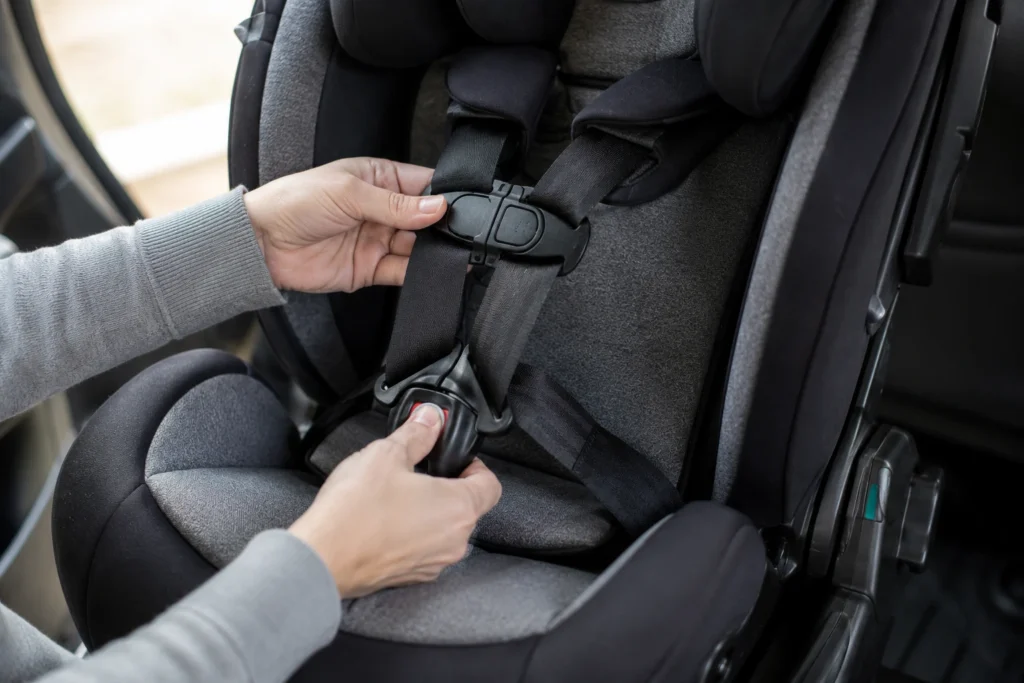
Step 1: Remove the Child Safely
Begin with an empty seat. This removes excess tension and allows a thorough inspection.
Step 2: Inspect the Harness for Twists
Follow each strap from top to bottom. Look for:
- Twists
- Folds
- Pinched webbing
- Uneven sections
Any twist should be corrected immediately.
Step 3: Check the Adjuster Strap Area
Locate the front adjustment strap. Next, inspect the surrounding area carefully. Look for:
- Crumbs
- Dirt
- Sticky residue
- Foreign objects
A flashlight can help reveal hidden debris.
Step 4: Examine the Release Button
Press the button repeatedly. Ask yourself:
- Does it move smoothly?
- Does it feel sticky?
- Does it return normally?
- Does it require excessive force?
Abnormal behavior may indicate contamination or wear.
Step 5: Inspect the Rear Splitter Plate
Turn the seat around and inspect the back. The splitter plate connects both harness straps and often hides routing issues. Check for:
- Crossed straps
- Twisted webbing
- Uneven attachment points
- Tangled harness sections
Many hidden problems become obvious during this step.
Step 6: Test Harness Movement Manually
Finally, test the harness itself. While pressing the release button:
- Pull the left strap
- Pull the right strap
- Pull both straps simultaneously
If one side moves differently than the other, you’ve narrowed down the source of the issue considerably.
How to Fix Evenflo Revolve 360 Straps That Won’t Loosen
Once you’ve identified the likely cause, you can begin correcting it.
Cleaning the Harness Adjuster Area
Start with the simplest fix. Use:
- A soft brush
- Mild soap
- A damp cloth
Carefully remove visible dirt and debris. Avoid:
- Lubricants
- Oils
- Solvents
- Harsh cleaners
Many adjustment issues disappear after a thorough cleaning.
Straightening Twisted Harness Straps
Patience matters here. Work through the harness path slowly and eliminate every twist. Pay special attention to:
- Shoulder slots
- Splitter plate connections
- Routing channels
Interestingly, the principles behind strap movement relate closely to Tribology the study of friction, wear, and interacting surfaces. Even a small twist can increase resistance significantly. After straightening the straps, test the harness again. In many cases, smooth movement returns immediately.
Repositioning the Child Correctly
Sometimes the easiest solution is simply changing your child’s position. Encourage your child to:
- Sit upright
- Keep their back against the seat
- Avoid leaning forward
Reducing harness tension often makes adjustment easier.
Checking Harness Routing
Review the harness pathway carefully. Verify that:
- Straps pass through correct slots
- Webbing remains flat
- Routing follows manufacturer instructions
Small routing mistakes can create surprisingly large problems. Furthermore, the coordinated movement of the harness system relates conceptually to Kinematics ,which studies motion and movement patterns within mechanical systems.
Resetting the Harness System
Occasionally, the harness benefits from a simple reset. Loosen the harness completely if possible. Then:
- Unbuckle the harness.
- Straighten all webbing.
- Verify routing.
- Re-tighten gradually.
This process often resolves minor alignment issues without additional repairs.
Inspecting for Physical Damage
Finally, inspect the harness components carefully. Look for:
- Frayed webbing
- Cracked plastic parts
- Bent hardware
- Broken components
If physical damage is present, replacement parts or professional assistance may be necessary.
Mistakes to Avoid When Troubleshooting
When an Evenflo Revolve 360 straps won’t loosen issue occurs, many parents understandably want a quick fix. However, some troubleshooting methods can create bigger problems than the original issue.
Forcing the Harness Release Button
It can be tempting to press harder when the button feels stuck. Don’t. Excessive force may:
- Damage internal components
- Bend plastic parts
- Increase wear on the mechanism
- Create additional adjustment problems
Instead, identify the source of resistance before applying more pressure.
Using Lubricants on the Mechanism
Many people automatically reach for a lubricant when something sticks. However, car seat harness systems are different. Avoid using:
- WD-40
- Silicone sprays
- Household oils
- Grease products
These substances can attract dirt and may interfere with the harness system over time.
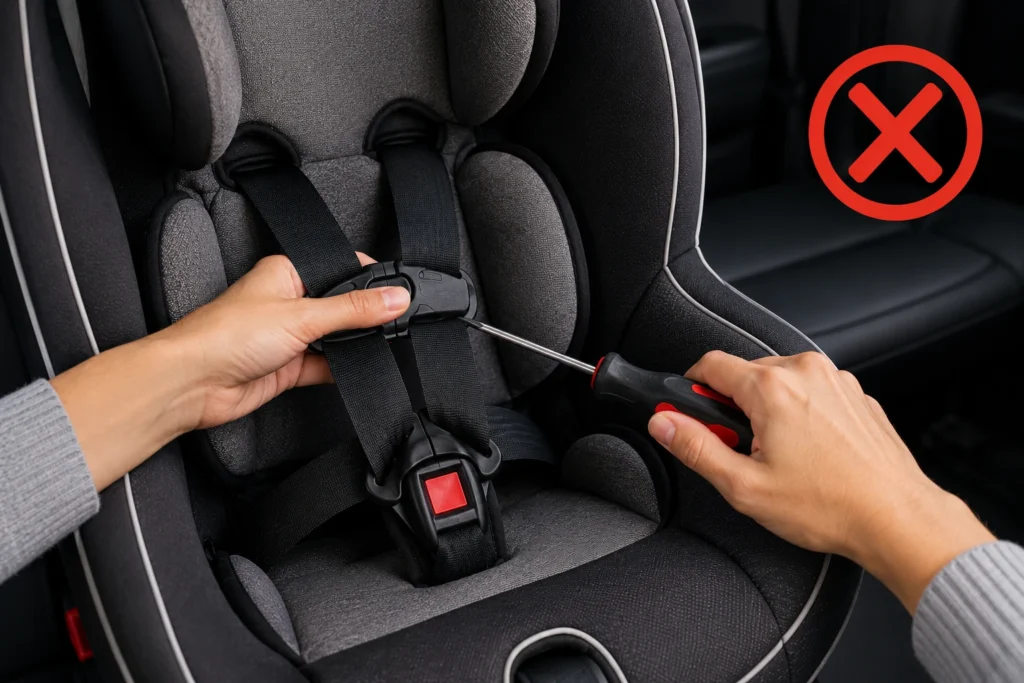
Disassembling the Harness System
Parents sometimes believe complete disassembly will solve the problem. Unfortunately, incorrect reassembly can introduce new safety concerns. Unless specifically directed by the manufacturer, avoid taking apart components beyond normal cleaning procedures.
Ignoring Manufacturer Instructions
Every car seat model has unique features. Therefore, always review the owner’s manual before performing adjustments or maintenance. A few minutes spent reviewing instructions can prevent hours of frustration later.
When to Contact Evenflo Customer Support
Most harness problems can be resolved at home. However, some situations require professional assistance.
Signs of a Mechanical Defect
Contact customer support if you notice:
- Broken release buttons
- Cracked plastic components
- Damaged harness hardware
- Repeated adjustment failures
Mechanical defects should never be ignored.
Persistent Harness Adjustment Problems
If you’ve:
- Cleaned the adjuster
- Corrected strap twists
- Verified routing
- Inspected the splitter plate
and the issue remains, professional guidance may be necessary.
Warranty and Replacement Considerations
The Evenflo Revolve 360 may be covered under warranty depending on its age and circumstances. Customer support can help determine:
- Warranty eligibility
- Replacement part availability
- Inspection recommendations
- Additional troubleshooting steps
When contacting support, have the model number and manufacture date available.
Preventing Future Harness Adjustment Problems
Prevention is often easier than troubleshooting.bA few simple habits can significantly reduce the likelihood of future issues.
Regular Cleaning Routine
Food and debris are among the most common causes of harness adjustment problems. Establish a routine that includes:
- Removing visible crumbs weekly
- Wiping surfaces regularly
- Inspecting adjustment areas monthly
Small efforts can prevent major frustrations.
Monthly Harness Inspections
Set aside a few minutes each month to inspect the harness. Check for:
- Twisted webbing
- Uneven strap movement
- Dirt buildup
- Signs of wear
Early detection helps prevent larger problems.
Proper Strap Storage Habits
When removing your child from the seat:
- Avoid twisting straps
- Keep harnesses laying flat
- Straighten webbing immediately
This simple habit reduces friction and improves long-term performance.
Avoiding Food and Debris Buildup
While snacks are often unavoidable during travel, reducing food inside the seat can help. Consider:
- Using spill-resistant containers
- Cleaning after long trips
- Vacuuming the seat periodically
Consequently, the adjustment mechanism stays cleaner and operates more smoothly.
Evenflo Revolve 360 Harness Maintenance Checklist
A simple maintenance schedule can help keep the harness functioning properly.
| Maintenance Task | Recommended Frequency |
|---|---|
| Inspect straps for twists | Weekly |
| Remove visible debris | Weekly |
| Clean adjuster area | Monthly |
| Check splitter plate | Monthly |
| Verify harness routing | Every adjustment |
| Inspect for damage | Monthly |
| Review seat manual | Every few months |
Following this checklist takes very little time yet provides long-term benefits.
Safety Tips When Adjusting the Harness
Fixing a harness problem is important. However, ensuring proper harness use afterward is equally critical.
Achieving Proper Harness Fit
The harness should fit snugly against the child. A properly adjusted harness:
- Keeps the child secure
- Reduces excessive movement
- Improves crash protection
The straps should lie flat without twists.
Performing the Pinch Test
After tightening the harness:
- Place your fingers at the child’s shoulder.
- Attempt to pinch the harness webbing.
- If you can grasp excess material, tighten further.
If you cannot pinch extra webbing, the fit is generally appropriate.
Proper Chest Clip Position
The chest clip should sit at armpit level. Positioning it too high or too low may reduce effectiveness during a collision. Always double-check clip placement before travel.
Seasonal Clothing Considerations
Heavy winter clothing can interfere with harness performance. Whenever possible:
- Remove bulky coats
- Use thinner layers
- Add blankets over the harness if needed
This helps maintain both comfort and safety.
Frequently Asked Questions About Evenflo Revolve 360 Straps Won’t Loosen
Why won’t my Evenflo Revolve 360 straps loosen?
Common causes include twisted straps, debris inside the adjuster mechanism, improper harness routing, or excessive tension from the child’s position.
Can dirt cause harness adjustment problems?
Yes. Crumbs, dust, and sticky residue can interfere with the release mechanism and prevent smooth harness movement.
Is it safe to use lubricant on the harness adjuster?
No. Lubricants may attract dirt and potentially affect harness performance. Follow manufacturer cleaning recommendations instead.
How often should I clean the harness adjustment area?
A monthly inspection and cleaning routine is generally sufficient for most families.
What if the release button feels stuck?
Inspect the area for debris first. If the button remains difficult to operate after cleaning, contact customer support.
Can twisted straps prevent loosening?
Absolutely. Twisted webbing creates friction that may restrict harness movement.
Should I remove the seat to troubleshoot?
Not necessarily. Many issues can be diagnosed while the seat remains installed.
When should I replace the harness?
Replace components if they become damaged, frayed, broken, or if the manufacturer recommends replacement.
Does cold weather affect harness performance?
Indirectly, yes. Bulky clothing can increase harness tension and make adjustments more difficult.
When should I contact Evenflo support?
Contact support whenever mechanical defects, damaged components, or persistent adjustment issues cannot be resolved through normal troubleshooting.
Conclusion
If your Evenflo Revolve 360 straps won’t loosen, don’t panic. In most cases, the cause is relatively simple, such as debris buildup, twisted harness webbing, or incorrect routing. Fortunately, a careful inspection and a few troubleshooting steps can often restore smooth operation quickly. Moreover, regular maintenance and routine checks help prevent future issues. By staying proactive and addressing problems early, you can keep your Evenflo Revolve 360 functioning properly and your child traveling safely every day.
FAQs
The most common causes include twisted harness straps, debris in the adjuster mechanism, or excessive tension on the harness from your child’s position.
Yes. Food particles, dust, and other debris can interfere with the release mechanism and make the straps difficult to loosen.
Yes, bulky clothing can add pressure to the harness system and make adjustments more difficult. Removing thick outerwear often helps.
Follow the straps from the shoulder slots to the buckle and rear splitter plate. Any folds or turns in the webbing indicate a twist.
No. Lubricants can attract dirt and may damage the harness mechanism over time.
Inspect the harness routing and splitter plate at the back of the seat. A twist or routing issue is often responsible for uneven strap movement.
A quick inspection once a month is a good habit and can help catch dirt buildup, twists, or wear before they become bigger problems.
In many cases, yes. Removing debris from the adjuster area can restore normal harness movement without requiring repairs.
Reach out if the release button is broken, the harness remains stuck after troubleshooting, or you notice damaged components.
If the harness cannot be adjusted correctly, the seat may not provide the proper fit for your child. It’s best to resolve the issue before continuing regular use.