
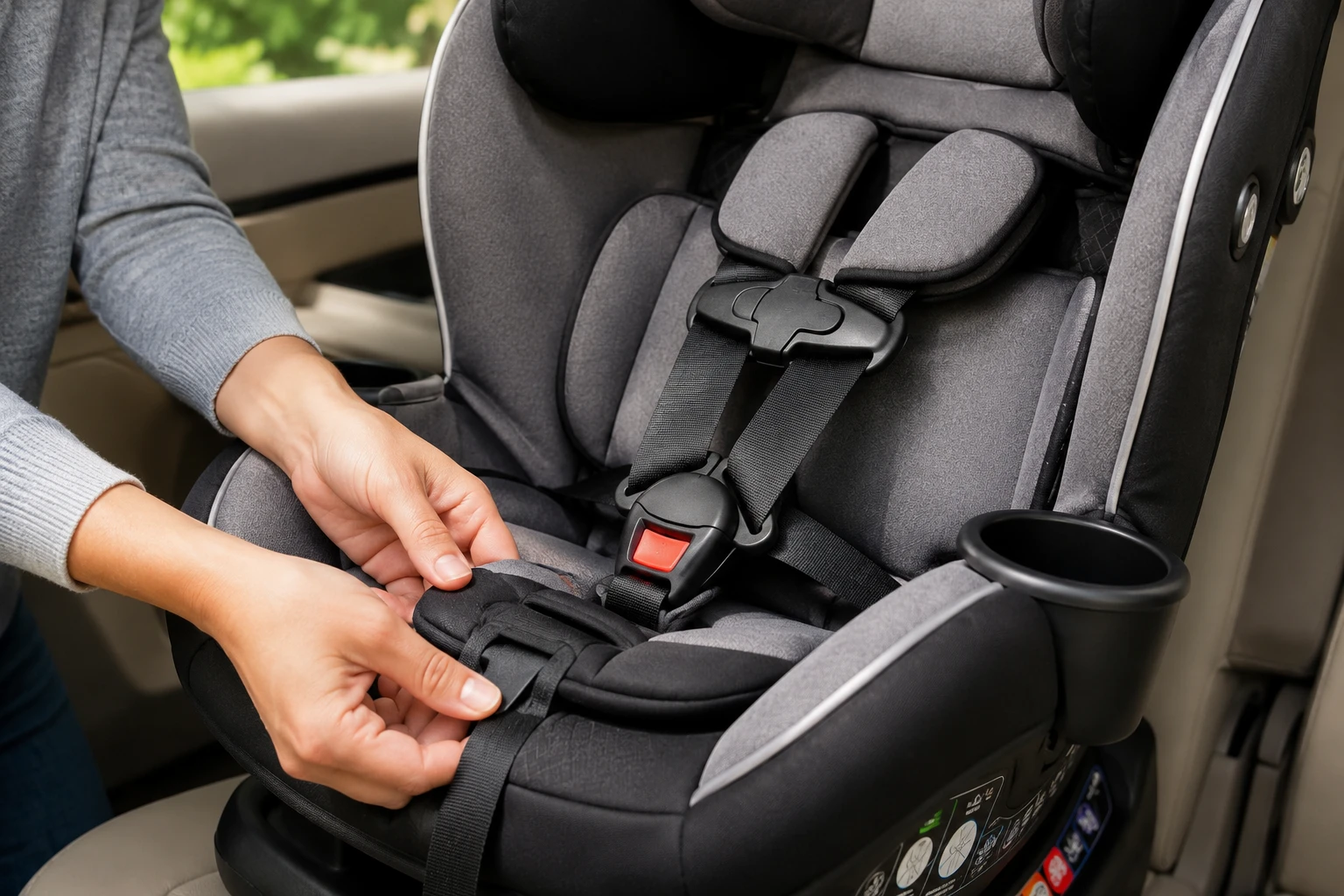
If your evenflo revolve 360 straps won’t tighten, don’t panic. Although this issue can be frustrating, it is often caused by a simple problem such as twisted webbing, debris, or incorrect harness routing. More importantly, a properly tightened harness is essential for protecting your child during every trip. Therefore, identifying and fixing the issue quickly should be your top priority. In this guide, you’ll learn the most common causes, practical troubleshooting steps, and proven solutions to restore proper harness function.
Understanding How the Evenflo Revolve 360 Harness System Works
Before troubleshooting the problem, it’s helpful to understand how the harness system functions. The Evenflo Revolve 360 uses a multi-point harness system designed to distribute crash forces across a child’s strongest body areas. When you pull the adjustment strap at the front of the seat, tension moves through the harness webbing and splitter plate, tightening both shoulder straps simultaneously. Several parts work together to make this happen:
- Harness straps
- Splitter plate
- Harness adjuster strap
- Adjustment mechanism
- Chest clip
- Buckle assembly
If one of these components becomes twisted, obstructed, or improperly positioned, tightening can become difficult or impossible.
Why Proper Harness Tension Matters
A secure harness does more than keep a child seated. It helps maintain proper positioning during sudden stops and collisions. Furthermore, it reduces the amount of movement a child experiences during an impact. When checking harness tightness, many child passenger safety technicians recommend performing the pinch test. If you can pinch excess harness material at the shoulder, the straps may need additional tightening.
Common Reasons Evenflo Revolve 360 Straps Won’t Tighten
When parents discover that their evenflo revolve 360 straps won’t tighten, the cause typically falls into one of several categories. Let’s examine each possibility.
Twisted Harness Straps
Twisted harness straps are one of the most common causes of tightening issues. Over time, children climb in and out of the seat, straps get adjusted repeatedly, and webbing can gradually twist. Even a minor twist may increase friction within the harness system. Signs of twisted straps include:
- Folded harness webbing
- Uneven shoulder straps
- Resistance during tightening
- One side tightening faster than the other
Therefore, always inspect the entire length of the harness before assuming a more serious issue exists.
Harness Strap Routing Problems
Harness routing errors frequently occur after cleaning or maintenance. Parents may remove portions of the harness system and unintentionally reinstall them incorrectly. As a result, the webbing may bind inside the seat shell. Common causes include:
- Incorrect harness slot selection
- Crossed harness straps
- Improper rethreading after cleaning
- Misaligned harness paths
Fortunately, these issues are usually easy to correct once identified.
Debris Inside the Adjuster Mechanism
Children are experts at dropping food. Crumbs, dirt, lint, and sticky residue can gradually accumulate inside the adjuster mechanism. Consequently, the system may become difficult to operate. Symptoms often include:
- Stiff adjustment strap
- Jerky tightening motion
- Increased resistance over time
- Harness that tightens inconsistently
Interestingly, friction-related issues like these are studied in the field of Tribology, which focuses on how surfaces interact and move against one another.
Harness Adjuster Strap Obstruction
The adjustment strap itself can also become obstructed. Sometimes seat padding shifts slightly. Other times, the strap twists beneath the cover or becomes caught against internal components. When this happens, you may notice:
- Limited strap movement
- Sudden stopping during tightening
- Uneven harness tension
- Difficulty loosening and tightening
Accordingly, inspecting the adjuster strap pathway should always be part of your troubleshooting process.
Splitter Plate Problems
The splitter plate is located on the rear of the car seat. Its job is to connect both shoulder harness straps and allow them to tighten evenly. However, if the straps become misaligned or twisted behind the seat, problems can occur. Potential splitter plate issues include:
- Harness slipping partially off the plate
- Twisted webbing behind the seat
- Uneven strap lengths
- Incorrect harness attachment
As a result, one side may tighten while the other remains loose.
Child Positioning Problems
Not every tightening issue originates from the seat itself. Sometimes the child’s position affects harness operation. Common examples include:
- Sitting on harness straps
- Leaning forward excessively
- Slouching in the seat
- Wearing bulky outerwear
Heavy winter coats deserve special attention. While they may make the harness seem snug initially, compressed clothing can create dangerous slack once the child is seated. Additionally, some parents dealing with an Evenflo Revolve 360 Chest Clip Problem discover that improper chest clip placement or thick clothing can interfere with achieving a proper harness fit.
How to Diagnose the Problem Step by Step
Rather than guessing, use a systematic approach. A structured inspection often reveals the source of the problem quickly.
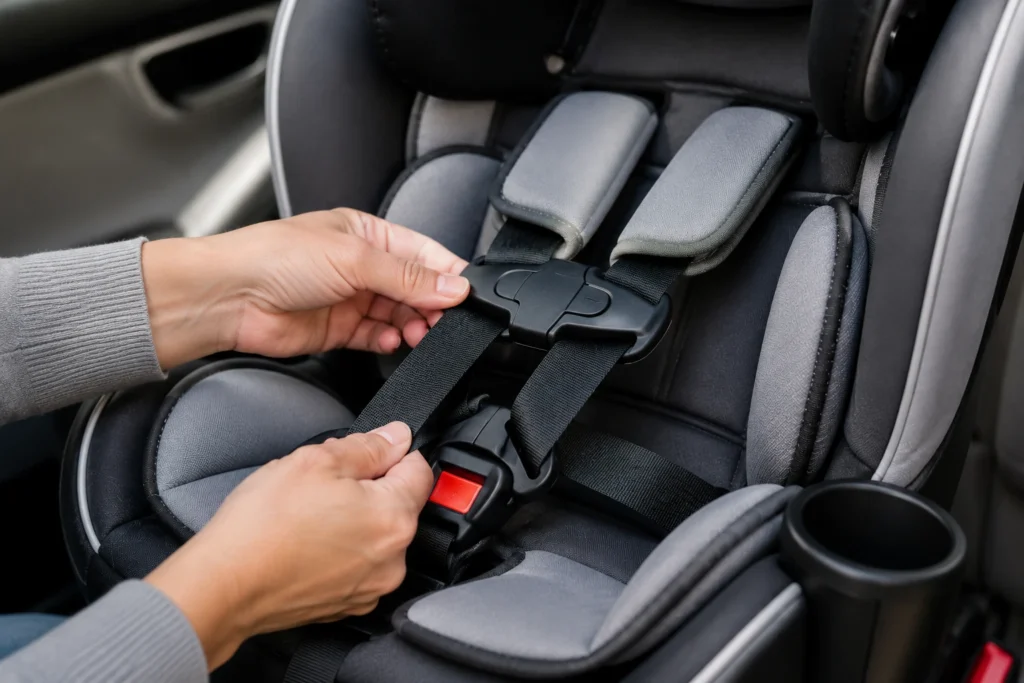
Step 1: Perform a Visual Inspection
Begin by examining:
- Shoulder straps
- Harness slots
- Adjustment strap
- Chest clip
- Seat padding
Look for:
- Twists
- Fraying
- Obstructions
- Misalignment
Even a small issue can create significant tightening difficulties.
Step 2: Fully Loosen the Harness
Next, loosen the harness completely. This helps expose hidden routing problems and allows the webbing to move freely. As you loosen the harness, pay attention to whether movement feels smooth or restricted. Any unusual resistance may help pinpoint the source of the issue.
Step 3: Slowly Retighten the Harness
After loosening the harness, begin tightening slowly. Observe both shoulder straps carefully. Ask yourself:
- Are both sides moving equally?
- Does one side stop moving?
- Is resistance occurring at a certain point?
- Does tightening feel rough or jerky?
These observations provide valuable clues.
Step 4: Inspect the Rear of the Seat
Now check the back of the car seat. Locate the splitter plate and verify that:
- Both harness straps are attached correctly
- Webbing lies flat
- No twists are present
- Strap lengths appear equal
The movement of webbing through the harness system involves principles related to Kinematics the study of motion and mechanical movement.
Step 5: Examine the Adjuster Mechanism
Finally, inspect the adjustment mechanism itself. Check for:
- Dirt buildup
- Crumbs
- Fabric debris
- Obstructions around the adjustment strap
If visible debris is present, cleaning may restore normal operation without requiring further repairs.
How to Fix Evenflo Revolve 360 Straps That Won’t Tighten
Once you’ve identified the cause, the solution is often straightforward.
Remove Harness Twists
Start with the easiest fix. Carefully follow each harness strap from the shoulder area down to the buckle. Flatten any twists you find. Don’t forget to inspect areas hidden beneath seat padding. Many harness problems originate in places that aren’t immediately visible. After removing all twists, test the harness again. In many situations, this simple correction completely resolves the issue.
Correct Harness Routing
If twisted straps aren’t the problem, the next step is verifying harness routing. Remove any visible twists and carefully follow the harness path from the shoulder slots to the splitter plate. Check that:
- Both straps pass through the correct slots
- Webbing is not crossed
- The harness follows the manufacturer’s routing path
- Both sides are symmetrical
Afterward, test the adjustment strap again. In many cases, correcting the routing immediately restores smooth tightening.
Clean the Harness Adjuster Area
If debris is causing resistance, a thorough cleaning may help. Start by inspecting the adjustment area with a flashlight. Look for:
- Food crumbs
- Dirt
- Dust
- Fabric fibers
Remove visible debris carefully. Avoid using harsh cleaners, lubricants, or sprays inside the adjustment mechanism. These products can damage components and potentially affect safety performance. Instead, follow Evenflo’s cleaning recommendations whenever possible.
Reposition the Child Properly
Sometimes the solution is surprisingly simple. Before tightening the harness:
- Ensure your child is sitting upright
- Position their back fully against the seat
- Verify they are not sitting on the harness straps
- Remove bulky jackets and coats
Then tighten the harness again. Many parents notice an immediate improvement when proper positioning is restored.
Reset the Harness System
If the problem persists, try resetting the entire harness. Follow this process:
- Fully loosen the harness.
- Inspect all visible webbing.
- Verify splitter plate attachment.
- Check harness routing.
- Reposition the straps.
- Retighten gradually.
This process often resolves issues that developed over time but are difficult to identify visually.
Evenflo Revolve 360 Straps Won’t Tighten After Washing
Cleaning the car seat can introduce new problems. Many parents report that their evenflo revolve 360 straps won’t tighten immediately after removing and reinstalling seat covers. The reason is usually simple. Something was reassembled incorrectly.
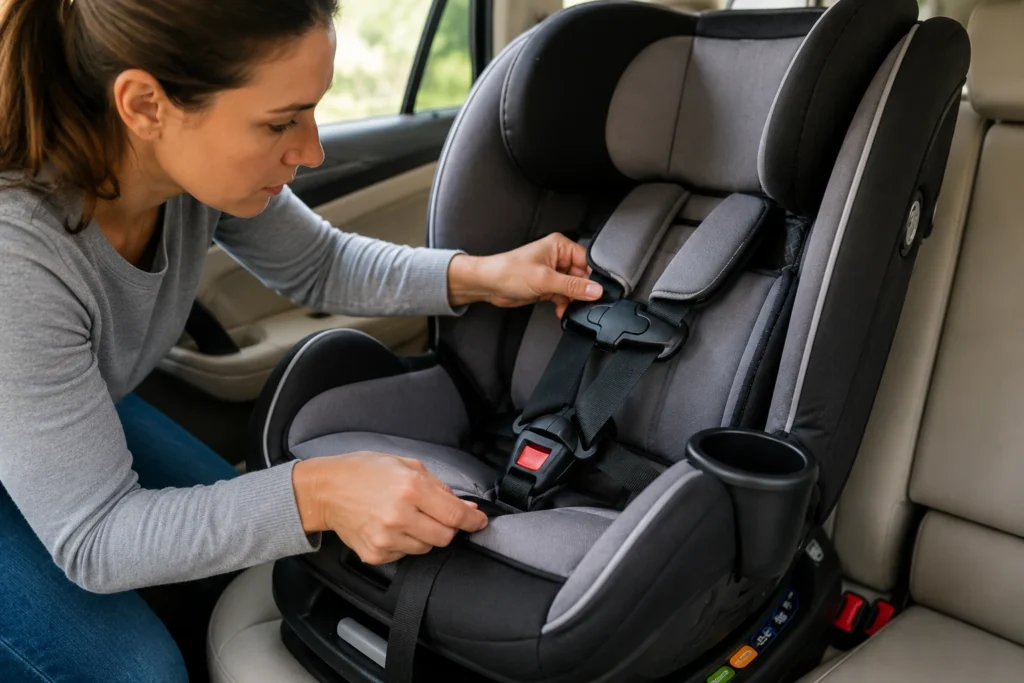
Common Mistakes During Cleaning
Several mistakes occur frequently:
- Harness straps become twisted during reinstallation
- Splitter plate connections are reversed
- Harness slots are routed incorrectly
- Seat padding interferes with strap movement
Fortunately, these issues are usually easy to fix.
How to Reinstall the Harness Correctly
After cleaning:
- Compare both harness sides carefully
- Ensure the straps lie completely flat
- Verify splitter plate attachment
- Test tightening before placing your child in the seat
Never assume the harness is functioning properly after reassembly. Always perform a complete function check.
Evenflo Revolve 360 Straps Stuck on One Side
Another common complaint occurs when one side tightens while the other remains loose. This can be frustrating because the harness appears functional at first glance.
Uneven Harness Tightening Causes
Several issues can create uneven tension:
- Twisted harness webbing
- Splitter plate misalignment
- Unequal strap lengths
- Routing errors behind the seat
Because both harness straps depend on the splitter plate, a problem on one side often affects the entire system.
Solutions for One-Sided Tightening Problems
Start by inspecting the rear of the seat. Then:
- Remove all twists
- Verify both straps are attached equally
- Confirm proper routing
- Reset the harness system
Once completed, tighten the harness again while observing both shoulder straps. Ideally, both sides should move at the same rate.
Safety Risks of Using Loose Harness Straps
A loose harness is not simply an inconvenience. It can reduce the effectiveness of the car seat during a collision. Therefore, any tightening issue should be addressed immediately.
Increased Injury Risk During a Collision
When harness straps remain loose:
- The child can move excessively
- Head movement increases
- Proper crash positioning may be lost
- Protection levels may be reduced
Even small amounts of slack can matter during an impact. That’s why proper harness adjustment should always be verified before every trip.
Signs the Harness Is Properly Tightened
Fortunately, checking harness fit takes only seconds. Look for these indicators:
- Straps lie flat against the body
- Chest clip sits at armpit level
- Harness passes the pinch test
- No visible slack exists
If all four conditions are met, the harness is likely adjusted correctly.
Preventing Future Harness Tightening Problems
Once you’ve fixed the issue, prevention becomes the next priority. A few simple habits can help avoid future problems.
Regular Maintenance Checklist
Inspect your car seat monthly. Focus on:
- Harness condition
- Strap routing
- Splitter plate position
- Adjuster operation
- Visible wear
Early detection often prevents larger issues later.
Best Practices for Daily Use
Daily habits matter. To reduce future tightening problems:
- Keep straps flat during every use
- Avoid twisting the harness
- Remove bulky outerwear
- Clean debris regularly
- Check chest clip positioning
Small actions performed consistently can significantly improve harness performance.
When to Contact Evenflo Customer Support
Sometimes professional assistance is necessary. Contact Evenflo if:
- The harness remains difficult to tighten
- Components appear damaged
- Fraying is visible
- The adjuster mechanism fails completely
- Troubleshooting does not resolve the issue
Do not continue using a potentially damaged harness system without guidance.
Quick Troubleshooting Table
| Problem | Possible Cause | Recommended Fix |
|---|---|---|
| Straps won’t tighten at all | Debris in adjuster | Clean adjustment area |
| Harness feels stuck | Twisted webbing | Remove twists |
| One side tighter than the other | Splitter plate issue | Inspect rear harness routing |
| Problem started after washing | Incorrect reassembly | Reinstall harness properly |
| Adjustment strap difficult to pull | Obstruction beneath padding | Inspect strap pathway |
| Tightening occurs unevenly | Routing error | Verify harness path |
Conclusion
If your evenflo revolve 360 straps won’t tighten, the cause is usually something manageable such as twisted webbing, debris, improper routing, or a splitter plate issue. Fortunately, most of these problems can be diagnosed and corrected at home with a careful inspection. More importantly, never ignore harness performance concerns. Instead, address them promptly, verify proper fit, and perform routine inspections. By doing so, you’ll help ensure your Evenflo Revolve 360 continues to provide the protection it was designed to deliver every time your child rides.
FAQs
The most common causes include twisted harness straps, debris in the adjuster mechanism, improper harness routing, or issues with the splitter plate.
Start by fully loosening the harness and inspecting it for twists, obstructions, or routing problems. Cleaning the adjuster area may also help.
Yes. Crumbs, dirt, and lint can accumulate inside the adjuster mechanism and make tightening the harness more difficult.
This usually happens when the harness straps are twisted, unevenly routed, or improperly attached to the splitter plate.
No. A loose harness may not properly secure your child during a crash, so the issue should be corrected before using the seat.
Yes. Harness routing mistakes or incorrect reassembly after cleaning are common causes of harness tightening issues.
The harness should pass the pinch test, meaning you cannot pinch excess webbing at your child’s shoulders after tightening.
No. Lubricants and sprays are generally not recommended because they can damage components or affect the adjuster’s performance.
A quick visual inspection before each trip and a more detailed monthly inspection can help identify issues before they become serious.
Contact Evenflo if the harness remains difficult to adjust after troubleshooting or if you notice damaged, frayed, or malfunctioning components.