
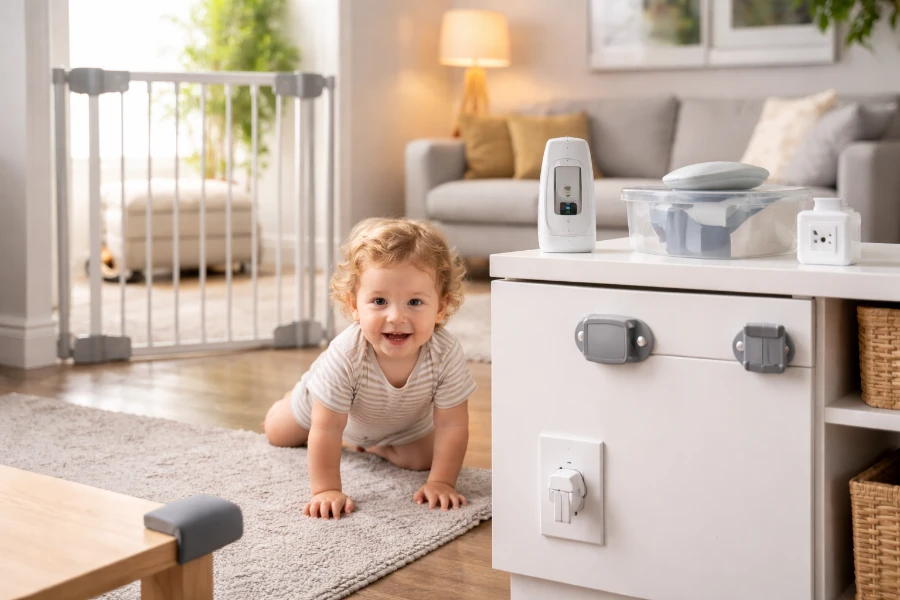

Bringing a child into your home changes everything. Suddenly, sharp corners look sharper. Cabinets feel riskier. Even the quietest room hides potential hazards. That’s why understanding what to look for in child safety products isn’t just helpful—it’s essential.
I’ve seen it firsthand. Parents often grab the first baby gate or cabinet lock they find, assuming all options offer the same level of protection. They don’t. Some fail under pressure. Others are too easy for curious little hands to bypass. The difference between a good product and a great one? It comes down to knowing exactly what to look for in child safety products before you buy.
Let’s break it down in a way that actually helps you make smarter decisions.
Understanding the Purpose of Child Safety Products
What Are Child Safety Products?
Child safety products are designed to reduce risk. Simple idea. Powerful impact.
They include:
- Baby gates
- Cabinet and drawer locks
- Outlet covers
- Corner guards
- Baby monitors
- Car seats
Each one solves a specific problem. Together, they create a safer environment.
Why They Matter More Than Ever
Homes today are filled with convenience. But convenience can create exposure.
Think about it:
- More electronics = more cords and outlets
- Open-concept homes = fewer natural barriers
- Busy schedules = less constant supervision
Child safety products step in where attention can’t always be perfect. They don’t replace parenting. They support it.
Safety Certifications and Standards
Key Certifications to Look For
This is non-negotiable. If you’re serious about what to look for in child safety products, start here.
Look for:
- Government safety approvals
- Third-party testing certifications
- Compliance labels on packaging
For example, understanding how products are tested under standards similar to ISO 9001 frameworks can give you confidence in manufacturing quality.
Why It Matters
Uncertified products may:
- Break under pressure
- Contain harmful materials
- Fail during actual use
That’s a risk you don’t want to take.
Age Appropriateness
Matching Products to Development Stages
Not all children face the same risks. A crawling infant and a climbing toddler operate in completely different ways.
Here’s a simple guide:
| Age Group | Key Risks | Recommended Products |
| 0–6 months | Rolling, limited movement | Soft edge protectors, monitors |
| 6–12 months | Crawling, pulling up | Cabinet locks, outlet covers |
| 1–3 years | Climbing, exploring | Baby gates, door locks |
Choosing the wrong product for the wrong stage? It’s like locking the front door but leaving the windows open.
Grow-With-Child Options
Some products adjust as your child grows. These are worth considering.
They:
- Save money
- Reduce replacement needs
- Adapt to changing risks
Smart buying always looks ahead.
Material Safety and Build Quality
Non-Toxic Materials
Children touch everything. Then they put those hands in their mouths.
So yes—materials matter.
Look for:
- BPA-free plastics
- Lead-free finishes
- Non-toxic coatings
Understanding the risks of exposure to harmful substances like Bisphenol A can help you make safer choices when selecting products.
Durability and Construction
This is where many products fail.
Cheap plastic might look fine out of the box. But under pressure? Not so much.
Check for:
- Reinforced joints
- Strong locking mechanisms
- Solid materials (metal or high-grade plastic)
A good test: If you can easily break it, a toddler probably can too.
Ease of Installation and Use
User-Friendly Design
Here’s the truth. If it’s hard to install, it won’t be installed correctly.
Or at all.
Look for:
- Clear instructions
- Tool-free installation options
- Quick setup designs
Time matters. Simplicity wins.
Easy for Adults, Hard for Kids
This balance is everything.
A great product should:
- Open smoothly for adults
- Stay completely confusing for kids
If a child can figure it out in minutes, it’s not doing its job.
Effectiveness and Reliability
Real-World Performance
Marketing photos can be misleading. Focus on performance.
Ask yourself:
- Does it hold under force?
- Does it stay in place over time?
- Does it solve the actual risk?
This is the core of what to look for in child safety products—real protection, not just appearance.
Product Reviews That Matter
Not all reviews are useful. Look deeper.
Focus on:
- Verified buyers
- Detailed feedback
- Mentions of durability over time
Patterns tell the truth. One bad review might be noise. Ten? That’s a signal.
Versatility and Compatibility
Fit Matters
A baby gate that doesn’t fit your doorway is useless. Same goes for cabinet locks that don’t align properly.
Measure first. Always.
Multi-Function Products
Some products do more than one job. These can be a great investment.
Examples:
- Gates that convert into play yards
- Locks that work on multiple surfaces
Less clutter. More value.
Design and Aesthetics
Blending with Your Home
Let’s be honest. No one wants their home to feel like a fortress.
Modern safety products now offer:
- Neutral colors
- Minimalist designs
- Sleek finishes
Safety doesn’t have to look bulky.
Visible vs. Hidden Safety
Sometimes you want safety features to stand out. Other times, you want them invisible.
- Visible: Gates, barriers
- Hidden: Cabinet locks, outlet covers
Choose based on function and preference.
Cost vs. Value
Budget vs. Premium
Price matters. But it shouldn’t be the only factor.
| Type | Pros | Cons |
| Budget | Affordable, accessible | Lower durability |
| Mid-range | Balanced quality and price | May lack advanced features |
| Premium | High durability, better design | Higher upfront cost |
When to Spend More
Some areas are high-risk. Don’t cut corners here.
Invest more in:
- Stair gates
- Car seats
- Crib safety products
For official safety recommendations, you can refer to Consumer Product Safety Commission guidelines, which outline critical product safety standards.
Common Types of Child Safety Products
Baby Gates
Essential for stairs and restricted areas.
Cabinet and Drawer Locks
Prevent access to hazardous items.
Corner Guards
Reduce injuries from furniture edges.
Outlet Covers
Protect against electrical hazards.
Baby Monitors
Provide real-time supervision and peace of mind.
Mistakes to Avoid When Buying
- Choosing based on price alone
- Ignoring installation requirements
- Skipping product reviews
- Buying for the wrong age group
- Overlooking recall history
Avoid these, and you’re already ahead.
Tips for Making the Right Purchase
- Research before buying
- Read real user reviews
- Check for certifications
- Test the product after installation
- Re-evaluate as your child grows
Knowing what to look for in child safety products means staying proactive, not reactive.
Creating a Comprehensive Childproofing Plan
Room-by-Room Approach
Start with living room, kitchen, bathroom, and bedrooms.
Prioritize High-Risk Areas
Focus on stairs, kitchens, and bathrooms first.
Combine Products for Full Protection
Layer multiple safety solutions for better results.
Final Thoughts
At the end of the day, child safety isn’t about buying more. It’s about buying smarter.
When you truly understand what to look for in child safety products, everything changes. You stop guessing. You start choosing with confidence.
And that confidence? It shows up in your home. In your routines. In your peace of mind.
Because safety isn’t just a product. It’s a decision. Make it a good one.
FAQs
Focus on certifications, durability, non-toxic materials, and ease of use to ensure real protection.
Check for verified safety certifications, strong customer reviews, and compliance with recognized standards.
You should start as early as infancy, especially once your baby begins rolling or crawling.
Not always, but higher-priced options often offer better durability and advanced safety features.
Replace them if they show wear, break, or no longer match your child’s developmental stage.
Yes, most are designed for easy installation, but always follow instructions carefully for proper use.
Start with high-risk areas like the kitchen, bathroom, and stairways.
Yes, they can save money and space while providing flexible protection as your child grows.
Choose products with strong locking mechanisms that are easy for adults but difficult for children.
No, they are an added layer of protection and should always be used alongside active supervision.

