
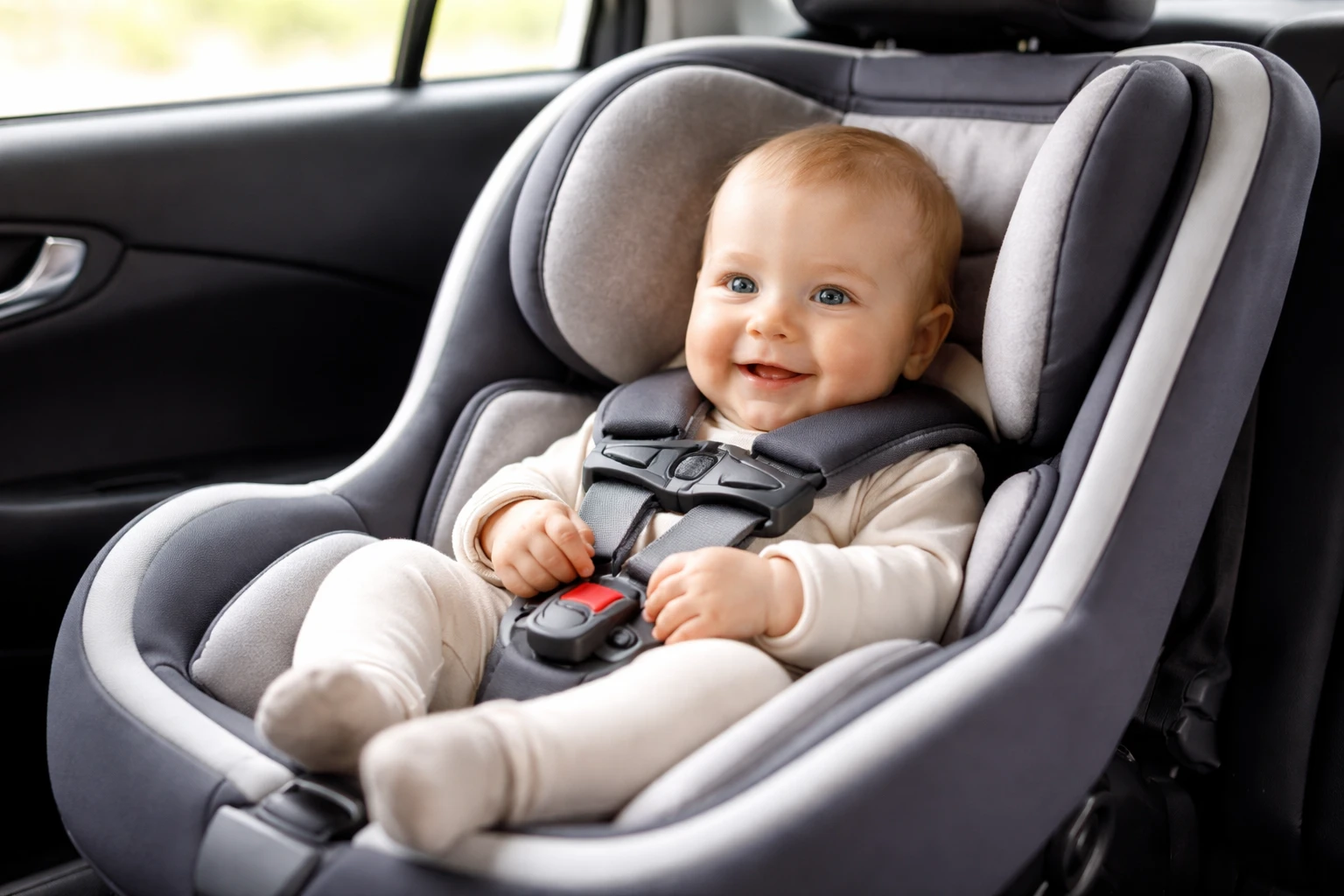

This post contains affiliate links. As an Amazon Associate, 360 Car Seat earns from qualifying purchases, at no extra cost to you.
There is one decision that quietly carries enormous weight every time you drive with a baby: how your infant is positioned in the car. The safest rear facing position for infants in vehicles isn’t just a recommendation it’s a proven, life-protecting standard. And yet, many parents unknowingly get small details wrong. Small details that matter.
Let’s fix that.
This guide breaks it all down. Clearly. Practically. No fluff. Just what works and why.
Why Rear-Facing Is the Safest Option for Infants
Infants are not just “small passengers.” Their bodies are built differently.
- Their heads are proportionally larger
- Their neck muscles are still developing
- Their spines are softer and more flexible
In a crash, forward-facing seats allow the head to snap forward. That motion puts intense strain on the neck and spine. It’s fast. Violent. Dangerous.
Rear-facing seats? They distribute crash forces across the entire back head, neck, and torso together. Instead of snapping forward, the body is cradled.
This concept relates to how forces are distributed across structures, similar to principles seen in Biomechanics, where proper support reduces stress on vulnerable areas.
That’s why safety experts consistently emphasize the safest rear facing position for infants in vehicles. It’s not a trend. It’s physics doing its job.
Understanding the Safest Rear Facing Position for Infants in Vehicles
Let’s get specific.
The safest rear facing position for infants in vehicles means more than just pointing the seat backward. It involves:
- Proper recline angle
- Correct harness positioning
- Full head, neck, and spine support
- Stable, tight installation
Think of it as creating a protective shell around your baby.
Key elements of proper positioning:
- Recline angle: Usually between 30–45 degrees
- Head support: Baby’s head should not flop forward
- Seat orientation: Fully rear-facing, never angled sideways
- Body alignment: Straight, supported, no slouching
When all these pieces come together, you’re not guessing anymore you’re doing it right.
Types of Rear-Facing Car Seats
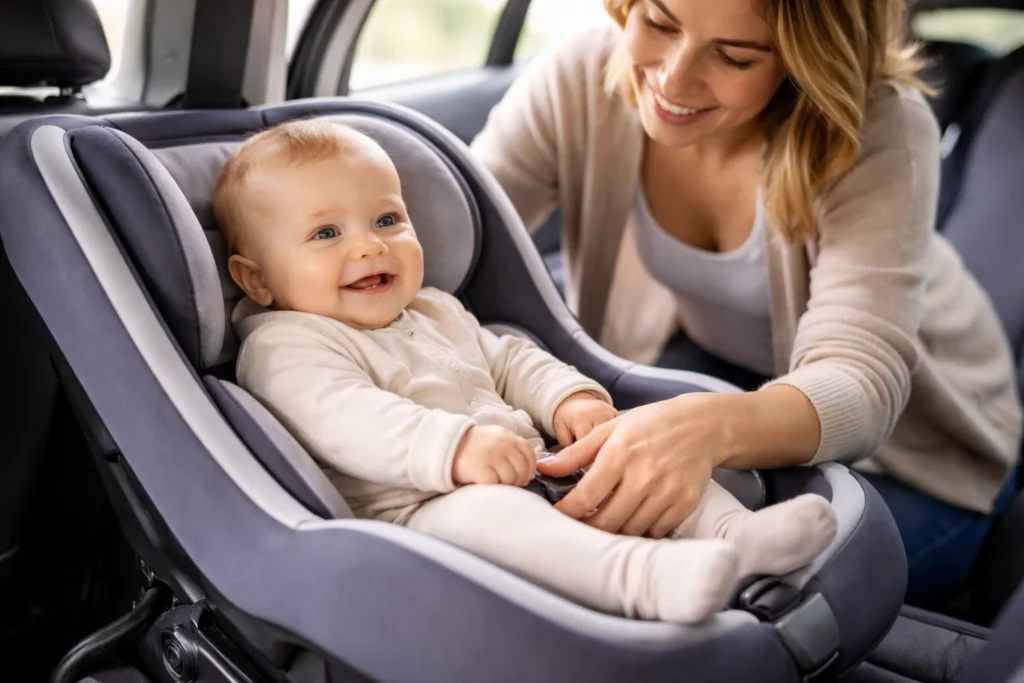
Not all car seats are created equal. But all can support the safest rear facing position for infants in vehicles when used correctly.
1. Infant-Only Car Seats
- Designed for newborns
- Lightweight and portable
- Snap into a base
2. Convertible Car Seats
- Rear-facing and forward-facing
- Higher weight and height limits
3. All-in-One Car Seats
- Rear-facing, forward-facing, and booster
| Seat Type | Pros | Cons |
| Infant Seat | Portable, easy to carry | Outgrown quickly |
| Convertible | Longer use, cost-effective | Not portable |
| All-in-One | Multi-stage convenience | Bulkier |
Correct Installation: The Foundation of Safety
Even the best seat won’t protect your baby if it’s installed loosely.
Installation checklist:
- Seat moves less than 1 inch
- Base is level
- Belts are tight and untwisted
For official safety standards and installation guidance, refer to the National Highway Traffic Safety Administration, which provides detailed child passenger safety recommendations.
Following these ensures you’re achieving the safest rear facing position for infants in vehicles every time.
Ideal Placement Inside the Vehicle
- Always use the back seat
- Center position is ideal when possible
- Side seats are safe if installed correctly
Airbags in the front seat can be dangerous for infants never place a rear-facing seat there.
Proper Recline Angle and Why It Matters
Too upright? Breathing risk.
Too reclined? Reduced crash protection.
Stick to:
- 30–45 degrees
Most seats have built-in indicators use them. This is a critical part of maintaining the safest rear facing position for infants in vehicles.
Harness Positioning and Fit
- Straps at or below shoulders
- Chest clip at armpit level
- Snug fit (use pinch test)
No shortcuts here.
Common Mistakes Parents Make
Avoid these:
- Turning forward too early
- Loose harness straps
- Bulky clothing under straps
- Incorrect recline
Each one weakens the safest rear facing position for infants in vehicles.
How Long Should Infants Stay Rear-Facing?
Keep your child rear-facing as long as possible.
Not just age-based follow:
- Height limits
- Weight limits
Many children can safely stay rear-facing beyond age 2.
Safety Enhancements and Accessories
Stick to:
- Manufacturer-approved items only
Avoid:
- Aftermarket inserts
- Unverified padding
Real-Life Scenarios: What Happens in a Crash
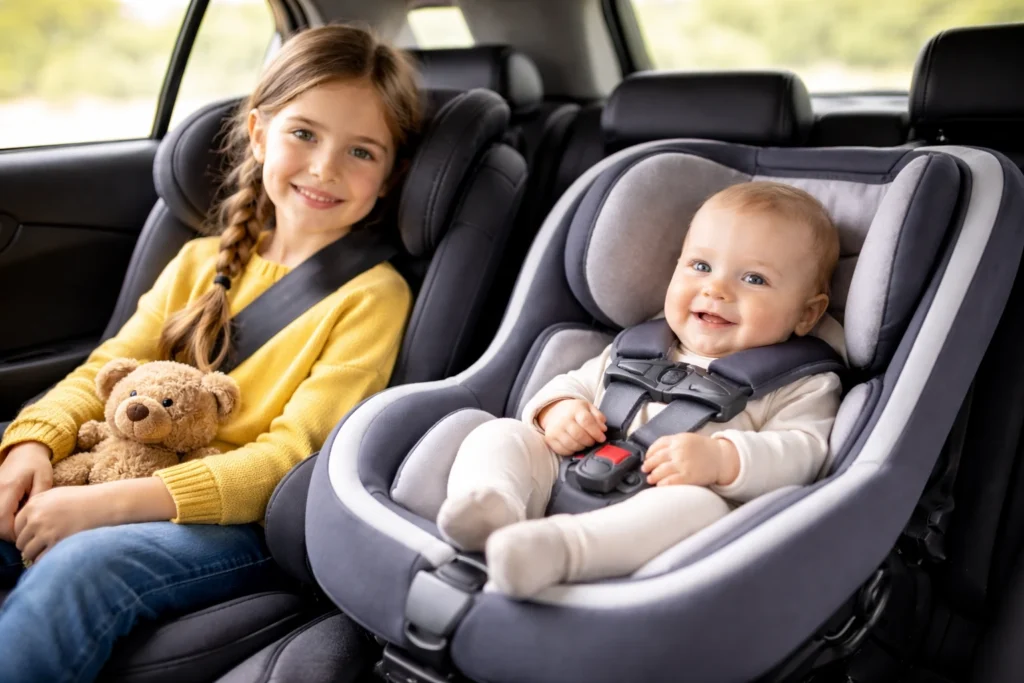
Rear-facing seats absorb impact.
Forward-facing seats allow forward motion.
That’s the difference between protection and risk.
The safest rear facing position for infants in vehicles minimizes injury by design not by chance.
Tips for Everyday Comfort and Safety
- Use thin clothing layers
- Add blankets over straps
- Take breaks on long trips
- Do a quick safety check before driving
When to Replace or Upgrade a Car Seat
Replace if:
- After any crash
- Expired
- Damaged
Expert Recommendations and Why They Matter
Safety guidelines evolve based on real-world data.
Experts continue to reinforce one message:
The safest rear facing position for infants in vehicles saves lives.
Conclusion
The difference between “installed” and “installed correctly” is everything.
The safest rear facing position for infants in vehicles depends on precision:
- Proper angle
- Tight harness
- Secure installation
Take the extra minute. Double-check everything.
Because when it comes to your baby, safety isn’t a guess it’s a decision.
FAQs
Rear-facing seats support the head, neck, and spine by distributing crash forces evenly, reducing injury risk.
It includes a proper recline angle, snug harness fit, and secure installation in the back seat.
Only when your child exceeds the rear-facing height or weight limits set by the car seat manufacturer.
The center seat is often safest, but a properly installed side seat is also secure.
The harness should be snug enough that you cannot pinch any extra strap at the shoulders.
No, bulky clothing can loosen the harness; use thin layers and place blankets over the straps instead.
Most seats require a 30–45 degree angle to keep the baby’s airway open and safe.
Only if the seat has no damage, is not expired, and has never been in an accident.
It should move less than 1 inch side-to-side and be tightly secured using either LATCH or a seat belt.
As long as possible—ideally until they reach the maximum limits of their car seat.

