
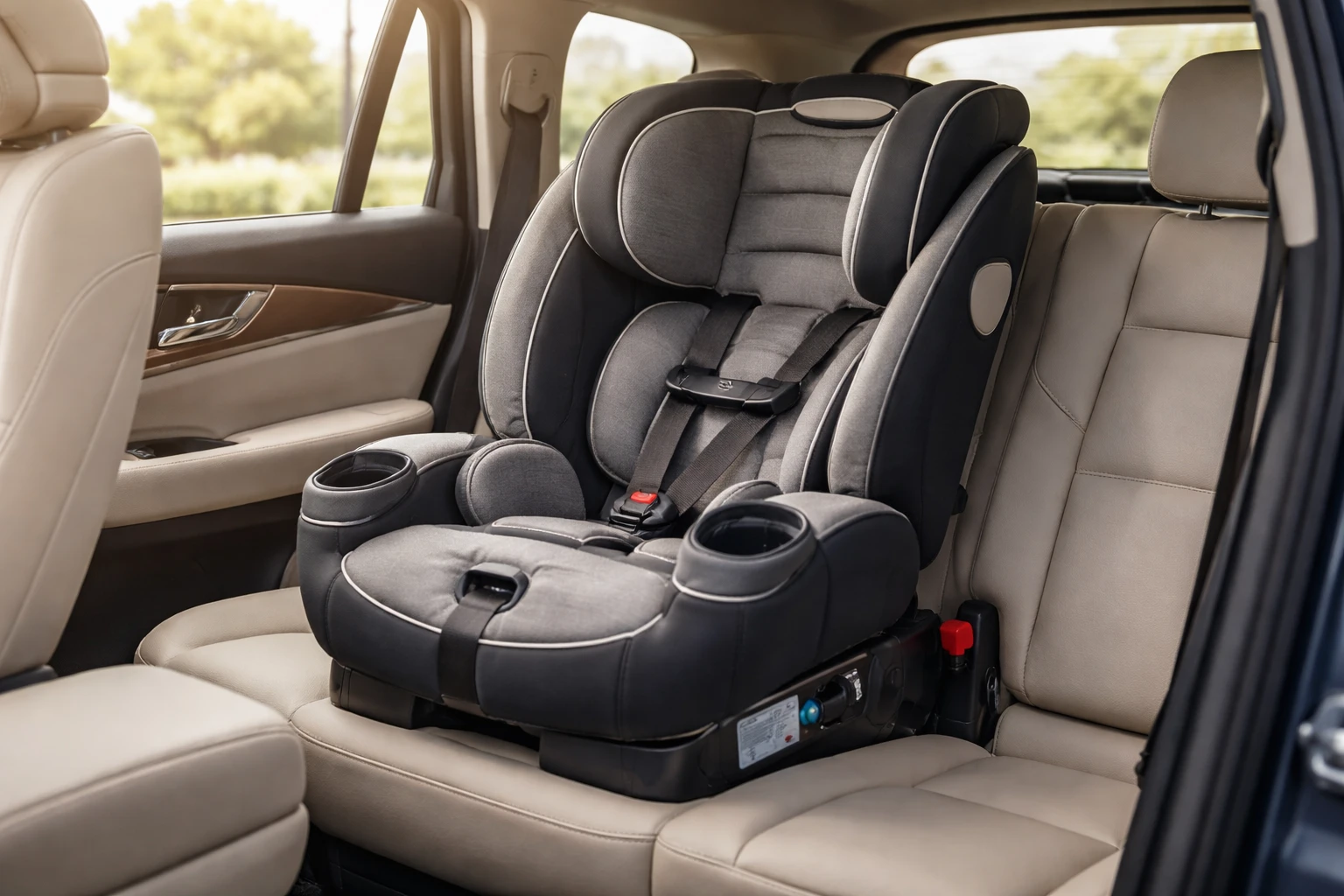

Buying car seats shouldn’t feel like signing up for a subscription service you never asked for. Yet many parents end up purchasing two, three, even four seats as their child grows. That’s why the convertible car seat with booster mode has become such a powerful solution. It promises long-term safety, financial efficiency, and fewer installation headaches all in one seat.
But is it truly the right choice for your family? Let’s break it down carefully. Not just marketing claims. Not surface-level features. Real-world, practical insights you can actually use.
What Is a Convertible Car Seat With Booster Mode?
A convertible car seat with booster mode is a multi-stage car seat designed to grow with your child from infancy through elementary school years. Unlike standard convertible seats that stop at forward-facing harness mode, these models continue transforming into a belt-positioning booster.
Most include three or four stages:
- Rear-Facing Mode – For infants and toddlers.
- Forward-Facing Harness Mode – For preschoolers.
- High-Back Booster Mode – For school-age children.
- (Sometimes) Backless Booster Mode – For older kids who meet size requirements.
In practical terms, this means one seat can potentially serve your child for 8 to 10 years. That’s a long runway.
How the Transition Actually Works
Here’s where many parents get confused. The transformation isn’t magic. It’s mechanical.
Stage 1: Rear-Facing
- Uses a 5-point harness.
- Installed at a reclined angle.
- Designed to distribute crash forces across the child’s back and head.
Rear-facing is the safest position. According to the National Highway Traffic Safety Administration (NHTSA), children should remain rear-facing as long as possible within the limits of their seat.
Crash forces obey the laws of physics, particularly inertia, which explains why rear-facing seats better support the head, neck, and spine during sudden deceleration:
Stage 2: Forward-Facing Harness
- Seat is positioned upright.
- Still uses the 5-point harness.
- Top tether becomes critical for stability.
The harness spreads crash forces across the strongest parts of the body shoulders and hips.
Stage 3: Booster Mode
This is where the convertible car seat with booster mode separates itself from traditional convertible seats.
In booster mode:
- The internal harness is removed or stored.
- The vehicle’s seat belt restrains the child.
- The seat acts as a positioning device to ensure proper belt fit.
The goal is simple: the lap belt lies flat across the upper thighs, and the shoulder belt crosses the center of the chest not the neck. Improper positioning defeats the purpose. Precision matters.
Age, Weight, and Height Guidelines (And Why Maturity Matters)
A common mistake? Transitioning too early.
Here’s a simplified progression:
| Stage | Typical Age | Weight Range | Key Consideration |
| Rear-Facing | Birth–4+ yrs | 5–40+ lbs | Keep rear-facing as long as limits allow |
| Forward-Facing | 2–6 yrs | 22–65 lbs | Harness must fit snugly |
| Booster Mode | 5–12 yrs | 40–120 lbs | Child must sit properly 100% of the time |
Booster readiness is not just about weight. It’s about behavior.
If your child:
- Leans forward,
- Slouches,
- Plays with the seat belt,
- Falls asleep and collapses sideways,
They may not be ready for booster mode yet even if they meet the minimum requirements. This is one reason why the convertible car seat with booster mode can be so valuable. It allows you to extend harness use safely before transitioning.
Safety Features That Actually Matter
Every car seat sold in the United States must comply with Federal Motor Vehicle Safety Standard 213 (FMVSS 213). That’s the baseline. But compliance is just the starting point.
Here’s what to look for:
1. Side Impact Protection
Energy-absorbing foam and deep side wings protect the head and torso during lateral collisions.
2. Steel-Reinforced Frame
Adds structural integrity. Heavier? Yes. Stronger? Absolutely.
3. Anti-Rebound Bar (Rear-Facing)
Reduces seat rotation during a crash.
4. No-Rethread Harness
Adjusts headrest and harness height simultaneously. Saves time. Reduces misuse.
5. LATCH and Seat Belt Flexibility
Understanding LATCH vs seat belt car seat installation is essential. LATCH systems use anchors built into your vehicle, while seat belt installation relies on locking mechanisms in the belt system. Both are safe when used correctly. Most experts recommend whichever method gives you the tightest install. A properly installed seat should not move more than one inch at the belt path.
Not two inches. Not close enough. One inch.
Recline Angles and Head Support: Why Positioning Is Critical
Recline is not about comfort alone. It’s about airway protection. Infants have heavier heads relative to their body size. If the seat angle is too upright, their head can fall forward and restrict airflow. If it’s too reclined, crash forces may not distribute properly.
This is where Car Seat Recline Positions for Proper Head Support become a serious safety consideration. Many convertible models include multiple recline settings designed to adjust as your child grows. Use the built-in level indicators. Follow the manual precisely. Small angle changes can have big safety implications. Head slump is not just inconvenient. It can compromise breathing in younger children.
Pros of a Convertible Car Seat With Booster Mode
Let’s talk real benefits.
Long-Term Cost Savings
Instead of buying:
- Infant seat
- Convertible seat
- Harness-to-booster
- Dedicated booster
You buy once.
Here’s a simplified cost comparison:
| Seat Strategy | Estimated Total Cost (Over 10 Years) |
| Multiple Separate Seats | $600–$1,000+ |
| Convertible Car Seat With Booster Mode | $250–$500 |
Cost per year drops dramatically.
Convenience
- One manual to learn.
- One installation system to master.
- No repeated shopping research.
Consistency builds confidence.
Familiarity for the Child
Children thrive on predictability. Staying in the same seat frame reduces resistance during transitions.
Ideal for Secondary Vehicles
Grandparents. Babysitters. Carpool vehicles. One seat. Full progression.
The Trade-Offs You Shouldn’t Ignore
No product is perfect.
1. Size
Many models are bulky. If you drive a compact vehicle, measuring your backseat space is critical.
2. Weight
Steel-reinforced models are heavy. Not ideal if you switch vehicles frequently.
3. Booster Mode Quality Varies
Some convertible seats excel in harness mode but offer less-than-ideal belt positioning in booster mode. Research real-world belt fit performance. Look at independent testing results.
4. Expiration Dates
Car seats expire. Usually 8–10 years from manufacture date. If you buy early, make sure the seat lifespan aligns with your child’s growth trajectory.
Installation: Where Most Mistakes Happen
Installation is the foundation of safety.
Quick Checklist
- Seat does not move more than 1 inch at belt path.
- Harness straps lie flat.
- Chest clip positioned at armpit level.
- Correct recline angle for stage.
There is no universal “better” method between LATCH and seat belt installation. The safest method is the one that provides the tightest, most stable installation in your vehicle. And remember in booster mode, LATCH (if available) simply stabilizes the seat when unoccupied. The vehicle’s seat belt restrains the child.
Convertible vs Combination vs All-in-One: What’s the Difference?
Clarity matters.
| Type | Rear-Facing | Harness | Booster | Best For |
| Convertible | Yes | Yes | No | Long rear-facing period |
| Combination (Harness-to-Booster) | No | Yes | Yes | Older toddlers |
| Convertible Car Seat With Booster Mode | Yes | Yes | Yes | Birth to booster solution |
If you’re starting with a newborn, the convertible car seat with booster mode offers maximum flexibility.
Cleaning, Maintenance, and Longevity
Kids are messy. Let’s be honest.
Look for:
- Machine-washable covers
- Easy harness removal
- Dishwasher-safe cup holders
Never submerge harness straps in water unless manufacturer instructions explicitly allow it. Water can weaken fibers. After any moderate or severe crash, replace the seat. Register your seat with the manufacturer. Recalls happen.
Who Should Buy a Convertible Car Seat With Booster Mode?
It’s not for everyone.
It’s ideal for:
- First-time parents who want long-term planning.
- Budget-conscious families.
- Parents who prefer simplicity.
- Families with limited storage space.
- Caregivers who don’t want multiple seats.
It may not be ideal for:
- Families who frequently travel by air (heavier models).
- Those who prefer lightweight infant carriers early on.
Know your lifestyle.
Final Thoughts
The right car seat decision isn’t about trends. It’s about trajectory. A convertible car seat with booster mode provides a structured path from infancy to elementary school without constant repurchasing or second-guessing.
Is it perfect? No.
Is it practical? Extremely. If installed correctly, used according to stage guidelines, and transitioned at the right developmental time, it can provide years of reliable protection. And when it comes to child passenger safety, reliability isn’t optional. It’s everything.
FAQs
It’s a multi-stage car seat that transitions from rear-facing to forward-facing harness and eventually to booster mode.
Only when your child meets the height, weight, and maturity requirements and can sit properly without slouching.
Yes, if it fits your baby’s size requirements and is installed at the correct recline angle.
Most models last 8–10 years, depending on the seat’s expiration date and your child’s growth.
Both are safe when used correctly; choose the method that gives the tightest, most secure installation.
Yes, typically after 8–10 years from the manufacture date.
No, booster mode uses the vehicle’s seat belt, and the internal harness must be removed or stored.
Many models are larger and heavier than single-stage seats, so check your vehicle’s space first.
In most moderate or severe crashes, yes always follow manufacturer and NHTSA guidance.
For many families, yes — a quality convertible car seat with booster mode can cover all major growth stages.

