
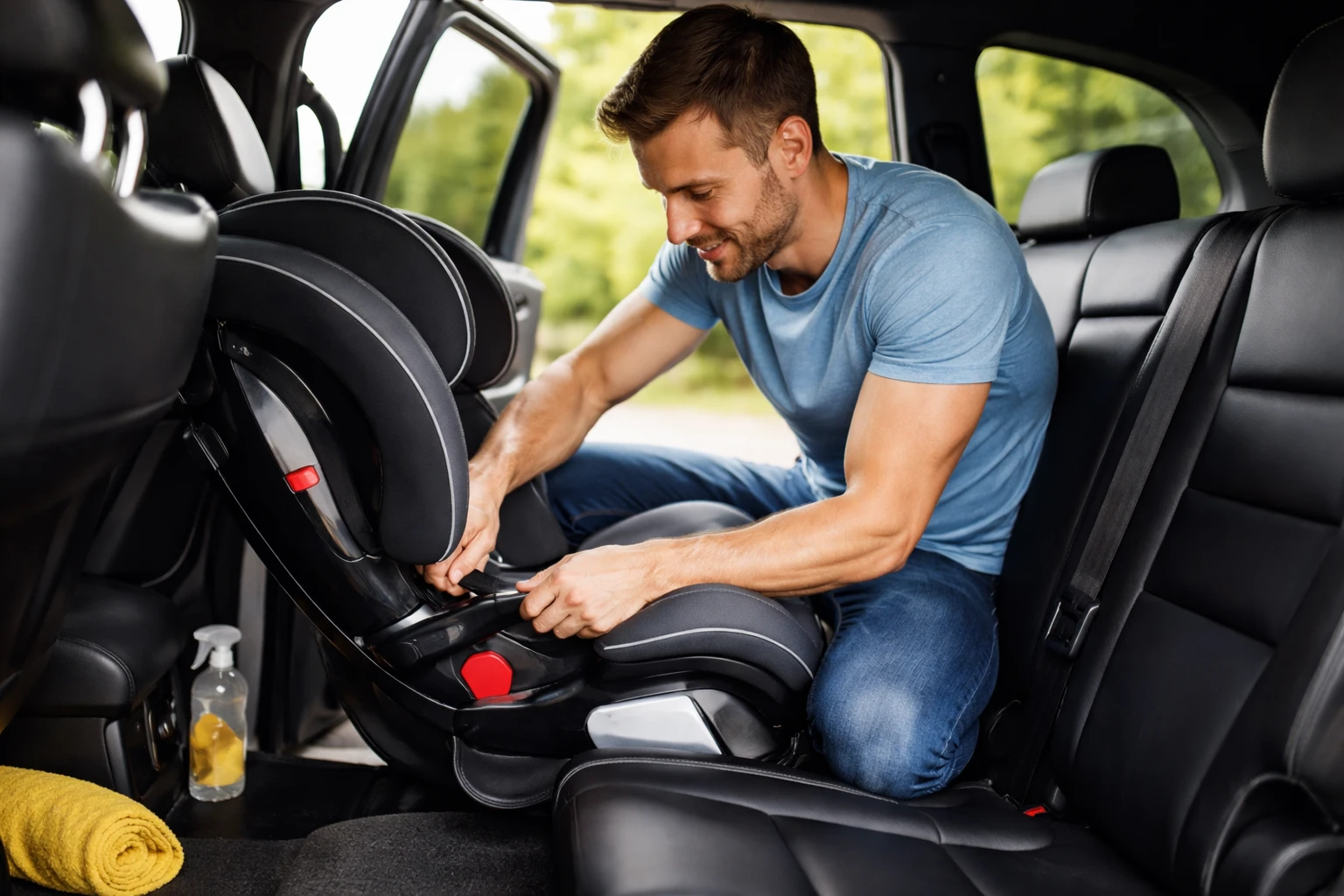

Installing a car seat should not feel like a full-body workout. And yet, for many parents, it does. If you’ve ever climbed out of your vehicle rubbing your lower back and wondering what just happened, you’re not alone. Learning how to reduce back strain when installing car seats is not just about comfort it’s about protecting your body for the long haul. Because here’s the truth. Car seat installation forces you into awkward angles. You bend. You twist. You brace. You pull with intensity. And if you repeat that process across multiple vehicles or growing stages, the strain adds up fast.
Let’s fix that. This guide breaks down exactly how to reduce back strain when installing car seats using proper mechanics, smarter positioning, and small adjustments that make a big difference. No fluff. Just practical strategies you can use today.
Why Car Seat Installation Hurts Your Back
Car interiors were not designed for ergonomics. They were designed for driving.
When you install a car seat, you’re usually:
- Leaning across a door frame
- Bending at the waist instead of the hips
- Pulling straps with force
- Holding tension while checking tightness
- Twisting your spine to reach anchor points
Do that for 10–20 minutes and your back will let you know.
From a biomechanical perspective, you’re placing your lumbar spine into repeated flexion under load — a movement pattern often associated with cumulative tissue stress. (If you’re curious about how load distribution works in the human body, the concept of biomechanics provides deeper context.)
The Most Common Strain Patterns
Lower back compression
Happens when you round forward and pull downward.
Sciatic irritation
Triggered by prolonged leaning and uneven weight distribution.
Neck and shoulder tension
Caused by reaching across the cabin repeatedly.
The good news? Nearly all of this is preventable. Once you understand how to reduce back strain when installing car seats, installation becomes controlled instead of chaotic.
Prepare Your Space Before You Start
Most people rush installation. That’s the first mistake. Preparation reduces effort. Effort reduction reduces strain.
1. Park Strategically
- Choose level ground.
- Open all doors fully.
- Work in daylight if possible.
A sloped driveway forces your body to compensate. That’s unnecessary load on your spine.
2. Adjust the Vehicle First
Before lifting the car seat inside:
- Slide front seats forward.
- Recline seatbacks temporarily.
- Remove bulky floor mats.
This creates more room for your body. More room equals better positioning. Better positioning equals less strain.
3. Use Simple Support Tools
You don’t need fancy equipment. But these help:
- Foam knee pad
- Rolled towel or pool noodle (for leveling rear-facing seats)
- Grippy gloves
- Small step stool for SUVs
Small comfort adjustments dramatically reduce cumulative stress.
Warm Up Your Body — Yes, Really
It takes two minutes. That’s it. If you want to know how to reduce back strain when installing car seats consistently, treat it like a physical task. Because it is.
Quick Pre-Install Routine
- 10 hip hinges (practice bending from hips)
- 5 slow standing hamstring stretches
- 10 shoulder rolls
- Light core brace practice
Your muscles respond better when activated. Cold muscles fatigue faster. Fatigue increases poor posture.
Master Proper Body Mechanics
This is the foundation. If you skip this, everything else is a bandage.
The Hip Hinge
Most people bend by rounding their lower back. Instead:
- Keep chest tall.
- Push hips backward.
- Maintain slight knee bend.
- Keep spine neutral.
Your hips are powerful. Your spine is not meant for repeated load under flexion. When leaning into the vehicle, hinge. Don’t fold.
Build a Wide Base of Support
Never lean on one leg while reaching.
Instead:
- Position feet shoulder-width apart.
- Plant both feet firmly.
- Shift weight evenly.
Stability reduces compensatory twisting.
Maintain a Neutral Spine
Neutral doesn’t mean rigid. It means aligned. If you feel your lower back rounding deeply, reset. Step out. Reposition. Continue. You are allowed to pause.
Engage Your Core Lightly
Think of bracing as preparing for a light punch to the stomach. Not sucking in. Not holding your breath. A subtle brace protects your lumbar spine when pulling straps. These principles are central to understanding how to reduce back strain when installing car seats effectively.
Step-by-Step Installation Without Wrecking Your Back
Let’s break this into manageable phases. Before starting, it’s wise to review official installation guidance from the National Highway Traffic Safety Administration (NHTSA), which outlines proper safety standards for car seat use in the United States.
Step 1: Position First, Tighten Later
Place the car seat correctly before applying force.
- Set recline angle.
- Confirm alignment.
- Thread LATCH or seat belt cleanly.
Repeated repositioning means repeated lifting. Minimize it.
Step 2: Use Body Weight, Not Arm Strength
Here’s a powerful shift. Instead of pulling straps while hovering awkwardly, use your body mass:
- Place forearm across seat.
- Lean in with controlled pressure.
- Pull strap in short bursts.
Your arms assist. Your body weight does the work.
Step 3: Tighten in Short Pulls
Long continuous pulls fatigue your back.
Better approach:
- Pull 2–3 inches.
- Reset posture.
- Pull again.
Alternate hands. Avoid twisting your torso mid-pull.
Step 4: Check Tightness Efficiently
At the belt path, test for movement. The standard guideline: less than 1 inch side-to-side or front-to-back. Don’t repeatedly reef on it. One firm check is enough.
Step 5: Step Out Before Final Adjustments
Need to adjust harness height? Recline angle? Don’t twist inside the vehicle. Exit. Reposition. Re-enter at a better angle. Tiny decisions prevent big soreness later.
LATCH vs Seat Belt: Which Is Easier on Your Back?
One common debate parents face is LATCH vs seat belt car seat installation, and while both methods are safe when used correctly, they feel very different physically during setup.
Here’s a practical comparison:
| Installation Method | Typical Body Position | Strain Risk | When It’s Easier |
| LATCH | Forward lean | Moderate | Smaller vehicles |
| Seat Belt | Twisting risk | Variable | Higher weight limits |
From a purely ergonomic standpoint, neither is universally easier. What matters more is posture, pacing, and positioning. Understanding how to reduce back strain when installing car seats depends less on the attachment system and more on how you use your body while tightening and checking for movement.
Challenging Installation Scenarios
Some situations are simply harder.
Compact Cars
- Kneel sideways instead of leaning forward.
- Install from the opposite side if helpful.
- Use a step stool to change your angle.
Three-Across Installations
- Install the most difficult seat first.
- Take breaks between seats.
- Avoid leaning repeatedly over previously installed seats.
Rear-Facing Seats
Press down near the child’s feet area while tightening to avoid excessive forward leaning.
Convertible Car Seat with Booster Mode
These seats are heavier.
Lift smart:
- Hold close to your body.
- Avoid twisting while carrying.
- Place directly in position before adjusting.
Heavier seats amplify poor mechanics.
Multi-Vehicle Households: Prevent Repetition Fatigue
Switching car seats between vehicles repeatedly increases cumulative load.
To reduce strain:
- Keep a printed installation guide in each vehicle.
- Practice once during daylight, not under time pressure.
- Assign one primary installer if possible.
Repetition is where injuries develop. Being intentional protects you. This is another overlooked element of how to reduce back strain when installing car seats long-term.
If Your Back Already Hurts
Let’s say you pushed too hard. It happens.
Immediate Relief
- Ice for 15–20 minutes if inflammation is present.
- Gentle walking instead of prolonged sitting.
- Light mobility exercises.
Avoid This
- Aggressive stretching immediately.
- Heavy lifting same day.
- Ignoring persistent pain.
If pain radiates down your leg or persists more than a few days, consult a medical professional.
Strengthen to Prevent Future Strain
The most sustainable answer to how to reduce back strain when installing car seats is resilience.
Focus on:
- Core stability (planks, dead bugs)
- Glute strength (bridges, squats)
- Posterior chain training (hip hinges)
Strong hips. Stable core. Protected spine. Even 10 minutes, three times a week, makes a difference.
The Bigger Picture
Car seat safety is non-negotiable. But so is your physical health. When you understand how to reduce back strain when installing car seats, you transform installation from a tense, rushed struggle into a controlled process.
You move with intention.
You use leverage instead of brute force.
You pause instead of pushing through pain.
And your body thanks you. Because the goal isn’t just a tight installation. It’s a tight installation without sacrificing your spine in the process. Take your time. Set your stance. Use your body wisely. You’ve got this!
FAQs
Back pain usually comes from bending at the waist, twisting inside the vehicle, and pulling straps with poor posture.
Use a hip hinge by pushing your hips back and keeping your spine neutral instead of rounding your lower back.
Neither is automatically easier; proper body mechanics matter more than the attachment method.
It should move less than one inch side-to-side or front-to-back at the belt path.
Yes, if done carefully and with balanced posture, using body weight can reduce arm and back strain.
Absolutely short pauses help reset posture and prevent muscle fatigue.
They can reduce daily lifting strain, though installation still requires proper technique.
Core stability, glute strengthening, and hip hinge practice are highly effective.
If pain radiates down your leg, causes numbness, or lasts more than a few days, consult a healthcare professional.
Focus on posture, use your body weight strategically, and avoid twisting under load.

