
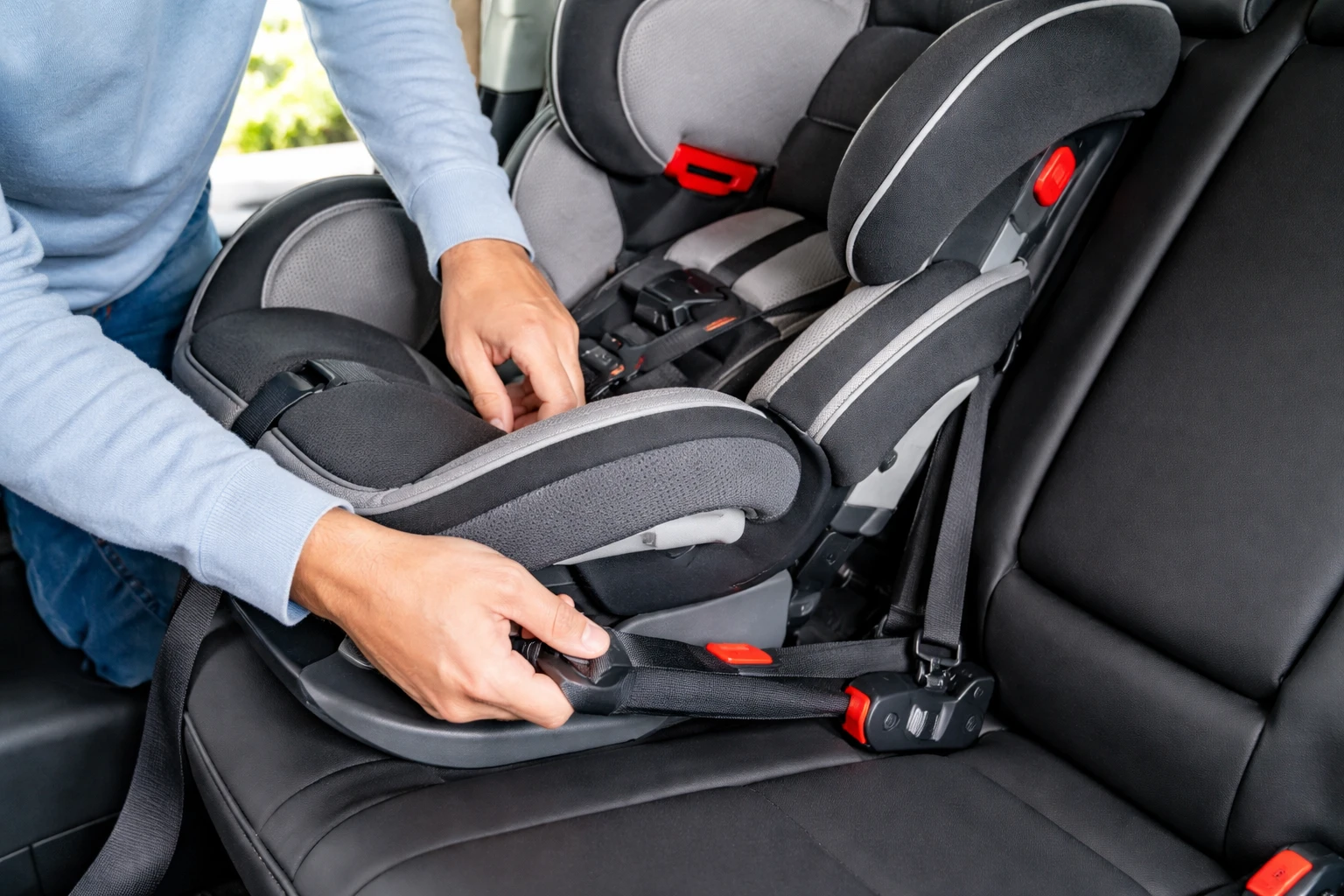
When parents start comparing LATCH vs seat belt car seat installation, they usually assume one method must be safer. It feels like there should be a clear winner. A “best” option. A gold standard. There isn’t.
Here’s the truth: both methods are equally safe when used correctly. The real difference isn’t crash performance. It’s ease, weight limits, flexibility, and how confidently you can install the seat in your specific vehicle. I’ve seen parents spend hours debating systems while the real issue was simple the seat wasn’t tight enough at the belt path. That’s what matters. Tight. Correct. Tethered. Let’s break it down properly.
Why Proper Installation Is Everything
Car seat misuse is common. Not minor mistakes. Major ones. Loose installs. Twisted straps. Incorrect belt paths. A car seat that moves too much during a crash cannot do its job. It won’t manage crash forces the way engineers designed it to.
According to the National Highway Traffic Safety Administration (NHTSA), correct installation dramatically improves protection. You can review federal child passenger safety guidelines directly on the official U.S. government.
That means:
- Less forward movement
- Better head containment
- Reduced injury risk
This is not about brand loyalty. It’s about physics. The debate around LATCH vs seat belt car seat installation only makes sense if you understand how both systems function.
Understanding the Two Installation Methods
There are only two approved primary ways to secure most car seats:
- LATCH (Lower Anchors and Tethers for Children)
- Vehicle seat belt
Both anchor the seat to the vehicle frame. Both are crash-tested. Both are regulated under federal safety standards. They just attach differently. Let’s unpack each one.
What Is the LATCH System?
The LATCH system became mandatory in U.S. vehicles in 2002. The idea was simple: make installation easier and reduce misuse.
The Components
- Lower anchors – small metal bars hidden in the vehicle seat bight
- Lower anchor connectors – attached to the car seat
- Top tether anchor – used for forward-facing seats
The tether matters more than most parents realize. It reduces forward head movement in a crash. That’s significant. If you’re installing forward-facing and skipping the tether, you’re missing a critical safety step.
Pros of LATCH Installation
- No need to understand seat belt locking mechanisms
- Quick to attach in compatible seating positions
- Often easier for beginners
Short. Direct. Click and tighten.
Cons of LATCH Installation
- Weight limits apply
- Only certain seating positions have lower anchors
- Not ideal for three-across installations
This is where the LATCH vs seat belt car seat installation discussion gets practical. Lower anchors have maximum combined weight limits (child + car seat). Once exceeded, you must switch to seat belt installation.
What Is Seat Belt Installation?
Seat belt installation uses your vehicle’s built-in restraint system instead of dedicated anchors. It’s older. But not outdated. Modern vehicles use locking mechanisms that allow the belt to hold a car seat tightly without movement.
How Seat Belt Locking Works
Most vehicles use one of these systems:
- Switchable retractor – pull the belt all the way out to activate locking
- Locking latchplate – holds tension automatically
You must confirm which your vehicle uses. It’s in the owner’s manual. Read it. Seat belt installation isn’t harder. It just requires understanding how your belt locks.
Pros of Seat Belt Installation
- No lower anchor weight limits
- Works in nearly any seating position
- Ideal for tight spacing or three-across setups
- Necessary for booster transitions
Cons
- Steeper learning curve
- Easy to forget to lock the belt
- Can feel intimidating at first
But here’s the key point in the LATCH vs seat belt car seat installation comparison: seat belts are designed to hold adults in crashes at high speeds. They are extremely strong. When locked correctly, they are just as secure.
LATCH vs Seat Belt Car Seat Installation: Direct Comparison
Let’s make this practical.
| Feature | LATCH | Seat Belt |
| Ease for Beginners | Often simpler | Requires understanding locking |
| Weight Limits | Yes | No |
| Seating Flexibility | Limited positions | Almost any position |
| Three-Across Friendly | Rarely | Often better |
| Long-Term Use | May require switching | Usable throughout |
Safety? Equal — when installed properly. The LATCH vs seat belt car seat installation debate isn’t about crash performance. It’s about usability.
Weight Limits: The Silent Dealbreaker
This is where many parents get surprised. Lower anchors have weight limits. They vary by manufacturer, but often fall between 40–65 pounds combined weight (child + seat).
That means:
- A 30-pound child in a 25-pound convertible seat may exceed the limit.
- A heavy all-in-one seat may reach the threshold sooner than expected.
Once exceeded, you must switch to seat belt installation. There is no safety penalty in switching. None. If anything, switching early can simplify things long-term. When evaluating LATCH vs seat belt car seat installation, think ahead. Your toddler won’t stay small.
Beyond Installation: Why Containment Design Matters
Installation keeps the seat anchored. The shell and headrest manage impact energy. This is where features like side impact protection for toddler car seats become relevant. Deep headwings, energy-absorbing foam, and reinforced frames help reduce lateral force exposure during side collisions. But here’s the important distinction: advanced containment features only work properly if the seat is tightly installed.
Loose seat. Reduced performance. That’s why installation method selection still comes back to execution.
Common Mistakes Parents Make
Let’s address the biggest ones.
1. Using Both Systems Together
Unless explicitly allowed by the manufacturer, do not use LATCH and seat belt simultaneously. More isn’t better.
2. Skipping the Top Tether
For forward-facing installs, the tether is critical. Always use it.
3. Not Checking Movement at the Belt Path
This is where you test tightness. Grab the seat at the belt path and push side-to-side and front-to-back. It should move less than one inch.
That’s it.
4. Misunderstanding the Locking Mechanism
If using seat belt installation, confirm it’s locked. Pull. Listen. Let it retract slowly. Confidence comes from practice.
The Science Behind Crash Protection
Car seats are engineered using principles of force distribution, energy absorption, and crash kinematics. A key discipline behind this is biomechanics, which studies how forces affect the human body in motion. If you’re curious about the technical science behind injury prevention, you can explore the concept. Understanding the science reinforces one critical truth: a tightly secured seat limits excessive movement. That control reduces injury risk. The method LATCH or seat belt matters less than correct force management.
Special Scenarios That Change the Decision
Three-Across Installations
Lower anchors are spaced at fixed widths. That limits positioning flexibility. Seat belts allow micro-adjustments. That’s often what makes three seats fit. In tight back seats, the LATCH vs seat belt car seat installation decision usually favors seat belts.
Older Vehicles Without LATCH
Pre-2002 vehicles may not have lower anchors. Seat belt installation is perfectly safe. No compromise.
Travel and Rental Cars
Seat belts are universal. Lower anchor availability can vary internationally. If you travel often, mastering seat belt installation makes you more adaptable.
A Practical Decision Framework
Here’s how I advise parents to decide:
Step 1: Check Weight Limits
If near or over lower anchor limits → use seat belt.
Step 2: Assess Seating Position
If installing center seat without anchors → seat belt.
Step 3: Evaluate Fit
If doing three-across → try seat belt first.
Step 4: Consider Confidence
Which method can you install tightly every single time? That’s your answer.
Final Takeaway
Let’s simplify this.
- Both methods are safe.
- Both methods are tested.
- Both methods protect when used correctly.
The LATCH vs seat belt car seat installation debate only becomes meaningful when you consider your child’s weight, your vehicle layout, and your ability to install the seat tightly.
Safety isn’t about which system you choose. It’s about how well you use it. Install it tightly. Lock it correctly. Use the tether. Then drive with confidence.
FAQs
No. In the LATCH vs seat belt car seat installation debate, both methods are equally safe when installed correctly.
Only if the car seat manufacturer specifically allows it; otherwise, use one method only.
Switch when your child plus the car seat exceeds the lower anchor weight limit listed in the manual.
Yes. The top tether significantly reduces forward head movement and should always be used for forward-facing seats.
After installation, the seat should move less than one inch side-to-side or front-to-back at the belt path.
It can feel more technical at first, but once you understand how to lock the belt, it’s just as straightforward.
Some boosters use LATCH to keep the seat stable when unoccupied, but the seat belt restrains the child.
Seat belt installation usually provides more flexibility for fitting multiple car seats across a back row.
Not always; check your vehicle owner’s manual to confirm anchor locations.
Yes. A Certified Passenger Safety Technician (CPST) can verify correct installation and answer specific safety questions.