
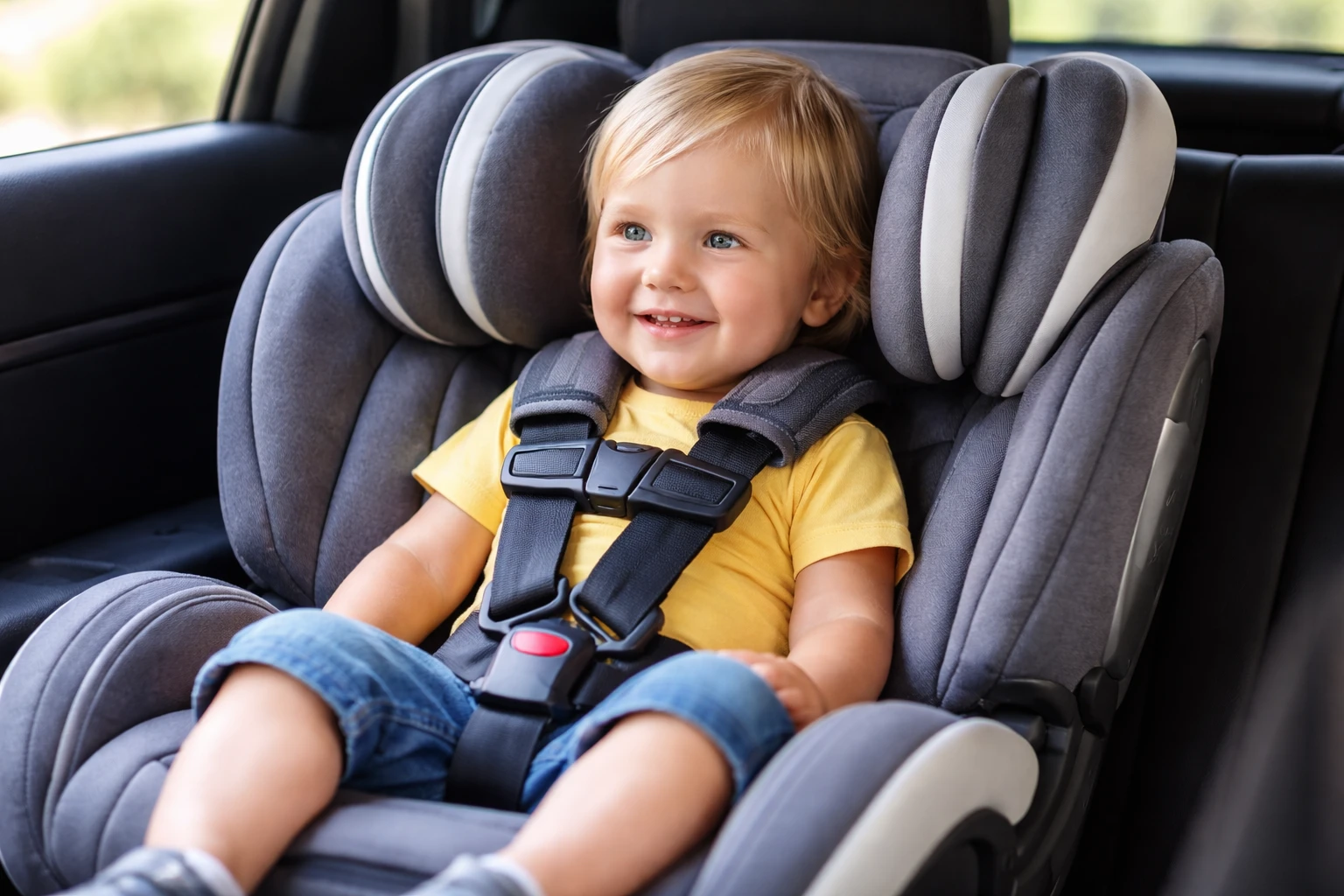

Side-impact crashes are among the most dangerous types of collisions on the road. There’s less space between your child and the point of impact. Less structure to absorb energy. Less time for the body to respond. That’s exactly why side impact protection for toddler car seats deserves your full attention not as a marketing buzzword, but as a critical safety feature that can make a measurable difference.
If you’re a parent, you don’t want fluff. You want clarity. You want to know what actually matters when choosing a seat. You want to understand how protection works, what’s regulated, what isn’t, and how to make a confident decision.
Let’s break it down.
Why Side-Impact Crashes Are Different
Frontal crashes get most of the headlines. But side impacts often called “T-bone” collisions introduce unique risks. And those risks escalate quickly when a toddler is involved.
The Physics of a Side Impact
In a frontal crash, the front of the vehicle absorbs much of the energy. The engine compartment crumples. The hood buckles. There’s space designed to collapse.
On the side of the car? Not much.
A vehicle door is relatively thin compared to the front end. When struck from the side, there’s minimal crumple zone. The force transfers quickly into the passenger compartment. That means the occupant your toddler is much closer to the impact point.
Energy travels laterally. Fast. And the body moves accordingly.
Understanding the biomechanics of crash forces how energy transfers through the human body helps explain why side containment matters so much. If you want a deeper dive into the science of force distribution and injury mechanics, Wikipedia’s overview of Biomechanics provides useful context.
Why Toddlers Are Especially Vulnerable
Toddlers are not small adults.
- Their heads are proportionally larger.
- Their neck muscles are still developing.
- Their spines are flexible and immature.
- Their rib cages are softer.
In a side-impact scenario, the head and torso can move toward the point of intrusion. Without strong containment and energy management, the risk of head and neck injury increases significantly.
That’s where side impact protection for toddler car seats comes in.
What Is Side Impact Protection in Toddler Car Seats?
The term sounds simple. The engineering behind it is not. At its core, side impact protection for toddler car seats is a combination of structural design and energy-absorbing materials that reduce the forces transferred to a child’s head, neck, and torso during a lateral crash.
It’s not just padding. It’s architecture.
Core Components of Effective Side Impact Protection
Here’s what truly matters:
1. Deep Side Walls
High, reinforced sides help contain the head and torso during a crash. The deeper the shell, the more controlled the movement.
2. Energy-Absorbing Foam (EPP or EPS)
These foams compress during impact, dissipating crash energy before it reaches your child.
3. Reinforced Headrests
Adjustable headrests that move with the harness ensure the head stays within a protective zone as your toddler grows.
4. Steel-Reinforced Frames
Some premium seats include internal steel structures. These enhance rigidity and improve crash force distribution.
5. Anti-Rebound Features
Anti-rebound bars or load legs help limit the seat’s rotational movement after impact.
Federal Safety Standards and Testing
Many parents assume there’s a universal safety rating system for side-impact performance.
There isn’t. In the United States, child restraints must comply with Federal Motor Vehicle Safety Standard 213 (FMVSS 213). These standards are overseen by the National Highway Traffic Safety Administration. For official guidance on car seat regulations and child passenger safety recommendations, you can review resources directly from the U.S. Department of Transportation via the NHTSA. Historically, federal testing emphasized frontal crashes. However, updated procedures now include enhanced side-impact testing requirements to better simulate real-world collisions.
Here’s what that means for parents:
- Every seat sold legally meets minimum federal standards.
- Manufacturers may exceed those standards.
- Marketing claims are not standardized across brands.
Minimum compliance is a baseline. It is not a guarantee of identical protection.
Rear-Facing vs. Forward-Facing: Why Position Matters
If there’s one decision that dramatically affects side-impact safety, it’s orientation.
Rear-Facing Is Safer
Rear-facing seats provide a cradle effect. In a side impact, the shell supports the head, neck, and spine as a unit. The forces are distributed across the entire back. With forward-facing seats, the head moves more independently, increasing stress on the neck.
For side impact protection for toddler car seats, rear-facing offers a significant advantage. That’s why safety experts recommend keeping children rear-facing as long as possible within manufacturer limits, especially when evaluating Extended Rear-Facing Car Seat Weight Limits that allow children to remain in this safer position longer.
When Forward-Facing Becomes Necessary
Eventually, toddlers outgrow rear-facing limits.
When transitioning:
- Use the top tether correctly.
- Confirm harness height aligns with shoulders.
- Ensure the seat has reinforced side containment.
Installation precision becomes even more critical at this stage.
Advanced Side Impact Safety Technologies
Some seats incorporate additional structural innovations.
Are they mandatory? No.
Are they beneficial? Often.
Load Legs
A load leg extends from the seat base to the vehicle floor, reducing rotation during a crash. This can minimize head movement and improve overall stability.
Side-Impact Pods
External pods absorb and redirect crash energy before it reaches the shell.
Rigid LATCH Systems
Rigid connectors reduce lateral seat movement compared to flexible straps.
Anti-Rebound Bars
These limit rebound motion after the initial crash pulse important in side impacts where secondary motion can contribute to injury.
How to Evaluate Side Impact Protection When Buying
Now let’s make this practical.
Structural Design Checklist
When evaluating side impact protection for toddler car seats, ask:
- Are the side walls deep and supportive?
- Is energy-absorbing foam present?
- Does the headrest adjust with the harness?
- Is the frame reinforced?
Installation Matters More Than Features
A premium seat installed loosely is not safer.
Follow these guidelines:
- The seat should not move more than 1 inch at the belt path.
- Harness straps should be snug with no slack.
- Chest clip at armpit level.
- No bulky coats under harness straps.
Professional inspections from certified Child Passenger Safety Technicians (CPSTs) can make a significant difference.
Budget vs. Premium Comparison
| Feature | Budget Seat | Premium Seat |
| Energy Foam | Yes | Yes |
| Steel Frame | Sometimes | Often |
| Load Leg | Rare | Common |
| Rigid LATCH | Rare | Common |
Focus on structural integrity first. Add-ons are secondary.
Common Myths About Side Impact Protection
Myth #1: All toddler seats offer equal side protection.
False. Structural differences matter.
Myth #2: More padding equals safer.
Incorrect. Energy management matters more than softness.
Myth #3: Booster seats offer similar protection for toddlers.
Not even close. Toddlers need harness systems for optimal side impact protection.
Real-World Safety Beyond the Seat
Even the best side impact protection for toddler car seats depends on proper use.
- Register your seat for recalls.
- Replace after moderate or severe crashes.
- Avoid second-hand seats without full history.
- Inspect regularly for wear and expiration.
Materials degrade. Harnesses stretch. Safety evolves.
Stay proactive.
The Bottom Line
Side impact protection for toddler car seats is not about branding. It’s about structure, orientation, and installation precision.
Rear-facing positioning.
Deep containment.
Energy-absorbing materials.
Secure installation.
That’s your safety foundation.
When parents ask what truly matters, the answer always returns to fundamentals. A properly installed rear-facing seat with strong structural design will outperform a high-end seat installed incorrectly every single time! You don’t need perfection. You need informed decisions. Because when it comes to protecting a toddler in a side-impact crash, every inch. Every angle. Every component. Matters.
FAQs
It refers to structural features designed to reduce head, neck, and torso injury during a side-impact crash.
All car seats must meet federal safety standards, but specific side-impact design features vary by manufacturer.
Yes. Rear-facing seats provide better head and spine support by distributing crash forces across the shell.
No. While they meet minimum standards, structural design and added safety technologies differ significantly.
They’re not required, but they can help absorb and distribute crash energy in certain seating positions.
Not necessarily. Energy-absorbing materials and structural integrity matter more than soft cushioning.
The center rear seat may offer added protection, but only if the seat can be installed securely.
Yes, especially after a moderate or severe crash, even if no visible damage appears.
It should not move more than one inch side-to-side or front-to-back at the belt path.
As long as possible within the manufacturer’s height and weight limits for maximum safety.

