

This post contains affiliate links. As an Amazon Associate, 360 Car Seat earns from qualifying purchases, at no extra cost to you.
When I talk to parents about 360 car seat safety, the first thing I notice is this: most people are excited about the convenience, but unsure about the safety. And that hesitation makes sense. A rotating car seat feels like a modern upgrade — sleek, smooth, even a little high-tech. But when it comes to your child’s safety, convenience should never come at the cost of protection. The good news? A well-designed 360 car seat can absolutely be safe — if you understand how it works and how to use it correctly.
In this guide, I’ll walk you through what a 360 car seat actually is, how it performs in crash protection, where parents make mistakes, and how to choose one confidently. By the end, you’ll know exactly what to look for — and what to avoid.
What Is a 360 Car Seat?
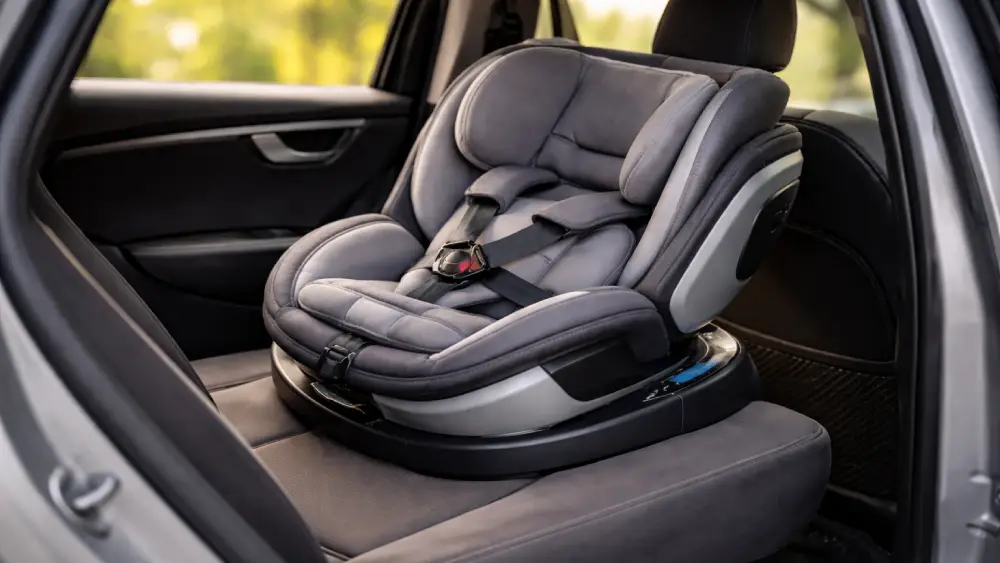
A 360 car seat (sometimes called a rotating car seat or swivel car seat) is a convertible car seat that rotates toward the vehicle door. Instead of bending awkwardly into the back seat, you turn the seat toward you, secure your child, and rotate it back into position.
Most 360 car seats:
- Start in rear-facing mode for infants
- Convert to forward-facing as your child grows
- Lock securely into place before driving
- Stay installed in the vehicle (unlike removable infant carriers)
Here’s how they compare to traditional options:
| Feature | Infant Car Seat | Convertible Car Seat | 360 Car Seat |
| Removable carrier | Yes | No | No |
| Rotates toward door | No | No | Yes |
| Rear-facing only | Yes | No | No |
| Long-term use | Limited | Yes | Yes |
| Installation frequency | Often removed | Installed once | Installed once |
The rotation feature doesn’t change the way the seat protects your child in a crash — at least not when it’s locked properly. That distinction matters.
Are 360 Car Seats Safe?
Let’s address the big question directly: yes, 360 car seats are safe when they meet federal standards and are used correctly.
Federal Safety Standards
In the United States, every car seat — including rotating models — must meet Federal Motor Vehicle Safety Standard 213 (FMVSS 213). That means:
- They undergo crash testing.
- They must stay secured during impact simulations.
- They must protect the child dummy within regulated injury limits.
A 360 car seat cannot be sold legally unless it passes these requirements. So from a regulatory standpoint, 360 car seat safety is not inferior to traditional designs.
What “Meets Standards” Really Means
Here’s the nuance: meeting minimum standards doesn’t automatically mean a seat is equally easy to install or use correctly.
And misuse is common. According to safety research, a large percentage of car seats are installed improperly. So the real safety advantage often comes down to:
- Clear installation systems
- Strong locking mechanisms
- Proper rear-facing duration
- Parent compliance
The swivel feature itself does not reduce crash protection — provided the seat is locked into the rear- or forward-facing position before driving.
Expert Recommendations
The American Academy of Pediatrics recommends keeping children rear-facing as long as possible — ideally until they outgrow the seat’s rear-facing height or weight limits.
This is where 360 car seat safety can actually shine. Because rotation makes loading easier, many parents are more willing to keep their child rear-facing longer. And that’s a big win.
Benefits of 360 Car Seats
I’ll be honest — once you’ve used a rotating seat, it’s hard to go back.
Easier Loading and Unloading
This is the obvious benefit. You rotate the seat toward you. No twisting your spine. No awkward shoulder strain.
This can be especially helpful if:
- You drive a smaller vehicle
- You’ve had a C-section
- You have back pain
- You’re frequently lifting a heavy toddler
Less strain on you means less frustration — and that matters.
Encourages Extended Rear-Facing
Rear-facing is safer because it supports a child’s head, neck, and spine during a crash. Yet some parents switch to forward-facing early because rear-facing feels harder.
With a rotating seat, that barrier disappears. You can comfortably buckle your child while the seat faces you. In my experience, that convenience supports better long-term safety decisions.
One-Time Installation
Most 360 models stay installed in the vehicle. That reduces the risk of frequent reinstallation errors. Once it’s done correctly, you’re set.
When installed properly, 360 car seat safety is just as strong as traditional convertible seats — and sometimes more user-friendly.
Potential Safety Concerns
No product is perfect. Let’s look at where issues can arise.
1. Improper Installation
Even the safest seat can fail if it’s installed incorrectly.
There are two common installation methods:
- LATCH system
- Seat belt installation
Some parents switch between the two improperly or exceed LATCH weight limits. Always check both the car seat manual and your vehicle manual.
2. Failing to Lock the Seat
This is specific to rotating models. If the seat isn’t fully locked into rear- or forward-facing mode before driving, it may not perform as designed.
Most models have indicators showing when the seat is locked. Use them. Don’t guess.
3. Weight and Size Limits
Every seat has:
- Rear-facing weight limits
- Forward-facing weight limits
- Maximum harness height
Outgrowing the seat prematurely can compromise safety. Check your child’s measurements regularly.
4. Price Confusion
A higher price does not automatically mean better 360 car seat safety. Sometimes you’re paying for premium fabrics or brand recognition. Focus on safety features first.
Rear-Facing and 360 Car Seat Safety
If you remember only one thing from this article, let it be this: rear-facing is significantly safer for young children.
In a frontal crash — the most common type — rear-facing seats cradle the entire body. Forward-facing seats rely more heavily on harness restraint.
A rotating design makes extended rear-facing easier because:
- You can buckle without leaning deep into the car
- You can check harness tightness more easily
- You’re less tempted to switch early
Some myths I hear often:
- “My child’s legs are bent, so it’s unsafe.”
Bent legs are not dangerous. Spinal protection matters more. - “They’ll be uncomfortable.”
Children adapt quickly.
When used properly, 360 car seat safety supports best-practice rear-facing recommendations beautifully.
How to Choose a Safe 360 Car Seat
Here’s where you get practical.
Step 1: Check Crash Test Reputation and Recalls
Look for:
- A clean recall history
- Transparent safety testing information
- Reputable manufacturer track record
Register your seat immediately after purchase.
Step 2: Verify Vehicle Compatibility
Not every 360 seat fits every car. Check:
- Manufacturer fit guides
- Online compatibility tools
- In-store test fitting (if possible)
A poorly fitting seat compromises safety.
Step 3: Prioritize These Safety Features
| Feature | Why It Matters |
| Side-impact protection | Protects head and torso |
| Anti-rebound bar | Reduces backward movement in crash |
| Steel-reinforced frame | Increases structural strength |
| Clear lock indicators | Prevents rotation misuse |
| No-rethread harness | Reduces adjustment errors |
These features strengthen overall 360 car seat safety and reduce common misuse.
Installation and Safe Use Tips
Here’s what I always recommend to parents:
- Read both manuals fully — yes, all of it!
- Tighten the seat so it moves less than one inch at the belt path
- Position chest clip at armpit level
- Remove bulky coats before buckling
- Check harness tightness every ride
- Schedule a free inspection with a certified Child Passenger Safety Technician (CPST)
You can usually find a CPST through local fire departments or hospitals.
Also remember:
- Replace the seat after expiration
- Replace after moderate or severe crashes (follow manufacturer guidance)
- Never buy used unless you know the full history
These small actions dramatically improve real-world 360 car seat safety.
Final Thoughts
Here’s my honest perspective: 360 car seat safety is not about the swivel. It’s about proper installation, extended rear-facing, and correct daily use.
The rotation feature is a tool. When used responsibly, it makes life easier without sacrificing protection. And when parenting feels easier, consistency improves. That consistency — buckling correctly every single ride — is what truly protects your child.
If you’re considering a rotating model, focus on fit, safety features, and correct installation. Register it. Get it checked. Keep your child rear-facing as long as possible.
Convenience and safety can absolutely coexist. And when they do, everyone wins.
Frequently Asked Questions
Yes, as long as they meet federal standards and are properly installed and locked before driving.
No, the swivel does not affect protection if the seat is fully locked into rear- or forward-facing position.
Experts approve any seat that meets safety standards and is used rear-facing as long as possible.
Many models support newborns, but always check the minimum weight and height requirements first.
Keep your child rear-facing until they reach the seat’s maximum rear-facing limits.
Not necessarily, but careful installation is essential to maintain proper 360 car seat safety.
Most rotating car seats are not FAA-approved due to their size and design.
Most models have visual or audible indicators that confirm the seat is securely locked in place.
Yes, all car seats have expiration dates, typically between 6–10 years from manufacture.
Higher cost doesn’t guarantee better 360 car seat safety — focus on proper fit and safety features instead.

