

This post contains affiliate links. As an Amazon Associate, 360 Car Seat earns from qualifying purchases, at no extra cost to you.
Choosing a rotating car seat feels like a smart move. It’s practical. It saves your back. It makes daily life easier. But before you click “buy,” you need to understand one critical factor: the Joie 360 car seat weight limit. That number determines how long your child can safely use the seat—and when it’s time to move on.
I’ve seen too many parents focus on convenience and overlook the limits. Weight limits aren’t marketing details. They are safety boundaries tested under crash conditions. Go over them, and you’re outside the design protection of the seat. That’s not a gray area.
This guide breaks down the Joie 360 car seat weight limit clearly, model by model, mode by mode, with practical steps you can use today.
Overview of the Joie 360 Car Seat
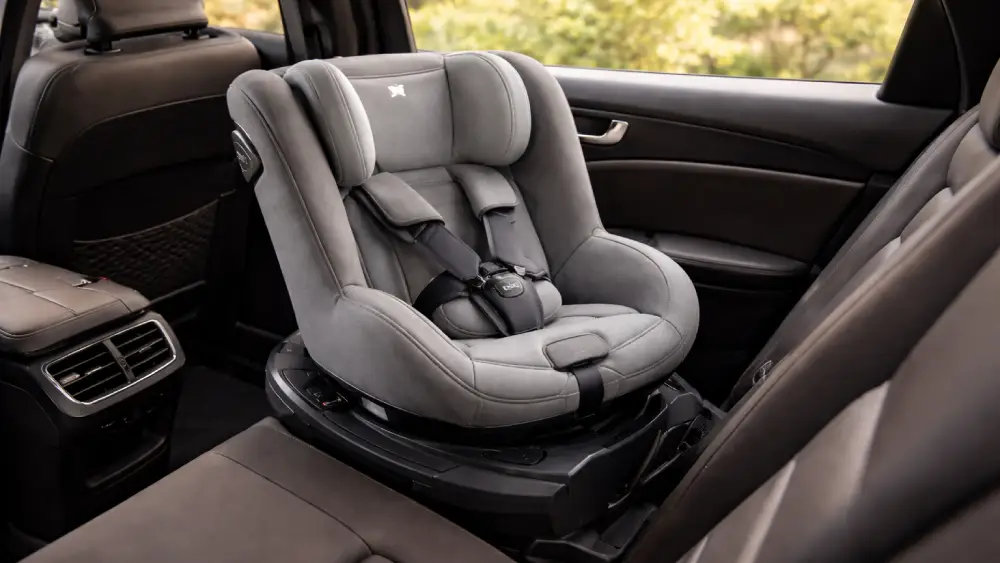
The Joie 360 line—most commonly the Joie Spin 360 and Joie i-Spin 360—is built around one defining feature: full rotation. The seat swivels toward the car door, making it easier to place and secure your child. Then it locks into rear- or forward-facing position.
Parents love it. For good reason.
Core features typically include:
- 360-degree rotation
- Rear- and forward-facing capability
- ISOFIX installation system
- Side-impact protection
- Adjustable headrest and harness system
The rotation is the headline. But the limits matter more.
Because while these seats grow with your child, they don’t grow indefinitely. Each model has specific weight and height caps. And understanding the Joie 360 car seat weight limit ensures you don’t outgrow the seat before you realize it.
Joie 360 Car Seat Weight Limit Explained
Let’s get straight to it.
The Joie 360 car seat weight limit depends on the model and whether you’re using it rear-facing or forward-facing.
Rear-Facing Weight Limit
For the Joie Spin 360 (R44 model):
- Rear-facing: Birth to 18 kg (40 lbs approx.)
For the Joie i-Spin 360 (R129 i-Size model):
- Rear-facing: Birth to 105 cm (height-based), typically up to 18–19 kg depending on child build
Rear-facing is the safest position. Period.
Crash forces are distributed across the entire back of the seat. The child’s head, neck, and spine stay supported. That’s why most safety experts recommend keeping children rear-facing as long as possible—ideally until at least age 4 if the seat allows it.
If your model allows rear-facing up to 18 kg, use it. Don’t rush forward-facing just because your child’s legs bend. Bent legs are not unsafe. Forward-facing too early can be.
Forward-Facing Weight Limit
For the Spin 360:
- Forward-facing: 9 kg to 18 kg (20–40 lbs approx.)
For the i-Spin 360:
- Forward-facing: 76 cm to 105 cm (with weight generally capped around 18–19 kg)
Important: Even if forward-facing is allowed at 9 kg, that does not mean it’s optimal. Legal and safe are not always the same.
Here’s a simplified comparison:
| Model | Rear-Facing Limit | Forward-Facing Limit | Regulation Type |
| Spin 360 | Birth–18 kg | 9–18 kg | R44 (Weight-based) |
| i-Spin 360 | Birth–105 cm (~18 kg) | 76–105 cm | R129 (Height-based) |
Understanding this distinction is essential when reviewing the Joie 360 car seat weight limit.
Minimum Weight Requirements
Most Joie 360 models are suitable from birth. However, newborn fit depends on:
- Proper insert placement
- Harness positioned at or below shoulder level
- Infant meeting minimum height (often around 40 cm)
If your baby is under 2.5 kg, double-check the manual. Some models specify a minimum birth weight.
Action step: Weigh your newborn before hospital discharge and confirm compatibility with your specific Joie model.
Small detail. Big impact.
Height Limits vs. Weight Limits
Weight matters. Height matters just as much.
The older R44 regulation uses weight categories. The newer R129 (i-Size) system uses height as the primary measurement. That’s why the Joie 360 car seat weight limit is sometimes paired with height restrictions.
A child may hit 105 cm before reaching 18 kg. When that happens, the seat is outgrown—even if weight appears acceptable.
Signs your child has outgrown the seat:
- Head is within 2–3 cm of the top shell
- Harness cannot be adjusted to proper shoulder level
- Height exceeds maximum listed in manual
- Weight exceeds stated maximum
Do not rely on guesswork.
Action step: Measure your child’s height every three months. Keep a simple record in your phone notes. Compare against manufacturer limits.
Precision beats assumption.
Spin 360 vs. i-Spin 360: What Changes?
This is where many parents get confused.
The Spin 360 follows the older R44 standard. It classifies seats primarily by weight. That’s why you’ll see the 9–18 kg forward-facing window.
The i-Spin 360 follows R129 (i-Size). This standard:
- Uses height instead of weight as primary measurement
- Requires improved side-impact testing
- Mandates rear-facing until at least 15 months
That last point matters.
If you’re evaluating the Joie 360 car seat weight limit across models, understand this:
- Spin 360 gives more flexibility on paper.
- i-Spin 360 enforces longer rear-facing by regulation.
If extended rear-facing is your goal, the i-Spin often aligns better with best-practice safety advice.
Why the Weight Limit Truly Matters
Let’s talk physics.
Car seats are crash-tested at specific weight ranges. The harness strength, shell integrity, and ISOFIX load limits are engineered for those boundaries. Exceed them, and you introduce unknown performance in a collision.
It’s not just about the harness snapping. It’s about how forces transfer through the structure.
Exceeding the Joie 360 car seat weight limit can:
- Compromise structural integrity
- Void warranty
- Create insurance complications
- Reduce crash protection performance
That’s not theoretical. It’s mechanical.
Action step: Set a calendar reminder when your child hits 16 kg. That gives you time to plan before reaching the 18 kg upper threshold.
Plan early. Transition calmly.
How to Check Your Child’s Fit Today
Here’s a practical checklist you can run in under five minutes:
- Weigh your child (without heavy clothing).
- Measure height against a wall.
- Adjust headrest so harness aligns correctly:
- Rear-facing: straps at or slightly below shoulders
- Forward-facing: straps at or slightly above shoulders
- Confirm harness passes the pinch test (no slack at collarbone).
- Verify ISOFIX indicators show green.
Do this quarterly. Children grow faster than we think.
And yes—winter clothing matters. Heavy coats can create false tightness. Remove bulky jackets before securing the harness.
When to Transition to the Next Car Seat
Eventually, every child outgrows the Joie 360 car seat weight limit.
When that happens, transition to:
- High-back booster (15–36 kg range typical)
- Seatbelt-installed configuration
But don’t rush it.
The next seat should match your child’s maturity level. Booster seats require proper sitting behavior. If your child leans forward or slouches, they may not be ready—even if weight qualifies.
Action step: Evaluate both physical size and behavioral readiness before switching.
Safety isn’t just numbers. It’s behavior, too.
Final Thoughts
The Joie 360 car seat weight limit isn’t a small technical detail buried in a manual. It’s the boundary that defines how long the seat protects your child as designed.
Rear-facing typically up to 18 kg. Forward-facing up to 18 kg. Height caps for i-Spin models at 105 cm. Those are the key thresholds.
Track them. Respect them. Plan ahead.
A rotating seat makes daily life easier. But informed decisions make it safer.
And that’s what truly matters.
Frequently Asked Questions
Most Joie Spin 360 models support up to 18 kg, while i-Spin versions are height-based up to 105 cm (around 18–19 kg).
When your child reaches 18 kg or exceeds the maximum height listed in your specific model’s manual.
No. Even 0.5 kg over the limit means the seat is officially outgrown.
No. Spin 360 uses weight-based limits, while i-Spin 360 follows height-based R129 standards.
Clothing doesn’t change the limit, but bulky coats can make the harness unsafe.
Yes, if they remain within the Joie 360 car seat weight limit and height limits.
You’ll need to transition to the next stage seat that supports higher weights.
Every three months is a practical schedule to ensure you stay within limits.
Yes, most models are approved from birth with proper infant inserts installed.
Check the approval label on the seat shell or review your manufacturer’s manual.

