

This post contains affiliate links. As an Amazon Associate, 360 Car Seat earns from qualifying purchases, at no extra cost to you.
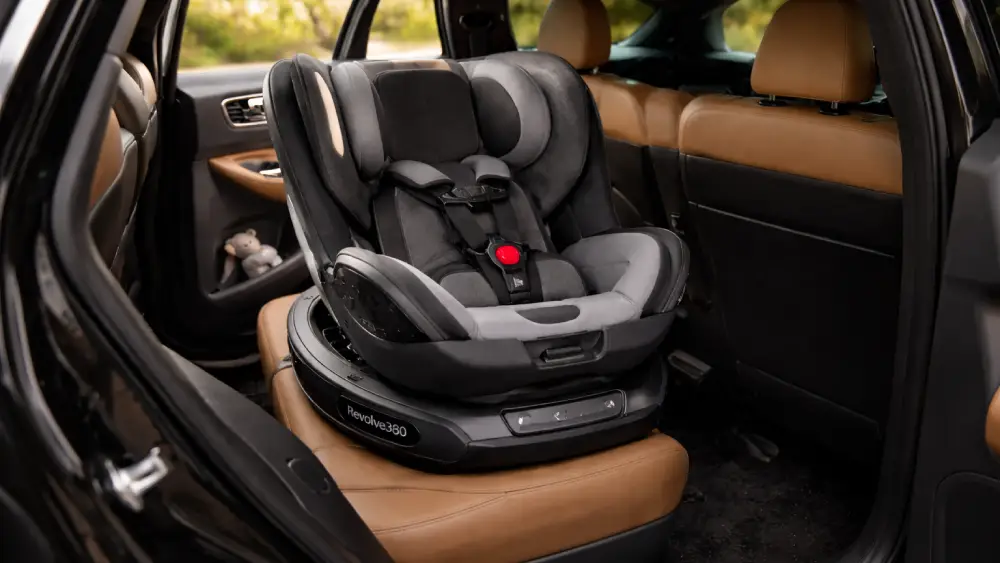
If you’ve ever tried to buckle a squirmy toddler while leaning awkwardly into a car, you already know why rotating seats have become so popular. The Evenflo 360 is built for that exact moment. And once you learn how to rotate the Evenflo 360 car seat, the whole process gets faster, cleaner, and far less stressful.
I’m going to walk you through the rotation system in a clear, practical way. No fluff. No vague “just twist it” advice. You’ll learn how the rotation works, how to do it safely every time, and what to check when the seat suddenly feels stiff or refuses to click back into place.
What “Evenflo 360” Really Means (And Why It Rotates)
When people say “Evenflo 360,” they’re usually talking about one of these models:
- Evenflo Revolve360
- Evenflo Revolve360 Extend
- Evenflo Revolve360 Slim
The key feature is the same across the lineup: the base stays installed in the vehicle, while the seat itself rotates on top of the base. That’s the magic.
Rotation is not just a convenience feature. It’s also a consistent feature. When you can position the seat toward the door, you’re more likely to buckle correctly, tighten the harness properly, and avoid the rushed “good enough” strap tension that happens when your back is screaming.
It’s worth saying clearly: rotating is for loading and unloading. Driving happens only when the seat is locked into its rear-facing or forward-facing position.
Before You Rotate: Safety Rules That Matter
Before we get into the steps, I want to highlight the safety rules I personally treat as non-negotiable. These are the habits that keep the rotation feature helpful instead of risky.
Here’s what I always keep in mind:
- Only rotate when the car is parked.
- Never drive with the seat turned sideways.
- Always listen and feel for the lock “click.”
- If it doesn’t rotate smoothly, stop and check what’s blocking it.
- Don’t force rotation using brute strength.
The reason these rules matter is simple. Rotation seats have two jobs: rotate for loading, and lock firmly for travel. If the lock isn’t engaged, the seat isn’t in its safe travel mode.
When you’re learning how to rotate the Evenflo 360 car seat, the most important skill isn’t rotating. It’s verifying the lock every time.
Understanding the Evenflo 360 Rotation System
Evenflo did a smart thing with this design. The system is intuitive once you understand what you’re interacting with.
The Rotation Mechanism (What’s Actually Moving)
Think of the base as a platform. It stays fixed in the car using either:
- the LATCH system, or
- the vehicle seatbelt
The seat itself rotates on a track or pivot point above the base. That’s why you can rotate without reinstalling anything.
The Locking Positions
The Evenflo 360 is designed to lock into specific positions:
- A side-facing loading position
- A rear-facing locked position (driving)
- A forward-facing locked position (driving)
In most day-to-day situations, you’ll rotate to the side to load, then rotate back to rear-facing and lock.
The Rotation Release Control
Depending on your model, the rotation control is typically located near the front of the seat or base area. It may be a handle, lever, or release mechanism you press or pull.
Here’s the “feel” you’re looking for:
- You activate the release.
- The seat rotates smoothly.
- The seat clicks into place at the next lock point.
That click matters. I treat it like a seatbelt click. No click, no go.
Step-by-Step: How to Rotate the Evenflo 360 Car Seat
Now we’re in the core tutorial. This is the exact process I recommend if you want a consistent routine that doesn’t fall apart when you’re tired, rushed, or parked in a tight space.
Step 1: Park the Car and Stabilize Your Setup
Put the car in park. Turn off the engine if you want to be extra cautious. Open the door wide so you have room to rotate without bumping the seat against the door frame.
Rotation is easiest when the car is on level ground. It still works on slight slopes, but the seat can feel heavier.
Step 2: Clear the “Rotation Zone”
This step is boring. It’s also one of the biggest reasons rotation fails.
Before you rotate, quickly check for:
- toys wedged near the base
- blankets tucked into the pivot area
- straps dangling into the rotation track
- snack crumbs built up near the bottom
If the seat is fighting you, something is usually caught where it shouldn’t be.
Step 3: Locate the Rotation Handle/Release
If you’re new to the seat, take 10 seconds to physically find the release and test it without your child inside.
I like to do this once or twice when the seat is empty because you learn how much pressure it needs. Some models feel stiff at first. That’s normal.
Step 4: Activate the Rotation Release
Press or pull the release firmly.
Don’t jab at it. Don’t half-press it. Give it a confident motion, then hold it long enough to begin the rotation.
A lot of “my seat won’t rotate” complaints come from releasing too early.
Step 5: Rotate the Seat Toward the Door
Now rotate the seat slowly toward you. Keep one hand guiding the seat while the other controls the release if needed.
The goal is not speed. The goal is alignment.
When you reach the side-facing position, you should feel the seat settle into place. You may also hear a click.
At this point, you’ve successfully completed the first half of how to rotate the Evenflo 360 car seat.
Step 6: Load Your Child and Buckle Correctly
This is where rotation pays off.
With the seat facing you, you can do the important stuff without twisting your spine:
- sit your child all the way back (hips back, shoulders back)
- position the harness straps flat
- buckle the crotch buckle
- buckle the chest clip
- tighten the harness until snug
Here’s the quick harness test I use:
If you can pinch excess webbing at the shoulder, it’s too loose.
Also, try to avoid bulky coats. Thick layers create slack. Slack is not your friend.
Step 7: Rotate the Seat Back Into Driving Position
Once your child is buckled, rotate the seat back toward the rear-facing or forward-facing position (depending on your child’s age, height, and the seat’s limits).
This is where parents sometimes make a critical mistake. They rotate it “close enough” and assume it’s locked.
Don’t do that.
Rotate until you feel the seat fully align. Then keep rotating until it clicks into its locked position.
Step 8: Confirm the Seat Is Locked (Do Not Skip This)
This step takes two seconds.
I do it every single time.
Use a quick check:
- try to rotate the seat without pressing the release
- it should not move freely
- it should feel firmly engaged
If it rotates without resistance, it is not locked.
That’s the full process of how to rotate the Evenflo 360 car seat, and once you’ve done it a few times, it becomes automatic.
Rear-Facing vs Forward-Facing Rotation: What Changes?
The rotation steps stay mostly the same. The “driving lock position” is what changes.
Rear-Facing Rotation (Most Common)
Rear-facing is typically used for infants and younger toddlers. It’s also the mode most parents use rotation for daily.
Rear-facing rotation tends to feel smoother because the seat naturally aligns with the rear-facing lock point.
Forward-Facing Rotation (Common With Older Toddlers)
Forward-facing still allows rotation for loading, but you must be more intentional when locking it back into forward-facing mode.
The most common mistake I see is:
- parent rotates to load
- parent rotates back
- seat ends up slightly off-center
- lock doesn’t fully engage
If you’re ever unsure, rotate back again and deliberately click it into place.
Common Problems (And What to Do About Them)
Even if you understand how to rotate the Evenflo 360 car seat, real life can still throw you curveballs. Here are the most common issues and the most realistic fixes.
Problem 1: “It Won’t Rotate at All”
This is usually one of three things:
- The seat is locked and you’re not pressing the release fully.
- Something is physically blocking the rotation track.
- The seat is slightly misaligned and needs a tiny reposition.
What I do:
- press and hold the release
- apply gentle rotation pressure
- stop if it feels jammed
- check for fabric, straps, or debris
If it still won’t rotate, remove your child and try again with the seat empty. You’ll have more control and can troubleshoot safely.
Problem 2: “It Rotates, But It Won’t Click Back Into Place”
This one is frustrating.
Most of the time, the seat is not centered over the lock point. It’s close, but not exact.
Try this:
- rotate slightly past the lock point, then back
- rotate slowly rather than quickly
- make sure the harness straps aren’t caught near the base
Also check the angle. If the seat is installed too upright or too reclined, it can affect alignment.
Problem 3: “It Feels Stiff and Hard to Rotate”
New seats often feel stiff.
That doesn’t mean something is wrong. It usually means the mechanism hasn’t been used enough to “break in.”
What I recommend:
- rotate it a few times when the seat is empty
- keep the base area clean
- avoid storing items near the seat that can rub the mechanism
What I do not recommend: lubricating it with oil or sprays unless Evenflo specifically approves it in the manual.
Problem 4: “It Feels Loose or Too Easy to Rotate”
This is the opposite problem, and it’s more concerning.
If the seat rotates too freely or doesn’t seem to lock with a firm stop, you should:
- re-check that it’s installed correctly
- confirm the lock engages in both rear-facing and forward-facing
- stop using the seat if the lock won’t hold
Rotation should be smooth, but not sloppy.
Best Practices for Smooth, Easy Rotation
Once you’ve mastered how to rotate the Evenflo 360 car seat, the next goal is consistency. The best rotation routines are the ones you can do half-awake on a rainy morning.
Here are the habits I suggest:
- Rotate slowly. Speed causes misalignment.
- Keep straps from dangling near the base.
- Don’t let kids store toys under the seat area.
- Make rotation part of a predictable sequence.
A simple routine helps:
Rotate → Buckle → Tighten → Rotate back → Lock check
It’s boring. It’s also incredibly effective.
Safety Checks After Rotating (Quick Checklist)
I don’t love long checklists. They can make safety feel complicated. But I do like one fast, repeatable verification step.
Here’s the minimal checklist I recommend:
| Check | What You’re Confirming |
| Direction | Rear-facing or forward-facing is correct |
| Lock | Seat is clicked into travel position |
| Harness | Snug and flat, no twists |
| Chest Clip | At armpit level |
| Child Position | Hips and shoulders back against the seat |
| Base Movement | Base doesn’t shift more than 1 inch at belt path |
This is the part of how to rotate the Evenflo 360 car seat that protects you from the most common mistakes.
When to Stop and Get Help
I’m all for DIY. I’m also realistic.
Stop troubleshooting and get help if:
- the seat will not lock into travel mode
- the rotation mechanism makes grinding or popping sounds
- you see cracks, damage, or broken plastic
- the base installation feels unstable
- the seat rotates without the release engaged
If you need support, the most reliable options are:
- Evenflo customer support
- the official manual for your exact model
- a CPST (Certified Passenger Safety Technician)
There’s no shame in asking. A car seat is not the place to “wing it.”
Final Thoughts
Learning how to rotate the Evenflo 360 car seat is one of those parenting upgrades that pays off daily. It reduces back strain. It also helps you buckle more carefully, which is the part that really matters.
Rotate for loading. Lock for travel. Check the click.
If you build that routine, you’ll feel confident every time you close the car door and pull away. And honestly? That peace of mind is worth everything!
Frequently Asked Questions
No. Rotation should only happen when the vehicle is parked and stable.
Usually something is blocking the rotation track, or the release isn’t being pressed fully.
No, but rotating makes buckling easier and often leads to a better harness fit.
Yes. The loading position is still used, but the travel lock position changes.
The click typically indicates the seat has locked into a secure position.
Yes. Many seats loosen slightly with repeated use.
Absolutely. Small objects can interfere with the rotation track.
Try rotating it without pressing the release. If it won’t move, it’s likely locked.
Sometimes, using two hands is safer and helps prevent misalignment.
When installed correctly and locked in travel mode, it’s designed to meet safety standards like traditional seats.

