
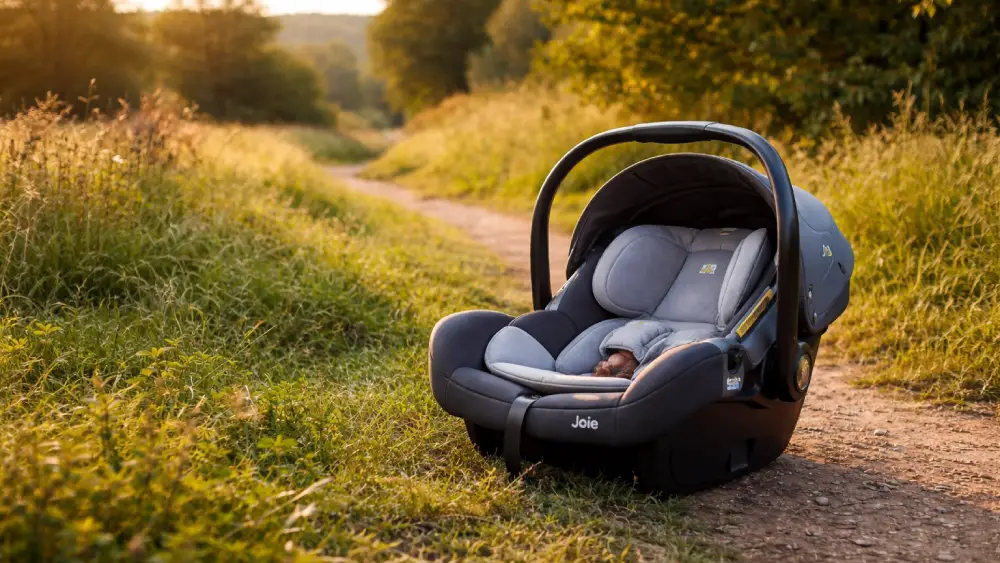
If you’re wondering when to take newborn insert out of car seat Joie, you’re asking the right question. Timing matters. Remove it too early and your baby may not sit securely. Leave it in too long and you can affect harness fit and positioning.
I’ve worked with enough parents to know this decision often feels confusing. The insert was essential in those first fragile weeks. It made everything look snug and safe. Then suddenly your baby grows. Fast. Now you’re staring at the seat thinking, Is it time?
Let’s walk through this clearly, practically, and with specifics you can act on today.
What the Newborn Insert Actually Does
The newborn insert isn’t just extra padding. It serves a precise purpose.
Joie designs inserts to:
- Improve harness positioning for very small babies
- Prevent side-to-side slumping
- Support the head and neck
- Maintain safer recline posture
Newborns are tiny. Their shoulders sit lower than the lowest harness slots in many infant seats. The insert fills that space so the harness can sit at or just below shoulder level — which is required for rear-facing safety.
Most Joie inserts include:
- A body support cushion
- A head support cushion
- Sometimes a lower wedge or seat liner
These pieces often detach separately. That matters later.
When to Take Newborn Insert Out of Car Seat Joie: The Clear Answer
There isn’t one universal age. Not three months. Not six months.
The correct time depends on three factors:
- Your specific Joie model
- Your baby’s weight and height
- Harness fit without the insert
Let’s break each one down.
1. Follow the Weight Guidelines First
Most Joie infant inserts are designed for babies roughly between 0–11 pounds, though some extend to 13 pounds. Convertible seats like the Joie i-Spin may have staged insert systems with different thresholds.
Here’s a general reference (always confirm in your manual):
| Joie Seat Type | Typical Insert Use Range | Notes |
| Joie Juva | Birth to ~11 lbs | Full insert often removed as baby grows |
| Joie Gemm | Birth to ~11–13 lbs | Head support may stay longer |
| Joie i-Spin | Multi-stage | Remove lower insert first |
If your baby exceeds the maximum insert weight listed in your manual, that’s your signal. Remove it.
No guessing required.
2. Watch for Physical Outgrowth
Sometimes babies outgrow inserts before hitting the maximum weight. Growth isn’t linear. It’s explosive.
Here are the real-world signs that tell you when to take newborn insert out of car seat Joie:
- Shoulders sit well above the lowest harness slot even with insert removed
- Baby appears cramped or compressed
- Harness straps no longer tighten smoothly
- Baby’s chin is pushed toward chest unnaturally
- The insert lifts baby’s hips forward
That last one is important.
If the insert begins pushing your baby’s body forward rather than supporting it, it’s no longer doing its job.
Remove it.
3. Harness Fit Is the Final Authority
Proper harness fit overrides everything.
For rear-facing seats, harness straps must sit at or just below shoulder level. After removing the insert, check this carefully.
Do this test:
- Buckle the harness.
- Tighten until snug.
- Perform the pinch test at the collarbone.
If you can pinch excess webbing between your fingers, tighten more. If it won’t tighten enough without the insert, your baby may not be ready for full removal yet.
This is where many parents hesitate. They remove the insert and suddenly the harness looks too high. That’s your cue to check manual adjustments. Some seats allow lowering harness slots once the insert is gone.
Small adjustments. Big impact.
Staged Removal: Most Parents Miss This
Many Joie seats allow staged removal. You don’t always remove everything at once.
Typical order:
- Remove lower body insert first
- Keep head support temporarily
- Remove head support once baby has full neck control and proper harness alignment
That’s why asking simply “when to take newborn insert out of car seat Joie” isn’t enough. The better question is:
Which part of the insert should come out first?
Your manual will specify this clearly. If you’ve misplaced it, download the digital version by searching your exact model name.
Don’t assume. Confirm.
How to Check If Your Baby Is Ready — A Practical Checklist
Use this visual and physical checklist before removing the insert completely:
Positioning
- Back lies flat against the seat
- Hips sit fully against the backrest
- No slouching
Head alignment
- Chin not forced toward chest
- Head doesn’t flop forward when vehicle stops
Harness test
- Straps snug with no slack
- Straps at or just below shoulders
- Chest clip at armpit level
If all three areas look correct without the insert, you’re ready.
If not, reassess.
Step-by-Step: Removing the Insert Safely
Let’s make this simple and methodical.
Step 1: Review the Manual
Yes, again. Because the answer to when to take newborn insert out of car seat Joie always starts there.
Look specifically for:
- Weight limits
- Staged removal instructions
- Diagrams of insert configuration
Step 2: Remove Lower Body Support First
If your model allows it, detach the lower cushion. Reinstall baby and test harness fit.
Notice the difference.
Step 3: Recheck Harness Height
Without the insert, shoulders may drop slightly relative to harness slots. Adjust if necessary.
Step 4: Check Recline Angle
Some inserts slightly alter seat angle. After removal:
- Confirm indicator is within correct recline zone
- Ensure installation hasn’t loosened
Step 5: Take a Short Test Ride
Observe head stability during braking and turns.
You’re not guessing. You’re evaluating.
Common Mistakes I See Parents Make
Let’s address these directly.
Removing It Too Early
This often happens around the two-month mark. Baby looks bigger. Parents assume they’re ready.
But without the insert:
- Harness may sit above shoulders
- Side-to-side support decreases
- Head slump increases
If harness position is wrong, reinstall the insert.
Leaving It In Too Long
Equally common.
If baby exceeds weight limits or appears cramped:
- Harness angle may be compromised
- Hips may be pushed forward
- Shoulder positioning becomes incorrect
More padding does not equal more safety.
Adding Third-Party Inserts
Never add aftermarket padding.
Crash testing is conducted with manufacturer-approved components only. Extra cushions can:
- Change harness geometry
- Affect crash force distribution
- Void warranty
Stick to original Joie components. Always.
Differences Between Joie Models Matter
Not all Joie seats behave the same.
Infant-Only Seats (Juva, Gemm)
- Typically one-piece or two-piece insert
- Removal often occurs around 11 lbs
- Head support may detach separately
Convertible/Rotating Seats (i-Spin series)
- Multi-layer inserts
- Lower insert removed early
- Upper support removed later
Because of this variation, the correct answer to when to take newborn insert out of car seat Joie is model-specific. If you switch vehicles or seats, reassess.
Don’t rely on memory from your first child.
Comfort and Temperature Considerations
Parents sometimes ask if summer heat means it’s time to remove the insert.
Only if baby meets size and fit requirements.
Yes, inserts can increase warmth. But safety first. Always.
If overheating is a concern:
- Dress baby in lighter layers
- Pre-cool vehicle
- Avoid bulky fabrics
Never remove the insert solely for seasonal comfort.
What Happens If Baby’s Head Falls Forward?
Mild forward tilt during sleep can be normal. Extreme chin-to-chest positioning is not.
If removing the insert causes significant forward slump:
- Check recline angle
- Confirm installation tightness
- Consider reinstalling head support (if allowed)
Airway positioning matters. Especially in the first months.
After You Remove the Insert: Ongoing Monitoring
Growth doesn’t pause.
In the first six months, babies change rapidly. Reassess fit every few weeks.
Here’s a simple monthly checklist:
- Has baby gained more than 2 pounds?
- Have shoulders moved relative to harness slots?
- Is harness tightening smoothly?
- Is recline indicator still correct?
Small babies become big babies faster than you expect.
Stay proactive
Final Thoughts
So, when to take newborn insert out of car seat Joie?
When your baby:
- Meets or exceeds the insert’s weight limit
- Achieves proper harness fit without it
- No longer needs the extra positioning support
Not randomly. Not based on age alone.
Car seat safety isn’t about guessing. It’s about precision.
Take five extra minutes. Check the manual. Reassess fit. Perform the pinch test. Confirm recline.
Small adjustments today prevent serious problems tomorrow.
And if you’re ever unsure? Schedule a car seat safety check with a certified technician. Even experienced parents benefit from a second set of trained eyes.
Your baby grows quickly. Your seat configuration should grow with them.
That’s how you stay safe.
Frequently Asked Questions
Remove it once your baby exceeds the insert’s weight limit and achieves proper harness fit without extra padding.
Yes, many Joie models allow staged removal, but confirm your specific seat manual first.
Most Joie inserts are for babies up to 11 pounds, though some models allow use up to 13 pounds.
Yes, leaving it in past the limit can affect harness positioning and overall fit.
Only if your baby meets weight and harness fit requirements outlined in the manual.
It can, so always recheck harness height and perform the pinch test after removal.
Only if your baby meets the proper size guidelines—temperature alone isn’t a reason.
Check recline angle and installation; reinstall approved head support if allowed.
No, aftermarket inserts are not crash-tested with Joie seats and can reduce safety.
No, removal timing varies by model, so always follow your specific seat’s manual.