
When parents ask “What is the safest 360 car seat?” they aren’t just talking about a swivel feature. They’re asking which seat best protects their child in the event of a crash—while still delivering everyday convenience. Safety is about structure, harness engineering, crash performance, and the real-world protection you can depend on.
A 360 car seat adds ease-of-use with rotation, but safety should always be the priority. The safest models combine robust engineering, high-quality materials, strong crash ratings, and design features that help proper installation (because even great seats fail if installed incorrectly).
This guide walks you through top contenders and what makes them stand out.
What “Safest” Really Means
Before we list specific seats, let’s clarify what safety looks like in a 360 car seat:
- Strong Crash Protection: Meets or exceeds federal standards
- Extended Rear-Facing Support: Longer rear-facing is safer
- Sturdy Installation: Easy, secure attachment with LATCH or belt
- Stability Features: Support legs, anti-rebound bars, tethers
- Harness Quality: Secure, easy to adjust, low risk of misuse
- Real-World Performance: Good results in independent testing
Safety isn’t about bells and whistles. It’s about engineering that protects the most vulnerable parts of a child’s body—head, neck, and spine.
Top Safest 360 Car Seats Worth Considering
No single seat is definitively “the safest” for every child, but the models below are widely recognized for strong safety design and performance:
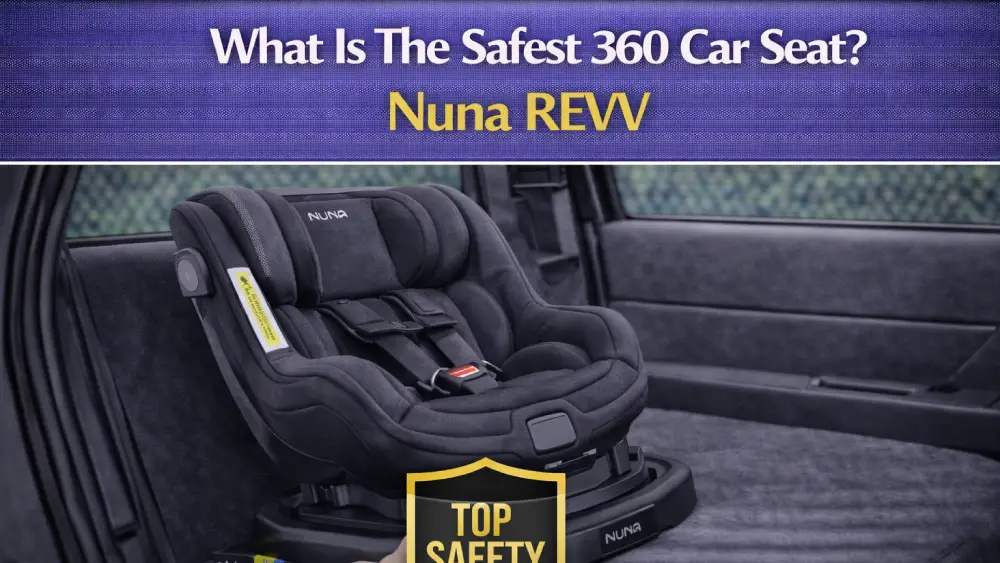
1. Nuna REVV
Why it’s highly rated
- Premium safety engineering
- Excellent side-impact protection
- Smooth rotation and locking
- Quality materials
Best for: Families who want top-tier safety features with premium build quality.
2. Graco Turn2Me 360
Why it’s strong
- Dual-facing design (rear- and forward-facing)
- Extended rear-facing support
- Easy-to-lock rotation
- Trusted crash performance
Best for: Parents seeking strong safety with long use life and great rear-facing limits.
3. Evenflo Revolve 360 / Slim 360
Why it’s notable
- Consistent performance in safety checks
- Strong recline and installation indicators
- Affordable without cutting safety corners
- Smooth rotation system
Best for: Families who want solid safety and user-friendly installation on a budget.
4. Chicco 360 Rotation Seat
Why it’s recommended
- Secure installation options
- Quality harness system
- Good real-world ease-of-use
- Solid safety engineering
Best for: Caregivers who want reliable safety and straightforward adjustments.
Key Safety Features to Look For
When comparing seats, here’s what makes one safer than another:
✔ Extended Rear-Facing
Kids are safest rear-facing. Seats that support this longer deserve strong consideration.
✔ Installation Support
Look for:
- Clear indicators
- Lock-offs
- Anti-rebound bars
- Support legs
These reduce the risk of error.
✔ Harness Quality
An easy-to-adjust, secure harness reduces misuse and improves crash protection.
✔ Side-Impact Protection
Extra padding and structural engineering minimize forces on the head and torso.
✔ Rotation Lock Mechanism
The swivel should lock solidly for travel—no movement while driving.
How Safety Rankings Are Determined
Safety isn’t about marketing claims.
Reliable indicators include:
- Crash test results from independent organizations
- Installation ease (fewer mistakes = safer use)
- User reviews focused on crash performance
- Certifications beyond basic compliance
Federal standards are a baseline. Better seats exceed them in real-world conditions.
Extended Rear-Facing Matters
Experts agree: keeping kids rear-facing as long as possible reduces neck and spine injury risk in frontal and side impacts. Many top 360 car seats support extended rear-facing—some up to 50+ lbs.
Installation Tips That Boost Safety
Even the best seat can be unsafe if installed incorrectly.
✅ Tighten until movement is under one inch
✅ Use indicators to confirm recline and level
✅ Check rotation is locked before driving
✅ Confirm harness fit every ride
✅ Avoid bulky clothing under harness
Safety isn’t just the seat—it’s how you use it.
Final Thoughts: What Is the Safest 360 Car Seat?
There’s no one-size-fits-all answer, but seats like Nuna REVV, Graco Turn2Me 360, Evenflo Revolve 360, and Chicco 360 consistently stand out for strong safety engineering, ease of correct installation, and extended rear-facing support.
Your safest choice matches:
- Your child’s age and size
- Your vehicle compatibility
- Your daily routines
A seat that’s installed correctly every time is always safer than a more feature-rich seat installed improperly.
Frequently Asked Questions
Safety is defined by strong crash protection, easy and secure installation, extended rear-facing support, and proper harness performance.
Yes, when installed and used correctly, 360 car seats must meet the same federal safety standards as traditional seats.
Models like Nuna REVV, Graco Turn2Me 360, Evenflo Revolve 360, and Chicco 360 are widely recognized for strong safety engineering.
Experts recommend rear-facing as long as possible—until your child exceeds the height or weight limits specified by the manufacturer.
Rotation itself doesn’t enhance safety; proper locking before driving and correct installation are what matter.
A correctly installed seat moves less than one inch at the belt path, shows proper recline levels, and locks into travel position.
Yes, enhanced side-impact protection adds extra crash energy management around the head and torso.
Use either method per your vehicle and seat manual; never use both unless explicitly allowed.
Yes, harsh cleaning and improper harness adjustment can weaken materials or compromise proper restraint performance.
Upgrade when your child outgrows the forward-facing limits or at the manufacturer’s specified transition point.