
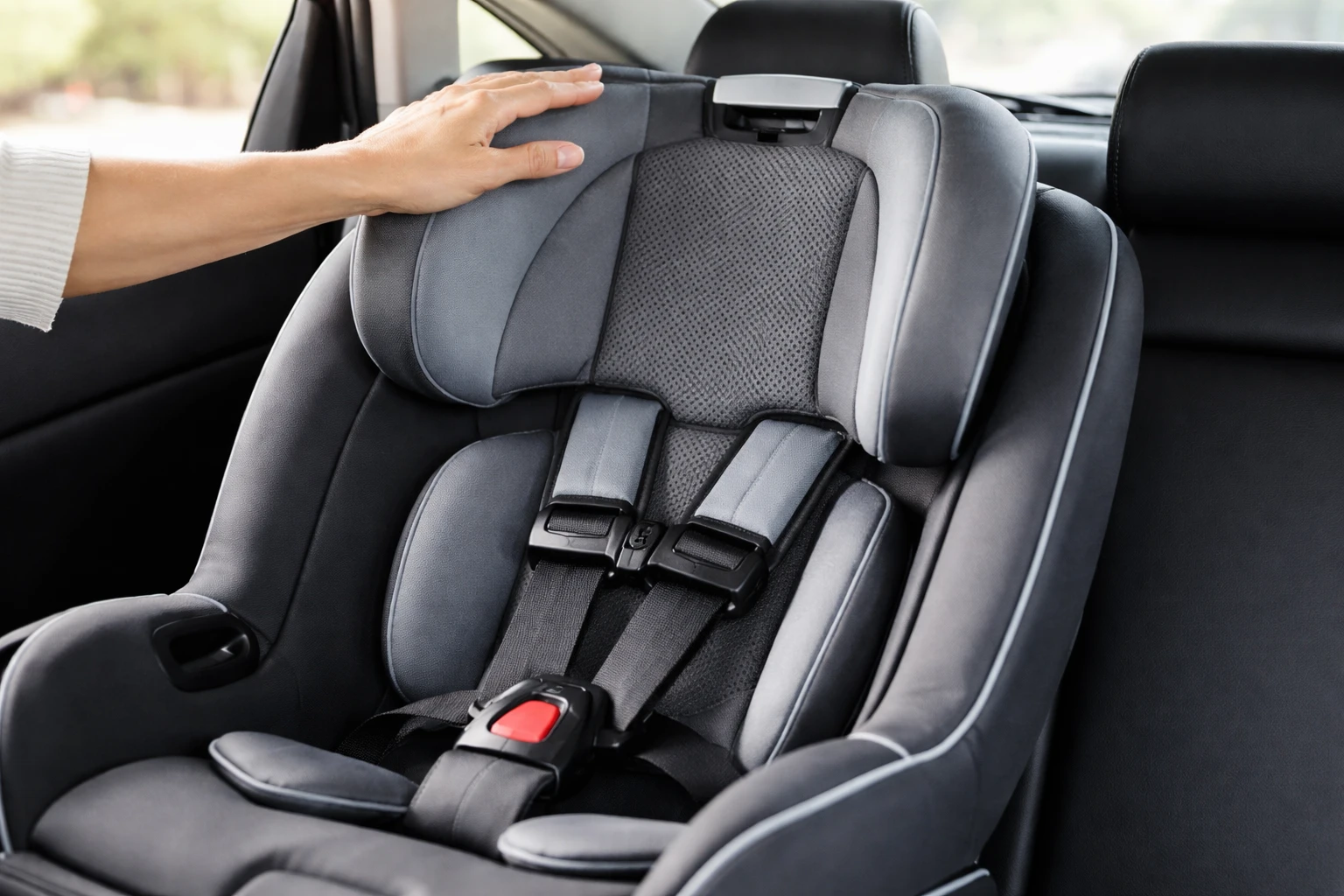
The no rethread harness adjustment system is one of those features that doesn’t scream for attention on the box but quietly changes everything about daily car seat use. It’s not flashy. It doesn’t beep. It doesn’t glow. Yet once you experience it, you realize how much friction it removes from one of the most important safety routines you perform as a parent.
Harness fit is not optional. It is structural. It directly influences how crash forces are transferred to your child’s body. And the easier it is to adjust properly, the more likely you are to keep it correct over time. That’s what this guide is about. Not hype. Not trends. Just clear, actionable insight into how a no rethread harness adjustment system works, why it matters, and whether it deserves your attention.
Let’s dig in.
What Is a No Rethread Harness Adjustment System?
A no rethread harness adjustment system allows parents to raise or lower the harness height by simply sliding the headrest without removing the harness straps and manually feeding them through fixed slots.
Traditional car seats rely on static shell openings. When your child grows, you must:
- Uninstall the seat (sometimes)
- Access the back panel
- Detach straps from the splitter plate
- Thread straps through a different height slot
- Reattach and confirm alignment
It works. But it’s tedious. And tedious tasks are often postponed.
A no rethread harness adjustment system eliminates those steps. The harness is integrated into a movable headrest assembly. One squeeze lever. One smooth slide. Locked in place. Adjustment takes seconds instead of minutes. And seconds matter when consistency is the goal.
Why Proper Harness Height Is So Critical
Let’s be direct.
In a collision, the vehicle stops abruptly. Your child’s body continues moving forward until restrained. That restraint must be aligned properly to distribute force across strong skeletal structures shoulders and hips. If harness straps sit too low in forward-facing mode, downward compression may occur before full restraint engages. If straps sit too high in rear-facing mode, upward motion can increase before controlled deceleration begins.
Crash dynamics follow basic physics. Concepts like deceleration, force vectors, and inertial frames explain how motion behaves during impact. If you want the deeper science, the physics behind restraint systems relates to motion principles described under inertial frame of reference.
You don’t need to master the math. The takeaway is simple:
Harness height changes how force is transferred. And as children grow especially when following extended rear-facing car seat weight limits harness height must be adjusted multiple times over several years. The easier the adjustment, the more accurate it stays.
What Federal Safety Guidance Says
The National Highway Traffic Safety Administration (NHTSA) makes one thing clear: proper harness positioning is critical for effective restraint performance.
Their child passenger safety guidelines emphasize:
- Rear-facing harness straps at or below shoulder level
- Forward-facing harness straps at or above shoulder level
- Snug fit with no slack
You can review official recommendations directly from the U.S. government. A no rethread harness adjustment system does not replace correct installation. But it supports proper compliance with federal fit guidelines by removing complexity from the adjustment process.
That matters.
Engineering Behind the System
Let’s talk design.
Modern no rethread harness adjustment systems typically include:
- Reinforced internal steel or composite tracks
- Integrated headrest-harness assembly
- Height locking mechanism
- Multi-position adjustment increments
When the headrest moves, the harness shoulder slots move with it. The geometry remains fixed relative to the child’s torso.
This synchronized movement preserves:
- Proper harness angle
- Equal strap tension
- Balanced force distribution
Internal locking systems prevent downward drift once secured. Manufacturers test these assemblies to meet federal motor vehicle safety standards for crash performance. It’s not just convenience engineering. It’s structural integration.
Misuse Reduction: The Hidden Benefit
Here’s what many parents don’t realize. Studies consistently show that car seat misuse rates are high. Improper harness height and incorrect strap routing are common errors.
Manual rethread systems introduce:
- Uneven strap placement
- Twisted webbing
- Incorrect slot selection
- Incomplete reattachment
Each step adds risk. A no rethread harness adjustment system removes multiple failure points. By eliminating manual strap handling, it lowers the chance of reassembly mistakes. Less handling. Fewer variables. That’s design simplification at work.
Real-World Convenience Scenarios
This feature shines during everyday life. Winter jacket season? Slight height adjustment may be needed after removing bulky layers. Unexpected growth spurt? Quick slide upward. Sibling rotating seats? Fast recalibration.
In busy households:
- Time pressure reduces thoroughness
- Complex tasks get delayed
- Adjustments become weekend projects
A no rethread harness adjustment system removes that barrier. You can adjust harness height in a parking lot before daycare drop-off.
Small change. Big impact.
Comparing Rethread vs. No Rethread Systems
Here’s a straightforward breakdown.
| Feature | Traditional Rethread | No Rethread Harness Adjustment System |
| Adjustment Time | 10–20 minutes | 10–30 seconds |
| Requires Seat Removal | Often | No |
| Risk of Strap Twisting | Moderate | Very Low |
| Ease for Caregivers | Low | High |
| Growth Adjustment Frequency | Often Delayed | Prompt & Easy |
This is not about luxury. It’s about operational efficiency.
Does It Improve Crash Safety Ratings?
Important clarification.
A no rethread harness adjustment system does not automatically increase crash test ratings. Car seats must pass federal standards regardless of adjustment type. However, it can improve real-world safety by reducing misuse. And real-world safety is what protects children not just lab scores. If a feature increases proper use, it increases effective protection.
Cost Analysis: Is It Worth It?
Seats with this feature may cost more due to:
- Added internal components
- Integrated headrest hardware
- Manufacturing complexity
But let’s consider lifecycle value.
If a seat lasts 8 years and costs $60 more due to this feature, that equates to roughly $7.50 per year for easier adjustments and reduced misuse risk. When framed annually, the investment becomes modest. And modest investments that improve compliance are often worthwhile.
Who Benefits Most?
This feature is especially valuable for:
- First-time parents learning car seat mechanics
- Families practicing extended rear-facing
- Multi-car households
- Grandparents or caregivers unfamiliar with rethreading
- Families who frequently switch vehicles
If multiple adults adjust the seat, simplicity matters even more. Consistency across caregivers increases safety reliability.
Step-by-Step: Using It Correctly
Even the best design requires correct use.
Here’s the proper adjustment process:
- Place child securely in seat.
- Check shoulder alignment relative to harness.
- Press or squeeze the height adjustment lever.
- Slide headrest until harness aligns correctly.
- Release lever and confirm lock.
- Tighten harness snugly.
- Perform pinch test at collarbone.
The pinch test is simple: try to pinch the webbing vertically. If you can pinch slack, tighten further. Technology assists. It does not replace vigilance.
Maintenance Considerations
Internal sliding mechanisms should be:
- Kept free of debris
- Inspected during routine cleaning
- Checked for smooth motion
Never lubricate internal tracks unless manufacturer instructions allow it. If the headrest sticks or fails to lock securely, contact the manufacturer immediately. Routine inspection is part of responsible ownership.
How It Integrates With Other Safety Factors
Harness height is one variable.
Proper safety also depends on:
- Secure LATCH or seat belt installation
- Correct recline angle
- Appropriate weight and height limits
- Seat expiration date
- Vehicle compatibility
The no rethread harness adjustment system improves one important factor: consistent harness alignment. It does not eliminate the need for proper installation. Safety is layered.
Extended Rear-Facing and Long-Term Use
Parents choosing extended rear-facing car seat weight limits often keep children rear-facing for several years. During that time, growth adjustments are inevitable.
Infants may require multiple height changes within the first year alone. Toddlers may require periodic adjustments every few months. A no rethread harness adjustment system simplifies that process across years not just weeks.
Longevity amplifies its value.
Behavioral Design: Why Simplicity Wins
Here’s a subtle but powerful insight. Human behavior tends to avoid friction. Tasks that require more effort are delayed. By reducing friction, the no rethread harness adjustment system increases the likelihood that parents adjust promptly when needed.
That’s behavioral engineering in action. And when the outcome is improved safety compliance, the design serves a meaningful purpose.
Potential Drawbacks
Balanced evaluation matters.
Possible downsides include:
- Slightly higher purchase price
- Additional internal parts
- Minor weight increase in some models
However, reputable brands test these mechanisms rigorously under federal crash performance standards. Durability is part of certification.
Final Thoughts
The no rethread harness adjustment system represents a practical evolution in car seat design. It removes unnecessary complexity. It reduces misuse risk. It encourages timely adjustments. And it supports consistent harness alignment throughout years of growth.
Is it mandatory? No.
Is it beneficial for most families? Very likely. In child passenger safety, the safest system is the one used correctly every single time. And when a feature makes correct use easier, that feature deserves attention. Simplicity isn’t luxury. It’s smart design.
FAQs
It allows you to adjust the harness height without removing and rethreading the straps through seat slots.
It does not change crash ratings, but it reduces user error, which can improve overall safety.
No, many modern seats have it, but some budget models still use manual rethread systems.
Quality models are built to lock securely, but you should always check fit regularly.
Check every few months and after growth spurts to ensure proper shoulder alignment.
For many families, the ease and reduced misuse risk make it worth the added cost.
Yes, the simple sliding mechanism makes adjustments quick and straightforward.
Yes, the harness adjusts for both positions to maintain proper shoulder height.
Yes, it makes frequent height adjustments easier as children grow while remaining rear-facing longer.
Reputable brands test these mechanisms thoroughly, but regular inspection is still important.