
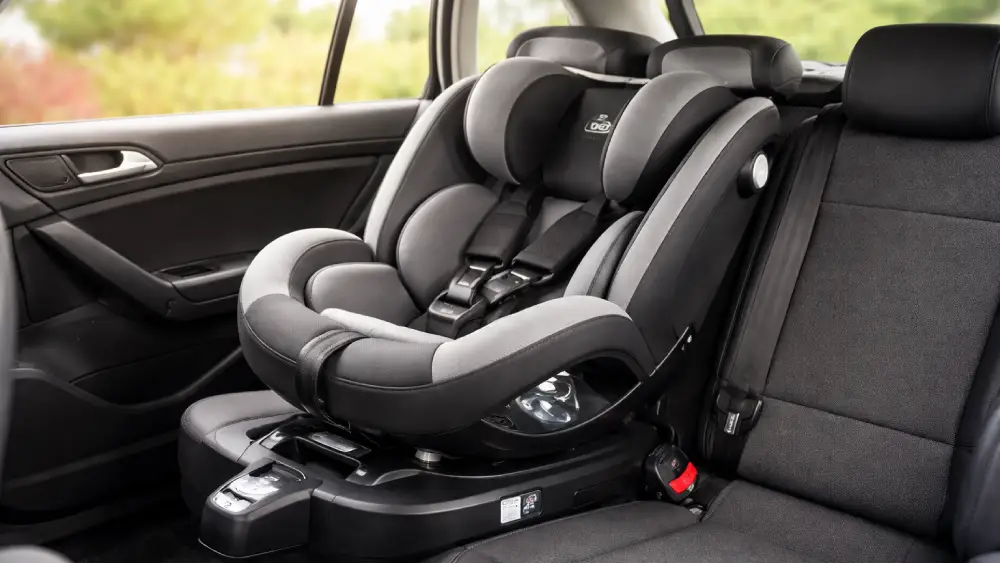
If you’re trying to figure out how to tilt Joie 360 car seat models correctly, you’re not alone. I’ve seen confident, capable parents struggle with this—because while the seat rotates beautifully, the recline adjustment isn’t always obvious at first glance. And yet, getting the tilt right can make the difference between a peaceful nap and a slumped-forward head five minutes into your drive.
This guide walks you through exactly how to tilt Joie 360 car seat models safely and correctly. Step by step. No fluff. Just practical instruction, troubleshooting advice, and safety insight you can use immediately.
Let’s get into it.
Understanding the Joie 360 Recline System
Before adjusting anything, it helps to understand what you’re working with.
The Joie 360 (including Spin 360 and i-Spin 360 variants) has two distinct functions:
- Rotation (360° swivel) – allows you to turn the seat toward the door.
- Recline (tilt adjustment) – changes the angle of the seat shell.
They are not the same thing. And they do not operate the same way.
Most Joie 360 models offer multiple recline positions—typically around 5 in rear-facing and fewer in forward-facing mode. However, the exact number varies slightly by model.
Why does the recline matter so much?
Because angle affects:
- Airway positioning for infants
- Crash performance
- Comfort on longer trips
- Head support during sleep
Too upright for a newborn? Their head tips forward. Too reclined forward-facing? You compromise stability. It’s a balance.
Before You Adjust Anything: Safety First
Before learning how to tilt Joie 360 car seat models, pause. Run through this quick safety checklist.
1. Confirm Proper Installation
The Joie 360 is typically installed with ISOFIX connectors and a support leg. Make sure:
- ISOFIX arms are fully extended and locked
- Indicator lights (if applicable) show green
- Support leg is firmly planted on the vehicle floor
- The seat does not move more than 1 inch side-to-side
If installation is unstable, recline adjustments won’t behave properly.
2. Park on Level Ground
This sounds minor. It isn’t.
Adjusting recline while parked on a slope gives you a false sense of the angle. Always adjust on flat ground for accurate positioning.
3. Remove Your Child Before Adjusting
Never adjust the recline with your child in the seat. Pressure from their weight can interfere with the mechanism—and it’s simply safer to make changes without them seated.
How to Tilt Joie 360 Car Seat: Step-by-Step
Now we get practical.
Here is exactly how to tilt Joie 360 car seat models in real-world conditions.
Step 1: Ensure the Seat Is Fully Locked in Position
The seat must be completely locked in either rear-facing or forward-facing mode.
If it’s slightly mid-rotation, the recline lever will not engage properly.
Turn the seat until you hear a solid click. Test by gently rotating—if it doesn’t move, you’re locked.
Step 2: Locate the Recline Adjustment Lever
On most Joie 360 models, the recline handle is:
- Located at the front base of the seat
- Positioned beneath the child’s leg area
- Designed as a squeeze or lift-style handle
It blends in. Look carefully.
Step 3: Apply Firm Pressure to the Recline Handle
Press or lift the handle fully. Not halfway.
This disengages the internal locking mechanism that holds the recline position.
You’ll feel resistance. That’s normal.
Step 4: Adjust the Seat Shell
While holding the recline handle:
- Gently push backward for more recline
- Pull slightly forward for a more upright position
Move slowly. You’ll hear or feel a click as it locks into each recline setting.
Step 5: Release and Test
Release the handle completely.
Then test the seat by gently pushing on the top of the shell. It should feel solid. No wobbling between positions.
Step 6: Check the Recline Indicator
Many Joie 360 models include a recline angle indicator on the side of the seat.
Look for:
- Green zone = correct
- Red zone = adjustment needed
Always confirm you’re within the safe range.
That’s the complete process for how to tilt Joie 360 car seat models safely.
Rear-Facing Recline: What You Need to Know
Rear-facing is where tilt matters most.
Infants lack neck strength. If the seat is too upright, their chin can fall toward their chest. That can restrict airflow.
For newborns and younger babies:
- Use the most reclined approved setting
- Ensure infant inserts are properly positioned
- Confirm the recline indicator shows safe positioning
Here’s a quick guide:
| Child Stage | Recommended Recline Approach |
| Newborn | Most reclined approved setting |
| 3–9 months | Slightly less reclined if head control improves |
| Older infant/toddler | Gradually more upright within rear-facing limits |
Watch your child’s head position during short drives. If you notice forward slumping, reassess the angle immediately.
This is where knowing exactly how to tilt Joie 360 car seat models becomes essential—not optional.
Forward-Facing Recline: Different Rules Apply
Forward-facing tilt is more limited.
You cannot recline as deeply as you can rear-facing. The seat’s design restricts excessive tilt for safety reasons.
When forward-facing:
- Use approved recline positions only
- Ensure top tether (if required) is secure
- Avoid over-reclining for comfort
Comfort matters, yes. But crash positioning matters more.
If your child complains the seat is “too straight,” test the next approved recline setting. Never force it beyond its designated stops.
Common Problems and How to Fix Them
Even when you know how to tilt Joie 360 car seat models, things can feel stuck. Let’s solve that.
Recline Lever Won’t Move
Possible causes:
- Seat not fully locked in facing position
- Child’s weight pressing on mechanism
- ISOFIX installation too tight against vehicle seat back
Solution: Remove child. Rotate fully. Try again.
Seat Won’t Lock Into New Position
- Reset to upright position
- Adjust again slowly
- Check for trapped fabric or debris
Sometimes small crumbs interfere with the locking track. Yes, really.
Baby’s Head Still Falls Forward
- Recheck recline indicator
- Confirm vehicle seat itself isn’t angled sharply
- Verify support leg is properly extended
If the vehicle seat slopes significantly, the recline range may feel limited. In that case, consult the manufacturer manual for vehicle compatibility notes.q
Safety Best Practices When Adjusting Recline
Let’s keep this simple and direct.
- Always adjust without your child seated
- Double-check harness fit after recline change
- Inspect ISOFIX connectors monthly
- Keep the recline track clean
- Never modify or add padding not supplied by Joie
And here’s something I always tell parents: check recline again after long road trips. Extended vibration can sometimes shift positioning slightly.
It’s rare. But possible.
Maintenance Tips for Long-Term Use
The recline mechanism is mechanical. It benefits from attention.
- Vacuum around the base regularly
- Avoid forcing the handle
- Periodically cycle through recline positions to keep movement smooth
- Reassess tilt every few months as your child grows
Children grow fast. The correct angle for a 4-month-old is not the same for a 14-month-old.
Understanding how to tilt Joie 360 car seat models properly is an ongoing process—not a one-time setup.
Final Thoughts
Learning how to tilt Joie 360 car seat models correctly isn’t complicated once you understand the mechanism. But it does require attention. Small adjustments matter. Angle matters. Locking position matters.
Take five extra minutes. Confirm the click. Check the indicator. Test the stability.
When done correctly, the right tilt supports safer positioning and more comfortable rides. Fewer slumped heads. Fewer mid-drive corrections. More confidence every time you buckle in.
And that peace of mind? That’s worth it.
Frequently Asked Questions
If the seat clicks securely into place and the recline indicator shows the safe zone, you’ve adjusted it correctly.
Yes, recline adjustments can be made after installation as long as the seat is properly locked in position.
Reassess the tilt every few months or whenever your child’s height, weight, or head control changes.
The seat may not be fully locked into rear- or forward-facing mode, or there may be pressure on the mechanism.
Only if it falls within the manufacturer’s approved recline range for your child’s weight and orientation.
Adjust the tilt again on level ground until the indicator moves into the approved safe zone.
No, forward-facing positions are typically more limited for safety reasons.
The seat must be fully locked into rear- or forward-facing position before adjusting the recline.
The seat may still be too upright, or your vehicle seat angle may require a slight repositioning.
The general process is similar, but always confirm specifics in your exact model’s manual.