
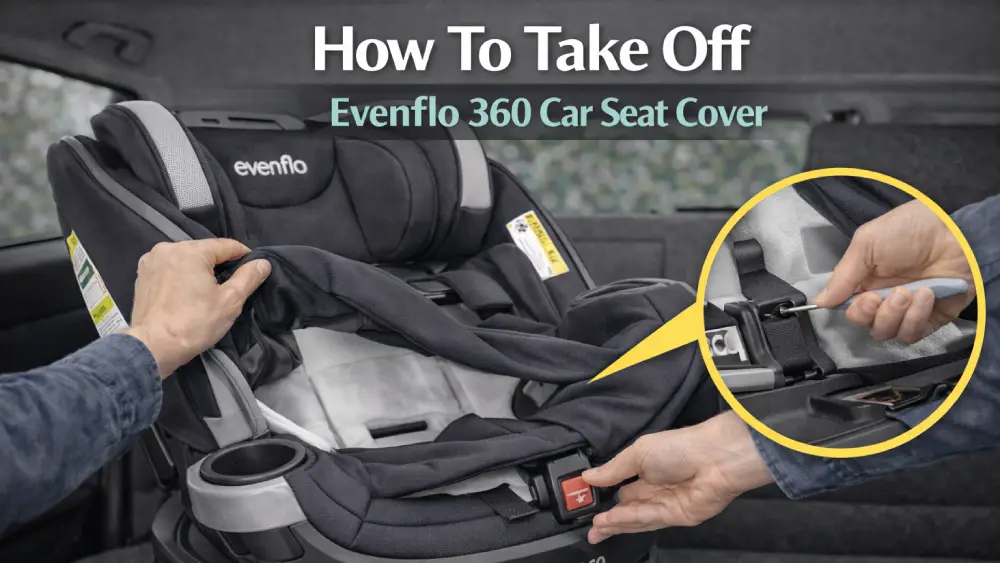
Spills, crumbs, and unexpected messes are part of everyday life with a baby or toddler. When cleanup goes beyond spot wiping, knowing how to take off Evenflo 360 car seat cover properly makes the process much easier—and safer.
Many parents worry about removing the cover because they don’t want to interfere with the harness or reinstall something incorrectly. The good news is the cover is designed to come off without disassembling critical safety parts. This guide walks you through the removal process step by step and explains what to avoid along the way.
Let’s get started.
Before Removing the Evenflo 360 Car Seat Cover
Take a moment to prepare.
Before you begin:
- Park the vehicle on level ground
- Remove your child from the seat
- Fully loosen the harness
- Unbuckle the chest clip and crotch buckle
Never remove or disconnect the harness straps themselves.
What Parts Should Stay in Place
It’s important to know what not to remove.
Do not take off:
- Harness straps
- Chest clip
- Buckle hardware
- Any permanently attached padding
These components are safety-critical and should remain installed.
How To Take Off Evenflo 360 Car Seat Cover (Step by Step)
Follow these steps slowly to avoid damage.
Step 1: Loosen the harness completely
Press the harness release button near the front of the seat and pull the shoulder straps forward. This creates slack so the cover can slide off easily.
Step 2: Unbuckle the harness
Disconnect the chest clip and crotch buckle so the cover isn’t trapped underneath.
Step 3: Remove headrest padding (if applicable)
Some Evenflo 360 models include separate headrest padding. Gently detach it according to the attachment points.
Step 4: Detach elastic loops and fabric tabs
Work from top to bottom, releasing:
- Elastic loops
- Fabric tabs
- Plastic snaps
Keep track of where each attachment connects for reassembly.
Step 5: Slide the cover off around the harness
Carefully guide the fabric around the harness slots without forcing it. The harness remains threaded through the seat.
What to Do After Removing the Cover
Once the cover is off:
- Lay it flat to inspect for stains
- Follow manufacturer washing instructions
- Avoid heat during cleaning or drying
Always let the cover dry completely before reinstalling.
Reinstalling the Evenflo 360 Car Seat Cover
Reinstallation follows the reverse order.
Key points:
- Align harness slots correctly
- Reattach all loops, tabs, and snaps
- Ensure padding sits flat with no bunching
- Tighten the harness after reinstalling
Before placing your child back in the seat, double-check harness routing and buckle function
Common Mistakes to Avoid
These issues happen often:
- Removing harness straps
- Pulling the cover forcefully
- Forgetting where tabs attach
- Reinstalling the cover while damp
Each mistake can affect fit and safety.
How Often Should the Cover Be Removed?
There’s no fixed schedule, but good guidelines include:
- After spills or accidents
- When odors persist
- Every few months for deep cleaning
Spot cleaning between removals helps extend fabric life.
Final Thoughts
Learning how to take off Evenflo 360 car seat cover doesn’t need to be stressful. The process is designed to be parent-friendly—as long as you respect which parts stay in place and move slowly through each step.
Frequently Asked Questions
Yes, the cover is designed to be removable without tools, as long as you follow the proper steps.
No, but removing the seat from the vehicle can make the process easier.
No, the harness straps should never be removed; the cover slides around them.
The cover is secured with elastic loops, fabric tabs, and snaps around the seat frame.
Yes, many Evenflo 360 models have separate headrest padding that can be removed independently.
The harness may not be fully loosened or some attachment loops may still be secured.
Yes, follow the care label instructions and avoid heat when washing or drying.
No, the cover should be completely dry before reinstalling to ensure proper fit.
All tabs should be secured, the fabric should lie flat, and the harness should move freely.
Remove it as needed after spills, accidents, or when deep cleaning is required.