
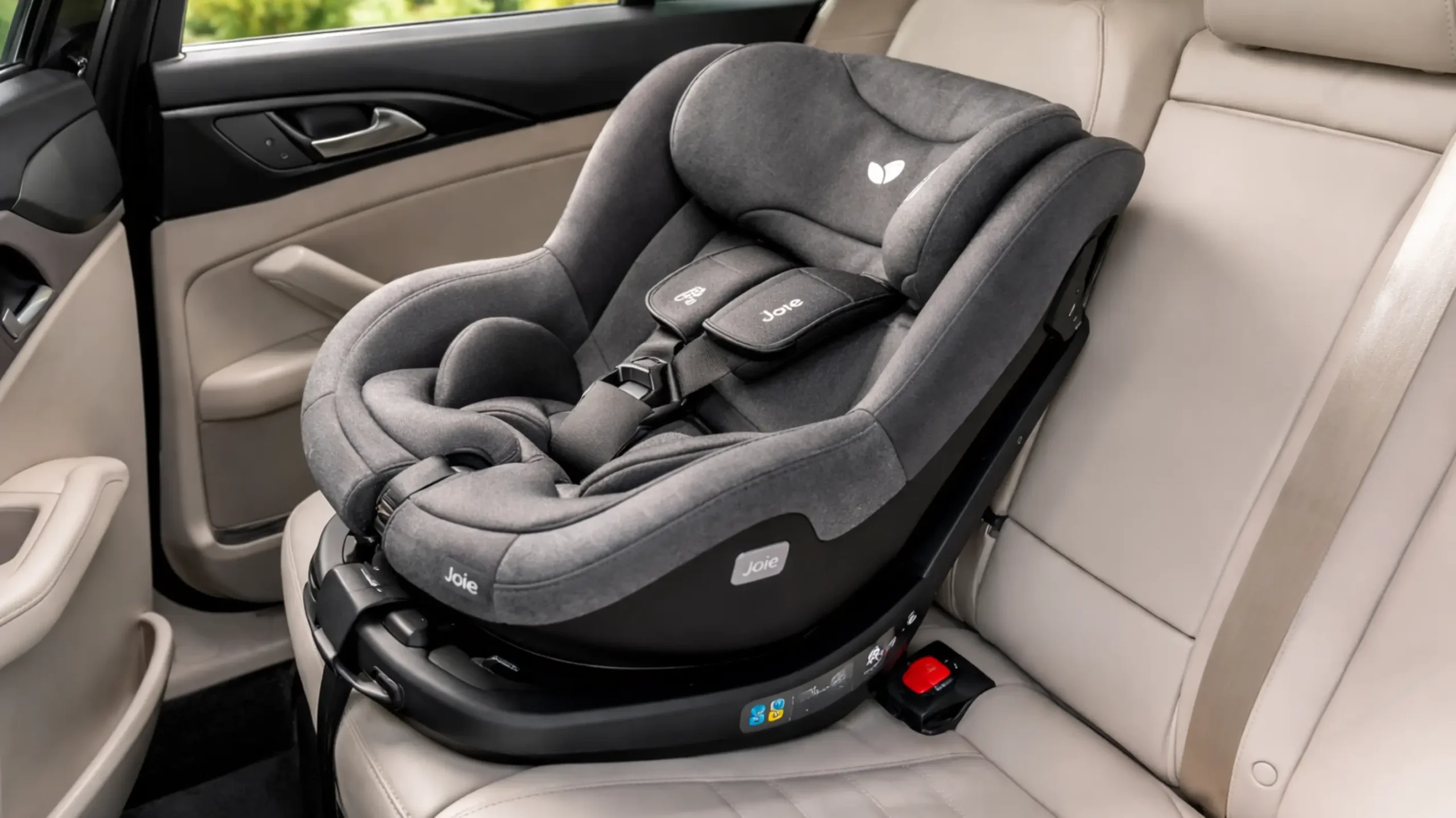
If you’re trying to figure out how to recline a Joie 360 car seat, you’re definitely not alone. I’ve helped enough parents (and wrestled with enough car seats myself!) to know that reclining can feel weirdly confusing the first time—especially with a rotating model. The good news? Once you understand how the recline system works, adjusting it becomes quick, smooth, and totally manageable.
In this guide, I’ll walk you through exactly how to recline a Joie 360 car seat safely and correctly, whether you’re using it rear-facing or forward-facing. I’ll also cover common issues (like the seat feeling stuck), how to pick the right recline angle for your child’s age, and the safety checks that matter most.
Let’s get into it!
Understanding the Joie 360 Car Seat Recline System
Before we jump into the steps, it helps to understand what the Joie 360 is doing mechanically.
What “360” actually means
The “360” part refers to the seat’s ability to rotate on its base. This rotation is designed to make your life easier:
- You can turn the seat toward the car door to buckle your child
- You can rotate it to rear-facing or forward-facing depending on your child’s stage
- You can reduce back strain and awkward twisting (a huge win)
But here’s the key thing many people miss:
Rotation and recline are not the same feature.
A seat can rotate without changing its recline angle.
So when you’re learning how to recline a Joie 360 car seat, you’re dealing with a separate adjustment system—usually controlled by a recline handle or lever.
Recline positions explained
Most Joie 360-style seats include multiple recline positions. Depending on the exact model (Spin 360, Spin 360 GTi, i-Spin 360, etc.), you’ll typically get 5–6 recline positions.
These positions exist for two big reasons:
- Safety: Rear-facing babies need a more reclined angle to protect their airway.
- Comfort: Older babies and toddlers can sit more upright without head slump.
Why correct recline matters more than people think
A properly reclined car seat helps:
- Keep your baby’s head from flopping forward
- Reduce the chance of chin-to-chest positioning
- Improve comfort on longer rides
- Maintain the correct harness fit and seating posture
It’s not about making the seat look “right.” It’s about making it function correctly in the real world.
Before You Recline: Quick Safety Checks
I know it’s tempting to grab the lever and start adjusting right away. But before you do, take 30 seconds for a few important checks.
1) Confirm the seat is properly installed
If the seat isn’t securely installed, recline adjustments can feel stuck, uneven, or unstable.
Depending on your model, installation might involve:
- ISOFIX connectors
- A support leg (load leg)
- A top tether (on some versions)
2) Make sure the seat is fully locked into the base
A rotating seat must be locked into the base before it can recline properly. If it’s slightly off-position, it may resist reclining.
3) Double-check rear-facing vs forward-facing mode
Some recline positions are only allowed in certain modes. A seat that reclines perfectly rear-facing may not allow the same angle forward-facing.
Step-by-Step: How to Recline a Joie 360 Car Seat
Alright—this is the part you came for. Here’s the clearest way I can explain how to recline a Joie 360 car seat without confusion.
Step 1: Make sure the car seat is installed correctly
Start by checking the basics:
- ISOFIX connectors are fully engaged (often indicated by green markers)
- The support leg is extended to the floor properly (if included)
- The seat base is flat and stable
If your installation is off, the recline mechanism may not move smoothly.
Step 2: Rotate the seat to a workable position
This step is surprisingly important.
Many Joie 360 seats recline most easily when the seat is:
- Rotated to face the car door (side-facing), or
- Rotated to a centered position where it locks firmly
If you’re struggling, try rotating the seat slightly and then attempting the recline again. I’ve seen this fix the issue instantly.
Step 3: Locate the recline adjustment handle
On most Joie 360 models, the recline handle is located:
- At the front of the seat, near the bottom
- Sometimes underneath the seat shell
- Often shaped like a wide plastic lever
If you’re looking and thinking, “Where is this thing?”—you’re not crazy. Car seat manufacturers don’t always make these levers obvious.
A good trick:
Run your hand along the front base area and feel for a handle that moves.
Step 4: Pull the recline handle and adjust the seat angle
Now the real action begins.
Here’s the exact technique I recommend:
- Pull and hold the recline handle
- With your other hand, push the seat back (to recline more)
or pull it forward (to make it more upright) - Release the handle
- Listen and feel for a click or firm lock-in
Don’t rush this. If the seat doesn’t click into a position, it may not be locked properly.
Step 5: Check the recline indicator (if your model has one)
Many Joie seats include an angle indicator—sometimes a line marker, sometimes a bubble-style level.
This indicator is especially important when rear-facing.
If the indicator shows the seat is too upright, your baby’s head may slump forward during sleep. If it’s too reclined, it may not fit properly or could reduce stability.
Step 6: Do a stability check after reclining
Once you’ve adjusted the recline, test the seat:
- Grab the seat near the belt path or base
- Try moving it side-to-side and front-to-back
A properly installed car seat should move less than 1 inch at the belt path.
If the seat feels loose after reclining, it’s a sign the installation needs attention.
Rear-Facing vs Forward-Facing Recline Differences
This is where many parents get tripped up, so I want to be very clear.
Rear-facing recline guidelines
Rear-facing recline is primarily about airway safety and head position.
Babies (especially newborns) do not have strong neck control. If the seat is too upright, their chin can drop toward their chest, which can restrict breathing.
So when you’re learning how to recline a Joie 360 car seat for rear-facing use, you’re aiming for:
- A deeper recline for infants
- A moderate recline for older babies
Forward-facing recline limits
Forward-facing recline is more about comfort than airway protection.
Toddlers generally sit more upright, and many car seats limit forward-facing recline positions to prevent the seat from being too laid back.
Forward-facing recline is still useful though, especially for:
- Long drives
- Nap-heavy trips
- Kids who slump when they sleep
Quick Reference Table: Recline Guidance by Stage
Here’s a helpful table to make this easier to visualize.
| Child Stage | Seat Direction | Recommended Recline | Why It Matters |
| Newborn (0–6 months) | Rear-facing | Most reclined allowed | Supports airway and prevents head slump |
| Older baby (6–18 months) | Rear-facing | Medium recline | Comfort + safe posture |
| Toddler (18+ months) | Rear-facing (if still RF) | Medium or slightly upright | Better leg space and comfort |
| Toddler (FF stage) | Forward-facing | Upright to moderate recline | Comfort while keeping stable posture |
Common Problems When Reclining a Joie 360 (And How to Fix Them)
Even once you know how to recline a Joie 360 car seat, you might still hit a snag. Here are the most common issues I see, plus practical fixes.
Problem 1: The seat won’t recline at all
This is usually caused by one of these:
- The seat isn’t locked into the base
- The rotation position is slightly off
- The ISOFIX connectors are pulling the seat too tight
Fix:
Rotate the seat to the side-facing position, lock it, and try again. If it still won’t move, loosen and reinstall the base slightly so the seat isn’t jammed.
Problem 2: The recline handle feels stuck
If the handle doesn’t pull easily, it might be:
- Not being pulled far enough
- Blocked by fabric
- Jammed due to pressure on the seat
Fix:
Pull the handle firmly while applying gentle pressure to the seat shell. Sometimes the mechanism needs the weight shifted to unlock.
Problem 3: The seat reclines, but then pops back
This is a sign the seat isn’t clicking into a position.
Fix:
Recline again and listen for the click. Then tug the seat slightly to confirm it’s locked.
Problem 4: The seat feels wobbly after reclining
This is the most important one.
If the seat becomes unstable after reclining, don’t ignore it.
Fix checklist:
- Recheck ISOFIX indicators
- Confirm support leg is firmly on the floor
- Ensure base is not lifting or tilting
- Reinstall if needed
How to Adjust Recline for Different Ages
This section is where I want to add real depth, because “just pick a recline position” isn’t helpful advice.
Newborns (0–6 months)
Newborn recline is non-negotiable. It’s about breathing.
If your Joie model allows it, use the most reclined rear-facing position that the indicator shows as acceptable.
Also keep in mind:
- Newborn inserts may affect posture
- A seat can look reclined but still be too upright depending on your vehicle slope
If your baby’s head tips forward during sleep, that’s your cue to adjust.
Older babies (6–18 months)
At this stage, you have more flexibility.
Your baby has stronger neck control, and they may actually prefer being slightly more upright so they can see you and the world around them.
I usually recommend:
- Start with a medium recline
- Watch your baby’s head position during naps
- Adjust one click at a time
Toddlers (forward-facing stage)
Forward-facing toddlers often want to sit upright. But during naps? They slump.
A moderate recline can help keep their head from tipping sideways awkwardly.
If you notice your toddler’s head always falling forward when sleeping, it’s worth experimenting with a slightly more reclined forward-facing setting—if your model allows it.
Safety Tips When Adjusting Recline
Let’s keep this simple and real.
When adjusting recline, I always follow these rules:
- Never adjust while driving
- Stop the car and park safely
- Make adjustments slowly
- Check the seat is locked after every change
- Recheck harness fit after recline changes
Also, if you’re adjusting the seat with your child inside it, be cautious. Some parents do it, but I personally prefer removing the child first when possible—especially with younger babies.
How to Reset or Reinstall If Recline Still Isn’t Correct
Sometimes, no matter how carefully you adjust, the seat still doesn’t look right. Or the indicator refuses to land in the safe zone.
When that happens, don’t waste an hour fighting it. Just reset the situation.
Here’s what I recommend:
When you should reinstall
- Recline positions won’t engage properly
- Seat feels unstable after reclining
- Angle indicator stays out of range
- Base seems tilted or uneven
Quick reinstall approach
- Remove the seat from the base
- Disconnect ISOFIX connectors
- Reposition the base more centrally on the vehicle seat
- Reconnect ISOFIX
- Recheck support leg position
- Try reclining again
Yes, it’s annoying. But it’s also the fastest way to fix a stubborn recline issue.
Final Thoughts: Recline Doesn’t Have to Be Confusing
Once you truly understand how to recline a Joie 360 car seat, the whole seat becomes easier to use. And honestly? That’s the goal. A rotating seat is supposed to make parenting smoother, not harder.
Here’s the big takeaway I want you to remember:
- Rear-facing recline is about airway safety
- Forward-facing recline is mostly about comfort
- The seat must click and lock into position every time
If you follow the steps above, you’ll be able to adjust confidently and keep your child comfortable and secure—without second-guessing every angle.
And yes, after a few tries, reclining becomes one of those things you do in five seconds without even thinking. You’ve got this!
Frequently Asked Questions
Pull the recline handle at the front of the seat, adjust the angle, then release it until it clicks into place.
You usually can, but it’s safer and easier to adjust the recline with your child out of the seat.
The seat may not be locked into the base, or it may need to be rotated into a different position before reclining.
Yes—rear-facing typically allows deeper recline for airway safety, while forward-facing recline is more limited.
Use the recline indicator on the seat (if included) and confirm your child’s head isn’t slumping forward when asleep.
Newborns should be in the most reclined rear-facing position allowed by the indicator for proper breathing support.
Your vehicle seat angle may be steep, which can make the car seat sit more upright even in a recline position.
Not always—some models recline more easily when rotated toward the door or locked into a centered position.
Yes, if the seat feels unstable or the indicator won’t stay in the safe zone, reinstalling often fixes the problem.
It can, so it’s always smart to recheck harness tightness and strap placement after adjusting the recline.