
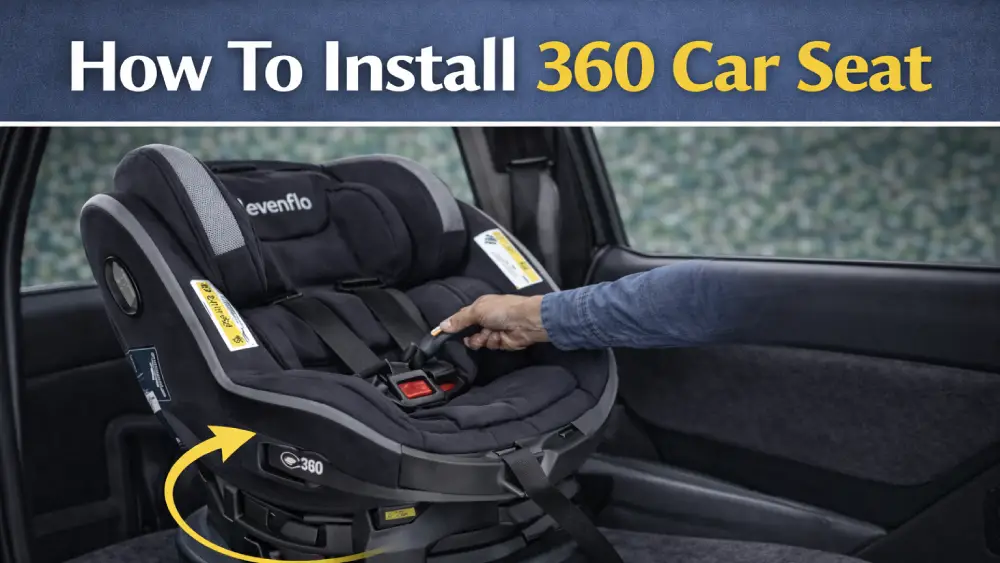
Installing a 360 car seat correctly is essential for both safety and everyday ease. These rotating seats are designed to simplify loading and unloading, but that convenience only works when the seat is installed properly. Knowing how to install a 360 car seat ensures the rotation locks correctly, the recline angle is accurate, and your child is protected on every ride.
A seat that looks secure isn’t always installed correctly. Small details—like belt routing, recline position, or locking mechanisms—make a big difference. This guide walks you through the installation process step by step so you can install with confidence.
Let’s get started.
Understanding How a 360 Car Seat Installs
A 360 car seat uses a fixed base that stays installed in your vehicle. The seat rotates on that base for easier access but locks into place for travel.
Most 360 car seats:
- Install using LATCH or a seat belt (some use ISOFIX)
- Support rear-facing and forward-facing modes
- Include recline and level indicators
- Require the seat to be locked before driving
Always follow both the car seat manual and your vehicle’s owner manual.
Before Installing a 360 Car Seat
Preparation prevents mistakes.
Before installation:
- Park on level ground
- Choose a rear seating position
- Confirm your child meets rear-facing requirements
- Decide whether to use LATCH or a seat belt
- Locate lower anchors or belt paths
Never use LATCH and a seat belt together unless the manufacturer explicitly allows it.
How To Install a 360 Car Seat Rear-Facing
Most children will begin in rear-facing mode.
Step 1: Place the seat in the vehicle
Position the seat on the back seat facing the rear of the car. Make sure it sits flat and centered.
Step 2: Set the recline
Adjust the recline using the handle at the base. Check the level or recline indicator to confirm it’s within the approved rear-facing range.
Step 3: Install using LATCH
- Extend the lower anchor connectors
- Attach them to the vehicle’s lower anchors
- Press down firmly on the seat
- Tighten until movement is under one inch
Step 4: Install using a seat belt (alternative)
- Route the seat belt through the rear-facing belt path
- Buckle the belt
- Lock the belt according to your vehicle instructions
- Apply pressure while tightening
Step 5: Lock the rotation
Rotate the seat until it clicks into the rear-facing travel position. Confirm it cannot rotate freely.
How To Install a 360 Car Seat Forward-Facing
Forward-facing installation is used only when your child meets the manufacturer’s limits.
Step 1: Switch to forward-facing mode
Adjust the seat according to the instructions and select the approved forward-facing recline position.
Step 2: Install using LATCH or seat belt
Attach the lower anchors or route the seat belt through the forward-facing belt path and tighten fully.
Step 3: Attach the top tether
Connect the top tether to your vehicle’s tether anchor and pull tight. The top tether is required for forward-facing use.
Step 4: Lock the rotation
Rotate the seat until it clicks into the forward-facing travel position.
How To Check If a 360 Car Seat Is Installed Correctly
Before driving:
- The seat moves less than one inch at the belt path
- The recline indicator is within range
- The rotation locks securely
- The harness fits snugly
- The chest clip is at armpit level
If something feels off, reinstall before driving.
Common Installation Mistakes to Avoid
These issues appear frequently:
- Using LATCH and seat belt together
- Ignoring recline indicators
- Forgetting the top tether forward-facing
- Driving with the seat not locked
- Assuming tight always means correct
Double-checking takes seconds and improves safety.
Final Thoughts
Learning how to install a 360 car seat correctly sets the foundation for every safe ride that follows. Once installed properly, the rotating feature becomes a helpful daily tool rather than a distraction.
Frequently Asked Questions
A 360 car seat is a rotating child safety seat that swivels toward the door for easier loading and locks for safe travel.
Yes, most 360 car seats allow installation with either LATCH or a seat belt, but never both at the same time.
No, the seat must lock into a rear-facing or forward-facing position before driving.
The seat should move less than one inch at the belt path and the recline indicator should be within range.
Yes, children should remain rear-facing until they meet the manufacturer’s height and weight limits.
The top tether is required for all forward-facing installations.
Yes, if your vehicle allows proper installation in the center seating position.
They may take slightly longer due to added features, but clear indicators help guide proper installation.
Yes, recline should be set first and then rechecked after the seat is fully tightened.
Recheck after adjustments, cleaning, vehicle changes, or periodically to ensure continued safety.