
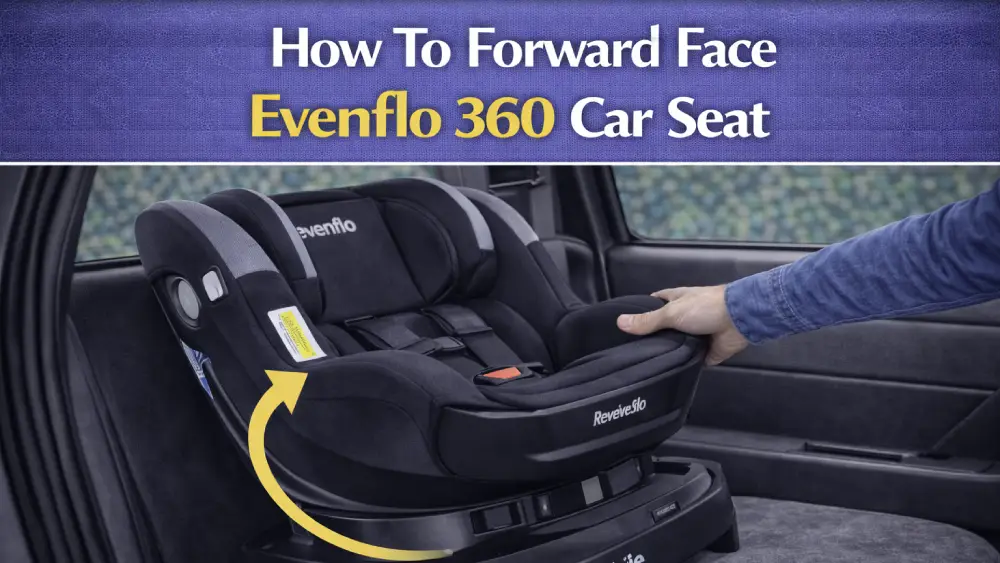
Switching to forward-facing is a major step, and it should only happen when your child is truly ready. The Evenflo 360 car seat makes the transition easier with its rotating design, but safety rules still apply. Learning how to forward face Evenflo 360 car seat ensures the seat is installed correctly, the harness fits properly, and the rotation feature is locked for safe travel.
Forward-facing is never just about convenience. This guide explains when the switch is allowed, how to convert the seat properly, and what to check before every drive.
Let’s walk through it step by step.
Before You Switch to Forward-Facing
Before making the change, confirm that your child meets all Evenflo requirements listed on the seat label and in the manual.
Your child must:
- Meet the minimum age requirement
- Meet the minimum height and weight
- Have outgrown rear-facing limits
- Fit correctly in the harness
Rear-facing is strongly recommended for as long as possible, even after minimums are met.
Preparing the Evenflo 360 for Forward-Facing
Preparation prevents mistakes.
Before adjusting the seat:
- Park the vehicle on level ground
- Remove your child from the seat
- Rotate the seat into a locked travel position
- Loosen the harness completely
- Review your vehicle’s top tether anchor location
Forward-facing always requires a top tether.
How To Forward Face Evenflo 360 Car Seat (Step by Step)
Step 1: Rotate the seat to forward-facing mode
Pull the rotation handle and turn the seat so it faces the front of the vehicle. Release the handle once aligned.
Step 2: Adjust the recline
Use the recline handle on the base to set the approved forward-facing recline position. Check the recline indicator to ensure it’s within range.
Step 3: Reinstall the seat (if required)
Some models require reinstalling when switching modes.
Install using:
- LATCH or
- *Vehicle seat belt
Never use both at the same time.
Tighten until the seat moves less than one inch at the belt path.
Step 4: Attach the top tether
Connect the top tether to the vehicle’s tether anchor and pull it tight. This step is required and critical for forward-facing safety.
Step 5: Lock the rotation
Rotate the seat slightly until you hear or feel a click. Confirm the seat is locked in the forward-facing travel position.
Adjusting the Harness for Forward-Facing
Harness position changes when forward-facing.
Set the harness:
- At or above your child’s shoulders
- Snug enough to pass the pinch test
- Chest clip positioned at armpit level
Remove bulky clothing to ensure proper fit.
Safety Checks Before Driving
Before every trip:
- Confirm the seat is locked
- Check top tether tension
- Test for less than one inch of movement
- Verify recline indicator position
- Confirm harness snugness
These checks take seconds and matter every ride.
Common Forward-Facing Mistakes to Avoid
These issues happen often:
- Turning forward-facing too early
- Forgetting the top tether
- Using rear-facing recline settings
- Driving with the seat unlocked
- Testing movement at the headrest
Avoiding these mistakes protects your child.
When to Recheck Forward-Facing Setup
Recheck whenever:
- Your child grows
- The seat is moved or cleaned
- Harness height is adjusted
- Clothing thickness changes
Regular checks keep the seat working as designed.
Final Thoughts
Learning how to forward face Evenflo 360 car seat properly ensures your child transitions safely when the time is right. The rotating feature makes loading easier, but correct installation, recline, and tether use are what keep your child protected.
Wait until your child meets all requirements. Lock the seat before every drive. Use the top tether every time. Those habits make forward-facing as safe as possible.
Frequently Asked Questions
You can forward face only after your child meets Evenflo’s minimum age, height, and weight requirements listed in the manual.
Some models require reinstallation when changing modes; always follow the instructions for your specific model.
Yes, the top tether must always be used for forward-facing installations.
Use only the approved forward-facing recline position indicated on the seat.
Harness straps should be at or above your child’s shoulders.
No, rotation should only be used when parked; the seat must be locked before driving.
The seat should move less than one inch at the belt path when properly installed.
No, use either LATCH or the seat belt, never both at the same time.
Yes, rear-facing provides better protection and is recommended for as long as possible.
Recheck after growth changes, cleaning, moving the seat, or periodically for safety.