
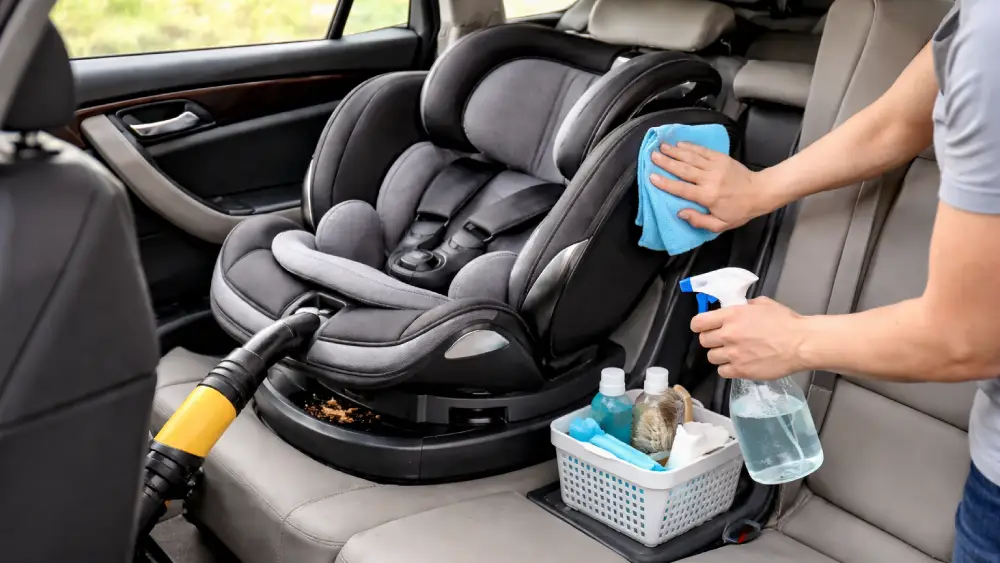
A 360 car seat is a lifesaver for your back. It locks. It makes loading a toddler feel manageable. But it also collects crumbs, milk drips, crushed snacks, and mystery stickiness at an impressive rate. If you’re wondering how to clean a 360 car seat properly — without damaging the rotation system or compromising safety — you’re in the right place.
Because this isn’t just about appearances. A dirty seat can affect function. Buckles jam. Harnesses stiffen. Rotation tracks clog. And when safety equipment stops working smoothly, that’s a problem.
Let’s clean it the right way.
What Makes a 360 Car Seat Different?
A traditional car seat is mostly fabric and shell. A 360 car seat adds a rotating base with internal tracks and locking points. More moving parts. More crevices.
Food falls straight into the rotation track. Juice runs down toward the buckle housing. Sand hides near the pivot mechanism.
And here’s the key: the rotation system must remain unobstructed. If debris builds up inside the base, the seat may feel stiff, fail to lock smoothly, or grind when turning. Cleaning a 360 car seat isn’t just about wiping fabric. It requires attention to mechanics.
That’s why we approach this in layers — fabric, harness, buckle, shell, and base.
Before You Start: Non-Negotiable Safety Rules
I never begin cleaning without checking the manufacturer’s manual. You shouldn’t either. Car seat brands differ in what they allow you to remove, wash, or rinse.
Here are the core rules you should follow every time you clean a 360 car seat:
- Never soak harness straps.
- Never machine wash harness webbing.
- Avoid bleach or harsh chemical sprays.
- Do not steam clean.
- Don’t lubricate the rotation mechanism unless explicitly allowed.
- Only remove parts labeled as removable.
Harness straps are engineered with specific tensile strength. Soaking them or using harsh cleaners can weaken fibers. It might look clean. It won’t be safe.
And after reassembly? Perform a full safety check. Tug on the harness. Confirm proper routing. Ensure the rotation locks firmly in place.
Clean is good. Safe is better.
Supplies You’ll Need
Keep it simple. Overcomplicating this leads to mistakes.
| Item | Purpose |
| Mild dish soap | Gentle cleaning without residue |
| Warm water | Dilution and rinsing |
| Microfiber cloths | Non-abrasive wiping |
| Soft-bristle brush | Crevices and seams |
| Small vacuum with crevice tool | Removing debris |
| Towel | Air drying support |
| Baking soda (optional) | Odor control |
That’s it. No fancy products required.
Step-by-Step: How to Clean a 360 Car Seat
Step 1: Remove the Cover (If Allowed)
Check your manual. Many 360 car seats have removable covers secured with elastic loops or plastic tabs.
Before removing anything, take photos. I do this every time. It saves frustration later.
Gently detach the cover without pulling on harness straps. Never disconnect the harness unless the manual specifically instructs you to.
Set the cover aside.
Step 2: Vacuum Thoroughly
This step matters more than people realize.
Use a crevice tool and vacuum:
- Around the buckle slot
- Under the seat padding
- Along the side wings
- Inside the rotation base gaps
Rotate the seat slowly while vacuuming. You’ll see debris fall out as you move it.
If you’re serious about how to clean a 360 car seat correctly, don’t skip this. Removing dry debris first prevents turning crumbs into muddy paste later.
Step 3: Spot Clean the Shell and Frame
Mix a small amount of mild dish soap with warm water.
Dip a microfiber cloth. Wring it out. It should be damp, not dripping.
Wipe:
- Plastic shell surfaces
- Armrests
- Headrest frame
- Exterior of rotating base
Avoid oversaturating seams near the rotation mechanism. Excess water can seep into internal components.
For stuck-on grime, use a soft toothbrush with light pressure. Gentle scrubbing. No scraping.
Dry immediately with a towel.
Step 4: Wash the Fabric Cover Properly
Check the tag.
If machine washable:
- Use cold water
- Gentle cycle
- Mild detergent
- No fabric softener
- Air dry only
High heat can shrink covers. It also warps foam padding. I’ve seen it happen. Don’t risk it.
If hand wash only:
- Soak briefly in mild soap solution
- Gently agitate
- Rinse thoroughly
- Press (don’t wring) to remove water
- Air dry flat
Let it dry completely before reinstalling. Damp fabric can trap moisture and create odor.
Step 5: Clean the Harness Safely
Harness straps deserve extra caution.
To clean:
- Mix mild soap with warm water.
- Dip a cloth.
- Wipe the straps thoroughly.
- Follow with a clean damp cloth to remove residue.
- air dry.
Never submerge the straps. Never machine wash them.
If odor persists, wipe again and allow extended air drying in indirect sunlight. Sunlight helps neutralize smells without chemicals.
If straps feel stiff after cleaning, that’s a red flag. Consider contacting the manufacturer.
Step 6: Clean the Buckle and Chest Clip
Crumbs love buckles.
Many manufacturers allow rinsing the buckle (not soaking). If permitted:
- Remove buckle per manual instructions.
- Rinse under warm running water.
- Do not use soap unless allowed.
- Shake out excess water.
- Let the air dry completely — at least 24 hours.
Test the click before reinstalling. It should snap sharply and release smoothly.
The chest clip can be wiped with mild soap and water. Dry fully.
Step 7: Clean the Rotating Base and Mechanism
This is the step most people skip.
And it’s the most important part of how to clean a 360 car seat properly.
Vacuum along the rotation track. Slowly rotate the seat while doing this. Debris will surface as you move it.
Use a damp cloth to wipe the outer track area. Do not insert tools into internal components. Do not spray cleaners inside.
If rotation feels stiff:
- Vacuum again.
- Check for visible debris.
- Confirm no fabric is obstructing the track.
- Ensure the seat is installed correctly.
If grinding persists, contact the manufacturer. Never apply oil or lubricant unless explicitly directed.
Step 8: Deodorize Without Damage
Odor often hides in padding or beneath the buckle area.
Here’s a safe method:
- Sprinkle baking soda lightly on the fabric.
- Let sit for 20–30 minutes.
- Vacuum thoroughly.
Air the seat in a shaded outdoor area if possible. Fresh airflow works better than artificial fragrance sprays.
Avoid fabric fresheners unless manufacturer-approved.
Step 9: Reassemble and Safety Check
Now we rebuild.
Reinstall the fabric carefully. Follow your photos. Ensure no twists in the harness.
Then perform a safety checklist:
- Harness moves smoothly
- Buckle clicks firmly
- Chest clip slides properly
- Cover secured tightly
- Rotation locks into each position
- Seat does not wobble excessively
If anything feels off, stop. Re-check.
A properly cleaned 360 car seat should function exactly as it did before — only cleaner.
How Often Should You Clean a 360 Car Seat?
Frequency depends on use.
Here’s a practical guideline:
| Cleaning Type | Frequency |
| Quick vacuum + wipe | Weekly |
| Deep clean | Monthly |
| After spills or illness | Immediately |
| Full inspection + clean | Every 3–4 months |
If your child snacks in the car daily, increase frequency. Small cleanings prevent large buildup.
Common Mistakes to Avoid
I see these often. They’re avoidable.
- Steam cleaning the seat
- Using bleach wipes on harness straps
- Machine washing the harness
- Soaking the buckle overnight
- Applying lubricants to the rotation base
- Reassembling without checking strap routing
The biggest mistake? Rushing.
When learning how to clean a 360 car seat, precision matters more than speed.
A 5-Minute Maintenance Routine for Busy Parents
Short on time? Here’s a practical routine:
- Vacuum crumbs.
- Wipe buckle and straps.
- Rotate seat while vacuuming track.
- Check harness tension.
- Inspect for debris in base.
Five minutes. Once a week. It prevents major deep cleans later.
I keep a small cleaning kit in the trunk. It saves time and stress.
When You Should Replace Instead of Clean
Sometimes cleaning isn’t enough.
Replace the seat if:
- Mold penetrates padding
- Harness is frayed or stiff
- Buckle won’t click properly
- Seat was involved in a crash (per manufacturer policy)
- The seat has expired
Car seats have expiration dates for a reason. Materials degrade over time.
No cleaning method can restore structural integrity.
Final Thoughts
Knowing how to clean a 360 car seat isn’t just about keeping things tidy. It’s about preserving function. Maintaining safety. Protecting your investment.
Clean deliberately. Reassemble carefully. Inspect routinely.
Your 360 car seat works hard every day. A structured cleaning process ensures it continues to rotate smoothly, lock securely, and protect what matters most.
And when in doubt? Always return to the manual.
Clean smart. Stay safe.
Frequently Asked Questions
Perform a light cleaning weekly and a deep clean monthly, or immediately after major spills or accidents.
Only if the manufacturer label allows it; use cold water, gentle cycle, and always air dry.
No, soaking can weaken the fibers and reduce the harness’s crash performance.
If permitted, rinse with warm water only and allow it to air dry completely before reinstalling.
Only if approved by the manufacturer, as harsh chemicals can damage materials and safety components.
Debris may still be in the track or moisture may have entered the base; vacuum thoroughly and let it dry fully.
No, steam can damage internal components and compromise structural integrity.
Wait until every component is fully dry, typically 24–48 hours.
Wipe it with mild soap and water, then air dry in indirect sunlight to eliminate lingering odor.
Replace it after a crash, at expiration, or if the harness or buckle no longer functions properly.