
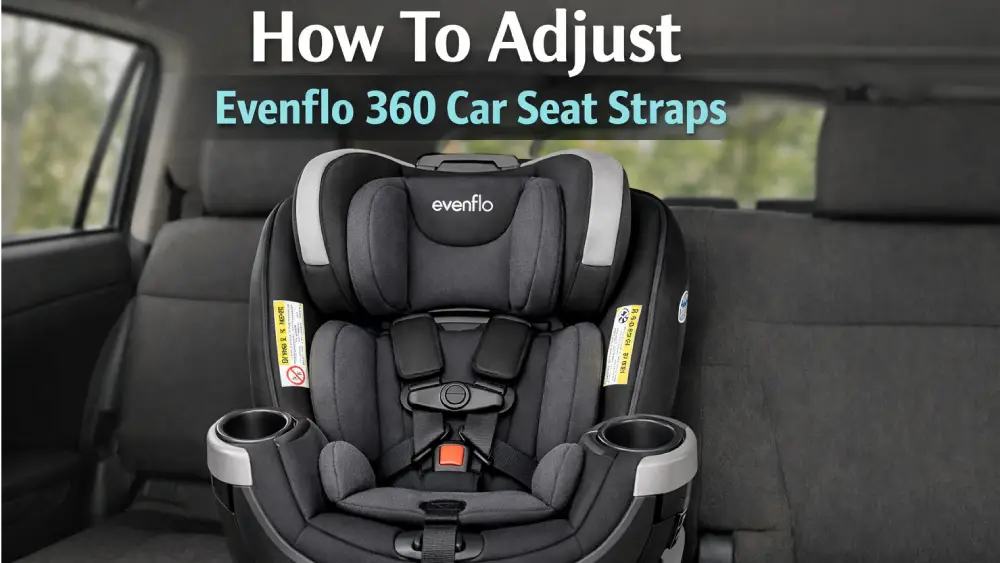
How To Adjust Evenflo 360 Car Seat Straps
Adjusting car seat straps sounds simple. Pull here. Tighten there. Done, right? Not quite. Knowing how to adjust Evenflo 360 car seat straps correctly is one of the most important safety steps you’ll repeat as your child grows. And with a rotating seat, a few small details matter more than you might expect.
I’ve helped parents adjust harnesses countless times. Most mistakes aren’t dramatic. They’re subtle. Quiet. And easy to overlook. This guide breaks the process down clearly, explains why each adjustment matters, and gives you confidence that your child is riding safely—every single time.
Let’s get started.
Understanding the Evenflo 360 Harness System
The Evenflo 360 car seat is designed to grow with your child, which means the harness system isn’t static. It’s meant to be adjusted often.
Key components include:
- A no-rethread harness, adjusted by raising or lowering the headrest
- A five-point harness system for balanced restraint
- A central harness tightening strap
- A chest clip that keeps straps positioned correctly
Because the harness doesn’t require rethreading, many parents assume adjustment is foolproof. It isn’t. Proper positioning still matters every single ride.
Before You Adjust the Straps
Pause for a moment before pulling any straps.
Confirm the seating mode
- Rear-facing: straps must be at or just below shoulder level
- Forward-facing: straps must be at or just above shoulder level
Check the seat position
If the seat is rotated toward you, rotate it back and lock it into the travel position before final tightening.
Verify fit requirements
Confirm your child’s height and weight still fall within the seat’s limits.
How To Adjust Evenflo 360 Car Seat Straps Step by Step
This is the correct, repeatable method for adjusting the harness.
Step 1: Loosen the harness
Press the harness release button near the child’s feet while pulling both shoulder straps forward. This creates slack and prevents uneven tightening later.
Step 2: Adjust the headrest height
Squeeze the headrest adjustment handle and move it up or down until the harness slots align properly with your child’s shoulders.
This step automatically adjusts the harness height—no rethreading required.
Step 3: Place your child in the seat
Ensure your child’s back and bottom are fully against the seat. No bulky coats. No thick padding. Clothing should be snug and lightweight.
Step 4: Buckle the harness
Connect both buckle tongues, then insert them into the crotch buckle until you hear a click.
Step 5: Tighten the harness
Pull the adjustment strap at the front of the seat in one smooth motion. Apply gentle pressure on your child’s hips as you tighten.
Stop once the straps are snug—not restrictive.
Step 6: Position the chest clip
Slide the chest clip to armpit level. This keeps the harness correctly aligned during a crash.
How Tight Is Tight Enough?
This is where many parents hesitate.
Use the pinch test:
- Try to pinch the harness webbing at your child’s shoulder
- If you can grab excess material, it’s too loose
- If you can’t pinch anything, the fit is correct
The straps should lie flat, without twists or gaps.
Rear-Facing vs Forward-Facing Strap Adjustments
Here’s a quick comparison to make things crystal clear:
| Seating Mode | Harness Position | Notes |
| Rear-facing | At or below shoulders | Keeps child safely contained |
| Forward-facing | At or above shoulders | Allows controlled forward motion |
Never adjust straps based on comfort alone. Fit always comes first.
Common Harness Adjustment Mistakes to Avoid
These errors happen often—and quietly.
- Chest clip positioned too low
- Harness twisted or folded
- Straps left loose for short trips
- Bulky jackets worn under the harness
- Seat rotated but not locked before driving
Avoiding these mistakes significantly improves safety without adding time or effort.
How Often Should You Adjust Evenflo 360 Car Seat Straps?
More often than you think.
Adjust straps when:
- Your child grows taller
- You switch between rear- and forward-facing
- Clothing thickness changes with seasons
- The harness feels looser than usual
A quick check before each drive is a smart habit.
Final Thoughts
Learning how to adjust Evenflo 360 car seat straps isn’t just about following instructions. It’s about consistency. About attention to detail. About knowing that the smallest adjustments can make the biggest difference when it matters most.
Once you’ve done it a few times, it becomes second nature. And that confidence? It’s worth every careful pull of the strap.
Frequently Asked Questions
Press the harness release button near the seat base while pulling the shoulder straps forward.
The straps should pass the pinch test, meaning you can’t pinch any excess webbing at the shoulder.
The chest clip should always sit at armpit level to keep the harness properly aligned.
Raise or lower the headrest using the adjustment handle; the harness height changes automatically.
No, the Evenflo 360 uses a no-rethread harness system adjusted through the headrest.
Rear-facing straps go at or below the shoulders, while forward-facing straps go at or above.
No, bulky clothing can prevent a snug fit and reduce harness effectiveness.
Adjust them whenever your child grows, clothing changes, or the harness feels loose.
Uneven straps usually mean the harness wasn’t fully loosened before tightening or the straps are twisted.
You can adjust while rotated for access, but always lock the seat in the travel position before driving