
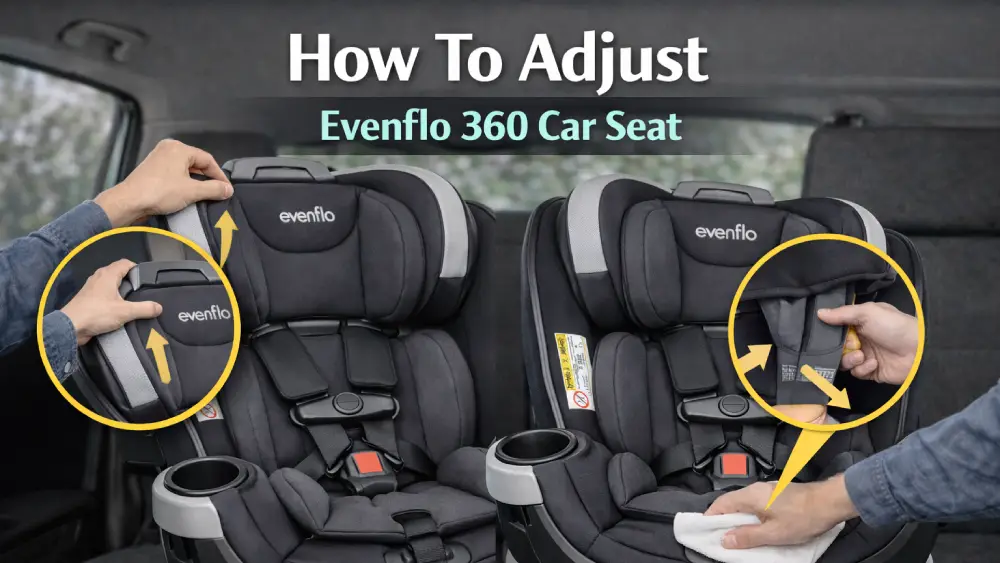
Car seats aren’t “set it and forget it.” As your child grows, the seat needs regular updates to stay safe. Knowing how to adjust Evenflo 360 car seat properly ensures the harness, headrest, and positioning continue to protect your child on every ride.
The Evenflo 360 is designed to make adjustments easier, thanks to its rotating feature and no-rethread harness. Still, small missteps can reduce effectiveness. This guide walks through each adjustment clearly, explains when changes are needed, and helps you avoid common mistakes.
Let’s break it down.
Understanding What Can Be Adjusted on the Evenflo 360
Several components are designed to move and adapt.
Key adjustable parts include:
- Harness tightness
- Harness height (via headrest)
- Recline position
- Rotation position
Each adjustment serves a specific safety purpose. None are cosmetic.
When You Should Adjust the Evenflo 360 Car Seat
Adjustments aren’t occasional—they’re ongoing.
Make changes when:
- Your child grows taller or heavier
- Clothing thickness changes with seasons
- You switch between rear-facing and forward-facing
- The harness feels loose or tight
- The recline indicator shifts
A quick check before driving is a smart habit.
How To Adjust Harness Height and Fit
The Evenflo 360 uses a no-rethread harness, which simplifies height changes.
Step 1: Loosen the harness
Press the harness release button near the base while pulling the shoulder straps forward.
Step 2: Adjust the headrest
Squeeze the headrest adjustment handle and raise or lower it until the harness slots align correctly:
- Rear-facing: at or below shoulders
- Forward-facing: at or above shoulders
Step 3: Buckle and tighten
Secure the buckle and chest clip. Pull the front adjustment strap until the harness is snug.
Use the pinch test to confirm proper tightness.
How To Adjust Recline Position
Recline supports proper head and airway alignment.
Step-by-step recline adjustment:
- Confirm seating mode
- Locate the recline handle at the base
- Pull the handle to unlock
- Adjust the seat angle
- Confirm recline using the indicator
Recline should always match the seating mode, not comfort preference.
How To Use the Rotation Feature Correctly
Rotation improves access—but only when used properly.
To rotate safely:
- Stop the vehicle completely
- Pull the rotation release handle
- Turn the seat toward the door
- Lock it back into a travel position before driving
Never drive with the seat unlocked or sideways.
Rear-Facing vs Forward-Facing Adjustments
Here’s a quick comparison for clarity:
| Mode | Harness Position | Recline Notes |
| Rear-facing | At or below shoulders | More reclined |
| Forward-facing | At or above shoulders | More upright |
Switching modes always requires rechecking all settings.
Common Adjustment Mistakes to Avoid
These issues appear frequently:
- Harness left too loose
- Chest clip positioned too low
- Recline indicator ignored
- Seat not locked after rotation
- Bulky clothing under harness
Each mistake can reduce protection.
How To Check If Adjustments Are Correct
Before driving:
- Harness passes the pinch test
- Chest clip is at armpit level
- Seat locks securely in position
- Recline indicator is within range
If anything feels off, re-adjust before driving.
Final Thoughts
Learning how to adjust Evenflo 360 car seat properly keeps your child safe through every growth stage. Adjustments don’t take long, but they matter more than almost anything else you’ll do with this seat.
Take a few seconds each ride. Check the fit. Lock it in. Those small steps make a big difference.
Frequently Asked Questions
Adjust it whenever your child grows, clothing thickness changes, or the harness feels loose or tight.
Use the headrest adjustment handle to raise or lower it; the harness height adjusts automatically.
The harness should pass the pinch test, meaning you can’t pinch excess webbing at the shoulder.
The chest clip should always sit at armpit level.
Yes, recline settings may change when switching modes or reinstalling the seat.
You can adjust for access, but always lock the seat into a travel position before driving.
Rear-facing harness straps should be at or below your child’s shoulders.
Forward-facing harness straps should be at or above your child’s shoulders.
This usually happens if the harness wasn’t fully tightened or the headrest wasn’t set correctly.
Yes, a quick check before each trip ensures continued safety.