
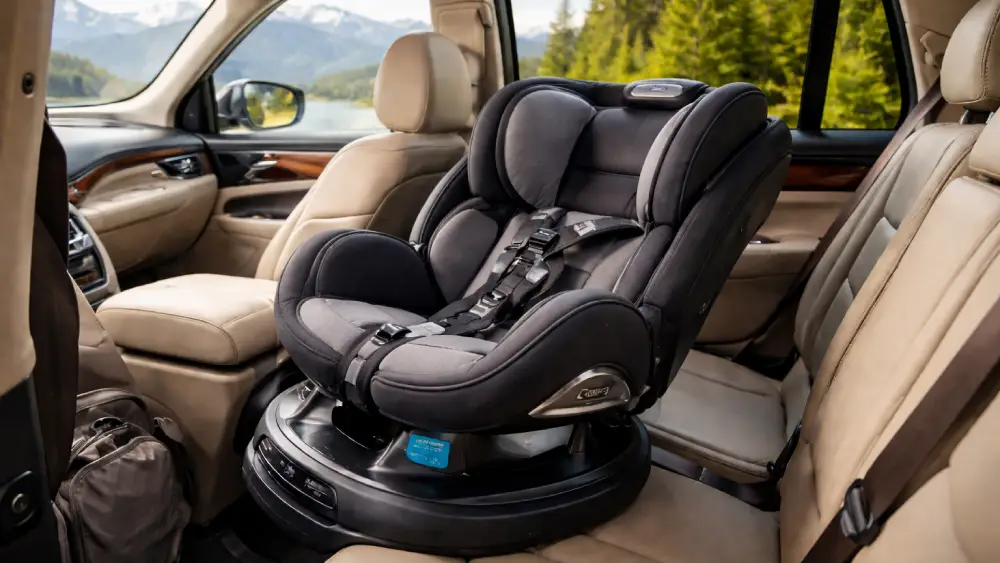
Understanding Graco 360 car seat rear facing limits isn’t just about reading numbers off a label. It’s about knowing how those limits translate into real-world safety for your child. I’ve found that many parents focus on when they can turn a seat forward-facing. Far fewer ask how long they should keep it rear-facing. That distinction matters.
In this guide, I’ll break down the Graco 360 car seat rear facing limits in practical terms—weight, height, age recommendations, and the subtle details that often get overlooked. If you want clarity instead of confusion, you’re in the right place.
What Is the Graco 360 Car Seat?
The “Graco 360” label generally refers to Graco’s rotating convertible car seats, such as the Turn2Me and Extend2Fit 360 models. These seats swivel toward the door, making it significantly easier to load and secure your child. Once positioned, they lock securely in rear- or forward-facing mode.
That rotation feature isn’t just convenient. It reduces awkward lifting angles and back strain. For parents who transfer a child in and out of the car multiple times a day, that’s a real advantage.
Most Graco 360 models are either convertible or all-in-one seats. This means they accommodate:
- Rear-facing infants and toddlers
- Forward-facing toddlers and preschoolers
- In some models, high-back booster use
But the most critical phase—the one with the highest safety payoff—is rear-facing. And that’s where understanding Graco 360 car seat rear facing limits becomes essential.
Official Graco 360 Rear-Facing Limits
Let’s get specific.
While exact numbers vary by model, most Graco 360 rotating seats follow these general rear-facing parameters:
- Weight range: Typically 4–40 pounds
- Some Extend2Fit 360 models: Up to 50 pounds rear-facing
- Height limit: Usually up to 40 inches, or until the child’s head is within 1 inch of the adjustable headrest top
These numbers define the core Graco 360 car seat rear facing limits. However, there’s nuance behind them.
Rear-Facing Weight Limits
Many models cap rear-facing use at 40 pounds. Certain Extend2Fit 360 versions allow up to 50 pounds, which can extend rear-facing use by a year or more depending on the child.
That extra 10 pounds can make a substantial difference.
If your child tracks high on weight percentiles, a 50-pound rear-facing limit provides valuable flexibility. I always recommend checking the sticker on your specific seat and confirming the manual. The name “Graco 360” alone doesn’t guarantee identical limits across models.
Rear-Facing Height Limits
Height limits are often misunderstood.
Parents frequently assume standing height determines fit. It doesn’t. The correct measure is whether:
- The child’s head is at least 1 inch below the top of the headrest when properly adjusted.
A long-torsoed child may outgrow rear-facing height limits sooner than expected—even if they’re under the stated inch maximum. Conversely, a long-legged child can remain rear-facing comfortably because leg length does not determine outgrowth.
Bent legs are not a safety issue. I repeat this often because it surprises parents.
Age Recommendations
While car seat laws vary by state, safety guidance is clear. The American Academy of Pediatrics recommends keeping children rear-facing as long as possible within the seat’s limits.
That’s why fully understanding Graco 360 car seat rear facing limits allows you to maximize safety—not just meet minimum legal requirements.
How Long Should a Child Stay Rear-Facing?
Here’s where safety science matters.
In a frontal crash—the most common severe collision type—a rear-facing seat distributes force across the child’s entire back. The head, neck, and spine move together. In forward-facing mode, the head is thrown forward while the body is restrained. For young children with developing vertebrae, that difference is significant.
The spine isn’t fully ossified in toddlers. It stretches more than the spinal cord can tolerate. Rear-facing positioning dramatically reduces that risk.
Many parents switch at age two because it’s the legal minimum in many states. But best practice is different from legal minimum. If your Graco 360 car seat rear facing limits allow continued use, there is no safety advantage to turning forward early.
If your model supports rear-facing up to 40 or 50 pounds, your child could realistically stay rear-facing until age four or even five.
That’s not excessive. It’s protective.
How to Tell If Your Child Has Outgrown Rear-Facing Mode
This is where I see the most confusion.
Outgrowing rear-facing happens in one of three ways:
1. The Weight Limit Is Reached
If your model caps rear-facing at 40 pounds, that’s a firm limit. Once your child exceeds it, you must transition.
If you’re within two pounds of the limit, begin planning. Don’t wait until the pediatrician visit surprise.
2. The Height Limit Is Reached
Remember the 1-inch rule. When the top of the child’s head is less than one inch from the top of the headrest (fully adjusted), rear-facing use must stop.
Parents often misinterpret leg crowding as outgrowth. It’s not.
Children naturally sit cross-legged or prop their feet against the seat back. They are flexible. Discomfort is rarely an issue.
3. The Seat’s Manual Specifies a Structural Limit
Some models include explicit standing height limits in addition to headrest positioning. Always confirm your manual.
Understanding Graco 360 car seat rear facing limits means reading your exact model documentation—not relying on general advice online.
Differences Between Graco 360 Models
Not all rotating Graco seats are identical.
For example:
| Model | Rear-Facing Weight Limit | Notable Feature |
| Turn2Me | Up to 40 lbs | Smooth one-hand rotation |
| Extend2Fit 360 | Up to 40–50 lbs (model dependent) | Extendable legroom panel |
The Extend2Fit’s adjustable extension panel provides extra legroom. That design supports longer rear-facing use, especially for taller toddlers.
If extended rear-facing is a top priority for you, choosing a model with a 50-pound limit meaningfully extends the Graco 360 car seat rear facing limits window.
Model choice directly affects safety duration. It’s not just about convenience.
Installation Tips for Rear-Facing Use
Even the best seat fails if installed incorrectly.
Rear-facing installation requires:
- Correct recline angle (follow indicator on seat)
- Secure LATCH or seatbelt routing
- Less than 1 inch of movement at the belt path
- Harness straps positioned at or below the child’s shoulders
When rotating seats are involved, ensure the seat locks firmly into rear-facing position before driving. The rotation feature should never remain unlocked in motion.
I also recommend periodic fit checks. Children grow quickly. What fit perfectly three months ago may now be borderline within the Graco 360 car seat rear facing limits.
Common Mistakes I See Parents Make
A few patterns show up repeatedly.
Turning forward at age two simply because it feels “normal.”
Confusing bent legs with danger.
Assuming all Graco 360 seats share identical limits.
Failing to recheck harness tightness as children grow.
The biggest issue? Underestimating how protective rear-facing truly is.
When you understand the full scope of Graco 360 car seat rear facing limits, the incentive to maximize them becomes obvious.
Final Thoughts: Maximizing Rear-Facing Safety
The numbers defining Graco 360 car seat rear facing limits are more than manufacturer specifications. They represent the boundaries of your child’s safest travel position.
If your model allows rear-facing to 40 or 50 pounds, use that capacity. If your child hasn’t reached the height threshold, keep them rear-facing. And if you’re unsure, revisit the manual.
Rear-facing isn’t about convenience. It’s about biomechanics, force distribution, and spinal protection.
When parents understand the full meaning behind Graco 360 car seat rear facing limits, they make more confident decisions. And confident, informed decisions protect children.
That’s the goal.
Frequently Asked Questions
Most models allow rear-facing from 4–40 pounds, while some Extend2Fit 360 versions go up to 50 pounds.
Rear-facing use ends when your child’s head is within one inch of the top of the headrest.
Yes, if they are within the listed weight and height limits for your specific model.
Yes. Keeping your child rear-facing as long as possible within the seat’s limits offers greater crash protection.
No. Weight limits vary by model, especially between Turn2Me and Extend2Fit 360 versions.
No. Bent or crossed legs are normal and not a sign that the seat is outgrown.
You must switch to forward-facing once the rear-facing weight limit is exceeded.
No, as long as the seat is fully locked into the rear-facing position before driving.
Always follow the manufacturer’s limits; they determine safe use of the seat.
Check your seat’s manual and the labels attached to the car seat shell.