
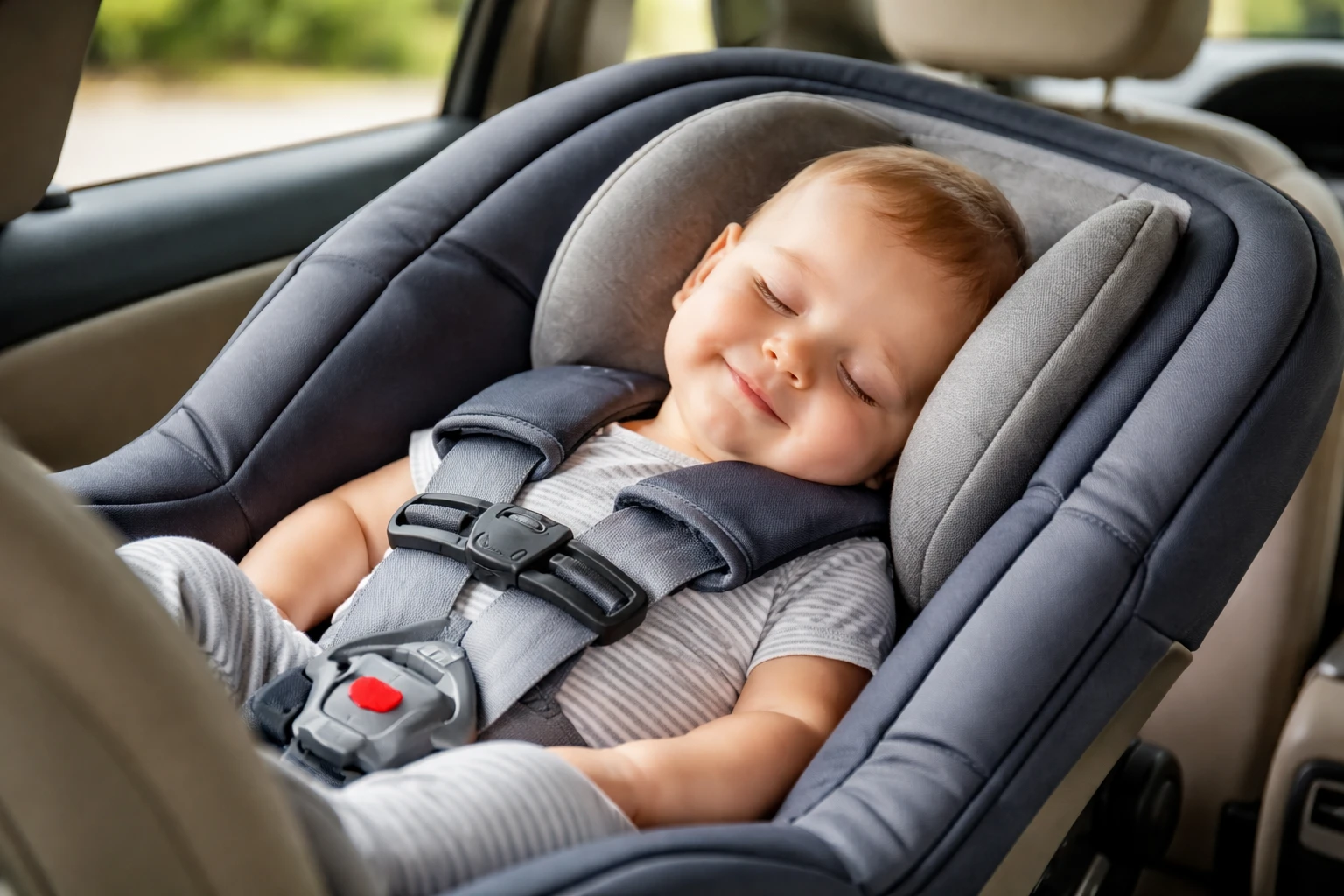
Car seat recline positions for proper head support are not just about comfort. They are about breathing. About spinal alignment. About crash protection. And yes about peace of mind every time you glance in the rearview mirror. I’ve seen it happen. A baby falls asleep, and within minutes their head drops forward. Chin to chest. It looks uncomfortable. Sometimes alarming. Parents wonder if something is wrong. In many cases, the answer comes down to angle. Understanding car seat recline positions for proper head support is one of the most overlooked yet essential parts of installation.
Installation gets attention. Harness tightness gets attention. Recline? It quietly determines whether your child’s airway stays open and whether crash forces are distributed the way engineers designed them to be. Let’s unpack it properly.
Why Recline Position Matters
Recline angle affects two critical safety factors:
- Airway alignment
- Crash force distribution
Miss either one, and you compromise protection.
Airway Protection and Positional Asphyxia
Infants are anatomically different from adults. Their heads are large relative to their bodies, and their neck muscles are underdeveloped. When a newborn’s chin drops toward their chest, the airway can narrow significantly. This is why recline matters so much in early months. Rear-facing newborns typically require an angle close to 45 degrees from vertical. That position helps maintain a neutral airway by using gravity to keep the head from falling forward.
The importance of maintaining an open airway is recognized broadly in pediatric health and safety guidelines, including resources from the Centers for Disease Control and Prevention. Too upright? The head slumps forward. Too reclined? Crash performance may not be optimized. Car seat recline positions for proper head support must balance both.
Crash Dynamics and Energy Distribution
During a collision, physics takes over. Rear-facing seats distribute crash forces across the back of the shell, supporting the head, neck, and spine as one unit.
The concept at play here is inertia the tendency of an object to resist changes in motion a principle explained clearly by Wikipedia under its physics entries. In a crash, your child’s body continues moving forward until restrained by the car seat.
A properly reclined rear-facing seat:
- Cradles the head and spine.
- Reduces neck strain.
- Manages crash energy across a broader surface.
Car seat recline positions for proper head support are not just about comfort during naps. They are about how force is managed in milliseconds.
Understanding Car Seat Recline Angles
Manufacturers provide recline ranges because children’s needs evolve.
| Stage | Typical Recline | Primary Goal |
| Newborn (0–3 months) | 40–45° | Airway protection |
| Older Infant | 35–40° | Balance airway & crash safety |
| Toddler (rear-facing) | 30–35° | Crash optimization |
| Forward-facing | Varies by model | Postural support |
Always follow your specific manual. But understanding the reasoning helps you install with confidence. Car seat recline positions for proper head support change as your child grows stronger.
Reading Recline Indicators Properly
Modern seats include:
- Bubble levels
- Ball indicators
- Level-to-ground lines
- Adjustable recline feet
Common mistakes include:
- Checking recline before tightening the seat.
- Ignoring vehicle seat slope.
- Assuming the indicator must be perfectly centered when a range is allowed.
Here’s what I recommend:
- Install the seat.
- Tighten fully.
- Remove all slack.
- Then check the indicator.
Vehicle cushions compress during tightening. That can subtly change your angle.
Small detail. Big impact.
Rear-Facing Recline Positions for Proper Head Support
Rear-facing recline matters most.
Newborn Stage (0–3 Months)
This stage requires maximum recline within manufacturer limits. Typically around 45 degrees.
Watch for warning signs:
- Chin touching chest.
- Head consistently dropping forward.
- Baby appearing compressed rather than supported.
Safe solutions may include:
- Adjusting the recline foot.
- Using tightly rolled towels or pool noodles (if permitted).
- Reinstalling in a different seating position.
Car seat recline positions for proper head support are most sensitive during this stage.
Older Infants (4–12 Months)
Neck strength improves. Head control stabilizes. At this point, many seats allow slightly more upright installation within the approved range.
Benefits of moving more upright:
- Improved crash force distribution.
- Increased front-seat space.
- Reduced risk of over-recline.
But move gradually. Always confirm weight and age minimums before adjusting.
Toddlers (1–4 Years, Rear-Facing)
A more upright rear-facing seat is often appropriate for toddlers. This surprises many parents. They assume more recline equals more safety. Not necessarily. At this stage, car seat recline positions for proper head support shift focus toward spinal alignment and impact efficiency rather than airway concerns.
Precision still matters.
Forward-Facing Recline Positions
Forward-facing seats also have recline settings.
Recline supports:
- Postural comfort.
- Prevention of excessive head drop during sleep.
- Proper harness geometry.
Avoid over-reclining forward-facing seats unless explicitly allowed. Excess recline can increase forward head movement in a crash. Always use the top tether. It significantly reduces head excursion.
Why Head Slump Happens
Head slump doesn’t always signal danger, but it deserves attention.
Common causes include:
- Seat installed too upright.
- Harness straps positioned incorrectly.
- Vehicle seat slope influencing base angle.
- Aftermarket inserts interfering with alignment.
Never add unapproved cushions. They can alter crash performance.
Safer adjustments:
- Re-check recline indicator after tightening.
- Switch installation methods if allowed.
- Adjust recline setting within approved limits.
- Consult a CPST for evaluation.
Car seat recline positions for proper head support solve most head slump concerns when adjusted correctly.
Vehicle Factors That Affect Recline
Your vehicle matters.
Sloped Seats
Sedans often have more angled cushions than SUVs. That slope can push your car seat more upright than intended.
Cushion Compression
As you tighten installation, foam compresses. This changes the angle slightly.
Always:
- Tighten completely.
- Re-check the recline indicator.
- Confirm less than one inch of movement at the belt path.
Also, many parents ask about how to reduce back strain when installing car seats. The key is to kneel into the seat using your body weight rather than bending at the waist, keep your back straight, and tighten straps from outside the vehicle whenever possible. Installation shouldn’t injure you.
Convertible and All-in-One Seats
Many seats offer multiple recline modes:
- Rear-facing infant position.
- Rear-facing toddler position.
- Forward-facing position.
It’s tempting to move upright early for legroom. I understand that. But car seat recline positions for proper head support must follow manufacturer minimums first. Safety before convenience.
Signs the Recline Is Incorrect
Watch for:
- Indicator outside approved zone.
- Chin-to-chest posture in infants.
- Base lifting off vehicle seat.
- Harness pulling upward at shoulders.
- Excessive head bounce over bumps.
If you see these, reinstall fully. Partial fixes rarely solve geometry issues.
Installation Best Practices
Follow this structured process:
- Set recline mode.
- Place seat firmly against vehicle seatback.
- Route belt or attach LATCH.
- Apply downward pressure at belt path.
- Tighten fully.
- Remove slack.
- Check recline indicator.
- Confirm minimal movement.
- Secure harness properly.
Car seat recline positions for proper head support depend on the entire installation process—not just one lever adjustment.
Final Thoughts
Car seat recline positions for proper head support are foundational to child passenger safety.
The right angle protects the airway.
The right angle manages crash forces.
The right angle supports healthy posture.
Follow your manual. Re-check after tightening. Adjust as your child grows. Car seat recline positions for proper head support evolve over time, and your installation should evolve with them. Safety is intentional. And getting the angle right is one of the most important details you control.
FAQs
No. About 45 degrees is typically recommended for newborns, but older infants and toddlers can usually sit more upright within the manufacturer’s allowed range.
Head slump can happen if the seat is too upright or the harness isn’t positioned correctly; recheck the recline indicator and harness height.
No. Only use inserts provided or approved by the car seat manufacturer, as aftermarket products can interfere with crash protection.
Yes. Tightening compresses the vehicle seat cushion, which can slightly alter the recline angle always recheck after installation.
Not necessarily. For toddlers, a more upright rear-facing position within the approved range often improves crash performance.
Use the built-in recline indicator (bubble, ball, or level line) and confirm it falls within the allowed zone specified in your manual.
Yes, if both methods are permitted for your child’s weight; sometimes seat belt installation allows better angle adjustment.
Not always, but frequent chin-to-chest positioning in young infants should be addressed by adjusting recline or reinstalling.
Yes, but typically less than rear-facing seats; recline in forward-facing mode mainly supports posture and reduces head drop during sleep.
If you’re unsure about recline or harness fit, a Certified Child Passenger Safety Technician can verify proper installation.